
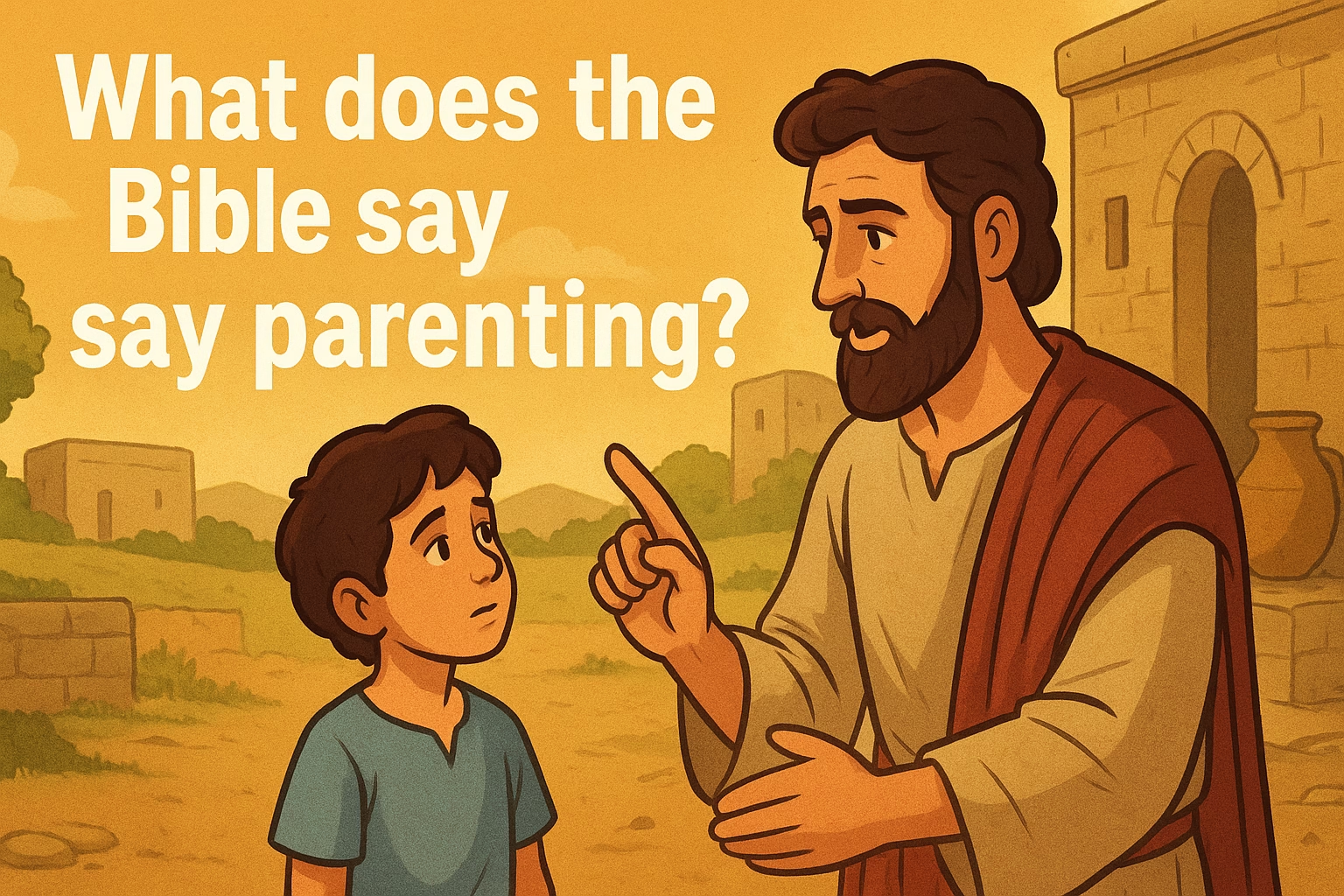
Parenting is one of the most significant responsibilities entrusted to individuals, and many seek guidance from the Bible on how to fulfill this role. The Scriptures provide timeless wisdom and principles that can help parents navigate the challenges of raising children. In this article, we will explore what the Bible says about parenting, drawing from various passages that highlight the importance of love, discipline, and spiritual guidance in raising children.
The Bible emphasizes the profound duty of parents to nurture their children in a loving and God-centered environment. It offers insights into the values and practices that can help parents raise children who grow in wisdom, character, and faith. Let’s delve into some key biblical principles that outline the essence of parenting.
The Role of Parents in God’s Plan
The Bible presents parenting as a vital part of God’s design for humanity. In Genesis 1:28, God commands Adam and Eve to “be fruitful and multiply.” This directive highlights the importance of family and the continuation of God’s creation through generations. Parents play a crucial role in shaping the next generation, not only physically but also spiritually and morally.
Teaching and Disciplining Children
One of the core responsibilities of parents is to teach and discipline their children. Proverbs 22:6 states, “Direct your children onto the right path, and when they are older, they will not leave it.” This verse underscores the importance of instilling values and guiding children towards righteousness from an early age.
Discipline is also a significant aspect of parenting. Hebrews 12:11 reminds us that “no discipline is enjoyable while it is happening—it’s painful! But afterward there will be a peaceful harvest of right living for those who are trained in this way.” This passage highlights that, while discipline may be difficult, it is essential for the development of character and self-control in children.
Modeling Godly Behavior
Parents are called to be role models for their children. Ephesians 6:4 instructs fathers to “bring them up in the training and instruction of the Lord.” This verse emphasizes the necessity for parents to embody the values and teachings of Christ. Children learn not only through words but also through the actions they observe in their parents.
In 1 Thessalonians 2:11-12, the Apostle Paul speaks of how he cared for the Thessalonian believers, likening his nurturing approach to that of a father with his children. This illustrates that parenting involves a deep commitment to love, support, and guide children towards a life that honors God.
The Importance of Love and Affection
Love is at the heart of effective parenting. Colossians 3:21 advises parents, “Fathers, do not embitter your children, or they will become discouraged.” This verse reminds parents that love must be coupled with encouragement rather than harshness. A loving environment fosters security and confidence in children, enabling them to thrive.
In addition to love, physical affection is also important. The Bible teaches that warmth and tenderness can significantly impact a child’s emotional well-being. In Psalm 127:3, children are referred to as a “heritage from the Lord,” which highlights their value and the joy they bring into a family.
Prayer and Spiritual Guidance
Prayer plays a crucial role in parenting, as it connects parents with God and invites divine guidance in their parenting journey. James 1:5 encourages believers to seek wisdom from God, promising that He gives generously to all who ask. Parents can pray for wisdom, patience, and understanding as they raise their children.
Additionally, Deuteronomy 6:6-7 instructs parents to impress God’s commands on their children: “Talk about them when you sit at home and when you walk along the road, when you lie down and when you get up.” This passage emphasizes the importance of integrating faith into everyday life, making it a natural part of family discussions and activities.
Encouraging Independence and Responsibility
As children grow, parents must also encourage independence and responsibility. Galatians 6:5 states, “For we are each responsible for our own conduct.” Teaching children to take responsibility for their actions prepares them for adulthood and helps them understand the consequences of their choices.
Parents can foster independence by allowing children to make age-appropriate decisions and learn from their experiences. This process can build confidence and help children develop problem-solving skills, essential for navigating life’s challenges.
Creating a Supportive Environment
Finally, the Bible highlights the importance of creating a supportive environment where children feel safe and valued. Proverbs 1:8 advises, “My child, listen when your father corrects you. Don’t neglect your mother’s instruction.” This implies that children should feel comfortable seeking guidance and support from their parents.
Creating an open and honest atmosphere encourages children to communicate their thoughts and feelings, fostering deeper relationships. Parents should be approachable and willing to listen, ensuring that children know their concerns and aspirations are valued.
In summary, the Bible presents a comprehensive view of parenting that encompasses love, discipline, teaching, and spiritual guidance. By following these biblical principles, parents can nurture their children in a way that honors God and prepares them for a life of purpose and faith.
Understanding the Impact of Parenting Styles
The Bible does not explicitly outline different parenting styles, but it does provide insight into the outcomes of various approaches. The principles of love, discipline, and guidance serve as foundational elements that can shape a child’s character and faith. Different styles may emphasize these principles in varying degrees, affecting a child’s development.
For instance, authoritative parenting, which balances warmth and structure, aligns with biblical teachings. Parents who set clear boundaries while providing love and support often cultivate children who are confident and respectful. In contrast, authoritarian parenting, which relies heavily on control and punishment without warmth, can lead to rebellion or insecurity, as suggested by the admonition in Colossians 3:21.
Reflecting on one’s parenting style can be beneficial. Questions such as, “Am I providing enough love and support?” or “Do my disciplinary methods encourage growth?” can help parents assess their approach in light of biblical teachings.
Incorporating Community and Church into Parenting
The Bible emphasizes the importance of community in raising children. Proverbs 27:17 states, “As iron sharpens iron, so one person sharpens another.” This principle can extend to parenting, where support from fellow believers can enrich a family’s spiritual life and provide additional guidance.
Involvement in a church community can offer parents resources, mentorship, and friendships that enhance their parenting journey. Engaging with other families and participating in church activities can provide children with positive role models and a sense of belonging. Additionally, church teachings and programs often reinforce biblical values, creating a cohesive environment for children’s growth.
Encouraging Children’s Spiritual Growth
Encouraging children to develop their own faith is a vital aspect of parenting. Ephesians 6:4 not only instructs parents to train their children but also emphasizes the importance of nurturing them “in the Lord.” This indicates that parents should actively engage their children in spiritual matters, helping them to build their own relationship with God.
Parents can facilitate this through regular family devotions, discussions about faith, and involvement in church activities. Questions like, “What does your faith mean to you?” or “How can we serve others together?” can stimulate meaningful conversations and help children articulate their beliefs.
Handling Challenges and Difficult Times
Parenting is not without its challenges. The Bible acknowledges this reality and provides encouragement for parents facing difficulties. For instance, Philippians 4:6-7 reminds believers to not be anxious but to pray and present their requests to God. This can be particularly relevant for parents dealing with stressors such as health issues, financial strain, or behavioral challenges with their children.
During tough times, parents can find solace in God’s promises and guidance. Reflecting on Scriptures that speak of God’s faithfulness can provide strength and perspective. Additionally, seeking counsel from trusted friends or church leaders can offer practical support and wisdom.
Balancing Authority and Compassion
Effective parenting requires a delicate balance between authority and compassion. While parents are tasked with providing guidance and structure, they must also exercise empathy and understanding. James 1:19 advises, “Everyone should be quick to listen, slow to speak and slow to become angry.” This principle is vital in parenting, as it encourages parents to listen to their children’s concerns and feelings before reacting.
Practicing active listening can foster a deeper connection between parents and children. It is essential to create an environment where children feel safe expressing their thoughts, even if they differ from their parents’ views. This not only strengthens relationships but also teaches children the importance of respectful dialogue and understanding.
Instilling Values Through Everyday Life
The Bible emphasizes the importance of teaching values through everyday experiences. Deuteronomy 6:7 instructs parents to talk about God’s commandments in all aspects of life. This means that parenting should not be confined to formal teaching moments but should permeate daily activities.
Parents can use ordinary moments—such as mealtimes, travel, or chores—to discuss values and lessons. Questions like, “How can we show kindness today?” or “What does it mean to be honest?” can lead to rich discussions that reinforce biblical principles in a natural way.
Conclusion: Embracing the Journey of Parenting
Parenting, as outlined in the Bible, is a profound journey filled with challenges and blessings. By embracing the principles of love, discipline, spiritual guidance, and community support, parents can foster an environment that nurtures their children’s growth in faith and character. It is a dynamic process that requires patience, prayer, and a willingness to learn and adapt.
Ultimately, the goal of parenting is not perfection but the development of children who know and love God. As parents navigate this journey, they can draw strength from Scripture and the support of their faith community, trusting that God will guide them in their role as caregivers and mentors.
For further insights into building a strong family foundation, explore these resources: find advice on Christian family values and learn about nurturing faith in children.