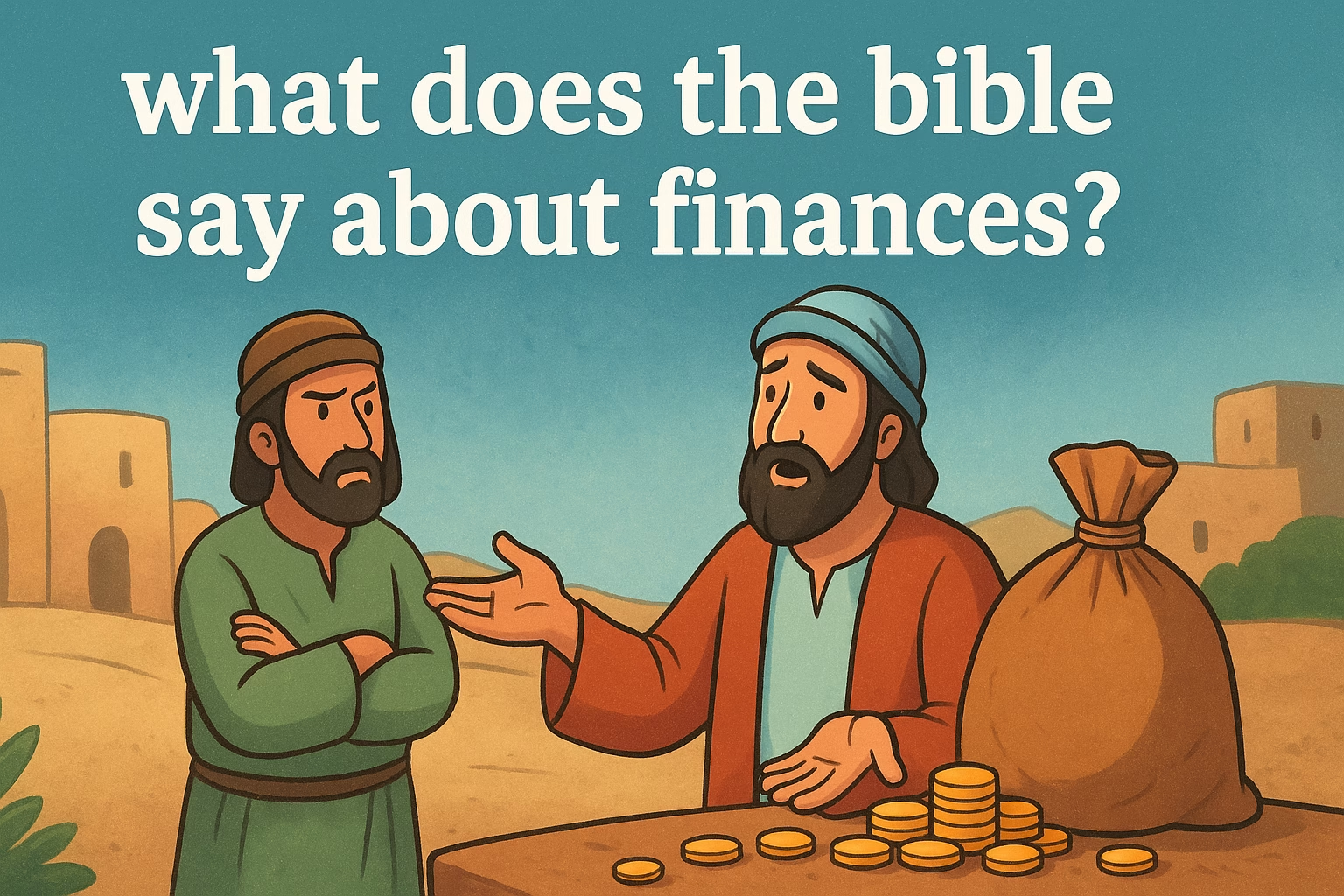
Understanding what the Bible says about finances is essential for Christians seeking to align their financial practices with their faith. The Scriptures provide a wealth of wisdom regarding money management, generosity, and the attitude one should have toward wealth. In this article, we will explore key biblical principles that can guide believers in their financial decisions.
The Bible addresses finances in various ways, emphasizing not only the importance of wise stewardship but also the spiritual implications of our financial choices. From the teachings of Jesus to the wisdom literature of the Old Testament, God’s Word offers practical insights on how to handle money, the dangers of greed, and the blessings of generosity.
The Foundation of Stewardship
At the core of biblical finance is the principle of stewardship. The Bible teaches that everything we have ultimately belongs to God. Psalm 24:1 states, “The earth is the Lord’s, and everything in it.” This verse reminds us that we are caretakers of God’s resources rather than owners. As stewards, we are responsible for managing our finances in a way that honors Him.
In the Parable of the Talents (Matthew 25:14-30), Jesus illustrates this concept of stewardship. In the story, a master entrusts his servants with varying amounts of money (talents) while he goes away. Upon his return, he evaluates how each servant managed the resources given to them. The servants who invested wisely were rewarded, while the one who buried his talent was reprimanded. This parable emphasizes the importance of using what God has entrusted to us for His glory and the advancement of His kingdom.
The Dangers of Greed
The Bible warns against the dangers of greed and the love of money. 1 Timothy 6:10 states, “For the love of money is the root of all kinds of evil.” This verse highlights that while money itself is not evil, an unhealthy attachment to it can lead to various problems, including strife and discontent. Jesus also cautioned against the pursuit of wealth in Matthew 6:24, where He said, “No one can serve two masters. You cannot serve both God and money.” This stark warning encourages believers to prioritize their relationship with God over material possessions.
Proverbs 28:20 further emphasizes the consequences of greed, stating, “A faithful person will be richly blessed, but one eager to get rich will not go unpunished.” This serves as a reminder that a desire for quick wealth can lead to unethical decisions and ultimately harm one’s character and relationships.
The Importance of Generosity
Generosity is a recurring theme in the Bible, and it is closely tied to financial stewardship. Acts 20:35 reminds us of the words of Jesus: “It is more blessed to give than to receive.” Generosity reflects the heart of God, who is the ultimate giver. When we give, we not only meet the needs of others but also cultivate a spirit of gratitude and trust in God’s provision.
2 Corinthians 9:6-7 reinforces this idea, stating, “Whoever sows sparingly will also reap sparingly, and whoever sows generously will also reap generously. Each of you should give what you have decided in your heart to give, not reluctantly or under compulsion, for God loves a cheerful giver.” This passage encourages believers to give willingly and joyfully, understanding that their generosity can have a significant impact on the lives of others.
Wise Financial Planning
The Bible also encourages wise financial planning and management. Proverbs 21:5 states, “The plans of the diligent lead to profit as surely as haste leads to poverty.” This verse underscores the importance of careful planning and diligent work in achieving financial stability. Budgeting, saving, and investing are all practical applications of this principle.
Jesus taught about the importance of planning in Luke 14:28-30, where He asked, “For which of you, intending to build a tower, does not sit down first and count the cost, whether he has enough to finish it?” This teaching emphasizes the need for foresight and consideration in our financial endeavors. Making informed decisions and setting financial goals are crucial steps in managing our resources effectively.
Contentment and Trust in God
Contentment is another vital aspect of biblical finance. Hebrews 13:5 encourages believers to “be content with what you have, because God has said, ‘Never will I leave you; never will I forsake you.'” In a world that often promotes materialism and comparison, finding contentment in God’s provision is essential. It allows us to focus on what truly matters and to be grateful for the blessings we already possess.
Additionally, Matthew 6:31-33 reassures us of God’s care for our needs: “So do not worry, saying, ‘What shall we eat?’ or ‘What shall we drink?’ or ‘What shall we wear?’ For the pagans run after all these things, and your heavenly Father knows that you need them. But seek first his kingdom and his righteousness, and all these things will be given to you as well.” This passage highlights the importance of trusting God to provide for our needs as we prioritize His kingdom in our lives.
Debt and Financial Responsibility
The Bible speaks about debt and the importance of financial responsibility. Proverbs 22:7 warns, “The borrower is slave to the lender.” This verse illustrates the potential dangers of debt and the importance of being cautious about borrowing. While there are situations where debt may be necessary, such as buying a home or pursuing education, it is crucial to approach it with wisdom and a plan for repayment.
In Romans 13:8, Paul instructs believers, “Let no debt remain outstanding, except the continuing debt to love one another.” This verse emphasizes the importance of paying off debts and managing our finances in a way that honors our commitments. Being responsible with our finances not only reflects good stewardship but also builds trust within our communities.
The Role of Work in Financial Stewardship
Work is a fundamental aspect of financial stewardship according to the Bible. In Genesis 2:15, God placed Adam in the Garden of Eden to work it and take care of it. This indicates that work is part of God’s design for humanity. Earning a living through diligent work is not only a means of financial stability but also a way to honor God with our efforts.
Colossians 3:23 encourages believers to “work willingly at whatever you do, as though you were working for the Lord rather than for people.” This perspective transforms our view of work from a mere job to a form of worship. When we approach our work with this mindset, it becomes an opportunity to glorify God and contribute positively to society.
The Importance of Community and Accountability
The Bible emphasizes the importance of community and accountability in managing finances. In Ecclesiastes 4:9-10, we learn that “two are better than one” because they can help each other succeed. Financial decisions can be challenging, and having trusted friends or mentors to provide guidance and support can be invaluable.
Additionally, Galatians 6:2 urges believers to “carry each other’s burdens.” This principle applies not only to emotional and spiritual support but also to financial challenges. Being part of a community allows individuals to share resources and assist one another in times of need, reflecting the biblical call to love and support one another.
The Principle of Tithing
Tithing, or giving a tenth of one’s income, is a practice rooted in the Old Testament. Malachi 3:10 encourages believers to “bring the whole tithe into the storehouse” and promises that God will bless them abundantly. While some argue that tithing is an Old Testament law, many Christians see it as a principle of generosity and gratitude that continues to apply today.
Giving a portion of one’s income can serve as a practical reminder of God’s provision and a way to support the work of the church and charitable organizations. It encourages believers to practice financial discipline and prioritize God in their financial planning.
Facing Financial Trials with Faith
The Bible acknowledges that financial difficulties are a part of life. James 1:2-4 encourages believers to consider it “pure joy” when facing trials, as these challenges can produce perseverance and maturity. This perspective can be particularly relevant during financial hardships, reminding us to rely on God’s strength and wisdom.
Philippians 4:19 reassures us that “my God will meet all your needs according to the riches of his glory in Christ Jesus.” In times of financial uncertainty, these promises can provide comfort and encouragement to trust in God’s provision, even when the situation seems bleak.
Investing in Eternal Treasures
Jesus taught about the importance of investing in eternal treasures rather than earthly wealth. In Matthew 6:19-21, He warns against storing up treasures on earth, where they can decay or be stolen, and instead encourages believers to store up treasures in heaven. This principle invites Christians to consider how their financial choices can contribute to God’s kingdom and eternal impact.
Investing in ministries, missions, and charitable causes that align with biblical values can be a way to use financial resources for eternal purposes. This perspective shifts the focus from accumulating wealth for personal gain to using resources to make a difference in the lives of others and advance God’s work on earth.
Final Thoughts on Biblical Finances
In conclusion, the Bible provides a comprehensive framework for understanding finances that emphasizes stewardship, generosity, wise planning, and reliance on God. By aligning financial practices with biblical principles, Christians can cultivate a healthy relationship with money and use their resources to honor God and bless others. As we navigate our financial journeys, let us continually seek God’s guidance and wisdom, recognizing that our ultimate treasure lies in our relationship with Him and our commitment to serving others.
Understanding what the Bible says about finances can transform how we view money and how we manage it. It challenges us to prioritize God, act with integrity, and invest in what truly matters.
For further insights on biblical stewardship and generosity, you may find it helpful to read about financial accountability in the church and the significance of giving in Christian life.