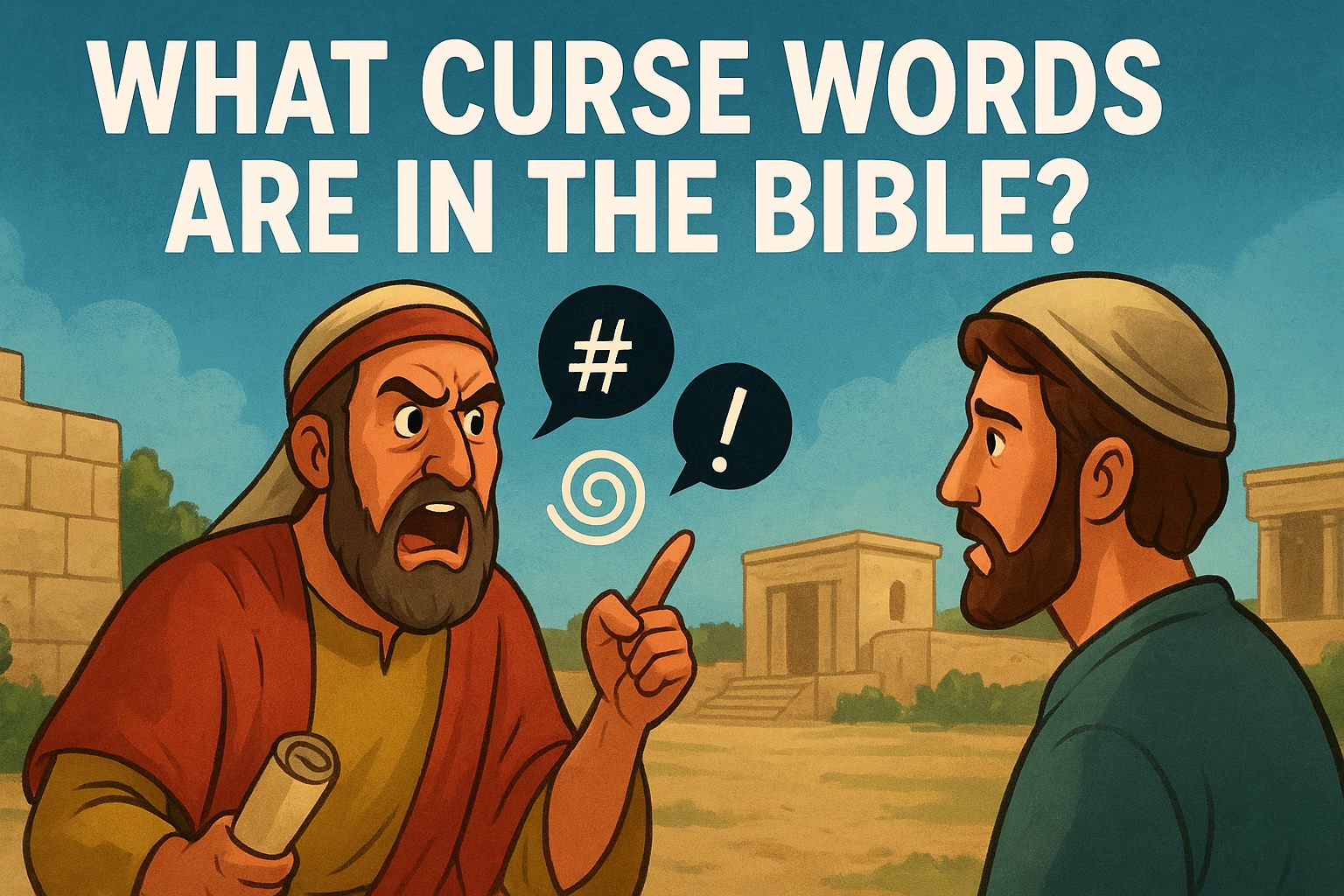
Understanding what constitutes curse words in the Bible can be a complex endeavor. Many modern readers might be surprised to learn that while the Bible does not contain curse words in the way we think of them today, it does address issues of language, profanity, and the importance of our words. This article will explore the context and meaning of certain words and phrases found in Scripture that could be considered offensive or inappropriate.
In the Bible, the term “curse” can refer to a few different concepts: cursing someone as a form of wishing harm upon them, using vulgar or profane language, or even invoking God’s judgment. The Bible does not list specific curse words as we know them today, but it does provide guidance on how we should use our speech and the power our words hold.
Understanding Cursing in the Bible
The Bible mentions cursing primarily in the context of wishing harm or misfortune on others. This is often seen in the Old Testament, where individuals would call down curses in response to perceived wrongs. For example, in Deuteronomy 27, God instructs the Israelites on the blessings and curses that will come depending on their obedience or disobedience to His commandments.
“Cursed is anyone who dishonors their father or mother.” (Deuteronomy 27:16, NLT)
This verse highlights how cursing was often tied to moral and ethical violations. In this context, cursing is less about specific words and more about the intention behind them and the consequences they invoke.
Profanity and the Use of Language
While the Bible does not contain a list of modern curse words, it does address the use of profanity and the way we speak. In Ephesians 4:29, Paul instructs believers to avoid unwholesome talk, stating:
“Do not let any unwholesome talk come out of your mouths, but only what is helpful for building others up according to their needs.” (Ephesians 4:29, NLT)
This passage emphasizes the importance of using language that is constructive rather than destructive. The term “unwholesome” can include vulgar language, insults, and any speech that tears down rather than builds up. The focus is on the impact of our words rather than a specific set of forbidden terms.
Examples of Strong Language in Scripture
Words of Condemnation
The Bible does contain strong language, particularly in the prophetic books where God’s displeasure with sin is made clear. For instance, in the book of Jeremiah, God uses powerful imagery and language to express His anger towards Israel’s unfaithfulness. While these words may not be curse words in the modern sense, they convey a depth of emotion and seriousness.
“I will bring upon them a disaster they cannot escape; although they cry out to me, I will not listen to them.” (Jeremiah 11:11, NLT)
In this context, the language serves to convey God’s judgment rather than to curse in a way that is meant to offend. It reflects the gravity of the situation rather than a casual use of profanity.
Jesus and Strong Language
Even Jesus used strong language to express His views, particularly when addressing hypocrisy and sin. For example, in Matthew 23, He calls the Pharisees “hypocrites” and “blind guides.” While these terms may not be considered curse words, they are certainly strong and confrontational.
“What sorrow awaits you teachers of religious law and you Pharisees! Hypocrites!” (Matthew 23:13, NLT)
Here, Jesus is not using profanity but is instead using strong, pointed language to highlight the seriousness of their actions. His words are a call to repentance rather than casual insults.
The Heart Behind the Words
Ultimately, the Bible teaches that the heart behind our words is what matters most. In Matthew 12:34, Jesus states:
“For whatever is in your heart determines what you say.” (Matthew 12:34, NLT)
This means that our speech reflects our inner thoughts and attitudes. If we harbor anger or resentment, it may come out in our language. Thus, while the Bible does not explicitly list curse words, it does encourage us to examine our hearts and ensure that our speech aligns with God’s standards of love and respect.
As believers, we are called to represent Christ in our words and actions. The way we communicate can either draw others to God or push them away. Therefore, understanding the biblical perspective on cursing and language is essential for living a life that honors God and reflects His love to others.
Curses and Their Consequences
In biblical times, cursing was not merely a verbal expression but often carried significant weight and consequences. In Numbers 22-24, the story of Balaam illustrates the power of curses. Despite being summoned to curse Israel, Balaam ultimately could only bless them because of God’s intervention. This narrative shows that curses can be thwarted by divine authority, emphasizing the sovereignty of God over human intentions.
Additionally, in the context of cursing, the Bible warns against the repercussions that can arise from our words. Proverbs 18:21 reminds us that “the tongue has the power of life and death.” This verse underscores that our speech can have profound effects, whether positive or negative. It serves as a reminder that cursing, whether directed at others or even at ourselves, can lead to spiritual and relational harm.
The Role of Blasphemy
Blasphemy is another form of cursing mentioned in the Bible, often associated with speaking irreverently about God. In Leviticus 24:16, it is stated that anyone who blasphemes the name of the Lord must be put to death, indicating the severity with which such language is viewed. This illustrates that the Bible takes the misuse of God’s name seriously, reflecting the importance of reverence in our speech.
In the New Testament, Jesus warns against blaspheming the Holy Spirit, indicating that this sin is unforgivable (Matthew 12:31-32). This serves as a critical reminder that our words concerning God and His Spirit are not to be taken lightly. Blasphemy can be seen as one of the most serious forms of cursing, as it directly attacks the character and holiness of God.
Modern Implications of Biblical Language
The teachings of the Bible regarding cursing and speech have modern implications. In today’s society, where profanity is prevalent in media and conversation, believers are called to rise above cultural norms. The Apostle Paul, in Colossians 3:8, instructs followers to “get rid of anger, rage, malice, slander, and filthy language from your lips.” This directive encourages a lifestyle of integrity and respect in communication.
Furthermore, the emphasis on the intention behind words is particularly relevant. In a culture that often uses harsh language or derogatory terms, Christians are challenged to reflect on their speech. Are we using our words to uplift or to tear down? Are we expressing love and kindness, or are we allowing frustration to lead us to use harmful language?
Examining Our Speech: Questions for Reflection
As we delve deeper into the biblical perspective on cursing and language, it is essential to ask ourselves meaningful questions. Here are a few to consider:
- What types of language do I use in my everyday conversations? Are they uplifting or degrading?
- How do my words reflect my relationship with God? Am I honoring Him in my speech?
- When I feel angry or hurt, how can I express those feelings without resorting to cursing?
- In what ways can I encourage others to speak positively and with respect?
These questions can help guide our hearts and minds towards a speech that aligns with biblical principles, fostering a spirit of kindness and love.
The Impact of Our Words on Others
Understanding the power of our words is crucial for building healthy relationships. In James 3:9-10, it is noted that with the same mouth, we can bless our Lord and curse others. This inconsistency can damage our witness as Christians. Our words can either reflect Christ’s love or create barriers that push people away from Him.
In light of this, believers are encouraged to cultivate a speech that is consistent with their faith. This involves not only refraining from curse words but also being intentional about how we communicate. Encouraging words can uplift and inspire, while harsh language can cause division and hurt.
Conclusion: A Call to Mindful Speech
While the Bible may not enumerate specific curse words, it provides a framework for understanding the gravity of our language. By encouraging believers to focus on the intention behind their words, the Scriptures challenge us to pursue a speech that reflects God’s love and grace. As we strive to honor God in our communication, we must remain mindful of the impact our words have on ourselves and those around us. Ultimately, our speech should serve to build up rather than tear down, reflecting the heart of Christ in all we say and do.
For further insights on the significance of language and the importance of wise speech, you may find it helpful to explore what the Bible says about profanity and what the Bible says about fools.