The term “countenance” appears several times throughout the Bible, often carrying significant meaning in both literal and metaphorical contexts. Understanding this word can deepen our appreciation of various Scripture passages and the emotions or intentions behind them. This article will explore the meaning of “countenance” in the Bible, examining its usage and the implications it holds within the text.
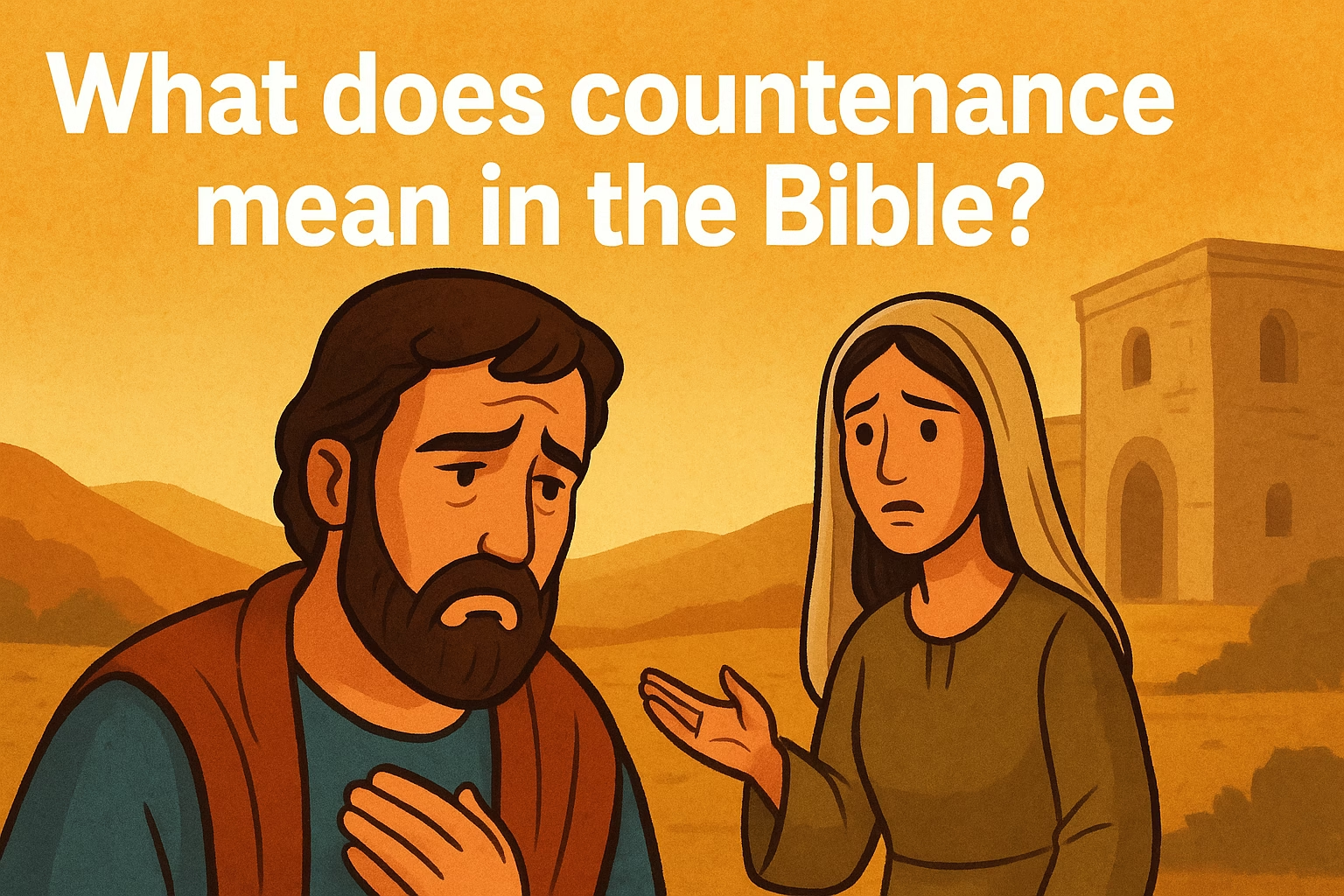
In biblical terms, “countenance” generally refers to a person’s face or facial expression, often reflecting their emotional state or spiritual condition. It can indicate joy, sadness, anger, or peace, among other feelings. The countenance is a window to the soul, revealing what is happening within a person. In some cases, it also symbolizes God’s favor or disfavor towards individuals or nations.
Countenance in the Old Testament
Facial Expression as a Reflection of the Heart
The Old Testament frequently illustrates how a person’s countenance can reflect their inner state. For example, in Genesis 4:5-7, we find the story of Cain and Abel. Cain’s countenance fell when God favored Abel’s offering over his own. This change in expression signified Cain’s anger and jealousy. God warned Cain that sin was crouching at his door, urging him to master it. Here, countenance serves as an indicator of Cain’s emotional turmoil and the sinful path he was about to embark on.
God’s Favor and Countenance
In Numbers 6:24-26, we read about God’s blessing through the priestly benediction: “The Lord bless you and keep you; the Lord make his face shine on you and be gracious to you; the Lord turn his face toward you and give you peace.” The phrase “make his face shine on you” can be understood as God’s countenance being favorable towards His people. When God’s countenance shines upon someone, it symbolizes His approval, presence, and blessings.
Countenance in the New Testament
Expressions of Joy and Peace
In the New Testament, the countenance continues to represent the emotional and spiritual states of individuals. For instance, in Matthew 6:16-18, Jesus teaches about fasting. He instructs His followers not to look somber or disheveled, which would reveal to others that they are fasting. Instead, they should wash their faces and anoint their heads, maintaining a joyful countenance. Jesus emphasizes that the heart’s intention is what matters, and the outward expression should reflect a state of joy rather than sorrow.
The Countenance of Jesus
Another profound example of countenance in the New Testament is found in the description of Jesus’ transfiguration in Matthew 17:1-2. It states that His face shone like the sun, and His clothes became as white as light. This radiant countenance signifies His divine nature and glory, revealing the essence of who He is. The brilliance of Jesus’ countenance during this event highlighted His identity as the Son of God and the fulfillment of the Law and the Prophets.
Symbolic Uses of Countenance
Countenance as a Sign of Judgment
Countenance can also serve as a sign of judgment or disfavor in biblical literature. In Proverbs 21:4, we read, “Haughty eyes and a proud heart—the unplowed field of the wicked—produces sin.” This passage highlights that a proud countenance can lead to wicked actions. The expression on one’s face can indicate a heart filled with pride, leading to sinful behavior. In this sense, a person’s countenance can be a warning sign of their spiritual state.
Countenance in Worship and Relationship with God
The Psalms often reflect a desire for God’s presence and countenance. In Psalm 27:8, David expresses his longing to seek God’s face, indicating that he yearns for a close relationship with the Lord. The countenance of God is portrayed as something precious and desirable, signifying the importance of being in communion with Him. This reflects the idea that God’s presence brings peace and joy, and a desire for His countenance signifies a heart aligned with Him.
Conclusion of Part One
As we have explored, the term “countenance” in the Bible encapsulates a range of meanings from facial expressions to broader spiritual implications. It serves as a crucial element in understanding the emotional and spiritual states of individuals, as well as the favor or disfavor of God. The countenance is a powerful symbol that invites us to reflect on our inner lives and our relationship with God. In the next part, we will delve deeper into specific biblical examples and explore how countenance can influence our interactions with others and our walk of faith.
Countenance in Biblical Relationships
The concept of countenance extends beyond individual emotional states; it also plays a crucial role in how people relate to one another in the Bible. The expressions on our faces can communicate messages that words sometimes cannot. Understanding how countenance affects relationships can help us navigate our interactions in a more Christ-like manner.
Countenance and Community
In the context of community, countenance can foster relationships or create barriers. Ecclesiastes 8:1 states, “A wise person’s heart makes their face shine, and the sternness of their face is like a lion’s.” This suggests that wisdom can be reflected in a person’s expression, encouraging positive interactions. When we approach others with a joyful and welcoming countenance, we invite connection and fellowship. Conversely, a stern or unhappy countenance can lead to misunderstandings and distance.
In the New Testament, Paul’s letters often emphasize the importance of unity and harmony among believers. A joyful countenance can reflect the unity of the Spirit, as seen in Philippians 2:1-2, where Paul urges the church to be of one mind and spirit. Our expressions can either build up or tear down the body of Christ. Therefore, cultivating a joyful and loving countenance is essential for healthy relationships within the Christian community.
Countenance in Conflict Resolution
In moments of conflict, the countenance can play a pivotal role in resolution. Proverbs 15:1 reminds us, “A gentle answer turns away wrath, but a harsh word stirs up anger.” The tone and expression we convey can either escalate a situation or bring peace. A calm, gentle countenance can defuse tension and create an environment conducive to reconciliation. This principle is vital in our interactions, encouraging us to be mindful of our expressions in times of disagreement.
Spiritual Growth and Countenance
As believers, the transformation of our countenance can be seen as a reflection of our spiritual growth. In 2 Corinthians 3:18, Paul writes that we are being transformed into the image of Christ with ever-increasing glory. This transformation is not only internal but can also manifest externally in our expressions and demeanor. A countenance that radiates joy, peace, and love serves as a testimony to the work God is doing within us.
The Countenance of a Faithful Servant
Consider the example of Stephen, the first martyr, described in Acts 6:15. His face was like the face of an angel as he stood before the Sanhedrin. This divine countenance indicated the presence of God upon him and highlighted his faithfulness even in the face of persecution. Such expressions can inspire others and draw them toward the truth of the Gospel. The countenance of a faithful servant reflects a life devoted to God and can profoundly impact those around us.
Countenance and Worship
Worship is another area where countenance plays a significant role. The expressions of our faces during worship can reveal our hearts’ posture towards God. In Psalm 95:6, we are called to “come, let us bow down in worship, let us kneel before the Lord our Maker.” Kneeling and bowing can be physical expressions of reverence, but our countenance during worship can also express our love, gratitude, and awe of God.
Moreover, when we gather as a community to worship, the collective countenance of the congregation can create an atmosphere of worship that honors God. A congregation that worships with joyful and reverent expressions can encourage and uplift one another, creating a powerful experience of God’s presence.
Questions for Reflection
As we consider the implications of countenance in the Bible, it is essential to reflect on our own expressions and their impact on our lives and relationships. Here are a few questions to ponder:
- How does my countenance reflect my relationship with God?
- In what ways can I cultivate a more joyful and welcoming expression in my interactions with others?
- Are there areas in my life where my countenance may be indicating a heart issue that needs to be addressed?
- How can I be more aware of the impact my facial expressions have on those around me, especially in times of conflict?
Conclusion
In conclusion, the concept of countenance in the Bible carries profound significance. It reflects not only our emotional and spiritual states but also our relationships with others and our walk with God. By being mindful of our countenance, we can foster positive relationships, enhance our worship experiences, and reflect the love of Christ in our lives. As we strive to embody a countenance that reflects God’s glory, we invite others to experience the transformative power of His presence in us.
For further exploration of the emotional aspects of our faith, consider reading about what the Bible says about emotions and the importance of kindness in our interactions with others.