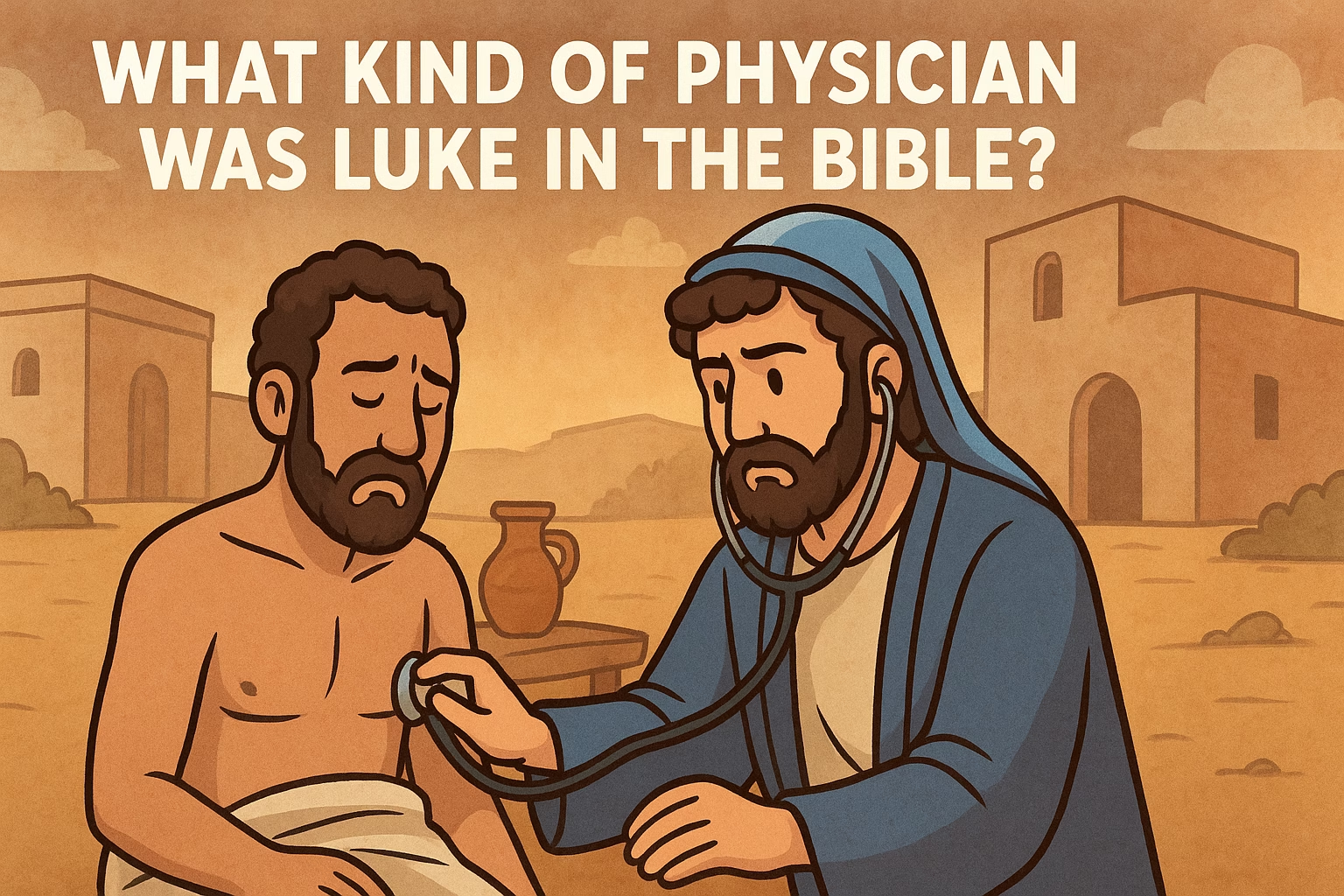
In the New Testament, Luke is known not only as a Gospel writer but also as a physician. His background as a doctor provides a unique perspective on the life and ministry of Jesus Christ. This article explores the kind of physician Luke was, drawing from Scripture and historical context.
Luke is specifically referred to as a physician in Colossians 4:14, where the Apostle Paul mentions him in his letter: “Luke, the beloved physician, and Demas greet you.” This brief reference sheds light on his profession, but it also invites us to consider what kind of physician he was and how that influenced his writings.
The Nature of Luke’s Medical Practice
Luke’s role as a physician likely encompassed a variety of tasks, both physical and spiritual. In the ancient world, physicians were not only responsible for treating physical ailments but also for understanding the holistic nature of health, which included emotional and spiritual well-being. This perspective aligns with Luke’s approach in his Gospel, where he emphasizes compassion and healing.
Luke’s medical background may have provided him with a deeper understanding of the human condition, allowing him to depict the miracles of Jesus with a unique sensitivity. For instance, in the healing narratives, Luke often includes details that reflect his medical knowledge. One example is the account of the woman with the issue of blood, where he notes that she had suffered many things from many physicians (Mark 5:26). This highlights not only her physical suffering but also the emotional toll of her condition, which Luke was likely attuned to as a doctor.
Luke’s Emphasis on Healing
Throughout the Gospel of Luke, there is a strong emphasis on the theme of healing. Jesus is portrayed as a compassionate healer, and this resonates with Luke’s identity as a physician. In Luke 4:18, Jesus reads from the scroll of Isaiah, proclaiming, “The Spirit of the Lord is upon me, because he has anointed me to proclaim good news to the poor. He has sent me to proclaim liberty to the captives and recovering of sight to the blind, to set at liberty those who are oppressed.” This passage highlights the holistic healing ministry of Jesus, which aligns with Luke’s understanding of health.
Moreover, Luke includes more healing miracles than any other Gospel writer. For example, he recounts the healing of ten lepers (Luke 17:11-19) and the raising of the widow’s son at Nain (Luke 7:11-17). These stories not only showcase Jesus’ miraculous power but also emphasize His compassion for the suffering, a sentiment likely close to Luke’s heart as a physician.
Luke’s Attention to Detail
As a physician, Luke would have been trained to observe details keenly. This characteristic is evident in his writings. For instance, in the birth narrative of Jesus, Luke provides a more detailed account than the other Gospel writers, including the angelic announcements to Mary and the shepherds (Luke 1:26-38; 2:8-20). His meticulousness extends to the accounts of Jesus’ life, teachings, and miracles, showcasing a commitment to accuracy and thoroughness.
Furthermore, Luke’s Gospel is known for its orderly structure. In Luke 1:3, he states that he “has followed all things closely for some time past” in order to write “an orderly account.” This methodical approach reflects his background as a physician, where precision and care are paramount. His aim to provide an accurate and comprehensive narrative is a testament to his dedication to both his profession and his faith.
Luke’s Broader Understanding of Health
In his writings, Luke goes beyond the physical aspects of healing to address the spiritual dimensions of health. This is evident in the way he portrays Jesus’ interactions with those who are marginalized or suffering. For example, in the parable of the Good Samaritan (Luke 10:25-37), Luke highlights the importance of compassion and mercy in the context of healing. The Samaritan not only treats the wounds of the injured man but also takes him to an inn to ensure his continued care. This story reflects a broader understanding of health that encompasses community support and relational healing.
Luke also emphasizes the role of faith in healing. In the healing of the paralytic (Luke 5:17-26), Jesus first forgives the man’s sins before healing him physically. This indicates that spiritual health is as vital as physical health. As a physician, Luke may have recognized that true healing involves addressing both aspects of a person’s life.
The Influence of Luke’s Profession on His Theology
Luke’s background as a physician likely influenced his theological perspective. His writings reflect a deep concern for the marginalized, the sick, and the outcasts of society. This compassion is central to the message of the Gospel, which Luke emphasizes throughout his account. His portrayal of Jesus as a healer is not merely about physical restoration but also about spiritual renewal and reconciliation.
Additionally, Luke’s understanding of the human condition informs his writings on sin and redemption. He portrays Jesus as the one who came to seek and save the lost (Luke 19:10), echoing the role of a physician who seeks to heal the broken and restore them to wholeness. This connection between physical and spiritual healing is a recurring theme in Luke’s Gospel, illustrating the integral nature of both aspects in the life of faith.
The Historical Context of Medicine in Luke’s Time
Understanding the kind of physician Luke was also requires a look at the historical context of medicine during the first century. In the Greco-Roman world, medicine was a blend of empirical observation, religious practices, and philosophical thought. Physicians like Luke often relied on a variety of treatments, including herbal remedies, dietary changes, and spiritual healing practices. This environment would have shaped Luke’s approach to medicine and his understanding of healing.
Additionally, the profession of medicine was often viewed with a degree of skepticism. Many physicians faced criticism for their methods and the efficacy of their treatments. However, Luke’s reliance on both his medical training and the divine power of Christ would have provided him with a unique platform to convey the importance of healing in a way that addressed both physical ailments and spiritual needs.
Luke’s Unique Contribution to the Gospels
Luke’s role as a physician also sets him apart from the other Gospel writers. While Matthew and Mark focus on the teachings and actions of Jesus, Luke offers a more narrative-driven account that emphasizes the human experience. His background allows him to tell stories that resonate with the struggles of everyday people, making his Gospel accessible and relatable.
For instance, Luke includes parables like the Prodigal Son (Luke 15:11-32) and the Lost Sheep (Luke 15:1-7), which speak to themes of forgiveness, redemption, and the joy of restoration. These stories reflect Luke’s understanding of healing as not just a physical process but also a relational and emotional journey. His ability to weave together these themes demonstrates his skill as a physician and storyteller.
Luke’s Legacy in Christian Thought
The legacy of Luke extends beyond his Gospel and the Book of Acts. His writings continue to influence Christian thought on healing and compassion. Luke’s emphasis on social justice and care for the marginalized is echoed in various Christian teachings today. His portrayal of Jesus as the compassionate healer encourages believers to engage in acts of service and mercy, reflecting the love of Christ in their communities.
Moreover, Luke’s detailed accounts of Jesus’ life and ministry provide a theological framework that has shaped Christian beliefs about healing. His writings remind Christians that holistic healing involves addressing not only physical needs but also emotional and spiritual well-being. This perspective encourages a more comprehensive approach to ministry and care within the church.
Questions for Reflection
As we consider the kind of physician Luke was, several meaningful questions arise:
- How does Luke’s understanding of healing challenge or reinforce our views on health today?
- In what ways can we emulate Luke’s compassion and attention to detail in our own lives and ministries?
- How do Luke’s accounts of Jesus’ healings inform our understanding of the relationship between physical and spiritual health?
- What lessons can we learn from Luke’s emphasis on serving the marginalized and suffering in our communities?
These questions invite further exploration into the integration of faith and practice, encouraging believers to reflect on how they can live out the teachings of Jesus in a holistic manner, much like Luke did through his writings and actions.
Conclusion: The Physician and the Gospel
Luke’s identity as a physician significantly shaped his Gospel and his understanding of Jesus’ ministry. His medical background provided him with a unique lens through which to view healing, compassion, and the human experience. By emphasizing the holistic nature of health, Luke invites readers to consider the importance of addressing both physical and spiritual needs in their lives and communities.
Ultimately, Luke’s legacy as a physician transcends his medical practice; it serves as a reminder of the call to embody Christ’s compassion and healing in a broken world. As we reflect on Luke’s contributions, may we be inspired to pursue a deeper understanding of health that encompasses the whole person—body, mind, and spirit.
For further exploration of Luke’s life and teachings, you may find insights in these articles: the role of healing in the ministry of Jesus and the significance of compassion in Christian practice.