
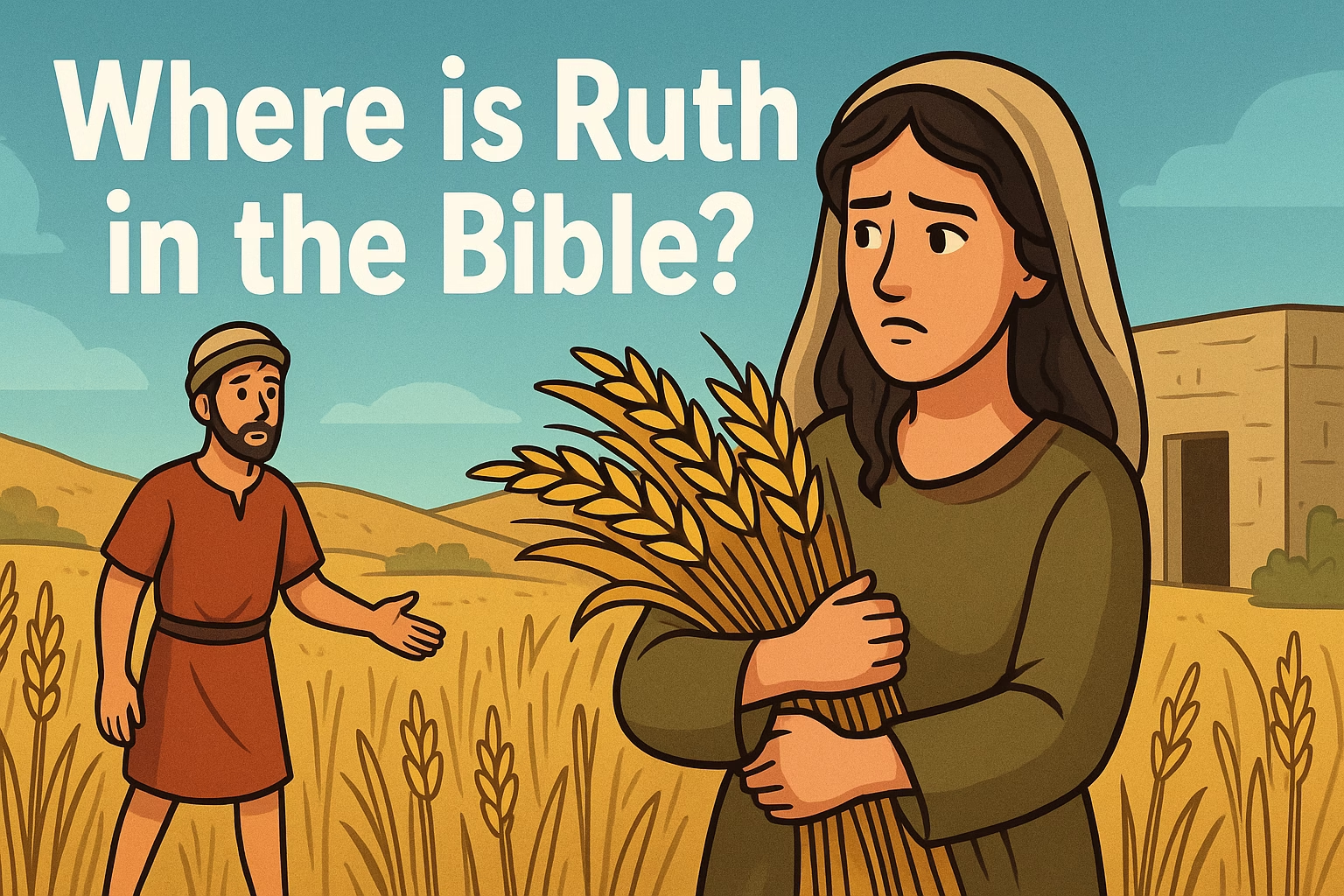
The story of Ruth is a beautiful narrative found within the Old Testament of the Bible. It is a tale of loyalty, love, and redemption that has resonated with many readers throughout the centuries. In this article, we will explore where to find Ruth in the Bible, the context of her story, and its significance within the larger biblical narrative.
Ruth is located in the Book of Ruth, which is situated between the Book of Judges and the First Book of Samuel in the Old Testament. This small but powerful book consists of only four chapters, yet it packs a profound message about faith, devotion, and God’s providence.
The Context of Ruth’s Story
The Book of Ruth is set during the time of the judges, a period characterized by social chaos and moral decline in Israel. This era is marked by the phrase “everyone did what was right in their own eyes” (Judges 21:25). Against this backdrop, Ruth’s story stands out as a narrative of hope and faithfulness.
The Characters Involved
The main characters in the Book of Ruth include:
- Ruth: A Moabite woman who becomes the central figure of the story.
- Naomi: Ruth’s mother-in-law, a widow who returns to Bethlehem after the death of her husband and sons.
- Boaz: A relative of Naomi’s deceased husband who plays a crucial role in the redemption of Ruth and Naomi.
These characters interact within the themes of loyalty, family, and divine providence, making Ruth’s story not just a personal tale but also a reflection of God’s overarching plan for His people.
Ruth’s Journey: From Moab to Bethlehem
The narrative begins in Moab, where Naomi, having lost her husband and sons, decides to return to her homeland of Bethlehem. She urges her daughters-in-law, Orpah and Ruth, to stay in Moab and remarry. However, Ruth famously replies, “Where you go, I will go; where you stay, I will stay. Your people will be my people and your God my God” (Ruth 1:16, NLT). This commitment showcases Ruth’s loyalty and desire to embrace Naomi’s people and faith.
Ruth’s decision to accompany Naomi is significant for several reasons:
- It reflects her deep love and loyalty toward Naomi.
- It signifies a break from her Moabite roots and an embrace of the Israelite faith.
- It sets the stage for her eventual role in the lineage of King David and ultimately, Jesus Christ.
Ruth’s Life in Bethlehem
Upon arriving in Bethlehem, Ruth’s loyalty continues to shine. She takes the initiative to provide for herself and Naomi by gleaning in the fields, which was a practice allowed by Mosaic Law for the poor (Leviticus 19:9-10). It is during this time that she meets Boaz, a kind and wealthy landowner who notices her hard work and dedication.
The Role of Boaz
Boaz’s character is essential to the story. He acts as a protector and provider, embodying the principles of kindness and justice. He ensures that Ruth is treated well while she gleans in his fields, offering her extra food and safety. This relationship is not just one of charity; it is also a precursor to the deeper connection that will develop between them.
As the story unfolds, Naomi encourages Ruth to seek a closer relationship with Boaz, suggesting that she approach him at the threshing floor (Ruth 3:1-4). This act of proposing marriage reflects Ruth’s boldness and the cultural practices of the time, where a woman could seek security through a family redeemer.
The Concept of Kinsman-Redeemer
The idea of a kinsman-redeemer is central to the narrative. In ancient Israelite culture, a male relative had the responsibility to redeem family members in distress. In Ruth’s case, Boaz fulfills this role, offering to marry Ruth and restore her family’s lineage. This act of redemption is a key theme throughout the narrative, symbolizing God’s compassion and care for His people.
Boaz, however, is not the closest relative to Naomi’s deceased husband, so he must first consult the nearer kinsman (Ruth 3:12-13). This adds tension to the story, as it introduces the possibility that Ruth might not end up with Boaz. Yet, Boaz’s integrity and determination to do what is right ultimately lead to a resolution that brings joy to both Ruth and Naomi.
This concept of redemption is not only significant in the context of Ruth’s story but also serves as an allegory for God’s redemption of humanity through Jesus Christ. Just as Boaz redeems Ruth, Christ offers redemption to all who believe in Him.
In summary, the Book of Ruth can be found in the Old Testament, nestled between Judges and 1 Samuel. It tells a compelling story of loyalty, faith, and redemption, with key characters like Ruth, Naomi, and Boaz driving the narrative forward. Ruth’s journey from Moab to Bethlehem highlights themes of devotion and God’s providence, making it a cherished part of biblical literature.
The Significance of Ruth’s Story
The Book of Ruth is much more than a simple love story; it serves as a vital piece of the biblical narrative, illustrating essential themes of loyalty, faith, and divine providence. Ruth’s relationship with Naomi and Boaz paints a vivid picture of selflessness and commitment, which resonates deeply in Christian teachings. Her story emphasizes that faithfulness and love can transcend cultural and national boundaries, exemplifying the inclusiveness of God’s grace.
The Role of Women in the Book of Ruth
Ruth’s story is significant not only for its themes but also for its portrayal of women. In a patriarchal society, Ruth and Naomi display strength and agency. Naomi’s wisdom guides Ruth, while Ruth’s actions show initiative and resilience. This representation of women challenges the traditional norms of their time, illustrating how women can be crucial figures in God’s plan. The narrative encourages readers to recognize the vital contributions of women in biblical history and the unfolding of God’s purposes.
Theological Implications of Ruth’s Lineage
Ruth’s inclusion in the genealogy of Jesus is a profound aspect of her story. After marrying Boaz, Ruth becomes the great-grandmother of King David, placing her in the direct lineage of Christ (Matthew 1:5). This connection emphasizes God’s redemptive plan that encompasses all people, including Gentiles like Ruth. It highlights the theme of inclusion in God’s family and serves as a reminder that His grace is available to everyone, regardless of their background.
The Message of Hope and Redemption
The Book of Ruth is often viewed as a narrative of hope, particularly for those who feel marginalized or without a place in society. Ruth, a Moabite widow, represents those who may be seen as outsiders, yet through her faithfulness and actions, she finds a place within God’s family. This message resonates with many readers who may feel lost or disconnected. The story assures believers that God can work through anyone, turning their circumstances into opportunities for blessing and redemption.
Lessons from Ruth’s Faithfulness
Ruth’s unwavering loyalty to Naomi and her commitment to God serve as a powerful example for readers today. Her famous declaration to Naomi is often quoted as a testament to true loyalty and love. Ruth’s story encourages believers to be steadfast in their relationships, to support one another, and to trust in God’s provision even in difficult times. It challenges individuals to reflect on their own commitments and the ways they can show love and faithfulness in their lives.
Questions for Reflection
As readers engage with the Book of Ruth, several questions can guide personal reflection and study:
- What does Ruth’s loyalty to Naomi teach us about the importance of relationships in our lives?
- How can we apply the principles of kindness and justice that Boaz exemplified in our own interactions with others?
- In what ways does Ruth’s story challenge our understanding of inclusion and God’s grace?
- How does the theme of redemption in Ruth’s life parallel the message of redemption found in the New Testament?
The Cultural Context of Ruth’s Story
Understanding the cultural context of the Book of Ruth enhances our appreciation of its narrative. The customs of gleaning, the role of the kinsman-redeemer, and the expectations placed on women during that time are crucial to grasping the full significance of Ruth’s actions. The practice of gleaning allowed the poor to gather leftover crops, reflecting God’s care for the marginalized. Additionally, the institution of the kinsman-redeemer reveals the communal responsibilities within families and the importance of maintaining lineage and inheritance.
Ruth’s decision to glean in Boaz’s fields is not merely an act of survival; it is also a strategic move that aligns her with God’s provision. Her actions, rooted in cultural practices, demonstrate her resourcefulness and faith in God’s plan for her life.
Conclusion: Embracing the Lessons of Ruth
The Book of Ruth is a rich narrative that invites readers to explore themes of loyalty, faith, and divine providence. By examining Ruth’s journey, we gain insight into the character of God and His inclusive nature. The lessons from Ruth’s life are timeless, encouraging us to be loyal, to seek justice, and to embrace the hope of redemption. As we reflect on her story, may we be inspired to live with the same faithfulness and courage that Ruth exemplified, trusting in God’s perfect plan for our lives.
For further exploration of biblical characters and themes, you may find these articles helpful: where Deborah is in the Bible and where Corinth is in the Bible.