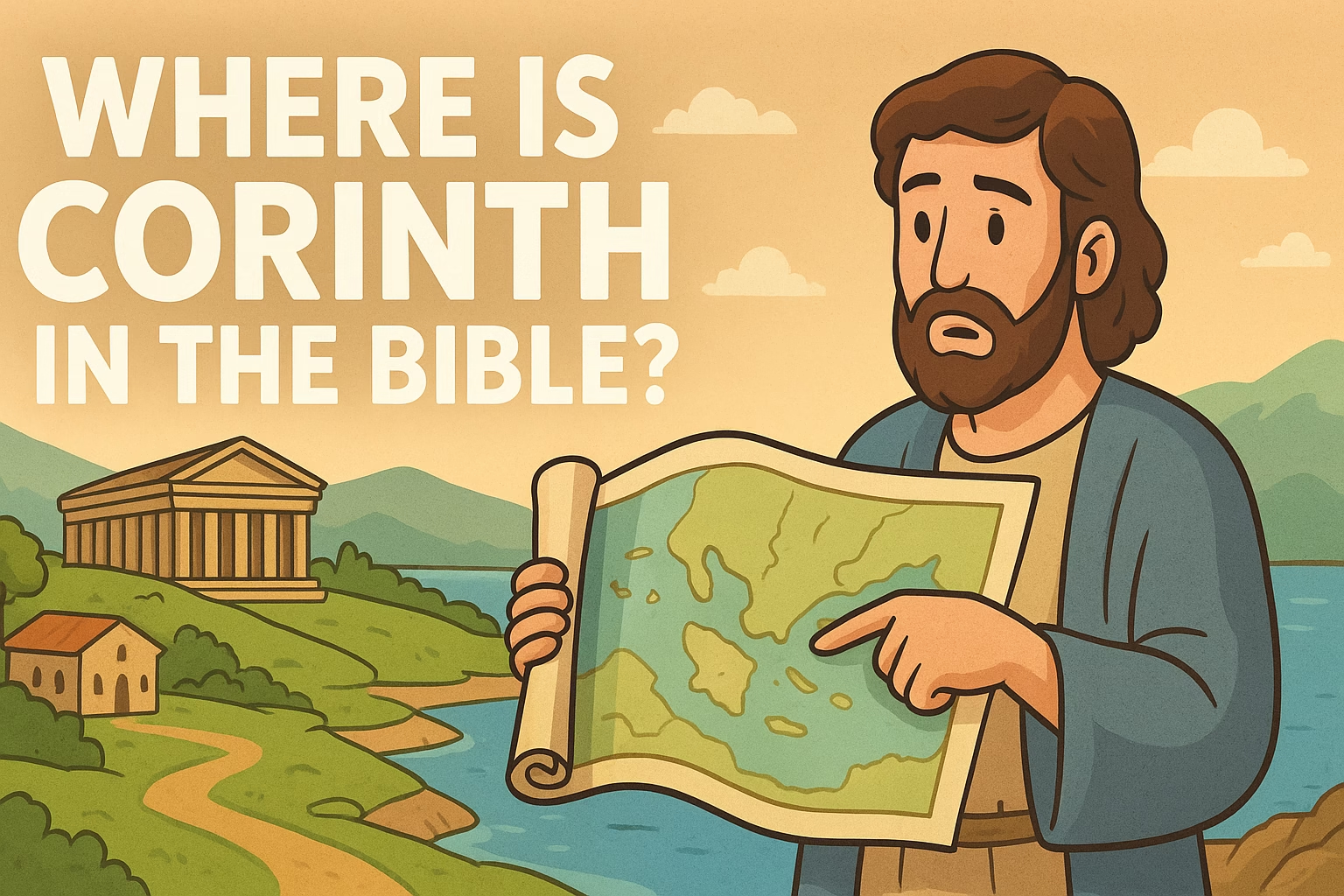
Corinth is a significant location in the Bible, known for its rich history and cultural importance in ancient times. This article explores where Corinth is mentioned in the Bible and the relevance of its location and events in the Christian faith.
Corinth was an ancient city located in Greece, situated on the narrow isthmus connecting the Peloponnese peninsula with mainland Greece. It played a vital role in trade and commerce due to its strategic position. In the New Testament, Corinth is mentioned primarily in the context of the Apostle Paul’s ministry as he established a Christian community there. Key references can be found in the books of Acts and the letters of 1 and 2 Corinthians.
Corinth in Historical Context
To understand Corinth’s significance in the Bible, we should first consider its historical context. Corinth was a thriving city during the time of the Apostle Paul, known for its wealth, culture, and diverse population. It was a melting pot of different cultures and religions, which made it both a vibrant place to live and a challenging environment for early Christians.
Historically, Corinth was destroyed by the Romans in 146 BC but was later rebuilt by Julius Caesar in 44 BC. This reconstruction made it a prominent Roman colony, and by the time of Paul, it had regained its status as a major city in the Roman Empire. The city was known for its temples, including the Temple of Apollo and the Temple of Aphrodite, which attracted many visitors and worshippers.
Corinth in the New Testament
Corinth is prominently featured in the New Testament, particularly in the book of Acts and the letters Paul wrote to the Corinthian church. In Acts 18, we learn about Paul’s visit to Corinth during his second missionary journey. He stayed there for about a year and a half, preaching the Gospel and establishing a church. Acts 18:1-11 recounts how Paul met Aquila and Priscilla, fellow tentmakers, and how he debated in the synagogue, persuading both Jews and Greeks.
“He stayed there for a year and a half, teaching them the word of God.” (Acts 18:11 NLT)
This passage highlights the foundational role Paul played in the early Christian community in Corinth. His experiences in the city were crucial in shaping the church’s identity and addressing the issues they faced.
Letters to the Corinthians
After establishing the church in Corinth, Paul wrote two significant letters to the believers there, known as 1 Corinthians and 2 Corinthians. These letters address various issues within the church, including divisions, moral challenges, and questions about spiritual gifts and the resurrection.
1 Corinthians is particularly notable for its practical guidance on how to live as Christians in a morally ambiguous society. Paul encourages the Corinthian believers to remain steadfast in their faith and to seek unity among themselves. He addresses topics such as love, spiritual gifts, and the importance of the resurrection, emphasizing the transformative power of Christ’s sacrifice.
“For I passed on to you what was most important and what had also been passed on to me: Christ died for our sins, just as the Scriptures said.” (1 Corinthians 15:3 NLT)
In 2 Corinthians, Paul defends his apostolic authority and shares his experiences of suffering for the sake of the Gospel. He expresses his deep love for the Corinthian church and encourages them to reconcile and support one another. This letter provides insight into the challenges Paul faced as a leader and the emotional connection he had with the believers in Corinth.
Geographical Significance of Corinth
The geographical location of Corinth contributed to its significance in the Bible. As a major trade hub, it was a crossroads for travelers, merchants, and ideas. This bustling environment made it an ideal place for the spread of Christianity, as the teachings of Jesus could reach a diverse audience.
Corinth’s strategic position also allowed for easy access to other parts of Greece and beyond. This facilitated the movement of missionaries like Paul, who could travel to various regions to share the Gospel. The city’s port, Cenchreae, was essential for maritime trade and travel, further enhancing its role as a center for early Christianity.
Corinth’s Cultural Influence
Culturally, Corinth was known for its immorality and idolatry, which posed significant challenges for the early church. The worship of Aphrodite, the goddess of love, was prevalent, and many of the city’s customs and practices were at odds with Christian teachings. This environment made it imperative for Paul to address issues of morality and conduct in his letters, guiding the believers on how to navigate their faith in a challenging setting.
Paul’s letters to the Corinthians reflect these cultural tensions. For example, in 1 Corinthians 6:12-20, he discusses sexual immorality and the importance of honoring God with their bodies. His teachings aimed to encourage the believers to live in a way that reflected their faith and values, even amid a culture that often contradicted them.
In summary, Corinth holds a prominent place in the Bible, particularly in the context of the early Christian church. Its historical, geographical, and cultural significance provides a backdrop for understanding the challenges and triumphs of the believers there. The letters from Paul continue to offer relevant teachings that resonate with Christians today, reminding them of the importance of faith, unity, and moral integrity.
The Role of Corinth in Early Christianity
Corinth’s role in early Christianity extends beyond the letters of Paul. It was a city where early Christian ideas were tested against a backdrop of diverse philosophies and competing beliefs. This environment created both challenges and opportunities for the growth of the church. The interactions between Paul and the Corinthian believers were not just about establishing a church but also about cultivating a community that could withstand the pressures of the surrounding culture.
One of the significant aspects of Corinth’s influence on early Christianity was its intellectual climate. The city was home to various schools of thought, including Stoicism and Epicureanism. These philosophical traditions encouraged discussions about ethics and morality, which Paul addresses directly in his letters. He sought to guide the Corinthian church in distinguishing Christian teachings from popular philosophies, emphasizing the importance of a Christ-centered worldview.
Key Themes in Paul’s Letters to the Corinthians
In both 1 and 2 Corinthians, several themes emerge that are vital for understanding the challenges faced by the early church. One of the primary themes is unity. Paul consistently urges the believers to overcome divisions and work together as one body. In 1 Corinthians 1:10, he implores them to agree with one another and be united in mind and thought. This call for unity was crucial in a city marked by division and rivalry.
Another significant theme is the concept of love. In 1 Corinthians 13, Paul famously describes love as the greatest virtue, highlighting its importance in the Christian life. This passage serves as a reminder that, despite the various gifts and practices within the church, love must be the foundation of all actions and interactions. Paul’s emphasis on love was particularly poignant in a city where relationships were often transactional and superficial.
Additionally, the theme of resurrection is central to Paul’s teachings in these letters. In 1 Corinthians 15, Paul defends the doctrine of the resurrection, asserting its foundational role in Christian faith. He explains that without the resurrection, the Christian message would lose its power. This teaching was vital for the Corinthian believers, who were grappling with doubts and misconceptions about life after death.
Corinth’s Legacy in Christian Thought
The legacy of Corinth in Christian thought is profound. The issues that arose in this early church continue to resonate with contemporary believers. The moral and ethical dilemmas faced by the Corinthian church mirror many challenges Christians encounter today, such as navigating cultural pressures and maintaining integrity in a secular world.
Moreover, the letters to the Corinthians provide timeless principles for church governance, worship, and interpersonal relationships. They encourage believers to seek wisdom, practice humility, and foster a spirit of cooperation. As such, Corinth serves as a case study in the growth of the church and the application of Christian principles in a diverse and often challenging environment.
Modern-Day Corinth and Its Significance
Today, the ancient city of Corinth is an archaeological site that attracts visitors from around the world. The ruins of ancient temples, marketplaces, and theaters provide a glimpse into the city’s past and its importance in the ancient world. For Christians, visiting Corinth can serve as a powerful reminder of the early church’s struggles and triumphs, reinforcing the relevance of Paul’s teachings in contemporary faith practice.
Modern Corinth is also a vibrant city that has embraced its historical significance while continuing to thrive as a center of commerce and tourism. This juxtaposition of ancient and modern life reflects the ongoing journey of faith that began with the early believers. It serves as an inspiration for Christians today to remain steadfast in their faith amid changing cultural landscapes.
Conclusion: The Enduring Relevance of Corinth
Corinth’s place in the Bible is not just a historical footnote; it represents a critical chapter in the story of early Christianity. The challenges faced by the Corinthian church and the teachings of Paul continue to offer valuable lessons for believers today. As Christians navigate their own cultural contexts, the messages of unity, love, and resurrection found in the letters to the Corinthians remain profoundly relevant. Understanding Corinth’s significance helps believers appreciate the rich tapestry of faith that has been woven throughout history, encouraging them to stand firm in their convictions while engaging with the world around them.
For further exploration of biblical themes, you might find these articles helpful: Christianity and Culture and Understanding Biblical Teachings.