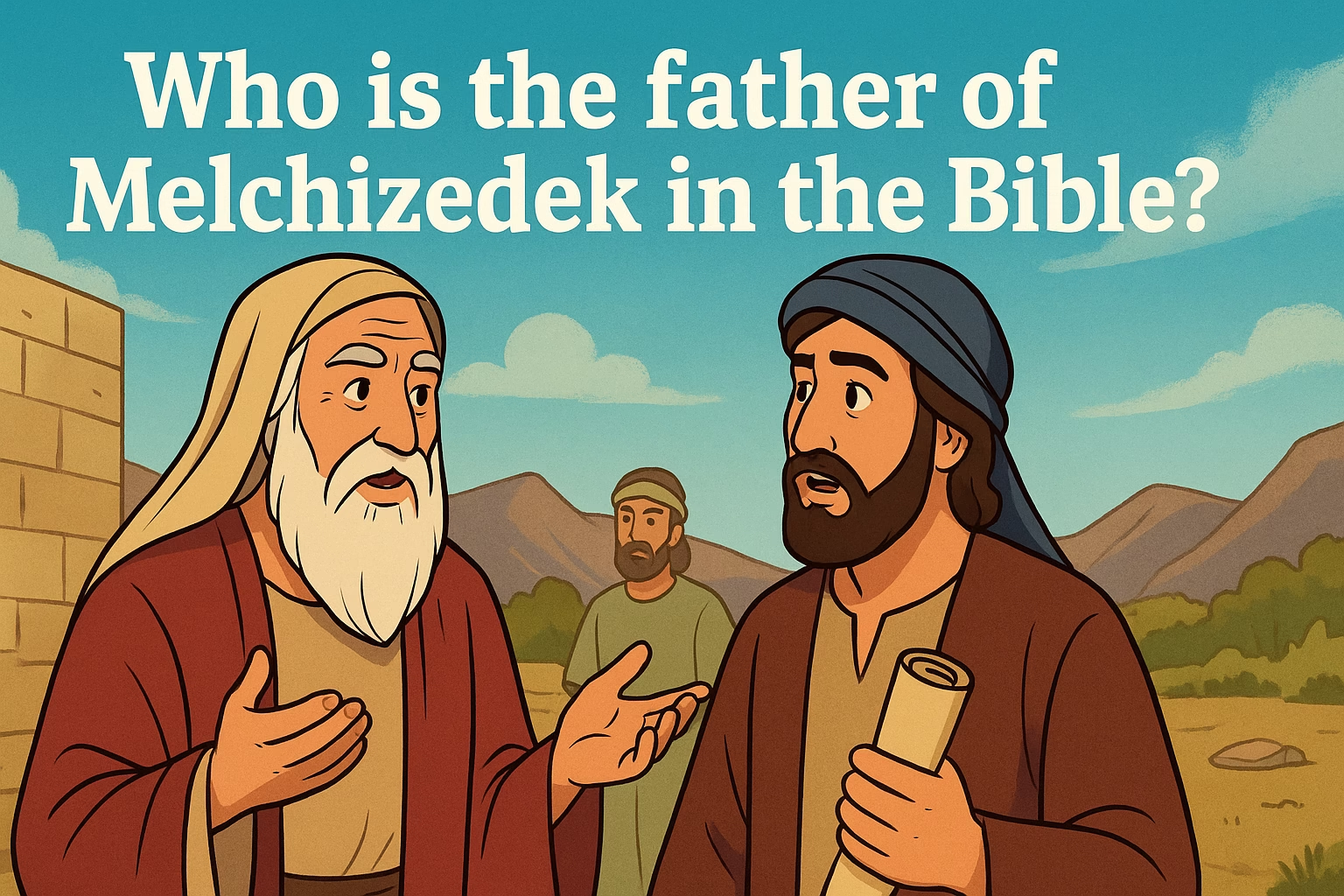
The figure of Melchizedek in the Bible has intrigued scholars and believers alike for centuries. His sudden appearance and the lack of detailed background information about him leave many questions unanswered, particularly concerning his lineage and, more specifically, his father. This article delves into the biblical text and interpretations surrounding Melchizedek to address who his father might be and what the Bible reveals about this enigmatic character.
To directly answer the question, the Bible does not explicitly mention the father of Melchizedek. In fact, the Scriptures provide very little information about his origins. Melchizedek first appears in Genesis 14:18-20, where he is introduced as the king of Salem and a priest of God Most High. This passage describes him as bringing out bread and wine and blessing Abram. The absence of genealogical details in this account is significant, as it sets Melchizedek apart from other biblical figures who are typically accompanied by their family lineage.
Melchizedek’s Role and Significance
To understand the implications of Melchizedek’s mysterious background, it is essential to consider his role in the biblical narrative. Melchizedek is described as both a king and a priest, which was a unique combination in ancient Israel. Priests were typically from the tribe of Levi, while kings came from the line of Judah. This dual role highlights Melchizedek’s significance as a forerunner of Christ, who fulfills both priestly and kingly functions.
Genesis 14: The Encounter with Abram
In Genesis 14, we read about Melchizedek’s encounter with Abram (later named Abraham). After Abram’s victory over the kings who had captured his nephew Lot, Melchizedek meets him and blesses him. The text states:
“Then Melchizedek, king of Salem and priest of God Most High, brought Abram some bread and wine. Melchizedek blessed Abram with this blessing: ‘Blessed be Abram by God Most High, Creator of heaven and earth. And blessed be God Most High, who has defeated your enemies for you.'” (Genesis 14:18-20 NLT)
This blessing emphasizes Melchizedek’s role as a priest of God, indicating his authority and standing before the Lord. However, there is no mention of his lineage or any familial ties, which raises further questions about his identity and origins.
Hebrews: A Deeper Exploration
The New Testament book of Hebrews offers further insight into Melchizedek’s significance and his mysterious status. In Hebrews 7, the author reflects on the Melchizedek story from Genesis and draws parallels between him and Jesus Christ. The key verses state:
“This Melchizedek was king of the city of Salem and also a priest of God Most High. When Abraham was returning home after winning a great battle against the kings, Melchizedek met him and blessed him. Then Abraham took a tenth of all he had captured in battle and gave it to Melchizedek. The name Melchizedek means ‘king of justice,’ and king of Salem means ‘king of peace.'” (Hebrews 7:1-2 NLT)
In this passage, the author of Hebrews emphasizes Melchizedek’s unique priesthood and his significance as a type of Christ. The absence of his father or genealogy in this context is intentional, as it serves to illustrate the eternal nature of Christ’s priesthood, which is not based on human lineage. The author further states that Melchizedek is “without father or mother or genealogy” (Hebrews 7:3 NLT), reinforcing his mysterious status.
Theological Interpretations
Over the years, theologians and scholars have debated the implications of Melchizedek’s lack of a recorded father. Some interpretations suggest that this absence signifies the eternal nature of his priesthood and foreshadows the priesthood of Christ. Others see Melchizedek as a historical figure who may have had a father, but whose identity was not deemed necessary for the theological message being conveyed.
- Typological Interpretation: Many theologians view Melchizedek as a type of Christ, representing a priesthood that transcends the Levitical priesthood established later in Israel’s history.
- Symbol of Eternal Priesthood: The lack of genealogy may symbolize the eternal and divine nature of Melchizedek’s priesthood, analogous to the eternal priesthood of Jesus.
- Cultural Context: In ancient Near Eastern culture, genealogies were essential for establishing authority. The omission of Melchizedek’s lineage may suggest a priesthood independent of human lineage.
Regardless of the interpretation, the absence of Melchizedek’s father in the biblical text serves a purpose. It invites readers to explore deeper theological meanings rather than focusing solely on historical lineage.
Conclusion of the Exploration
While the Bible does not provide a definitive answer regarding Melchizedek’s father, the exploration of his role and significance reveals much about the nature of his priesthood and its connection to Christ. The lack of genealogical information invites us to reflect on the eternal and divine aspects of priesthood that transcend human limitations.
Melchizedek’s Place in Biblical History
To further understand the significance of Melchizedek, it is essential to consider his context within the broader biblical narrative. Melchizedek appears during a crucial moment in Genesis, shortly after the establishment of God’s covenant with Abram. This covenant is foundational for the Israelite identity and relationship with God. By blessing Abram, Melchizedek reinforces the importance of divine authority and the priestly role in mediating that relationship.
Moreover, Melchizedek’s appearance serves as a bridge between the patriarchal narratives and the establishment of the nation of Israel. His role as both king and priest hints at a future where leadership and spiritual authority would be unified, a theme that finds its ultimate fulfillment in Jesus Christ. The absence of Melchizedek’s father or genealogy is striking against the backdrop of the genealogical emphasis in Genesis, which highlights the significance of his unique position.
Interpreting Melchizedek’s Character
Melchizedek’s character can be interpreted in several ways, each shedding light on different aspects of his significance. Some scholars propose that he represents a type of priesthood that is superior to the Levitical priesthood, which was established later in Israel’s history. This perspective is bolstered by the fact that the Levitical priests were required to have a lineage traced back to Aaron, while Melchizedek’s priesthood is not bound by such restrictions.
Another view is that Melchizedek embodies the ideal of a righteous king and priest, a model that the Israelites would strive to achieve. His title as “king of righteousness” and “king of peace” suggests a harmonious relationship between justice and peace, qualities that are central to God’s character. This ideality is particularly relevant when considering the tumultuous history of Israel’s kings and priests, many of whom fell short of these standards.
Melchizedek in Jewish and Christian Thought
In Jewish tradition, Melchizedek is often seen as a mysterious and revered figure. Some rabbinical interpretations suggest that he was a historical figure associated with the ancient city of Salem, possibly Jerusalem. His role as a priest of God Most High has led to various interpretations regarding his significance in the history of Israel and the priesthood.
In Christian thought, Melchizedek takes on even more profound significance as a foreshadowing of Christ. The author of Hebrews emphasizes that Jesus is a priest “in the order of Melchizedek,” which highlights the eternal and unchangeable nature of His priesthood. This connection invites believers to reflect on the implications of Christ’s role as both king and priest, fulfilling the requirements that Melchizedek embodies.
Questions for Further Reflection
As we ponder the enigmatic figure of Melchizedek, several questions arise that encourage deeper exploration of his character and significance:
- What does Melchizedek’s priesthood teach us about the nature of God’s authority? Understanding Melchizedek’s role can help clarify the expectations of spiritual leadership and authority in our faith communities today.
- How does the absence of Melchizedek’s genealogy inform our understanding of Christ’s priesthood? Reflecting on this can deepen our appreciation for the divine nature of Jesus’ role as a mediator between God and humanity.
- What lessons can we learn from Melchizedek’s interaction with Abram? His encounter with Abram provides insights into the importance of blessing, gratitude, and recognizing divine authority in our lives.
Conclusion and Implications
In summary, while the Bible does not provide a clear answer regarding the father of Melchizedek, his significance transcends the need for genealogical details. He serves as a pivotal figure in the biblical narrative, embodying the ideals of a righteous king and priest. His mysterious origins invite believers to reflect on the eternal nature of God’s priesthood, as ultimately fulfilled in Jesus Christ. Melchizedek reminds us of the importance of spiritual authority and leadership that aligns with divine principles, encouraging us to seek a deeper relationship with God.
For further exploration of biblical characters and themes, you may find these articles helpful: Melchizedek and Christ and The Importance of Priesthood.