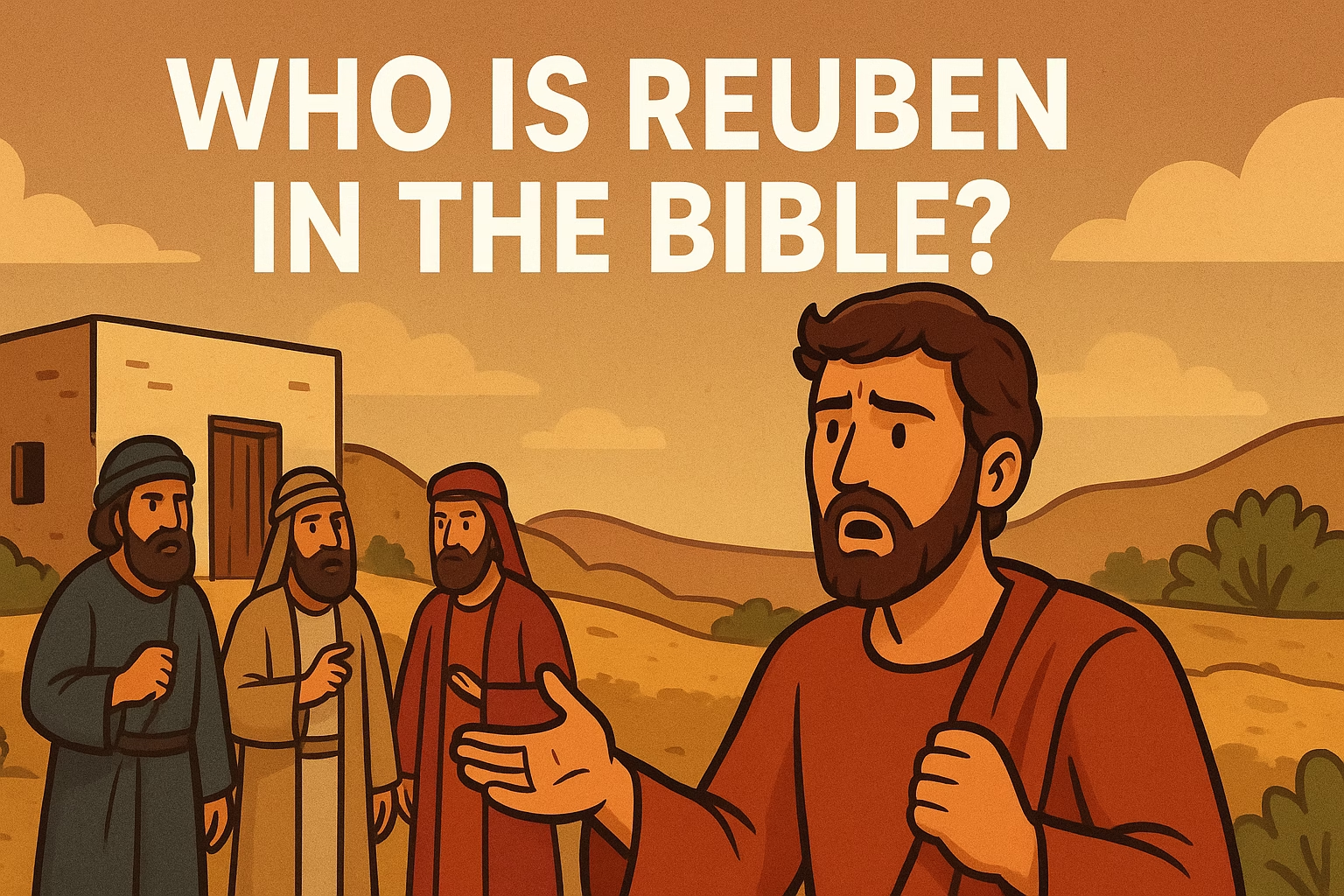
The Bible is filled with significant figures whose stories contribute to the overarching narrative of faith, covenant, and redemption. Among these figures is Reuben, the firstborn son of Jacob and Leah. His life and legacy offer insights into the early history of the Israelites and the complexities of family dynamics within the biblical context. This article will explore who Reuben is in the Bible, his role within his family, and the implications of his actions as recorded in Scripture.
Reuben is primarily known as the firstborn of Jacob, one of the patriarchs of the Israelite people. His birth is documented in Genesis 29:32, where Leah, his mother, names him Reuben, which means “See, a son!” She hoped that his birth would win Jacob’s affection, as she felt unloved compared to her sister Rachel. Reuben’s character and actions throughout the biblical narrative reveal much about his family dynamics and the challenges he faced as the eldest son.
Reuben’s Birth and Early Life
Reuben’s story begins in the book of Genesis, specifically in Genesis 29. He is the first child born to Jacob and Leah, and his birth is significant in the context of Jacob’s complicated relationships with his two wives, Leah and Rachel. Leah’s desire for Jacob’s love drove her to bear children, hoping that each birth would earn her husband’s affection. The birth of Reuben is seen as a turning point in Leah’s quest for love, as she exclaimed, “The Lord has seen my misery. Surely my husband will love me now” (Genesis 29:32, NLT).
The Role of Reuben in His Family
As the firstborn son, Reuben held a special position within his family. In ancient Israelite culture, the firstborn son typically received a double portion of the inheritance and was given a place of leadership among siblings. However, Reuben’s actions later in life would complicate this status. He is mentioned as being involved in significant family events, including the story of Joseph, Jacob’s favored son.
In Genesis 37, we see the dynamics of Reuben’s relationship with his brothers. When they conspire to kill Joseph out of jealousy, Reuben intervenes, suggesting they throw Joseph into a pit instead, intending to rescue him later. This act demonstrates Reuben’s desire to protect Joseph, but it also showcases the tension between the brothers. Reuben’s plan ultimately fails, as the brothers sell Joseph into slavery instead (Genesis 37:21-28).
Reuben’s Sin and Its Consequences
One of the most significant events in Reuben’s life is recorded in Genesis 35:22, where it is noted that he slept with Bilhah, his father’s concubine. This act of incest not only violated cultural norms but also showed a disregard for family honor. Jacob later learns of this transgression, which has repercussions for Reuben’s standing within the family.
In Genesis 49, as Jacob approaches the end of his life, he gathers his sons to bless them. During this blessing, Jacob addresses Reuben directly, stating, “You are my firstborn, my strength and the first fruits of my virility. You are superior in status and superior in power. Uncontrolled as water, you will not excel…” (Genesis 49:3-4, NLT). This statement reflects Jacob’s disappointment in Reuben’s actions and serves as a prophetic declaration of Reuben’s diminished status among his brothers.
The Tribe of Reuben
Despite his shortcomings, Reuben’s legacy continues through the tribe named after him. The Tribe of Reuben became one of the twelve tribes of Israel, playing a role in the conquest of Canaan and the settlement of the Promised Land. The tribe is often associated with its territory east of the Jordan River, which was allocated to them as part of the land distribution among the tribes (Numbers 32).
While Reuben’s tribe was significant in the history of Israel, it also faced challenges. The tribe struggled with faithfulness to God and often found itself at odds with other tribes. This struggle is evident in various biblical accounts, including the wars and conflicts that arise during the time of the judges and kings.
Reuben’s Legacy and Lessons Learned
The story of Reuben offers valuable lessons regarding leadership, accountability, and the importance of integrity. As the firstborn, Reuben had the potential to lead his family and tribe, yet his actions led to a loss of privilege and respect. This serves as a reminder that one’s status or birthright does not guarantee a favorable legacy; rather, it is one’s choices and actions that shape their future.
“The blessings of God are often tied to our obedience and integrity. Reuben’s story illustrates how a single poor choice can have lasting consequences.”
Reuben’s life also highlights the complexities of family relationships, particularly in a context where favoritism, jealousy, and rivalry were prevalent. The dynamics between Reuben, his brothers, and his father Jacob reflect the broader themes of conflict and reconciliation found throughout the Bible. His story invites readers to reflect on their own family relationships and the importance of maintaining unity and love amidst challenges.
In summary, Reuben is an important figure in the Bible whose life encapsulates themes of leadership, familial relationships, and the consequences of one’s actions. His narrative serves as a cautionary tale about the importance of making wise choices and the impact those choices can have on future generations.
Reuben’s Role in the Exodus and Beyond
Following the establishment of the twelve tribes, Reuben’s tribe played a crucial role during the Exodus from Egypt. While Reuben himself does not have a prominent individual narrative during this period, the Tribe of Reuben was part of the larger Israelite community that experienced God’s deliverance from slavery. This collective journey shaped the identity of the Israelites and set the stage for their eventual settlement in the Promised Land.
In the book of Numbers, we see Reuben’s tribe listed among those counted for military purposes. They were tasked with various responsibilities as the Israelites traveled through the wilderness. Although Reuben’s tribe was significant, they often struggled with faithfulness, a theme that recurs throughout their history. Their initial reluctance to enter the Promised Land, as seen in Numbers 32, reveals a tension between their desire for safety and the call to trust in God’s promises.
The Land of Reuben
When the Israelites finally reached the Promised Land, Reuben’s tribe was granted land east of the Jordan River, an area that included fertile pastures. This territory was seen as advantageous for their cattle, which was a primary source of wealth and sustenance in that culture. However, the decision to settle outside of the Promised Land came with its own set of challenges. The Reubenites faced the risk of isolation from the other tribes, which could lead to vulnerability during times of conflict.
As the Israelites continued to develop their identity and nationhood, the Tribe of Reuben’s choice to settle where they did often placed them at odds with the other tribes. Their decision to prioritize immediate needs over long-term spiritual commitments serves as a lesson for contemporary believers about the importance of aligning one’s choices with God’s plans.
Reuben’s Representation in Later Texts
Reuben is mentioned in various historical texts beyond the Torah. The prophetic books, such as Jeremiah, reflect on the fate of the tribes of Israel, including Reuben. These references often serve as reminders of the consequences of disobedience and the potential for redemption. The prophetic literature emphasizes the importance of returning to God, a theme that resonates deeply with Reuben’s narrative.
In the New Testament, while Reuben is not directly mentioned, his legacy continues through the teachings about faithfulness and integrity. The lessons drawn from Reuben’s life echo throughout Scripture, as believers are encouraged to reflect on the importance of making wise choices and living in accordance with God’s will.
Lessons from Reuben’s Life
Reuben’s life is a rich source of lessons that remain relevant today. His story illustrates the complexities of leadership and the weight of responsibility that comes with it. The consequences of his actions remind readers that integrity is essential, especially for those in positions of influence. The idea that one’s birthright or position does not guarantee success is a powerful message that speaks to modern audiences.
Moreover, Reuben’s story is a testament to the importance of family unity. The tensions between him and his brothers highlight the need for reconciliation and understanding in familial relationships. In a world where divisions often arise, Reuben’s narrative invites reflection on how to foster love and unity despite challenges.
Reflections on Reuben’s Spiritual Journey
Reuben’s spiritual journey can be seen as a metaphor for the broader Israelite experience. Just as the Israelites struggled with their faith during the Exodus and in the Promised Land, Reuben’s life reflects the tension between human frailty and divine promise. His shortcomings serve as a reminder that even those chosen by God can falter, yet there is always an opportunity for redemption and growth.
The narrative of Reuben encourages believers to examine their own spiritual lives. Are they prioritizing immediate desires over long-term faithfulness? Are they fostering unity within their families and communities? Reuben’s story challenges individuals to seek a deeper relationship with God, emphasizing the importance of obedience and integrity in their walk of faith.
Conclusion: The Enduring Legacy of Reuben
Reuben’s story is not merely a historical account but a profound narrative that continues to resonate with readers today. His life encapsulates themes of leadership, accountability, and the complexities of human relationships. While he faced significant challenges and made poor choices, Reuben’s legacy endures through the Tribe of Reuben and the lessons drawn from his life.
Ultimately, Reuben serves as a reminder that our choices shape our legacy. His experiences compel believers to strive for integrity, to foster unity in their relationships, and to remain faithful to God’s calling. As we reflect on Reuben’s life, we are encouraged to learn from both his triumphs and failures, striving to make choices that honor God and build a lasting legacy for future generations.
For further insights into the significance of family dynamics in biblical narratives, you can explore the role of family in Scripture and the importance of integrity in leadership.