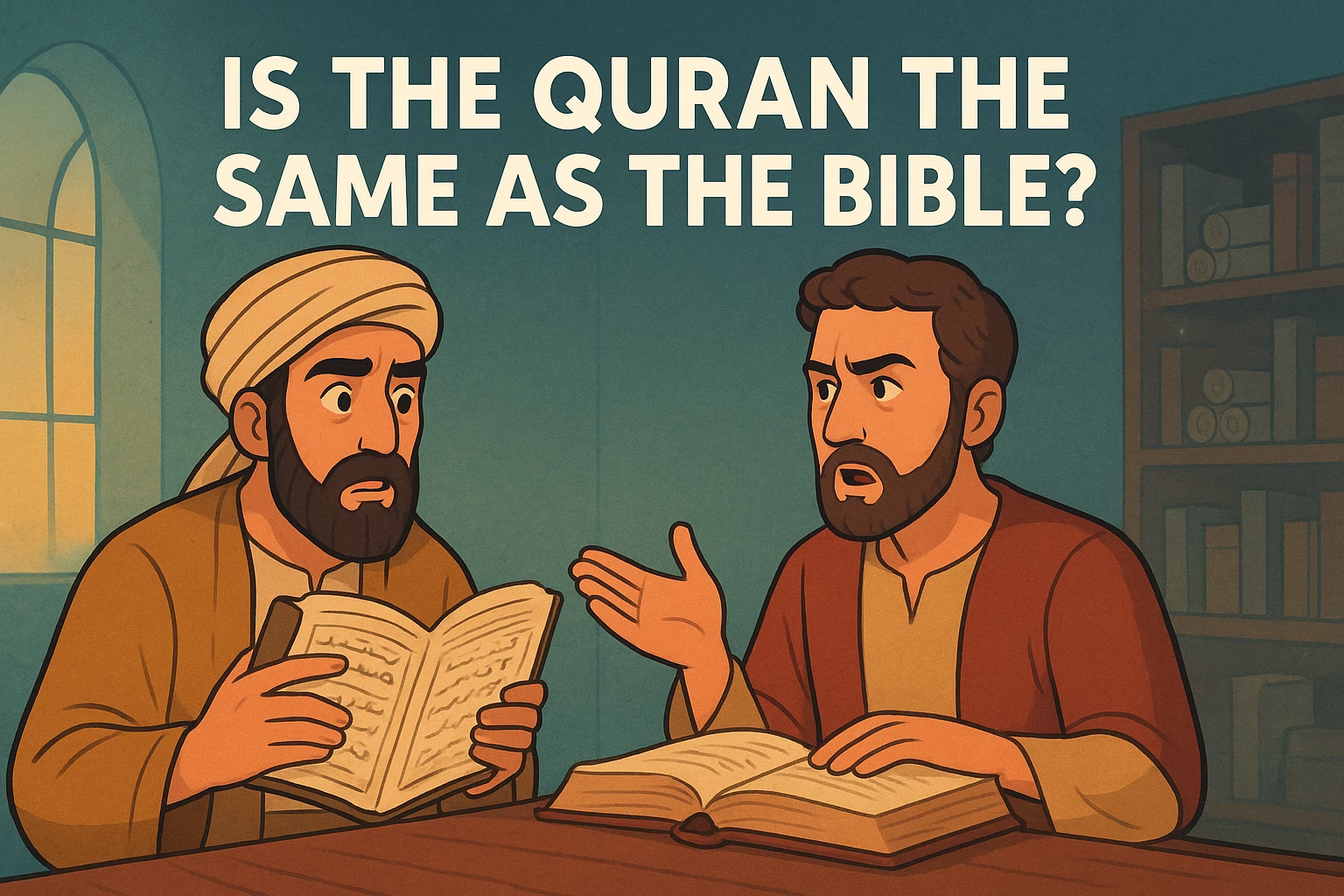
The relationship between the Quran and the Bible is a complex and multifaceted topic. Both texts are central to their respective faiths—Islam and Christianity—and are often compared and contrasted by scholars and believers alike. Understanding the similarities and differences between these two sacred texts requires a careful look at their origins, teachings, and the contexts in which they were written.
To answer the question directly: No, the Quran is not the same as the Bible. While there are some overlapping themes and figures, the two texts differ significantly in content, structure, and theological implications.
Origins and Authorship
The Bible is a collection of texts that includes the Old Testament and the New Testament. The Old Testament, which is shared with the Jewish faith, contains historical narratives, laws, poetry, and prophecies written by various authors over many centuries. The New Testament focuses on the life and teachings of Jesus Christ and the early Christian church, composed by followers of Jesus in the first century AD.
In contrast, the Quran is believed by Muslims to be the literal word of God (Allah) as revealed to the Prophet Muhammad over a period of approximately 23 years, beginning in 610 AD. The Quran is written in Arabic and is organized into chapters called Surahs, which vary in length. Islamic tradition holds that Muhammad was illiterate and received these revelations through the angel Gabriel.
The Nature of God
One of the most significant theological differences between the Quran and the Bible is their understanding of God. In Christianity, God is understood as a Trinity—Father, Son, and Holy Spirit. This concept is fundamental to Christian doctrine and is based on various New Testament passages, such as Matthew 28:19, where Jesus instructs his followers to baptize “in the name of the Father, the Son, and the Holy Spirit.”
Conversely, the Quran emphasizes the oneness of God (Tawhid) and explicitly rejects any notion of God being divided into parts or persons. For instance, Surah 112 states, “Say, ‘He is Allah, [who is] One,'” underscoring the Islamic belief in the absolute unity of God.
Jesus Christ: A Central Figure
Jesus is a pivotal figure in both the Bible and the Quran, but the perceptions of his identity and role differ significantly. In the New Testament, Jesus is portrayed as the Son of God, the Messiah, and the Savior of humanity. His death and resurrection are central to Christian faith, as seen in John 3:16, which speaks of God giving His Son for eternal life.
In Islam, Jesus (known as Isa) is regarded as one of the greatest prophets but not divine. The Quran acknowledges his miraculous birth to the Virgin Mary (Maryam) and his ability to perform miracles. However, it rejects the crucifixion, asserting instead that Jesus was not killed but was raised to heaven by God. Surah 4:157 states, “And [for] their saying, ‘Indeed, we have killed the Messiah, Jesus, the son of Mary’… But they did not kill him, nor did they crucify him; but [another] was made to resemble him to them.” This belief forms a crucial part of Islamic theology.
Scriptural Authority and Interpretation
The authority of the Bible and the Quran is also a point of divergence. Christians believe that the Bible is divinely inspired and the authoritative guide for faith and practice. Various denominations may interpret passages differently, leading to a range of theological perspectives. However, the core message remains the same across mainstream Christianity, emphasizing salvation through faith in Jesus Christ.
In Islam, the Quran is considered the final revelation and supersedes previous scriptures, including the Bible. Muslims believe that earlier texts were altered or corrupted over time. The Quran is often recited in Arabic, and its original language is considered sacred. Interpretation (Tafsir) of the Quran is a significant field of study in Islam, with scholars providing context and explanations for its verses.
Salvation and Afterlife
Another fundamental difference lies in the understanding of salvation and the afterlife. In Christianity, salvation is primarily through faith in Jesus Christ, as emphasized in Ephesians 2:8-9, which states, “For by grace you have been saved through faith, and that not of yourselves; it is the gift of God.” This belief in grace and faith contrasts with the Islamic view of salvation.
In Islam, salvation is achieved through a combination of faith in Allah, good deeds, and adherence to the Five Pillars of Islam, which include the declaration of faith, prayer, fasting, almsgiving, and pilgrimage. Surah 2:25 highlights the importance of righteous deeds, stating, “And give good tidings to those who believe and do righteous deeds that they will have gardens in Paradise.” The Islamic view emphasizes a balance between faith and actions in determining one’s fate in the afterlife.
Common Themes and Figures
Despite the differences, the Quran and the Bible share some common themes and figures. Both texts discuss moral principles, justice, compassion, and the importance of community. Figures such as Adam, Noah, Abraham, Moses, and others appear in both scriptures but often with differing narratives and emphases.
- Adam is the first human created by God in both texts, but the stories surrounding his fall differ.
- Noah’s story of the flood is similarly recounted, yet the details and theological implications vary.
- Abraham is a significant patriarch in both religions, representing faith and obedience to God.
These commonalities highlight some of the shared roots of the Abrahamic faiths but also underscore the distinct theological paths each has taken over centuries.
Literary Style and Structure
The literary styles and structures of the Quran and the Bible differ significantly. The Bible is composed of various literary genres, including historical narrative, poetry, prophecy, and epistles. Each book has its own style, reflecting the time and context in which it was written. For example, the Psalms are poetic and often express deep emotional experiences, while the Gospels are narrative accounts of Jesus’ life and teachings.
In contrast, the Quran is primarily written in a rhythmic and poetic form, which is considered one of its miraculous aspects in Islamic belief. The Quran employs a unique style that includes repetition, rhyme, and assonance, which serves to enhance its memorability and recitational quality. This poetic nature is significant in Islamic culture, as recitation of the Quran is an important practice, often performed in a melodious manner.
View of Other Religions
The Quran and the Bible also differ in their perspectives on other religions. The Bible presents a narrative of God’s covenant with the Israelites and later the inclusion of Gentiles through Jesus Christ, emphasizing the fulfillment of Old Testament prophecies. It acknowledges the existence of other nations and religions but ultimately portrays a unique relationship between God and His chosen people.
In contrast, the Quran addresses the followers of previous scriptures, such as Jews and Christians, often referring to them as “People of the Book.” While it acknowledges the divine origin of their texts, it also asserts that these scriptures have been altered or misinterpreted over time. This belief leads to the Quran’s claim of being the final and uncorrupted revelation from God. Surah 2:79 warns against those who write scripture with their own hands, suggesting a critical view of the integrity of prior texts.
Religious Practices and Rituals
The religious practices and rituals outlined in the Quran and the Bible reflect their divergent teachings. In Christianity, worship practices vary widely among denominations but typically include prayer, reading scripture, singing hymns, and participating in sacraments such as baptism and communion. These practices are often centered around the church community and the teachings of Jesus.
Islam, on the other hand, prescribes specific rituals and practices that are essential to a Muslim’s faith. The Five Pillars of Islam serve as the foundation of a Muslim’s life, guiding their relationship with God and their community. These pillars include the Shahada (the declaration of faith), Salah (prayer five times a day), Zakat (almsgiving), Sawm (fasting during Ramadan), and Hajj (pilgrimage to Mecca). Each pillar represents a commitment to faith and duty, reinforcing the communal aspect of Islamic practice.
Interpretation and Theological Disputes
Both the Quran and the Bible have been subject to various interpretations, leading to significant theological disputes within each faith. In Christianity, different denominations often emerge from differing interpretations of scripture, leading to varied beliefs about salvation, the nature of God, and the authority of church traditions. This diversity highlights the dynamic nature of biblical interpretation and the ongoing dialogue among Christians.
In Islam, while the Quran is considered the ultimate authority, interpretations can vary widely based on cultural, historical, and theological contexts. The study of Tafsir, or Quranic exegesis, seeks to explain the meanings of the text, and various schools of thought exist within Islam, such as Sunni and Shia, which may interpret certain verses differently. These differences can lead to significant theological discussions and sometimes even conflict.
Conclusion: Bridging Understanding
In summary, while the Quran and the Bible share some commonalities rooted in their Abrahamic traditions, they are fundamentally different texts with distinct theological, literary, and cultural implications. Understanding these differences is crucial for fostering respectful dialogue and mutual understanding between Christians and Muslims. Engaging with the beliefs and practices of each faith can help bridge gaps and encourage a spirit of cooperation and peace in a diverse world.
As we reflect on the differences and similarities between these sacred texts, we can ask ourselves meaningful questions: How can we engage in constructive conversations about faith? What can we learn from each other’s traditions to foster understanding? The pursuit of knowledge and respect for differing beliefs can lead to a more harmonious coexistence among the world’s religions.
For further exploration of the relationship between these texts, you can read more about the similarities and differences between the Quran and the Bible and how these texts influence their respective communities today in modern religious practices.