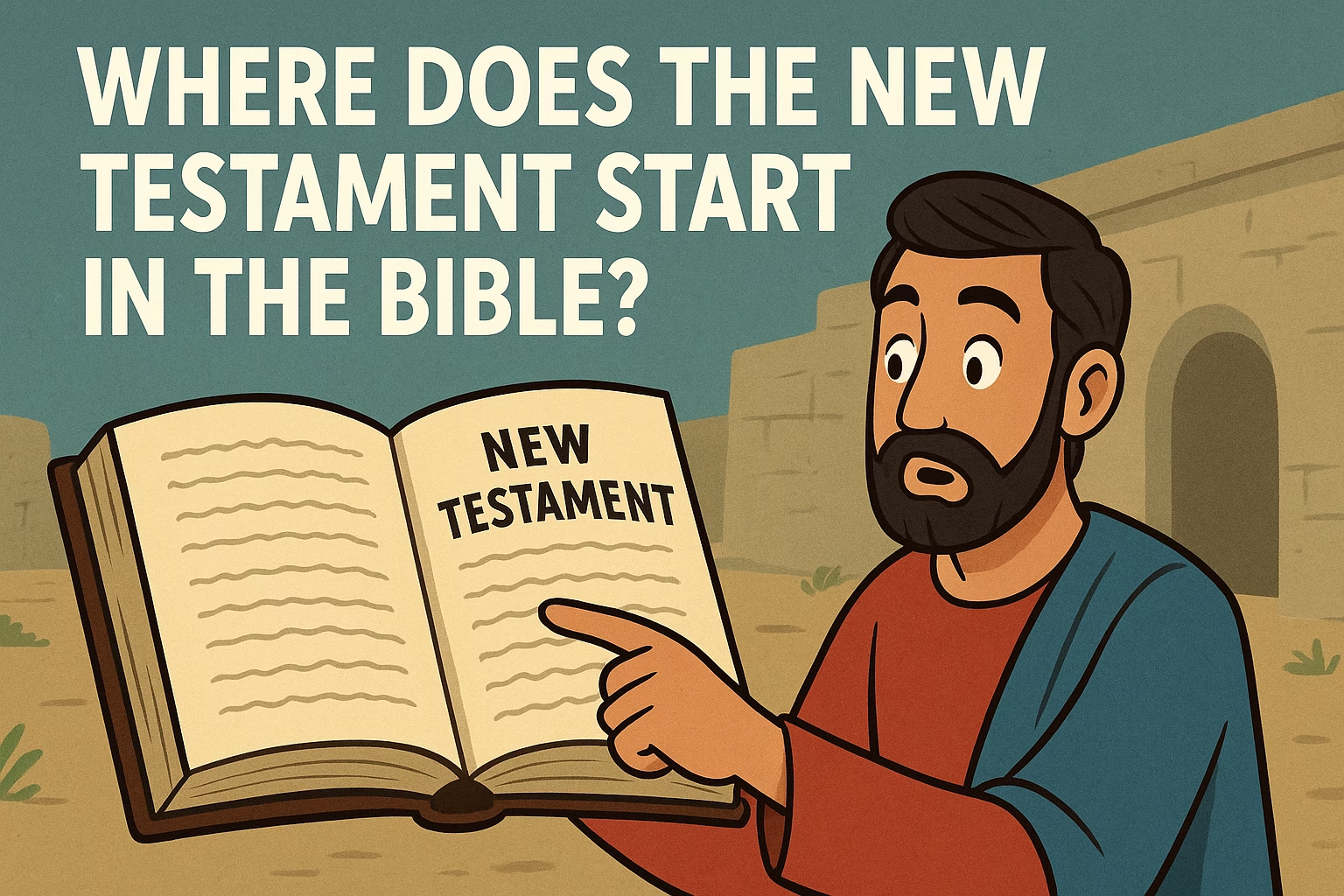
The New Testament is a central part of the Christian Bible, containing the teachings and accounts of Jesus Christ and the early Church. Understanding where the New Testament begins is essential for anyone studying the Scriptures. This article will explore the placement of the New Testament within the Bible and provide context for its significance.
The New Testament begins with the Gospel of Matthew, which is the first book in this section of the Bible. It is important to note that the New Testament follows the Old Testament, which is composed of various books that recount the history, laws, poetry, and prophecies of the Israelites.
The Structure of the Bible
The Bible is divided into two main sections: the Old Testament and the New Testament. The Old Testament contains 39 books, while the New Testament consists of 27 books. This division is significant as it reflects the transition from the covenant made with Israel to the new covenant established through Jesus Christ.
The New Testament does not just appear abruptly; it represents a continuation of God’s revelation to humanity. The Old Testament lays the groundwork for understanding the New Testament. For instance, the prophecies about the coming Messiah in books like Isaiah and Micah point toward the events and teachings found in the New Testament.
- Isaiah 7:14: This verse prophesies the virgin birth of Jesus, indicating that He would be called Immanuel, meaning “God with us.”
- Micah 5:2: This passage foretells the birthplace of the Messiah, stating that He would come from Bethlehem.
- Isaiah 53: This chapter describes the suffering servant, which Christians interpret as a reference to Christ’s sacrificial death.
These prophecies are fulfilled in the New Testament, demonstrating a cohesive narrative throughout the Bible.
The New Testament begins with the Gospel of Matthew. Matthew’s account is unique in that it emphasizes Jesus’ role as the Messiah and King, connecting Him to the Old Testament prophecies. The very first verse of Matthew declares, “This is a record of the ancestors of Jesus the Messiah, a descendant of David and of Abraham” (Matthew 1:1 NLT). This introduction highlights the importance of Jesus’ lineage and His fulfillment of Jewish expectations.
Matthew was written primarily for a Jewish audience, aiming to show that Jesus is the long-awaited Messiah. The Gospel is structured to illustrate Jesus’ teachings, miracles, and His ultimate sacrifice. It contains the famous Sermon on the Mount (Matthew 5-7), which outlines the ethics of the Kingdom of Heaven.
Following Matthew, the New Testament continues with the Gospels of Mark, Luke, and John. Each Gospel provides a different perspective on the life and ministry of Jesus:
- Mark: Often considered the earliest Gospel, Mark focuses on the actions of Jesus, presenting Him as a servant and emphasizing His miracles.
- Luke: Written by a physician, Luke offers a detailed account of Jesus’ life, including His compassion for the marginalized and His emphasis on prayer.
- John: This Gospel is distinct in its theological depth, focusing on the divinity of Christ and His relationship with the Father.
After the Gospels, the New Testament includes the Acts of the Apostles, which details the early Church’s formation and expansion following Jesus’ ascension. Acts provides insight into how the apostles spread the message of Jesus and how the early Christian community developed. Key events include the outpouring of the Holy Spirit at Pentecost and the missionary journeys of Paul.
The Book of Acts is vital for understanding the transition from a Jewish sect to a global movement. It demonstrates how the early Christians navigated cultural barriers and spread the Gospel beyond Jerusalem to places like Samaria and the Gentile world.
Following Acts, the New Testament consists of various letters (epistles) written by apostles like Paul, Peter, James, and John. These letters address specific issues within early Christian communities and provide theological teachings. They include:
- Paul’s Letters: Such as Romans, Corinthians, and Ephesians, which offer insights into faith, grace, and Christian living.
- General Letters: Like Hebrews, James, and 1 John, which cover topics relevant to all believers.
These letters serve both as instruction and encouragement for believers, addressing challenges and affirming the core tenets of the Christian faith. The epistles provide a deeper understanding of how to live out the teachings of Jesus in daily life.
The New Testament concludes with the Book of Revelation, a prophetic work attributed to John. Revelation offers a vision of the end times, emphasizing the ultimate victory of Christ over evil. It is filled with symbolism and imagery that can be challenging to interpret, but its core message is one of hope for believers.
In summary, the New Testament begins with the Gospel of Matthew and contains a variety of writings that together narrate the life of Jesus and the early Church. Each section contributes to a fuller understanding of the Christian faith and its foundations.
The Significance of the New Testament in Christian Faith
The New Testament is not merely a collection of writings; it is the cornerstone of Christian doctrine and practice. It serves to reveal the nature of God through Jesus Christ and provides guidance for living a life aligned with His teachings. The New Testament emphasizes themes such as love, grace, redemption, and the establishment of a new covenant between God and humanity.
The New Covenant
One of the most significant aspects of the New Testament is the concept of the new covenant, which Jesus established through His death and resurrection. This new covenant fulfills the promises of the Old Testament and allows believers to have a direct relationship with God, free from the sacrificial system of the Old Testament. In Luke 22:20, Jesus states, “This cup is the new covenant in my blood, which is poured out for you.” This declaration signifies a transformative shift in how God relates to His people.
The Role of the Holy Spirit
The New Testament highlights the role of the Holy Spirit, who empowers believers to live according to God’s will. The Book of Acts describes the outpouring of the Holy Spirit at Pentecost, marking the beginning of the Church’s mission to spread the Gospel. The Holy Spirit is depicted as a comforter, guide, and source of strength for believers, which is crucial for living a Christian life.
The Gifts of the Spirit
In addition to guidance, the Holy Spirit bestows various gifts upon believers, as described in 1 Corinthians 12. These gifts, including wisdom, knowledge, faith, and healing, are essential for the functioning of the Church and for the edification of its members. Understanding these gifts fosters a sense of community and service among believers.
The Historical Context of the New Testament
To fully appreciate the New Testament, it is important to consider its historical context. Written in the first century AD, the New Testament reflects the cultural, social, and political climate of the time. The Roman Empire’s influence is evident, as it shaped the environment in which Jesus and the apostles preached. Furthermore, the early Church faced persecution, which is addressed in various letters and narratives throughout the New Testament.
The Audience of the New Testament Writings
The New Testament was written for diverse audiences, including Jews and Gentiles, each with different backgrounds and expectations. Understanding these audiences helps readers grasp the intent behind the various writings. For example, Paul’s letters often addressed issues relevant to Gentile converts, while the Gospel of Matthew was particularly focused on demonstrating Jesus as the fulfillment of Jewish prophecy.
Interpretation and Application of the New Testament
Interpreting the New Testament requires careful consideration of its literary styles, genres, and historical context. The Gospels, epistles, and apocalyptic literature each serve different purposes and convey messages in unique ways. For instance, the parables of Jesus are intended to provoke thought and reflection, while the letters provide direct teaching and correction.
Questions for Reflection
As readers engage with the New Testament, it is beneficial to reflect on meaningful questions that arise from the text. Some questions to consider include:
- How do the teachings of Jesus challenge my understanding of love and forgiveness?
- In what ways can I apply the principles found in the epistles to my daily life?
- What does the promise of the Holy Spirit mean for me as a believer today?
- How can I actively participate in the mission of the Church as described in Acts?
Conclusion: The New Testament as a Guide for Believers
The New Testament begins with the Gospel of Matthew and encompasses a rich tapestry of writings that reveal God’s character and His plan for humanity through Jesus Christ. It serves as a guide for believers, offering teachings that are timeless and relevant for today. Understanding the context, purpose, and significance of the New Testament deepens one’s faith and equips Christians to live out their beliefs in a meaningful way.
For more insights on how to start reading the Bible, check out where to start reading the Bible. To understand the organization of the Bible, visit how the Bible is organized.