The question of when life begins is a profound and complex issue that has been debated for centuries, especially within the Christian community. Many people turn to the Bible for guidance on this matter. Understanding the biblical perspective involves examining various passages and their implications regarding the beginning of life, as well as considering the context in which these texts were written.
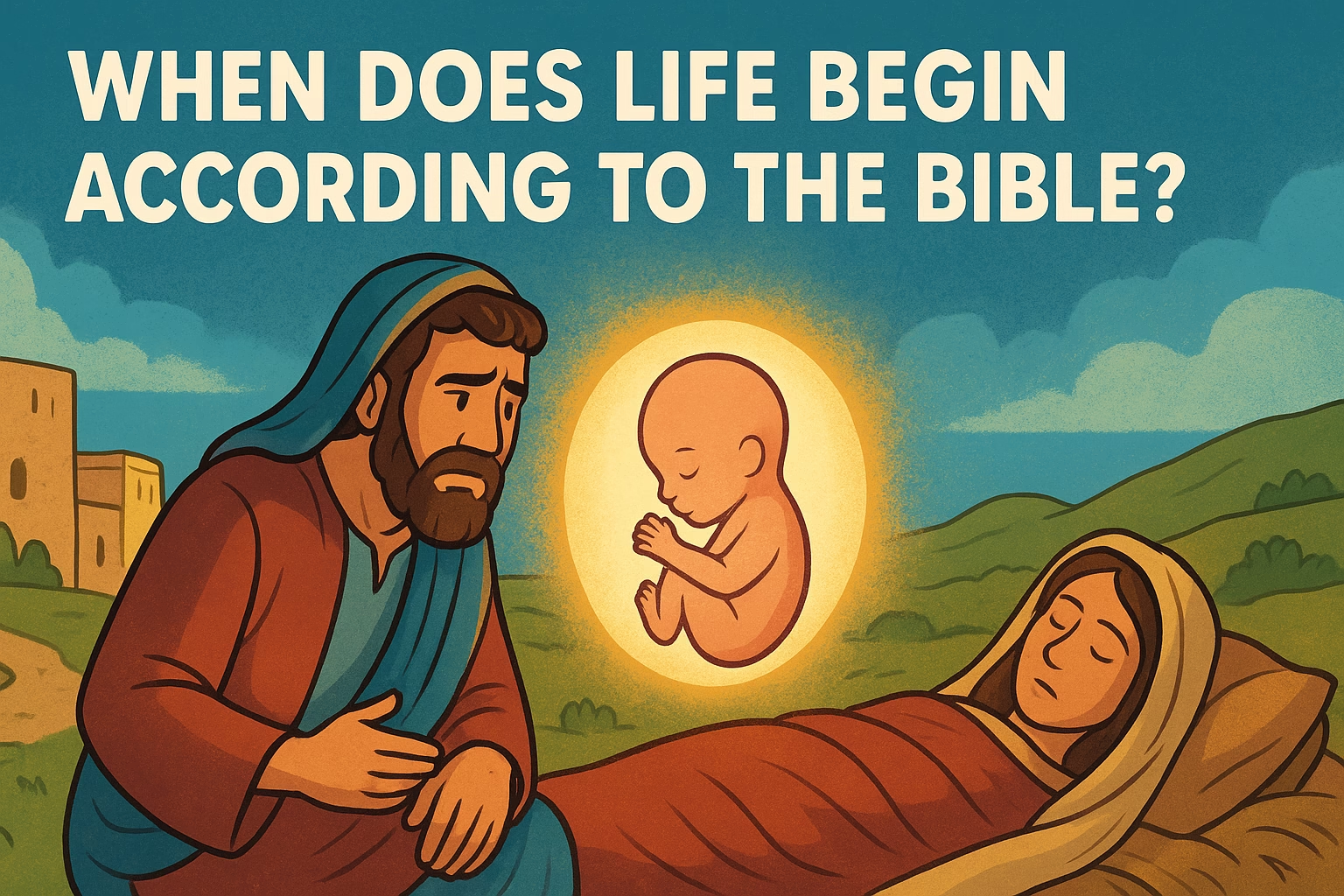
According to the Bible, life begins at conception. This belief is supported by several key passages that highlight the formation of a person in the womb and the divine involvement in that process. The Bible presents the idea that God has a purpose for each individual even before birth, affirming the sanctity of life from its earliest stages.
Scriptural Foundations for Life Beginning at Conception
Psalm 139:13-16
One of the most cited passages regarding life in the womb is Psalm 139:13-16. In this Psalm, David expresses the intimate knowledge God has of him, stating, “You made all the delicate, inner parts of my body and knit me together in my mother’s womb.” This imagery conveys a sense of care and intentionality in the creation of life. David continues by affirming that God’s eyes saw him even before he was formed, suggesting that life and individuality begin at conception.
Jeremiah 1:5
Another significant verse is found in Jeremiah 1:5, where God tells the prophet Jeremiah, “I knew you before I formed you in your mother’s womb.” This statement indicates that God has a relationship with individuals prior to their physical existence. The implication here is that Jeremiah’s life and purpose were established by God even before conception, reinforcing the idea that life begins at that moment.
Life in the Womb: A Biblical Perspective
Exodus 21:22-25
The Bible also addresses the issue of life in the womb in Exodus 21:22-25. This passage discusses a situation where two men are fighting and accidentally cause a pregnant woman to give birth prematurely. The text indicates that if there is no serious injury, the offender must be fined. However, if there is serious injury, then the punishment should match the harm done. This differentiation implies that the unborn child is considered a life deserving of protection and value, further supporting the belief that life begins before birth.
Luke 1:41-44
In the New Testament, we see a noteworthy encounter between Mary, the mother of Jesus, and Elizabeth, the mother of John the Baptist, in Luke 1:41-44. When Mary visits Elizabeth, the baby (John) leaps in Elizabeth’s womb, and Elizabeth exclaims that the baby recognizes Mary as the mother of the Lord. This moment highlights the recognition of life and personhood in the womb, suggesting that John was already responding to the presence of Jesus, affirming the idea that life and awareness exist before birth.
Understanding Personhood and Value
Theological Implications
From a theological standpoint, the Bible portrays humans as created in the image of God (Genesis 1:27). This concept of Imago Dei extends to all stages of life, including the unborn. If God values life from the moment of conception, it underscores the importance of protecting and cherishing that life. The belief that life begins at conception influences how Christians view issues like abortion, prenatal care, and the overall treatment of the unborn.
Distinctions in Interpretation
While many Christians believe that the Bible clearly supports the idea that life begins at conception, some may interpret certain passages differently. For instance, some argue that the Bible does not explicitly mention the moment of conception as the starting point of life. Instead, they may suggest that life begins at viability or birth. However, these interpretations often rely more on cultural or philosophical perspectives rather than a direct reading of Scripture.
Conclusion of Part One
As we explore the biblical perspective on when life begins, it is essential to consider the context and the overarching themes of creation and divine purpose. The Scriptures consistently affirm the value and sanctity of life, emphasizing God’s intimate involvement in the formation of each individual. While interpretations may vary, the prevailing understanding within the Christian tradition is that life begins at conception, a belief deeply rooted in biblical texts.
The Role of the Holy Spirit in Conception
A crucial aspect of understanding when life begins in a biblical context involves the role of the Holy Spirit during conception. In the New Testament, the conception of Jesus is described as being initiated by the Holy Spirit. In Matthew 1:20, an angel tells Joseph that Mary will give birth to a son conceived by the Holy Spirit. This divine intervention signifies not only the miraculous nature of Jesus’ birth but also emphasizes the sanctity of life from the very moment of conception, indicating that life is a sacred gift from God.
The Significance of the Unborn in Scripture
The Unborn as Recipients of God’s Plan
The biblical text shows that the unborn are not merely potential lives but are seen as individuals with a purpose. For example, in Isaiah 49:1, the prophet declares, “The Lord called me before my birth; from within the womb he called my name.” This verse indicates that God has a plan for individuals even before they are born. Such passages encourage believers to view the unborn as endowed with dignity and purpose, further supporting the belief that life begins at conception.
Life and the Covenant Community
Throughout the Bible, community and covenant play essential roles in understanding life. In Genesis 17:12, God establishes the covenant of circumcision, commanding that every male child should be circumcised on the eighth day after birth. This covenantal act implies that the child is seen as part of God’s people from a very early stage, reinforcing the idea that life within the womb is significant to God’s plan for His people.
Questions for Reflection
As believers seek to understand the biblical perspective on when life begins, it is helpful to consider several reflective questions:
- How does the understanding of life beginning at conception influence our views on current social issues surrounding abortion and reproductive rights?
- What does it mean to be created in the image of God, and how does this relate to the treatment of the unborn?
- In what ways can the church support families facing unexpected pregnancies, ensuring that the sanctity of life is upheld in practical terms?
- How do we navigate differing interpretations of Scripture regarding the beginning of life while maintaining a spirit of love and understanding?
The Importance of Education and Advocacy
In light of the biblical understanding that life begins at conception, it is vital for Christians to engage in education and advocacy efforts that support the unborn. This includes promoting awareness about pregnancy resources, fostering adoption opportunities, and supporting legislation that protects life at all stages. By actively participating in these efforts, Christians can embody the values expressed in Scripture and advocate for the rights of the unborn.
Conclusion
In summary, the biblical perspective on when life begins is rooted in the understanding that life is a divine gift starting at conception. Through various passages, the Scriptures affirm the value and purpose of the unborn, emphasizing God’s intimate involvement in their creation. While differing interpretations exist, the prevailing view among many Christians is that life begins at conception, a belief that carries significant implications for how we engage with contemporary issues surrounding life and personhood. Ultimately, embracing this understanding calls for compassion, advocacy, and a commitment to protecting the dignity of all human life.
For further exploration of related topics, you can read about the importance of protecting human life and discover how the Christian community can support families facing challenges during pregnancy.