The Bible is a sacred text for millions around the world, containing a rich tapestry of history, poetry, prophecy, and teachings. However, some people have heard about “missing books” of the Bible, leading to curiosity and questions about what these books are and why they are not included in the canonical scriptures. In this article, we will explore the concept of missing books, their historical context, and their relationship to the Bible as we know it today.
The term “missing books” generally refers to ancient texts that are either not included in the canonical Bible or are recognized as apocryphal or deuterocanonical by certain Christian traditions. These texts may provide additional insight into biblical times, beliefs, and practices, but they were not accepted into the official canon for various reasons. Some of these texts include the Gospel of Thomas, the Book of Enoch, and the Shepherd of Hermas, among others.
Understanding the Biblical Canon
The biblical canon is the collection of books that are recognized as authoritative scripture by a particular religious community. For Christians, this canon varies between denominations. The Protestant Bible typically contains 66 books, while the Catholic Bible includes 73, incorporating several additional texts known as the Apocrypha.
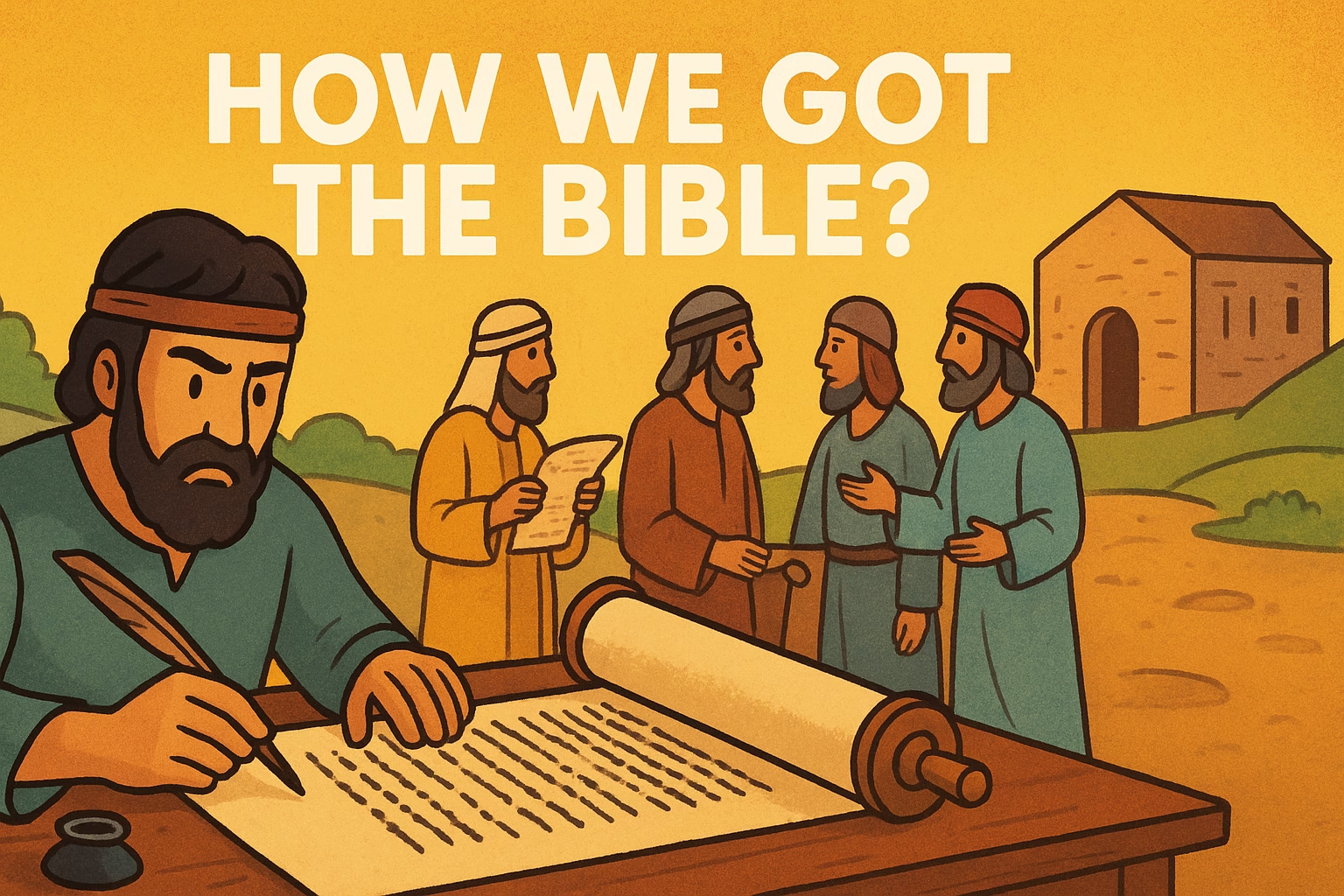
The process of forming the canon was complex and involved various criteria, including apostolic authorship, consistency with established doctrine, and widespread acceptance among early Christian communities. The Council of Carthage in 397 AD affirmed the New Testament canon that most Christians accept today, while the Old Testament canon had been established earlier.
The Apocryphal Books
Apocryphal books are those that are not included in the canonical Bible but are sometimes referenced or acknowledged in other religious traditions. These books often provide valuable historical and theological insights. Some well-known apocryphal books include:
- The Book of Enoch: An ancient Jewish text attributed to Enoch, the great-grandfather of Noah. It contains unique accounts of the fallen angels and elaborate descriptions of heaven and hell.
- The Gospel of Thomas: A collection of sayings attributed to Jesus, emphasizing personal spiritual knowledge over traditional teachings. It is considered a Gnostic text.
- The Shepherd of Hermas: A Christian literary work from the 2nd century that offers moral teachings and visions about faith and repentance.
While these texts offer intriguing perspectives, they were not included in the canon due to questions about their authorship, theological consistency, or historical accuracy.
Reasons for Exclusion
Several factors contributed to the exclusion of certain books from the Bible. Here are some key reasons:
1. Lack of Apostolic Authority
Many of the excluded writings were not attributed to apostles or their close associates. The early church placed a high value on apostolic authority, believing that the teachings of Jesus were best preserved through those who directly followed Him.
2. Theological Consistency
Some texts were excluded because their teachings conflicted with core Christian doctrines. For instance, Gnostic texts often presented a dualistic worldview that diverged significantly from orthodox Christian beliefs about God and salvation.
3. Historical Validity
The historical accuracy of certain writings was also scrutinized. Texts that could not be reliably dated or that contained anachronisms were often set aside. The church sought to preserve a consistent narrative of salvation history, which these texts could potentially disrupt.
Examples of Missing Books
To further illustrate the concept of missing books, let’s examine a few notable examples in detail:
The Book of Enoch
The Book of Enoch is an ancient Jewish text that was widely read in the early centuries of Christianity. It provides elaborate descriptions of the heavenly realms and the fate of sinners. Though it was influential, it was ultimately excluded from the canon due to questions about its authorship and theological implications. The New Testament, however, does reference Enoch in Jude 1:14-15, indicating its historical significance.
The Gospel of Thomas
This text is a collection of sayings attributed to Jesus, which emphasize personal spiritual enlightenment. The Gospel of Thomas is often associated with Gnostic beliefs, which were deemed heretical by early church leaders. Its exclusion from the canon reflects the church’s desire to maintain a unified understanding of Jesus’ teachings.
The Shepherd of Hermas
Written in the 2nd century, The Shepherd of Hermas presents visions and parables that focus on themes of repentance and moral living. While it was respected by some early Christians and even considered for inclusion in the New Testament, it ultimately did not meet the criteria for apostolic authorship and was set aside.
The Impact of Missing Books
The existence of these missing books raises important questions about the nature of scripture and the development of Christian doctrine. They provide a glimpse into the diversity of early Christian thought and the struggles to define orthodoxy. While these texts are not considered inspired scripture by most Christian traditions, they can still offer valuable historical and cultural context for understanding the Bible.
In summary, the “missing books” of the Bible refer to various ancient texts that were not included in the canonical scriptures. The reasons for their exclusion often relate to issues of authorship, theological consistency, and historical accuracy. Understanding these texts can enrich our appreciation of the biblical narrative and the early Christian community.
The Role of Tradition in Canon Formation
The formation of the biblical canon was influenced by tradition as much as it was by theological debate. Different Christian communities had varying practices and beliefs, shaping their views on which texts should be considered authoritative. The early Church Fathers, instrumental in establishing the canon, often relied on the traditions of their respective communities to guide their decisions.
In some cases, specific texts were widely read and accepted within certain regions, leading to their inclusion in the canon. For example, the Gospel of Mark was recognized early on due to its widespread use in the Roman church, contributing to its acceptance as part of the New Testament. Conversely, texts that lacked such widespread recognition often faced skepticism and were more likely to be excluded.
Theological Implications of Exclusion
The exclusion of certain texts reflects broader theological implications concerning the nature of revelation and the understanding of God’s word. The question arises: how do we define inspired scripture? For many early church leaders, inspiration was tied to the apostolic witness and the continuity of teaching that aligned with the life and message of Jesus Christ.
This leads to a critical consideration of how the absence of certain texts impacts our understanding of God and His relationship with humanity. The excluded writings, such as the Gospel of Mary and the Acts of Peter, often provide alternative perspectives on Christian beliefs, particularly regarding the role of women in the early church and the nature of salvation. Exploring these texts can help us appreciate the diversity of early Christian thought and the complex landscape of faith during that time.
The Influence of Historical Context
The historical context in which the biblical canon was formed is crucial for understanding why certain texts were accepted or rejected. The early church faced various challenges, including persecution, heretical movements, and the need for a unified doctrine. In this environment, establishing a consistent canon served as a stabilizing force for the faith community.
Furthermore, the rise of Gnosticism in the second century presented a significant challenge to orthodox Christianity. Gnostic texts often contained esoteric teachings that diverged from traditional beliefs, prompting church leaders to carefully evaluate which writings aligned with their understanding of Jesus’ teachings. This historical backdrop highlights the dynamic interplay between faith, culture, and the formation of scripture.
Modern Perspectives on Missing Books
In contemporary discussions, the “missing books” of the Bible prompt a reevaluation of how we view scripture and its authority. Some scholars and theologians advocate for a broader understanding of inspiration, suggesting that the excluded texts may still hold valuable insights for faith and practice. This perspective encourages believers to engage with these texts critically and thoughtfully, rather than dismissing them outright.
Additionally, many modern readers are drawn to these writings for their unique spiritual insights. For instance, the Gospel of Thomas offers a different take on Jesus’ teachings, focusing on personal experience and inner wisdom. This can resonate with those who seek a more individualistic approach to spirituality, prompting questions about the nature of faith and personal revelation.
Questions for Further Reflection
As we consider the implications of the missing books of the Bible, several questions arise that can deepen our understanding of scripture and our faith:
- What criteria do we use today to determine the authority of spiritual writings? Are those criteria consistent with those used by early church leaders?
- How do we reconcile the diversity of early Christian thought with the emphasis on orthodoxy in contemporary Christianity?
- In what ways can studying the missing books enhance our understanding of the biblical narrative and the character of God?
- What role does personal interpretation play in understanding scripture, especially in light of texts that were excluded from the canon?
Conclusion: Embracing the Complexity of Scripture
The exploration of the missing books of the Bible reveals the complexity and richness of early Christian history and thought. While these texts are not considered canonical by most Christian traditions, they provide valuable insights into the beliefs, practices, and struggles of early believers. Understanding the reasons for their exclusion can help us appreciate the formation of the biblical canon and the diverse landscape of faith that has existed throughout history.
Ultimately, engaging with these writings encourages a deeper exploration of our own beliefs and the nature of divine revelation. As we navigate the complexities of scripture, we are invited to seek a more profound understanding of God’s word and how it informs our lives today.
For more insights into the accuracy and variations of biblical texts, you might find it helpful to read about the most accurate version of the Bible and explore why there are different versions of the Bible.