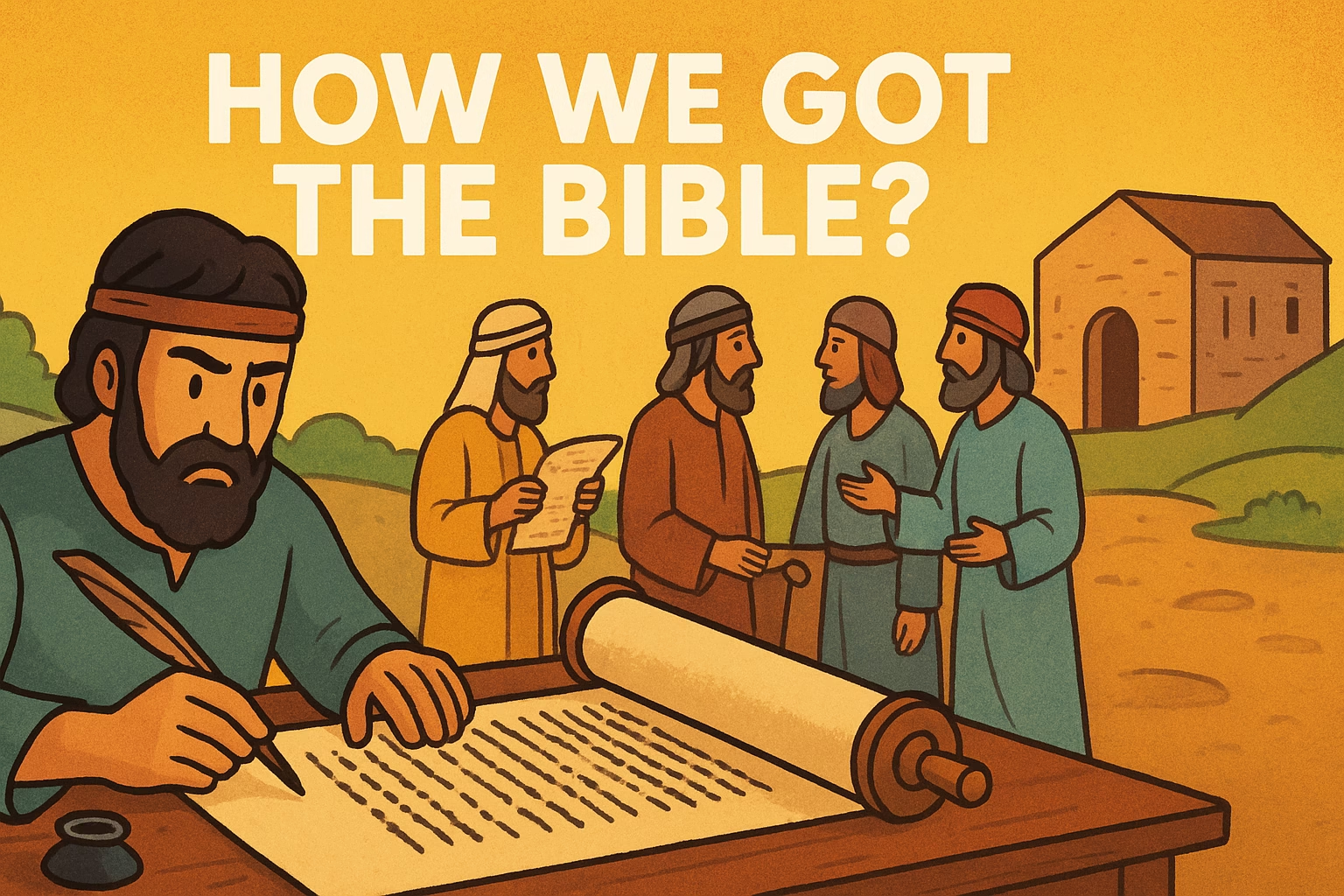
The Bible is a sacred text for millions of Christians around the world, but have you ever wondered how it came to be? The journey of the Bible from ancient manuscripts to the book we know today is a fascinating story filled with historical events, divine inspiration, and the efforts of many individuals over centuries. In this article, we will explore the origins of the Bible, its formation, and the key factors that contributed to the development of this beloved text.
To understand how we got the Bible, we need to look at the historical context in which it was written, the different types of literature it contains, and the process of canonization that determined which books were included. From the Old Testament to the New Testament, each part has its own unique story, reflecting the diverse cultures and times in which they were composed.
The Old Testament: Origins and Formation
The Old Testament, also known as the Hebrew Scriptures, is foundational for both Judaism and Christianity. It consists of various books, including the Torah (the first five books), historical narratives, wisdom literature, and prophetic writings. The formation of the Old Testament took place over many centuries, beginning around the 12th century BCE and continuing until the 2nd century BCE.
The Torah
The Torah, or Pentateuch, is traditionally attributed to Moses. It contains the laws and teachings that form the basis of Jewish faith and practice. Scholars believe these texts were written down during the Babylonian Exile in the 6th century BCE, although oral traditions likely existed long before this time. The Torah includes key events such as creation, the Exodus, and the covenant between God and Israel.
Historical Books
The historical books, including Joshua, Judges, Samuel, and Kings, provide a narrative of Israel’s history from conquest to exile. These texts were compiled from various sources and oral traditions, often reflecting the theological and moral lessons derived from Israel’s experiences. The books were likely written and edited by multiple authors over time, particularly during the monarchic and post-exilic periods.
Wisdom Literature and Prophets
Wisdom literature, such as Proverbs and Ecclesiastes, offers insights into life and morality, while the prophetic books contain messages from God delivered through prophets like Isaiah and Jeremiah. These writings were often addressed to specific audiences, addressing social injustices and calling for repentance. The prophetic books were compiled as part of the larger narrative of God’s relationship with His people.
The New Testament: Emergence and Canonization
The New Testament focuses on the life, teachings, death, and resurrection of Jesus Christ and the early Christian church. It was written in the first century CE, primarily in Greek, and consists of the Gospels, letters (epistles), and the Book of Revelation. The formation of the New Testament is a critical aspect of understanding how we got the Bible.
The Gospels
The four Gospels—Matthew, Mark, Luke, and John—offer distinct perspectives on the life and ministry of Jesus. Mark is considered the earliest Gospel, likely written around 70 CE, followed by Matthew and Luke in the 80s CE, and John later in the first century. Each Gospel author aimed to convey the significance of Jesus’ life and teachings to their specific audiences, often drawing on oral traditions and earlier written accounts.
The Letters of Paul and Other Apostles
The letters, primarily written by the Apostle Paul, address various communities and issues within the early church. These epistles provide theological teachings, ethical guidance, and encouragement to believers. Paul’s letters, such as Romans and Corinthians, were among the first New Testament writings, and their theological depth greatly influenced Christian thought. Other apostles, like Peter and John, also contributed letters that were eventually included in the New Testament canon.
The Formation of the Canon
The process of canonization for the New Testament took several centuries. Early church leaders sought to determine which writings were authoritative and inspired by God. Criteria included apostolic authorship, consistency with Christian doctrine, and widespread acceptance among early Christians. By the 4th century CE, church councils, such as the Council of Carthage, recognized a core set of texts that would become the New Testament as we know it today.
Translation and Preservation
Once the canon was established, the Bible underwent numerous translations to make it accessible to different cultures and languages. The Septuagint, a Greek translation of the Hebrew Scriptures, was widely used in the early church. Later, the Latin Vulgate, translated by Jerome in the late 4th century, became the standard Bible for the Western church for many centuries.
Throughout history, the Bible has been preserved through careful copying by scribes. Despite the challenges of translation and the potential for human error, the vast number of manuscripts available today allows scholars to reconstruct the original texts with a high degree of accuracy. The invention of the printing press in the 15th century revolutionized access to the Bible, making it available to the masses and paving the way for the Protestant Reformation.
The Role of Early Church Fathers
As the New Testament was being formed, early church fathers played a significant role in shaping Christian doctrine and determining the canon. Figures such as Ignatius of Antioch, Irenaeus, and Athanasius contributed to the theological discussions of their time. They wrote extensively on the importance of apostolic teaching and the necessity of adhering to the core beliefs of Christianity.
These leaders not only defended the faith against heresies but also emphasized the authority of the Scriptures. Irenaeus, for instance, argued for the necessity of the four Gospels, asserting that their distinct perspectives complemented each other and provided a fuller picture of Jesus. Athanasius, in his famous Easter letter of 367 CE, listed the 27 books that would later be accepted as the New Testament canon, highlighting the growing consensus among church leaders.
The Influence of Historical Context
The historical context in which the Bible was written greatly influenced its content and themes. The Old Testament reflects the ancient Near Eastern culture, with its laws, rituals, and societal norms. These elements were essential for the Israelites, guiding their identity and relationship with God.
In the New Testament, the early Christians faced persecution and challenges from both Jewish authorities and the Roman Empire. This context shaped the writings, as they often addressed suffering, hope, and the promise of eternal life through faith in Christ. The letters of Paul, for example, were written to encourage believers facing trials and to establish a sense of community among scattered churches.
The Impact of Translations and Interpretations
As the Bible was translated into various languages, it became accessible to a broader audience. However, each translation also brought with it the potential for differing interpretations. Early translations, like the Septuagint and the Vulgate, played crucial roles in shaping Christian thought and practice.
The Protestant Reformation in the 16th century marked a significant turning point in biblical interpretation. Reformers like Martin Luther and John Calvin emphasized the importance of Scripture alone (sola scriptura) as the foundation of faith. This led to the translation of the Bible into vernacular languages, allowing individuals to read and interpret the Scriptures for themselves, which was a radical departure from the Latin-only tradition maintained by the Catholic Church.
Modern Scholarship and Biblical Criticism
In recent centuries, the field of biblical scholarship has expanded, introducing various methods of interpretation and analysis. Biblical criticism seeks to understand the historical and cultural contexts of the texts, as well as their literary forms. Scholars employ tools such as textual criticism to examine manuscripts and trace the development of biblical texts over time.
This academic approach has led to new insights into the Bible’s composition, including the identification of different source materials and the historical contexts of various writings. While some may view this scholarship as a challenge to traditional beliefs, it can also enrich one’s understanding of the Bible and its messages.
Questions for Reflection
As we consider how we got the Bible, several important questions arise:
- How does understanding the historical context of the Bible enhance our interpretation of its teachings?
- What role does translation play in shaping our understanding of Scripture?
- How can we reconcile modern biblical scholarship with traditional beliefs about divine inspiration?
- In what ways can the Bible continue to speak to contemporary issues faced by individuals and communities today?
Reflecting on these questions can deepen our engagement with the Bible and help us appreciate its relevance in our lives.
Conclusion: The Bible as a Living Document
The Bible is not just an ancient text; it is a living document that continues to shape the faith and practices of millions around the world. Understanding how we got the Bible—from its origins in ancient history to its modern translations—provides valuable insight into its significance. As we engage with its teachings, we are invited into a rich tradition that spans centuries and cultures, encouraging us to explore our own faith journeys.
By examining the processes of canonization, translation, and interpretation, we can appreciate the Bible’s complexity and its profound impact on individuals and communities. Ultimately, the Bible invites us to seek God and to live out our faith in a world that desperately needs hope and truth.
For further exploration of the origins and authorship of the Bible, consider reading about why the Bible was written and who wrote the original Bible.