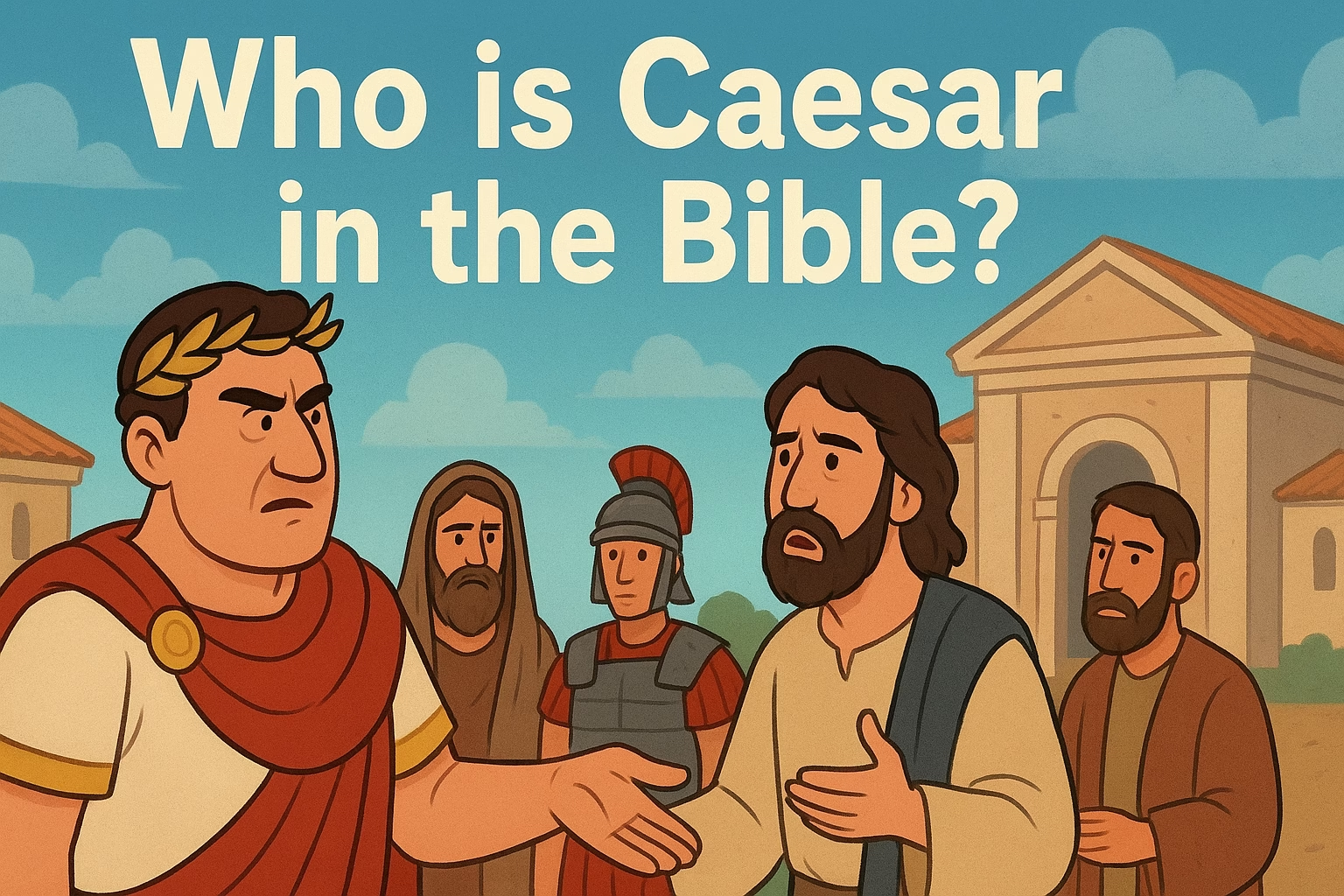
The figure of Caesar in the Bible represents both a historical and a theological significance. As a title, “Caesar” refers to the Roman emperors, particularly during the time of Jesus and the early church. Understanding who Caesar is in the Bible helps us grasp the political and social context in which early Christians lived. This article will explore the references to Caesar in the New Testament and the implications of these references for understanding authority, governance, and the mission of the early church.
Caesar, in biblical terms, primarily refers to the Roman emperors, with the most notable being Julius Caesar, Augustus, and Tiberius. The title “Caesar” became synonymous with Roman imperial power and authority. The New Testament offers several references to Caesar, particularly in the Gospels and the Acts of the Apostles, which provide insight into the relationship between the Roman authorities and the early Christian community.
Historical Context of Caesar
To understand the significance of Caesar in the Bible, it is essential to consider the historical context of the Roman Empire during the time of Jesus. By the time of Christ’s ministry, the Roman Empire had established itself as a dominant force in the Mediterranean world. The Jews lived under Roman rule, which often created tension and conflict. The Roman government was known for its strict governance and taxation policies, which were resented by many Jewish people.
Caesar was not only a political figure but also a symbol of the imperial cult, where emperors were often worshipped as deities. This posed a challenge for early Christians, who believed in one true God and faced persecution for refusing to acknowledge Caesar as divine.
References to Caesar in the New Testament
Several key passages in the New Testament mention Caesar, providing insight into his role and significance. One of the most notable references is found in Matthew 22:15-22, where Jesus is questioned about paying taxes to Caesar:
“Is it lawful to pay taxes to Caesar or not?”
In response, Jesus asks to see a coin and points out that the image on the coin belongs to Caesar. He famously replies, “Give to Caesar what is Caesar’s, and to God what is God’s.” This statement highlights the distinction between earthly authority and divine authority. Jesus acknowledges the legitimacy of Roman rule while simultaneously affirming God’s ultimate sovereignty.
Caesar and the Early Church
In the book of Acts, Caesar is mentioned in the context of Paul’s missionary journeys and his eventual trial. For instance, in Acts 25:10-12, Paul appeals to Caesar to ensure a fair trial when he is accused by the Jewish leaders:
“I appeal to Caesar!”
This appeal illustrates the legal rights that a Roman citizen had, allowing Paul to seek justice in the highest court of the empire. It also indicates the complexities of navigating Roman law as a Christian leader in a predominantly hostile environment.
Theological Implications of Caesar’s Role
The references to Caesar in the Bible raise important theological questions about authority and obedience. Romans 13:1-7 emphasizes the importance of submitting to governing authorities, stating that all authority comes from God. This passage encourages Christians to respect and obey civil laws while maintaining their primary allegiance to God. It underscores the idea that while Christians are to honor earthly leaders, their ultimate loyalty lies with God’s kingdom.
- Authority: The New Testament teaches that God is sovereign over all earthly powers, including Caesar.
- Obedience: Christians are called to obey civil authorities unless such obedience contradicts God’s commands.
- Witness: The early church’s relationship with Caesar serves as a model for how Christians can navigate their faith within secular societies.
Furthermore, the tension between the early Christians and the Roman authorities highlights the challenges of maintaining faith in a culture that often opposed their beliefs. The refusal to worship Caesar as a god was a significant factor in the persecution of Christians, as seen in the accounts of martyrs and the struggles faced by the early church.
Conclusion of Part One
In summary, Caesar in the Bible represents more than just a historical figure; he symbolizes the complex relationship between faith and authority. The teachings of Jesus and the experiences of the early church provide profound insights into how Christians are to interact with governmental powers while remaining faithful to God’s call. Understanding Caesar’s role in the biblical narrative helps to frame the larger discussion about the nature of authority and the mission of the church in a world that often challenges its beliefs.
Caesar’s Influence on Early Christian Thought
The presence of Caesar in the biblical narrative profoundly influenced early Christian thought and practice. The early church was often at odds with the Roman Empire, leading to a unique theological reflection on authority, power, and the nature of God’s kingdom. Early Christians had to grapple with the idea of living under a regime that demanded loyalty and reverence while simultaneously affirming the supremacy of Christ as Lord.
One significant aspect of this influence is the concept of the “kingdom of God” as contrasted with the “kingdom of Caesar.” Jesus proclaimed the kingdom of God as a revolutionary idea that challenged the existing social and political structures. This kingdom was not defined by earthly power but was characterized by love, justice, and mercy. Early Christians understood their mission as a calling to embody these values, often at great personal cost.
The Persecution of Early Christians
The refusal to acknowledge Caesar as a divine figure led to intense persecution of Christians. Historical accounts, such as those from Tacitus and Josephus, provide context for this persecution, which often included imprisonment, torture, and execution. The early church faced these challenges with remarkable resilience, believing that their ultimate allegiance was to Christ, not the emperor.
In Revelation, for example, the imagery of the “Beast” is often interpreted as a representation of the Roman Empire and its oppressive authority. The early Christians were encouraged to remain steadfast in their faith, even in the face of severe persecution, as seen in passages that call for endurance and faithfulness amidst trials. This theological perspective reinforced the idea that suffering for the sake of Christ was a noble pursuit and a means of participating in His redemptive work.
Paul’s Relationship with Roman Authority
The Apostle Paul’s interactions with Roman authorities provide additional insight into the relationship between Caesar and early Christianity. Paul, as a Roman citizen, navigated the complexities of Roman law and governance with skill. His appeal to Caesar, as mentioned in Acts, was not merely a legal maneuver; it was also a strategic way to spread the Gospel to the highest echelons of power in the empire.
Paul’s letters often reflect his understanding of authority. In his epistles, he encourages believers to live peaceably and honorably, even while advocating for their rights as citizens. For instance, in Philippians 3:20, Paul writes that believers are citizens of heaven, emphasizing that their primary identity transcends their earthly citizenship. This dual citizenship illustrates the tension Christians face in balancing their responsibilities to both God and the state.
Lessons for Contemporary Christians
The relationship between Caesar and the early church has significant implications for contemporary Christians. In a world where political powers often conflict with Christian values, believers are called to navigate their faith with wisdom and grace. The teachings of Jesus and the experiences of the apostles serve as a guide for how to engage with authority today.
- Discernment: Christians are encouraged to discern when to comply with government regulations and when to stand firm in their faith, especially when laws contradict biblical teachings.
- Engagement: Believers are called to be active participants in their communities, advocating for justice and righteousness, reflecting the values of God’s kingdom.
- Hope: The early church’s perseverance amidst persecution reminds modern Christians of the hope found in Christ, even in difficult circumstances.
Final Reflections on Caesar in the Bible
Understanding Caesar’s role in the Bible not only sheds light on the historical context of the early church but also invites contemporary believers to engage thoughtfully with the concept of authority. The dynamic between the empire and the church serves as a reminder that while Christians live in a physical kingdom, they are ultimately part of a spiritual one that calls for a distinct way of life.
In conclusion, Caesar represents the earthly powers that believers must navigate. The early Christians’ response to these powers offers valuable lessons on faithfulness, resilience, and the importance of prioritizing God’s kingdom. By examining the biblical narrative surrounding Caesar, Christians today can find guidance on how to live faithfully in a world that often challenges their beliefs and values.
For further exploration of biblical figures and their interactions with authority, consider reading about Herod in the Bible and the role of tax collectors in the Bible, both of which provide additional context to the political and social dynamics of the time.