The life of Abraham is one of the most significant narratives in the Bible, rich with lessons about faith, obedience, and God’s promises. Understanding the timeline of Abraham’s life, including his age at death, sheds light on his journey and the covenant God made with him. This article will explore the biblical details surrounding Abraham’s age at the time of his death and the context within which this figure is presented.
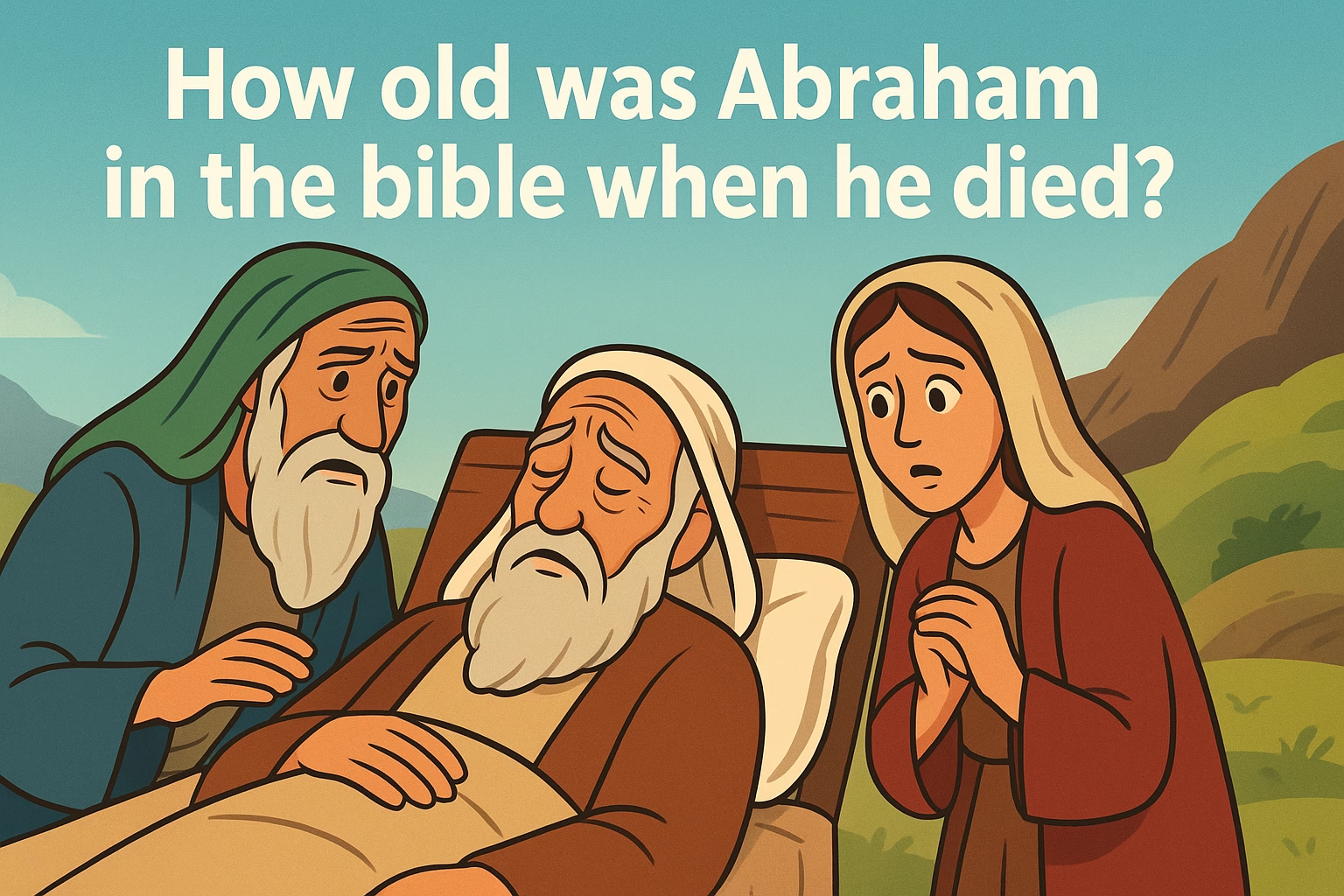
According to the Bible, Abraham was 175 years old when he died. This information is found in Genesis 25:7-8, which states, “Abraham lived for 175 years. He died at a ripe old age, having lived a long and satisfying life. He died and was buried beside his wife, Sarah.” This passage provides a clear answer to the question of Abraham’s age at death, emphasizing both the length and quality of his life.
Abraham’s Life Span in Context
Abraham’s age at death is significant not only for its numerical value but also for what it represents in the broader narrative of Genesis. He lived a long life by the standards of his time, which is often highlighted in biblical texts. The ages of the patriarchs in Genesis are generally much longer than those of people today, reflecting a different historical and theological context.
In the early chapters of Genesis, it is common to find individuals living for several centuries. For instance, Methuselah lived 969 years, and Noah lived 950 years. These long life spans can be seen as a reflection of God’s original design for humanity, where death had not yet entered the world in the way it would later after the fall. Abraham’s age, while significantly shorter than that of some of his predecessors, still indicates a life well-lived according to God’s plan.
The Significance of 175 Years
Why is Abraham’s age of 175 important? This age signifies not only the length of his life but also the fulfillment of God’s promises. Abraham was called by God at the age of 75 when he left his homeland to journey to the land of Canaan (Genesis 12:1-4). Over the next century, he would experience profound events, including the birth of his son Isaac at the age of 100, the covenant of circumcision, and numerous encounters with God that shaped the history of Israel.
In Genesis 17:1, God appears to Abraham and makes a covenant with him, promising that he would be the father of many nations. Abraham’s long life allowed him to witness the beginnings of this promise, as Isaac, Jacob, and eventually the twelve tribes of Israel came from his lineage. His age at death can be seen as a testament to the faithfulness of God in fulfilling His promises over generations.
The Death of Abraham: A Biblical Perspective
Genesis 25 provides a poignant account of Abraham’s death. It describes him as having lived a “long and satisfying life,” which indicates that he had a sense of fulfillment in his journey. The Bible often emphasizes the importance of how one lives rather than merely how long one lives. Abraham’s life was marked by faith, challenges, and obedience to God, which contributed to the legacy he left behind.
“He died and was buried beside his wife, Sarah.” (Genesis 25:8)
This statement not only marks the end of Abraham’s life but also signifies his connection to Sarah, his wife, and the covenant relationship established by God. Their burial together symbolizes the unity they shared, both in life and in death, and highlights the importance of family and legacy in biblical narratives.
Understanding Biblical Ages
When considering the ages of biblical figures like Abraham, it’s essential to recognize the cultural and historical context. The genealogies and ages recorded in the Bible serve various purposes, including theological messaging and historical record-keeping. The ages can reflect the vitality of life in the early chapters of Genesis and the gradual decline of lifespan as humanity moves further away from the original creation.
Abraham’s age of 175 years may also serve as a narrative device to illustrate the themes of God’s covenant and faithfulness. By providing a specific age, the biblical authors convey a sense of completeness and divine order in Abraham’s life, paralleling the larger biblical narrative of God’s plan for humanity.
Life After Abraham: The Impact of His Legacy
Abraham’s death at 175 years old marked a significant transition in the biblical narrative. His passing did not signify the end of his influence; rather, it was a continuation of God’s promises through his descendants. Isaac, his son, would carry on the covenant, and the impact of Abraham’s faith would ripple through generations, ultimately leading to the establishment of the nation of Israel and, by extension, the story of redemption through Jesus Christ.
In the New Testament, Abraham is often referenced as a model of faith. In Romans 4:3, Paul writes, “For the Scriptures tell us, ‘Abraham believed God, and God counted him as righteous because of his faith.'” This connection underscores the significance of Abraham’s life beyond just his years; it highlights the enduring legacy of faith that continues to inspire believers today.
Exploring Abraham’s Life Before His Death
To fully appreciate the significance of Abraham’s age at death, it is helpful to examine the events leading up to that moment. Abraham’s life was marked by several key milestones that shaped his identity and relationship with God. From his calling to leave Ur of the Chaldeans to his covenant with God, each phase of his journey contributed to his legacy.
One of the most pivotal moments in Abraham’s life occurred when he was 99 years old. At this time, God established the covenant of circumcision, marking Abraham and his descendants as God’s chosen people (Genesis 17:10-14). This act not only signified the special relationship between God and Abraham but also underscored the importance of obedience in the life of faith.
Another significant event was the birth of Isaac, which took place when Abraham was 100 years old (Genesis 21:5). Isaac was the child of promise, born to Abraham and Sarah after years of waiting and uncertainty. This miraculous birth further demonstrated God’s faithfulness and power, as Abraham and Sarah were well beyond childbearing age. The joy and fulfillment Abraham experienced with Isaac must have been profound, adding depth to his life experience.
Abraham’s Faith Journey
Abraham’s faith journey is a central theme in his story. His willingness to trust God, even when circumstances seemed impossible, serves as a powerful example for believers. For instance, when God commanded Abraham to sacrifice Isaac, Abraham obeyed without hesitation, believing that God could raise Isaac from the dead if necessary (Hebrews 11:17-19). This act of faith not only tested Abraham but also illustrated the depth of his relationship with God.
The significance of Abraham’s faith extends beyond his personal journey. In Galatians 3:7, Paul writes that those who have faith are children of Abraham. This connection emphasizes that Abraham’s faith is a model for all believers, showcasing that righteousness comes through faith rather than works. Abraham’s life serves as a bridge between the Old and New Testaments, highlighting the continuity of God’s plan for humanity.
The Cultural Context of Abraham’s Death
Understanding the cultural context of Abraham’s death is essential for grasping its significance. In ancient Near Eastern societies, a person’s age at death often reflected their wisdom, experience, and status within the community. Abraham’s 175 years positioned him as a revered patriarch, and his death would have been a moment of great significance for his family and tribe.
Moreover, the burial practices of the time emphasized the importance of family and ancestry. Abraham’s burial beside Sarah in the Cave of Machpelah (Genesis 23:19) indicates not only their marital bond but also the establishment of a familial lineage that would continue to impact future generations. This burial site became a significant location for the descendants of Abraham, reinforcing their identity as a chosen people with a shared heritage.
Lessons from Abraham’s Life and Death
The life and death of Abraham offer several lessons for contemporary readers. First, the importance of faith and obedience stands out. Abraham’s willingness to follow God’s commands, even when faced with uncertainty, encourages believers to trust in God’s plans for their lives. His story reminds us that faith is often accompanied by trials but can lead to profound blessings.
Additionally, Abraham’s legacy emphasizes the importance of relationships. His connection with Sarah, his son Isaac, and his descendants illustrates the value of family and community in the biblical narrative. The way Abraham lived his life serves as a reminder to prioritize relationships with loved ones and to foster a legacy of faith and obedience.
Theological Implications of Abraham’s Age
Abraham’s age at death, 175 years, carries theological implications that extend beyond mere numbers. It symbolizes the fulfillment of God’s promises and the unfolding of His divine plan. As a patriarch, Abraham’s life serves as a precursor to the broader narrative of redemption found in Scripture. His age reflects a life fully engaged in God’s purposes, demonstrating that one’s years can be filled with meaning and purpose when aligned with divine intentions.
Furthermore, the long life of Abraham invites believers to consider the nature of time and eternity. While human life is finite, the impact of a faithful life can resonate through the ages. Abraham’s faith continues to be celebrated and studied, showing that true legacy transcends physical existence.
Conclusion: Abraham’s Enduring Legacy
Abraham’s life, marked by faith, obedience, and divine promise, culminated in his death at the age of 175. This age not only signifies a long life but also serves as a testament to God’s faithfulness and the fulfillment of His covenant. Abraham’s story is not just about the number of years he lived but about the profound impact he made through his faith and obedience to God.
As we reflect on Abraham’s life and death, we are encouraged to embrace a life of faith, trusting in God’s promises and committing to leave a legacy that honors Him. The lessons learned from Abraham’s journey remind us that our lives can have lasting significance when we walk in faith and obedience.
For further exploration of Abraham’s life and the implications of his faith, you can read more about the significance of Abraham in the New Testament and how his story connects to the broader narrative of faith in the Bible in another article about the covenant promises of God.