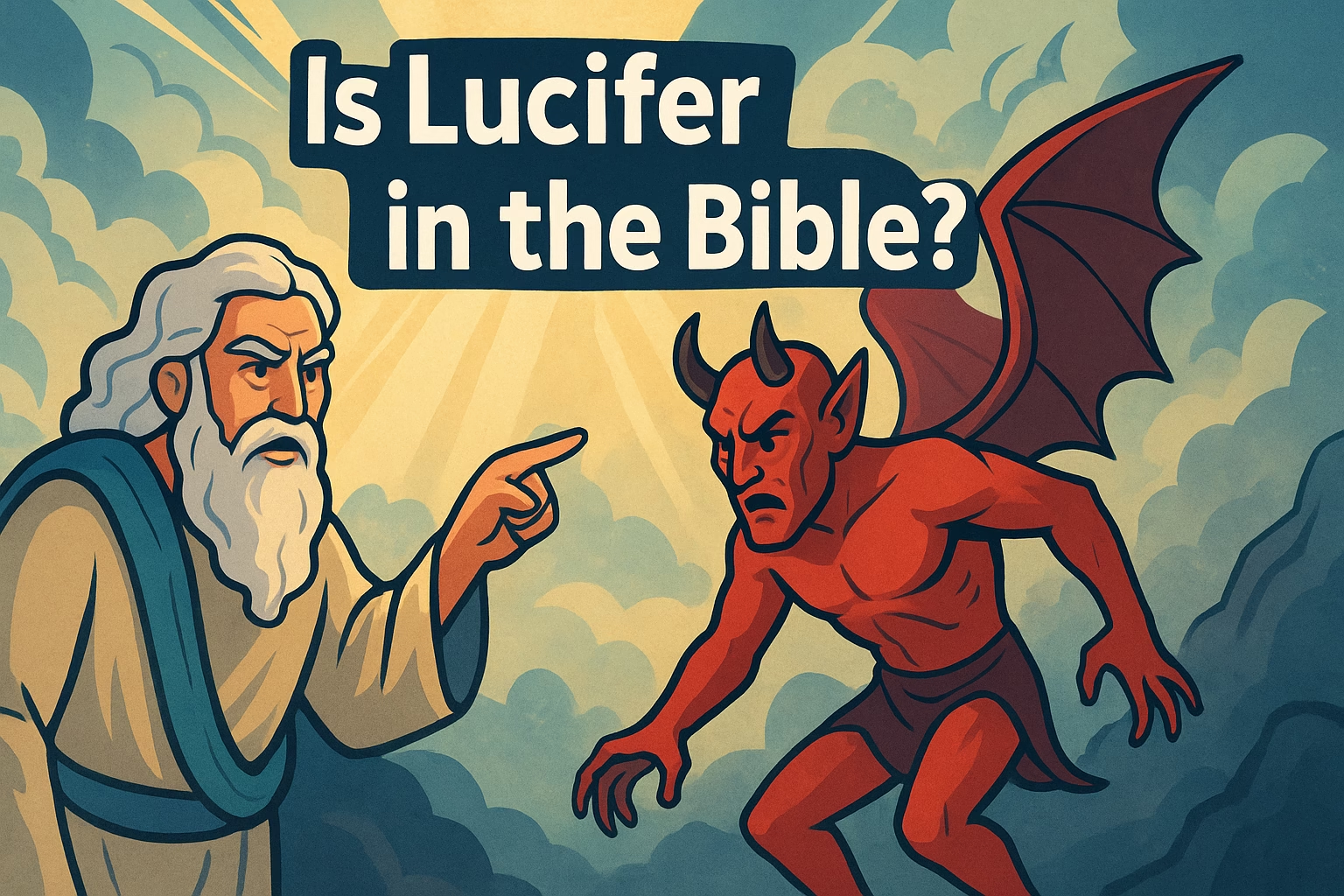
The figure of Lucifer has intrigued many believers and scholars throughout the history of Christianity. The name is often associated with a fallen angel or a being who opposes God. In this article, we will explore whether Lucifer is mentioned in the Bible and how this character is depicted in Scripture. We will look closely at relevant biblical passages and their interpretations to provide clarity on this topic.
To answer the question directly, the name “Lucifer” does appear in the Bible, but it is important to understand the context in which it is used. The term is found in Isaiah 14:12 in the King James Version, where it describes the fall of a figure often interpreted as the king of Babylon. However, the connection between this figure and the traditional concept of Lucifer as a fallen angel is a matter of debate among scholars and theologians.
Understanding Isaiah 14:12
Isaiah 14:12 reads, “How you are fallen from heaven, O Lucifer, son of the morning! How you are cut down to the ground, you who weakened the nations!” This verse is part of a passage that critiques the pride and eventual downfall of the Babylonian king. The term “Lucifer” comes from the Latin word meaning “light-bringer” or “morning star.” In this context, it refers to a figure who once held a high position but fell from grace due to pride and arrogance.
It is essential to note that the original Hebrew text uses the word “helel,” which means “morning star” or “shining one.” The translation to “Lucifer” in the KJV is a result of the Latin Vulgate’s influence, which used “lucifer” to translate “helel.” Many modern translations do not use the term “Lucifer” at all, opting instead for “morning star” to reflect the original meaning more accurately.
The Connection to Satan
Over time, the figure of Lucifer has been conflated with Satan, the adversary of God, primarily due to interpretations that view Isaiah 14:12 as a reference to the fall of Satan. This interpretation is not explicitly stated in the text and is largely based on tradition rather than direct biblical support. In Christian theology, Satan is often depicted as a fallen angel who rebelled against God. However, the Bible does not explicitly link this figure to the name “Lucifer” in a direct manner.
In Ezekiel 28:12-17, we find another passage often associated with the fall of Satan. This passage describes the king of Tyre but uses imagery that some interpret as referring to a heavenly being. The verses speak of a figure who was “the model of perfection” and “full of wisdom and perfect in beauty.” This being is described as having been in Eden and later cast out due to pride. While some see this as a description of Satan’s fall, it does not mention the name “Lucifer.” The connection is again inferred rather than explicit.
Lucifer in Christian Tradition
The association of Lucifer with the devil has been popularized through literature, art, and sermons. Works like John Milton’s “Paradise Lost” have cemented the image of Lucifer as a tragic figure who rebels against God. This portrayal has influenced Christian thought and has led to the widespread belief that Lucifer is synonymous with Satan. However, it is crucial to differentiate between biblical text and later interpretations or traditions.
Many early Church Fathers, such as St. Augustine, also contributed to the development of the idea of Lucifer as a fallen angel. They interpreted Isaiah 14 in a way that connected it to the narrative of Satan’s rebellion. However, modern biblical scholarship often cautions against this conflation, emphasizing the need to consider the original context of the passages.
Alternative Interpretations
The understanding of Lucifer and its connection to Satan is not universally accepted among all Christian denominations. Some theologians argue that Isaiah 14 is strictly about the Babylonian king and that applying it to Satan is a misinterpretation. They point out that the passage’s primary intent is to express God’s judgment against earthly rulers who oppress His people.
Furthermore, some translations of the Bible, such as the New International Version, do not use the term “Lucifer” at all, opting instead for phrases like “morning star.” This shift in translation reflects a growing understanding of the text’s original meaning and its context. By focusing on the immediate context of the verses, many scholars advocate for a reading that emphasizes the historical and political implications rather than a cosmic battle between good and evil.
Conclusion
In summary, while the name “Lucifer” does appear in the Bible, particularly in Isaiah 14:12, its context and meaning are vital for understanding its implications. The connection between Lucifer and Satan is a tradition that has evolved over centuries and is not explicitly supported by Scripture. As we continue to explore this topic, it is essential to consider the original texts and their meanings without imposing later interpretations.
The Role of Lucifer in Biblical Theology
To fully grasp the implications of the figure associated with Lucifer, we must consider the broader theological context within the Bible. The concept of rebellion against God and the consequences of pride are prevalent themes throughout Scripture. In many ways, the narrative surrounding Lucifer serves as a cautionary tale about the dangers of hubris and the inevitable downfall that follows.
Throughout the Bible, pride is consistently portrayed as a precursor to destruction. Proverbs 16:18 states that “Pride goes before destruction, a haughty spirit before a fall.” This principle aligns with the story of Lucifer as a figure who, due to pride, sought to elevate himself above God, leading to his ultimate demise. In this light, the narrative serves as a moral lesson rather than a mere historical account.
Theological Implications of the Fall
The fall of Lucifer raises significant theological questions. What does it mean for believers today? The fall is often interpreted as a demonstration of God’s sovereignty. It shows that no matter how powerful a being may be, they are ultimately subject to God’s authority. This principle offers comfort to believers, reminding them that God is in control, even in the face of evil.
This theological reflection leads to critical questions for believers: How do we respond to our own pride? Are we aware of the subtle ways in which we might elevate ourselves above God? The narrative of Lucifer challenges individuals to examine their hearts and motivations continually. It serves as a reminder of the importance of humility and reliance on God’s grace.
Lucifer in the New Testament
While the name “Lucifer” itself does not appear in the New Testament, the themes associated with this figure resonate throughout the New Testament writings. The concepts of light and darkness are significant in the teachings of Jesus and the apostles. For instance, John 1:5 states, “The light shines in the darkness, and the darkness has not overcome it.” This dichotomy of light versus darkness can be seen as a reflection of the struggle between good and evil, a theme that connects back to the traditional understanding of Lucifer as a being who was once a bearer of light but fell into darkness.
Moreover, in Revelation 12:7-9, there is a depiction of a great war in heaven where Michael and his angels fight against the dragon (often interpreted as Satan). This passage highlights the ongoing spiritual battle between good and evil, reinforcing the idea that the conflict initiated by pride and rebellion is a continuing saga within the biblical narrative.
Lucifer in Popular Culture
The portrayal of Lucifer has extended beyond theological discussions into popular culture. Many works of literature, film, and art have drawn inspiration from the idea of Lucifer as a tragic figure or a symbol of rebellion. This cultural representation often emphasizes the duality of good and evil, presenting Lucifer as a complex character rather than a monolithic evil force.
Understanding these cultural interpretations can help modern readers navigate their perceptions of biblical texts. While they can provide insight, it is crucial to remember that these portrayals are often influenced by personal or artistic interpretations rather than strict biblical accuracy. Engaging with these narratives can lead to deeper discussions about morality, choice, and the nature of good and evil.
Questions for Further Reflection
As we conclude the exploration of Lucifer’s place in the Bible, several questions arise that can enrich personal study and group discussions:
- What lessons can we learn from the story of Lucifer about pride and humility in our lives?
- How does understanding the context of Isaiah 14 change our perception of spiritual warfare today?
- In what ways can we discern the influence of cultural narratives on our understanding of biblical figures?
- How does the New Testament’s portrayal of light and darkness inform our understanding of spiritual conflict?
Final Thoughts on Lucifer’s Identity
In conclusion, while the name “Lucifer” appears in the Bible, its interpretation is complex and layered. The connection between Lucifer and Satan is not explicitly defined in Scripture, and much of the understanding comes from tradition and interpretation. The biblical text offers rich lessons about pride, authority, and the nature of good and evil. As we engage with these themes, it is essential to ground our understanding in the Scripture itself, rather than relying solely on cultural or traditional interpretations. Ultimately, the story of Lucifer serves as a reminder of the consequences of rebellion against God and the importance of humility in our walk of faith.
For a deeper understanding of related topics, you may find it helpful to explore what heresy is in the Bible and what hell is described as in the Bible.