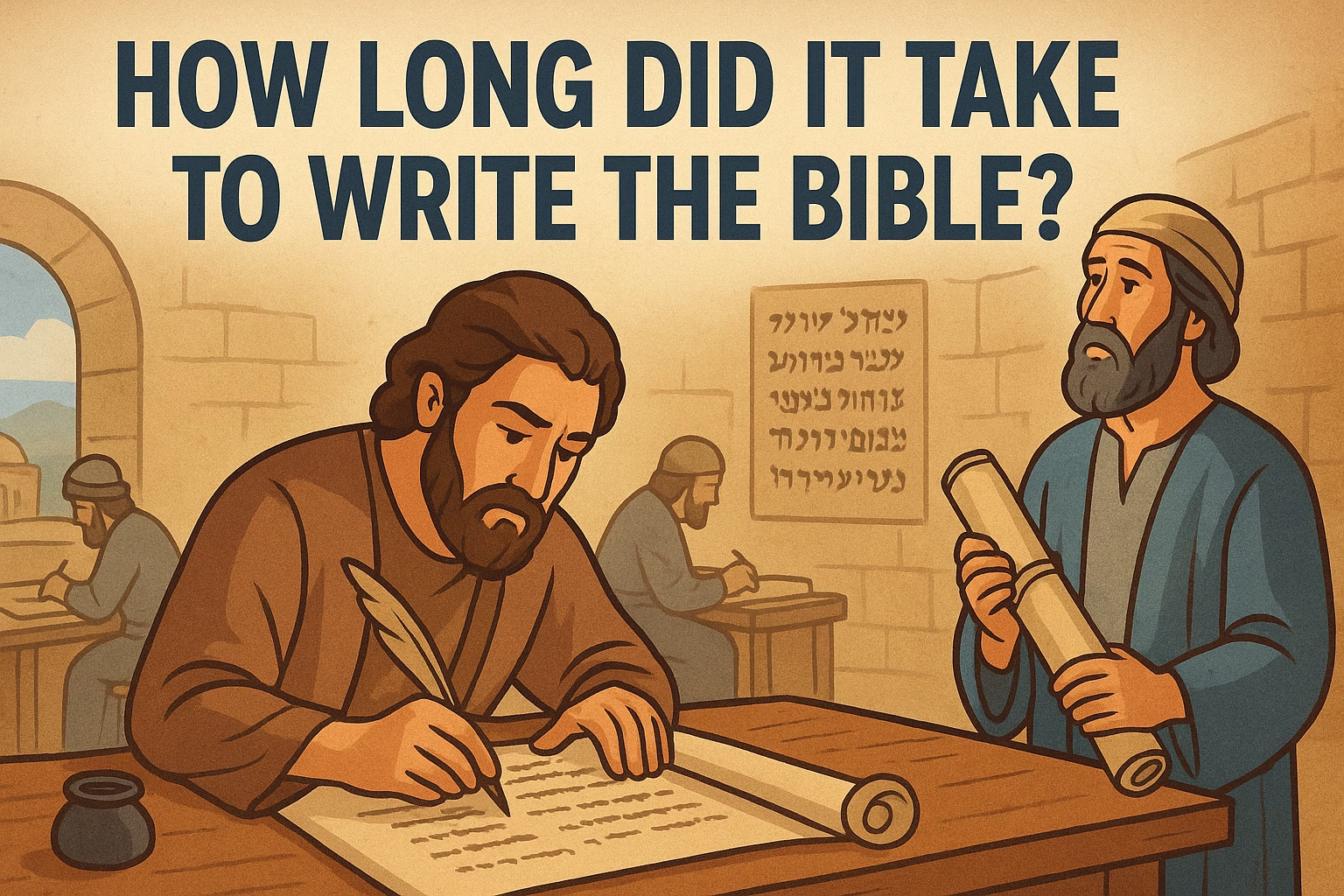
The Bible is one of the most influential texts in human history, revered by millions as the inspired word of God. Its creation spans centuries, involving numerous authors, cultures, and historical contexts. Understanding how long it took to write the Bible requires delving into its composition and the various stages of its development.
While it is difficult to pinpoint an exact timeframe, scholars generally agree that the Bible was written over a period of roughly 1,500 years. This long process involved many different authors and was influenced by diverse historical events and cultural contexts.
Understanding the Composition of the Bible
The Bible is divided into two main sections: the Old Testament and the New Testament. Each of these sections has its own unique history and timeline of authorship.
The Old Testament
The Old Testament, also known as the Hebrew Scriptures, includes texts that were written over a vast period. Many of the books are believed to have been composed between the 12th and 2nd centuries BCE. Key components of the Old Testament include:
- The Torah (Pentateuch): Traditionally attributed to Moses, the first five books (Genesis, Exodus, Leviticus, Numbers, and Deuteronomy) were likely written during the 15th to 13th centuries BCE. However, modern scholars suggest they may have been compiled and edited over several centuries.
- The Historical Books: These books, which include Joshua, Judges, Samuel, and Kings, were written between the 10th and 6th centuries BCE. They document the history of the Israelites and their relationship with God.
- The Wisdom Literature and Psalms: Books like Proverbs, Ecclesiastes, and the Psalms were written from around the 10th century BCE to the 2nd century BCE, reflecting the thoughts and prayers of the Israelites.
- The Prophets: Major and minor prophets, including Isaiah, Jeremiah, and Amos, wrote their messages from the 8th to the 5th centuries BCE, often addressing the moral and spiritual state of Israel.
The New Testament
The New Testament was written in a much shorter timeframe, approximately between 45 CE and 100 CE. It documents the life of Jesus Christ and the early Christian church. Key components include:
- The Gospels: Matthew, Mark, Luke, and John were written between 65 CE and 100 CE, providing different perspectives on the life and teachings of Jesus.
- The Acts of the Apostles: Written by Luke, this book describes the early church’s history and the spread of Christianity after Jesus’ resurrection, likely composed around 63 CE.
- The Epistles: Letters from apostles like Paul, Peter, and John were written to various churches and individuals from approximately 50 CE to 100 CE, addressing theological issues and offering guidance.
- The Book of Revelation: The last book of the New Testament, attributed to John, was likely written around 95 CE, offering a prophetic vision of the future.
Factors Influencing the Timeline
Several factors influenced the writing and compilation of the Bible over such an extensive period:
Historical Context
The Bible was written during significant historical events that shaped the lives of its authors. For instance, the Babylonian Exile in the 6th century BCE prompted a renewed focus on preserving Israel’s history, leading to the compilation of many texts. Similarly, the rise of Christianity in the 1st century CE created a need for written accounts of Jesus’ life and the teachings of His followers.
Oral Tradition
Before many biblical texts were written down, they were passed down through oral tradition. Stories, laws, and teachings were shared verbally, which helped preserve them over generations. This oral culture allowed for the transmission of important spiritual truths before being recorded in writing.
Editing and Compilation
The Bible was not only written but also edited and compiled over time. Different communities may have had their own versions of texts, leading to variations before the canonization process established a standardized collection of books. This process, particularly for the Old Testament, took several centuries and involved discussions among religious leaders about which texts were divinely inspired.
The Role of Inspiration
For many believers, the Bible’s authorship goes beyond mere historical and cultural factors. They view the writing of the Bible as an inspired process guided by God. This belief is based on passages like 2 Timothy 3:16, which states that “All Scripture is inspired by God and is useful to teach us what is true.” This divine inspiration is seen as integral to understanding the Bible’s authority and significance.
In summary, the writing of the Bible spanned a remarkable 1,500 years, encompassing diverse authors, historical contexts, and cultural influences. From the ancient texts of the Old Testament to the teachings of the New Testament, each part reflects a unique journey of faith and revelation. Understanding this timeline provides valuable insight into the Bible’s complex and rich history.
The Journey of Translation and Transmission
After the original texts of the Bible were written, the journey did not end there. The Bible underwent numerous translations and adaptations to reach a wider audience. This process has significantly influenced how the Bible is understood today.
Early Translations
The earliest translations of the Bible were made to make the scriptures accessible to those who spoke different languages. One notable early translation is the Septuagint, a Greek version of the Hebrew Scriptures created in the 3rd to 2nd centuries BCE. It was crucial for Jewish communities living outside of Israel and later for early Christians who spoke Greek.
Latin translations, such as the Vulgate, were produced in the 4th century CE by Jerome. This translation became the standard Bible for the Western Christian church for many centuries. The Vulgate’s widespread use solidified the importance of Latin in the Christian tradition.
The Impact of the Printing Press
The invention of the printing press in the 15th century revolutionized how the Bible was disseminated. The first major book printed using movable type was the Gutenberg Bible in 1455. This development made the scriptures more accessible to the general public, leading to increased literacy and the spread of Reformation ideas.
Modern Translations
In the modern era, countless translations of the Bible have been produced to cater to diverse linguistic and cultural contexts. These translations seek to convey the original meanings of the texts while making them understandable to contemporary readers. Versions like the New International Version (NIV) and English Standard Version (ESV) are examples of how the Bible continues to evolve in language and style.
The Canonization Process
The Bible we know today is the result of a long canonization process that involved determining which books were divinely inspired and should be included in the sacred text. This process took centuries and varied between different religious traditions.
Old Testament Canonization
The canon of the Old Testament was largely established by the end of the 1st century CE, but the exact timeline is debated among scholars. Different Jewish communities accepted various texts, and discussions continued until the Council of Jamnia in the late 1st century, where a more standardized list began to emerge.
New Testament Canonization
The New Testament canon was established over a shorter period, roughly from the 2nd to the 4th centuries CE. Early church leaders, such as Athanasius, played significant roles in affirming the authenticity of certain texts. The Council of Carthage in 397 CE helped to solidify the canon that most Christians accept today.
Questions for Reflection
Understanding the timeline of the Bible’s writing invites deeper reflection on its significance. Here are some meaningful questions to consider:
- How does the historical context of the Bible influence its teachings and messages?
- In what ways do translations impact the interpretation of biblical texts?
- What role does oral tradition play in the preservation of scripture?
- How can understanding the canonization process enhance our appreciation of the Bible?
- How does the belief in divine inspiration shape the way we approach reading and studying the Bible?
Conclusion: A Living Document
The Bible’s creation, spanning approximately 1,500 years, reflects a dynamic interplay of history, culture, and faith. From its diverse authors to the various translations and the canonization process, every aspect contributes to its richness as a living document. For believers, the Bible is not just a historical text; it is a source of spiritual guidance and inspiration.
As we explore the depth of its history and the journey of its texts, we gain a greater appreciation for the impact the Bible has had on individuals and societies throughout the ages. Its messages continue to resonate today, inviting us to engage with its teachings in new and transformative ways.
To learn more about why the Bible was written, you can visit this article. Additionally, if you’re curious about the timeline of when various parts of the Bible were written, check out this informative piece.