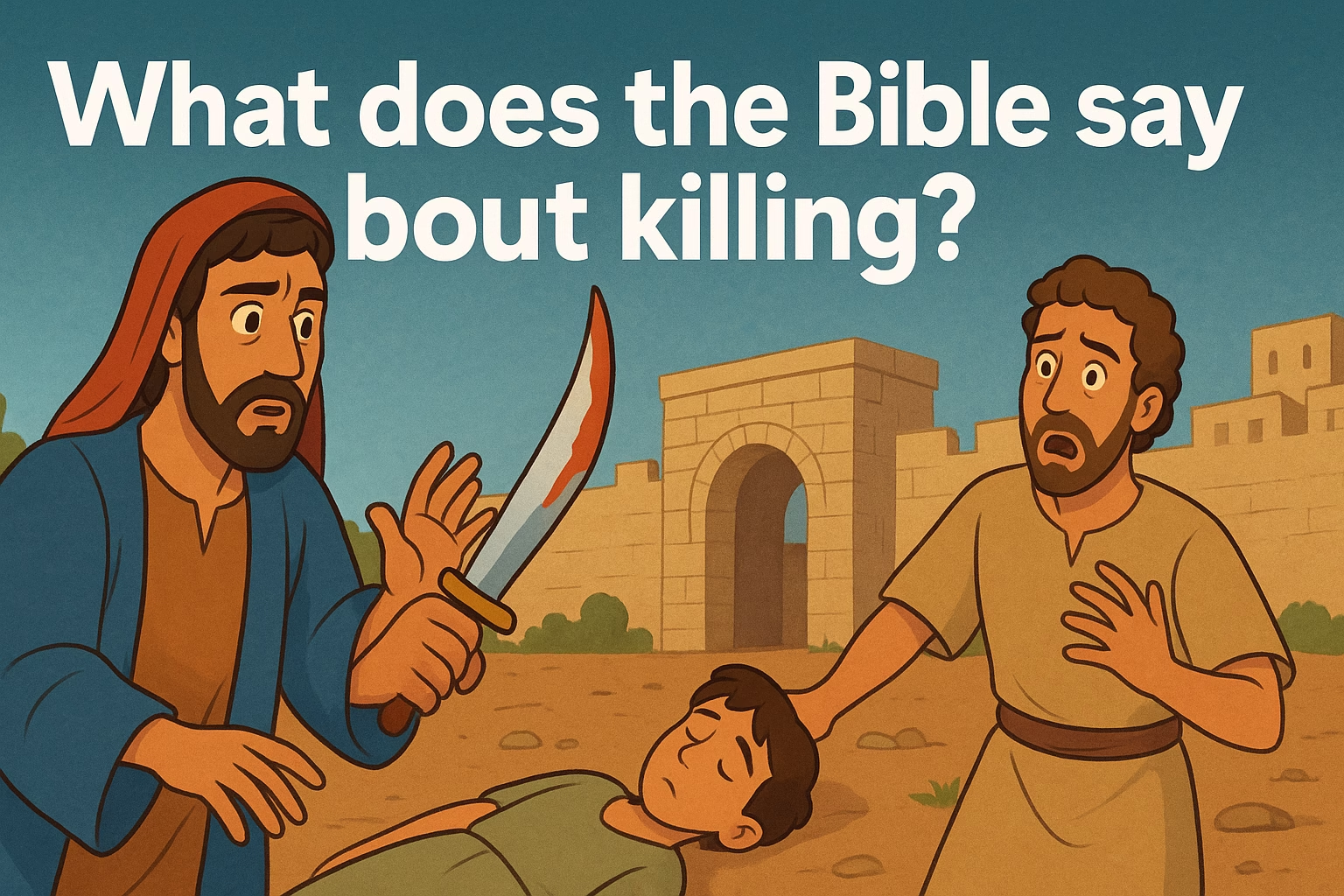
The topic of killing is complex and multifaceted in the Bible, addressing various contexts and moral considerations. Understanding what the Bible says about killing requires examining specific passages, the cultural and historical background of those texts, and the broader theological implications. This article seeks to explore these aspects to provide clarity on this sensitive subject.
At its core, the Bible explicitly condemns murder, which is the unlawful taking of a human life. However, it also presents scenarios where killing may be seen as justified, such as in self-defense or during wartime. The distinction between murder and other forms of killing is crucial to grasping the biblical perspective.
The Sixth Commandment: A Clear Prohibition
One of the most direct statements regarding killing is found in the Ten Commandments. In Exodus 20:13, God commands, “You must not murder.” This commandment emphasizes the sanctity of human life and establishes a moral foundation against taking innocent life. The Hebrew word used here, “ratsach,” refers specifically to unlawful killing, or murder, rather than killing in general. This distinction is important in understanding the broader biblical context.
Murder vs. Killing
The Bible makes a distinction between murder and other forms of killing. For instance, in the Old Testament, there are laws regarding capital punishment, which indicate that certain acts, such as murder, theft, or adultery, could warrant the death penalty (Exodus 21:12-17). These laws were given within a specific historical and cultural context where the community’s moral and judicial structure was different from modern perspectives.
Justifiable Killing in War and Self-Defense
There are instances in the Bible where killing is portrayed as justifiable, particularly in the contexts of war and self-defense. For example, in the Old Testament, God commanded the Israelites to engage in battles against their enemies, leading to significant loss of life (Deuteronomy 20:1-20). These actions were seen as fulfilling God’s judgment against nations that practiced immorality and idolatry.
In the New Testament, Jesus acknowledges the reality of self-defense in Luke 22:36, where He advises His disciples to carry swords for protection. This indicates an acknowledgment of the need to protect oneself from harm, which can involve killing in life-threatening situations.
The Role of Authority
Romans 13:1-4 provides insight into the role of governing authorities in matters of life and death. Paul writes that authorities are instituted by God and bear the sword to punish wrongdoers. This passage suggests that God grants governments the right to administer justice, which can include capital punishment. However, this authority is not to be abused; it must align with God’s moral order.
God’s Sovereignty Over Life
Throughout the Bible, there’s a recurring theme that God is the ultimate authority over life and death. In Deuteronomy 32:39, God declares, “I hold the keys of life and death.” This underscores the belief that human life is sacred and that only God has the authority to take it. This perspective is crucial when considering the moral implications of killing.
The Value of Human Life
From a biblical standpoint, human life is created in the image of God (Genesis 1:27). This foundational belief in the dignity and worth of every person informs the biblical stance against murder. In Matthew 5:21-22, Jesus expands on the commandment against murder, teaching that harboring anger or contempt towards others can be seen as a form of murder in the heart. This teaching highlights the importance of our attitudes and intentions, not just our actions.
Consequences of Killing
The Bible also addresses the consequences of killing. In Numbers 35:33-34, it warns that murder pollutes the land and that the land cannot be cleansed except by the blood of the murderer. This signifies the seriousness with which God views the act of taking a life. Additionally, the emotional and psychological toll on both the perpetrator and the community can be profound, as seen in the story of Cain and Abel (Genesis 4:8-16), where Cain’s act of murder leads to his own alienation and punishment.
Seeking Forgiveness and Redemption
Despite the seriousness of killing, the Bible also offers hope for redemption. The story of David, who committed adultery and orchestrated the murder of Uriah (2 Samuel 11), illustrates that even those who have committed grave sins can seek forgiveness. David repented sincerely, and God forgave him, though he faced significant consequences for his actions (Psalm 51). This emphasizes the importance of repentance and the possibility of restoration, regardless of the severity of the sin.
In summary, the Bible presents a nuanced view on killing, distinguishing between murder and other forms of killing, while emphasizing the sanctity of human life. It acknowledges justifiable killing in specific contexts, such as self-defense and war, while reminding us of the moral weight of taking a life. The overarching theme is one of God’s authority over life and death, the value of human life, and the possibility of forgiveness and redemption for those who seek it.
Contextualizing Old Testament Laws
Understanding the Old Testament laws regarding killing requires acknowledging the cultural and historical context of ancient Israel. These laws were given to a specific people at a specific time, reflecting their societal norms and values. For instance, the laws surrounding capital punishment, as outlined in Exodus and Leviticus, were part of a theocratic system meant to maintain community purity and justice. In this framework, the death penalty was not merely punitive but also served as a deterrent and a means to uphold the covenant community’s moral standards.
Moreover, the ancient Israelites viewed their relationship with God as a covenantal one, where obedience to His laws was paramount. Violations of these laws often led to severe consequences, illustrating the seriousness with which they approached issues of life and death. Understanding these laws in their original context helps modern readers grapple with the complexities of biblical teachings on killing.
The Role of Cities of Refuge
Another significant aspect of the Old Testament laws is the concept of cities of refuge, outlined in Numbers 35:9-34. These cities provided sanctuary for individuals who accidentally killed someone, distinguishing between intentional murder and unintentional killing. This provision highlights the biblical understanding of intent and circumstance in the act of killing. It demonstrates that not all killing is viewed equally under biblical law, emphasizing God’s mercy and justice.
New Testament Perspectives on Killing
In the New Testament, the teachings of Jesus further expand on the moral implications surrounding killing. Jesus challenges the understanding of the law by emphasizing the heart’s condition rather than just external actions. In the Sermon on the Mount, He equates anger and insults with murder, illustrating that the root of killing often lies in unresolved conflict and hatred (Matthew 5:21-22). This perspective calls believers to examine their hearts and attitudes towards others, fostering a spirit of reconciliation and love.
Additionally, in the context of the early Christian community, the New Testament encourages believers to pursue peace and reconciliation rather than violence. Romans 12:17-21 urges Christians to overcome evil with good, challenging the idea of retaliation. This shift in focus from the letter of the law to the spirit of the law reflects the transformative nature of Christ’s teachings on how we engage with one another.
Martyrdom and the Value of Life
The New Testament also introduces the concept of martyrdom, where individuals willingly lay down their lives for their faith. This notion is evident in the lives of early Christians who faced persecution. Acts 7 recounts the stoning of Stephen, the first Christian martyr, who forgave his attackers even as he died. This act exemplifies the belief that life can be surrendered for a higher purpose, highlighting the profound value of life and the willingness to sacrifice for one’s convictions.
Theological Implications of Killing
The theological implications of killing extend into discussions about God’s nature and human dignity. The Bible teaches that all humans are made in the image of God, which bestows inherent value and dignity upon every life. This understanding shapes the Christian response to killing, emphasizing the need for compassion, mercy, and justice.
Furthermore, the concept of imago Dei (image of God) calls believers to respect and protect life. This principle is foundational in discussions about issues such as abortion, euthanasia, and capital punishment within Christian ethics. The debate often centers on the sanctity of life versus the complexities of justice and mercy, reflecting the ongoing struggle to apply biblical principles in a modern context.
Questions for Reflection
Considering the biblical perspective on killing raises several important questions for believers and seekers alike:
- How do we navigate the tension between justice and mercy in our responses to violence and killing?
- In what ways can we promote peace and reconciliation in our communities to prevent acts of violence?
- How does the understanding of killing in the Bible inform our views on contemporary ethical issues?
- What role does forgiveness play in the aftermath of violence and killing?
These questions encourage deeper reflection on the implications of biblical teachings and their relevance to our lives today. As we seek to understand the complexity of killing in the Bible, we are invited to engage thoughtfully and compassionately with these challenging topics.
Conclusion: Upholding the Sanctity of Life
The Bible presents a multifaceted view of killing, distinguishing between murder and other forms of killing while emphasizing the sanctity of human life. It acknowledges justifiable killing in specific contexts, such as self-defense and warfare, but consistently underscores the moral weight of taking a life. Ultimately, the Scriptures call believers to uphold the value of life, seek justice tempered with mercy, and pursue reconciliation in a world often marked by violence. In doing so, Christians are reminded of their responsibility to reflect God’s character in their interactions with others.
For further exploration of the nuances of biblical teachings on life and death, you can read more about the sanctity of life in Scripture and the implications of forgiveness in the face of violence.