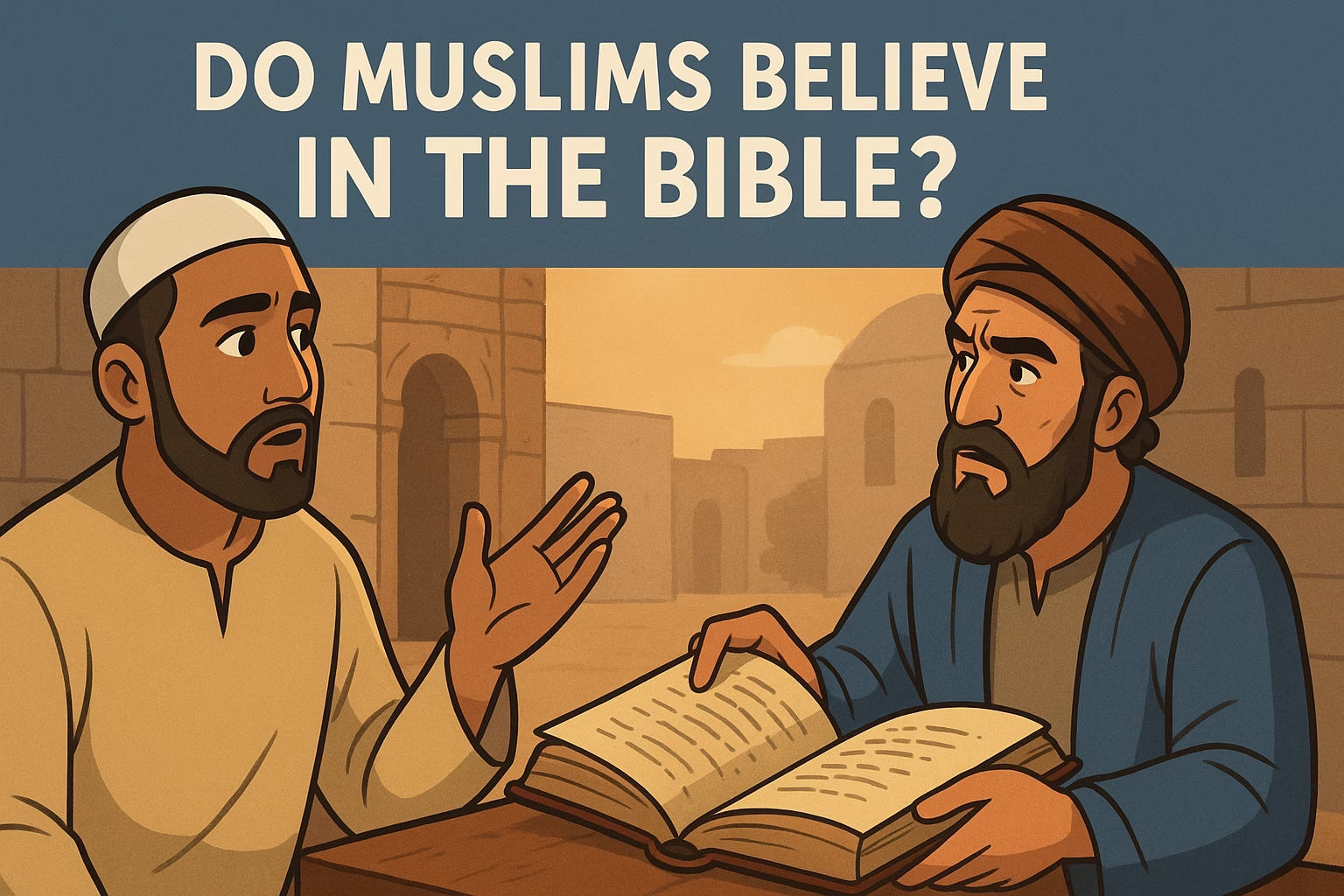
The relationship between Islam and the Bible is a topic of great interest and often leads to many questions. As we explore this subject, it is important to understand the perspectives of both faiths and how they view their respective scriptures. This article will delve into whether Muslims believe in the Bible, what aspects they accept, and how they interpret these texts in light of their own beliefs.
Muslims do acknowledge the Bible, but their belief in it differs significantly from that of Christians. They regard the Bible as a holy book that was revealed by God, but they believe that it has been altered and corrupted over time. Therefore, while Muslims respect the scriptures of the Bible, they do not accept them as the final or complete revelation of God. Instead, they consider the Quran to be the ultimate and unaltered word of God, revealed to the Prophet Muhammad.
Muslims and the Concept of Revelation
In Islam, the concept of revelation is foundational. Muslims believe that God has sent numerous prophets throughout history, each delivering His message to humanity. Among these prophets, figures such as Adam, Noah, Abraham, Moses, and Jesus are highly regarded. The Quran states, “Indeed, We have sent Our messengers with clear signs and sent down with them the Scripture and the balance” (Quran 57:25). This indicates that Muslims believe in the divine origin of many scriptures, including those found in the Bible.
Acceptance of Previous Scriptures
Muslims believe that the Torah (Tawrat) given to Moses and the Psalms (Zabur) given to David are authentic revelations from God. They also recognize the Gospel (Injil) given to Jesus. However, Muslims hold that these texts were intended for specific peoples and times and that with the coming of Muhammad, the Quran became the final revelation, superseding previous scriptures.
“And We sent, following in their footsteps, Jesus, the son of Mary, confirming that which was before him of the Torah; and We gave him the Gospel, in which was guidance and light…” (Quran 5:46).
In this verse, the Quran acknowledges the role of Jesus and his teachings, affirming that he was a prophet who came with a message from God. However, the Islamic perspective is that over time, the teachings found in the Torah and the Gospel were altered or misinterpreted, leading to the need for a final revelation in the Quran.
Muslims’ View on the Bible’s Authenticity
While Muslims respect the Bible, they often argue that it has been changed. The Quran states, “Woe to those who write the Scripture with their own hands and then say, ‘This is from Allah,’ to exchange it for a small price…” (Quran 2:79). This verse reflects the Islamic belief that certain individuals manipulated the text for personal gain, thus obscuring the original messages intended by God.
Muslims also believe that the Bible contains inconsistencies and contradictions, which they view as evidence of its corruption. For instance, they point to differences in genealogies, accounts of events, and teachings between the Bible and the Quran. This belief can lead to a significant divergence in how both faiths view key theological concepts, such as the nature of Jesus.
Jesus in the Bible vs. Jesus in the Quran
In Christianity, Jesus is the Son of God, part of the Holy Trinity, and the Savior of humanity. The Bible explicitly presents these beliefs in various passages, particularly in the New Testament. For example, John 3:16 states, “For God so loved the world that he gave his one and only Son, that whoever believes in him shall not perish but have eternal life.” This central tenet of Christianity is fundamentally different from the Islamic view of Jesus.
In Islam, Jesus (known as Isa) is revered as a prophet and messenger, but he is not considered divine. The Quran emphasizes his humanity and his role as a servant of God. It states, “The Messiah, Jesus, the son of Mary, was but a messenger of Allah and His word which He directed to Mary and a soul [created at a command] from Him” (Quran 4:171). This distinction is crucial, as it highlights the fundamental theological differences between the two faiths.
Muslims’ Engagement with the Bible
Despite their belief in the Quran as the final revelation, many Muslims engage with the Bible in various ways. Some Muslims read the Bible to understand Christian beliefs better, while others may study it to find common ground between the two faiths. Interfaith dialogues often include discussions about the shared figures and narratives found in both scriptures, such as creation, the flood, and the lives of the patriarchs.
- Common Figures: Both the Bible and the Quran share stories of figures like Adam, Noah, Abraham, and Moses, allowing for points of connection and discussion.
- Moral Teachings: Many moral lessons and ethical teachings overlap between the two texts, offering opportunities for dialogue on shared values.
- Historical Context: Understanding the historical context of the Bible can provide insight into the Quran and its teachings, enriching the faith of both Muslims and Christians.
While Muslims respect the biblical texts, their belief in the Quran as the ultimate and unaltered word of God leads them to regard the Bible as incomplete and altered. This perspective shapes their understanding of faith and influences how they interact with Christians and their scriptures.
Differences in Interpretation and Theology
The divergence between Islamic and Christian beliefs extends beyond the recognition of the Bible. It manifests in various theological interpretations and practices. For Muslims, the Quran is not just a continuation of previous scriptures; it is considered the definitive and final revelation that corrects the misunderstandings found in earlier texts. This belief influences their interpretation of biblical narratives and doctrines.
Key Doctrinal Differences
Several core doctrines highlight the differences between Islam and Christianity, particularly concerning the nature of God, Jesus, and salvation. For example, the concept of the Trinity is central to Christian faith, defining God as three persons in one essence: the Father, the Son, and the Holy Spirit. This idea is fundamentally rejected in Islam, where God (Allah) is understood as a singular entity without partners or equals. The Quran states, “Say, ‘He is Allah, [who is] One, Allah, the Eternal Refuge. He neither begets nor is born, nor is there to Him any equivalent’” (Quran 112:1-4).
Additionally, the understanding of salvation differs sharply. Christians believe in salvation through faith in Jesus Christ, who atones for humanity’s sins through his death and resurrection. In contrast, Muslims believe that salvation is attained through submission to Allah’s will, following the teachings of the Quran, and performing good deeds. The Quran emphasizes this point by stating, “Indeed, those who have believed and done righteous deeds – they will have the Gardens of Paradise as a lodging” (Quran 18:107).
Interfaith Dialogue and Understanding
The differences in beliefs can lead to misunderstandings, but they also open doors for interfaith dialogue. Many Muslims and Christians engage in conversations to foster mutual respect and understanding. These dialogues often focus on shared values and ethical teachings, which can bridge the gap between the two faiths.
Common Ground in Ethics and Morality
Both religions emphasize the importance of compassion, justice, and charity. For instance, the Bible teaches, “You shall love your neighbor as yourself” (Mark 12:31), while the Quran states, “And do good; indeed, Allah loves the doers of good” (Quran 2:195). These shared moral imperatives provide a foundation for cooperation and coexistence in diverse communities.
Moreover, discussions about social justice, human rights, and the importance of community service are common areas where both Muslims and Christians can collaborate. By focusing on these shared values, interfaith groups often seek to promote peace and understanding in a world that can be polarized by religious differences.
Understanding the Bible in Islamic Context
It is essential to recognize that while Muslims may view the Bible as an altered text, they still regard it with a level of respect due to its divine origins. This acknowledgment leads to a nuanced approach where the Bible is not dismissed entirely but instead seen through the lens of Islamic theology. Scholars and theologians from the Muslim community may study the Bible to extract valuable lessons while adhering to the belief that the Quran provides the ultimate truth.
Engaging with Biblical Texts
Some Muslims may also reference biblical stories to illustrate points when discussing faith with Christians. This engagement can create a richer dialogue, as both faiths share many narratives. For instance, the story of Noah’s Ark is present in both scriptures, allowing for discussions on obedience, faith, and God’s mercy.
However, while engaging with biblical texts, Muslims typically emphasize their understanding of these stories in light of the Quranic teachings. This can lead to reinterpretations or different emphases on certain aspects of the narratives, reflecting their belief in the Quran as the final and unaltered word of God.
Conclusion: A Complex Relationship
The relationship between Muslims and the Bible is complex and multifaceted. While Muslims recognize the Bible as a holy text that once contained God’s revelations, they believe it has been altered and is no longer the definitive guide for faith and practice. Instead, they turn to the Quran as the complete and final revelation.
Despite these differences, there are opportunities for interfaith dialogue and understanding. By focusing on shared values and moral teachings, Muslims and Christians can foster mutual respect and collaboration. Ultimately, the exploration of these beliefs can deepen understanding and pave the way for peace among diverse faith communities.
To further explore the relationship between Islam and the Bible, you can read more about the shared narratives and teachings in these articles: Muslims and the Bible: A Comparative Study and Exploring Interfaith Dialogue: Bridging Faiths.