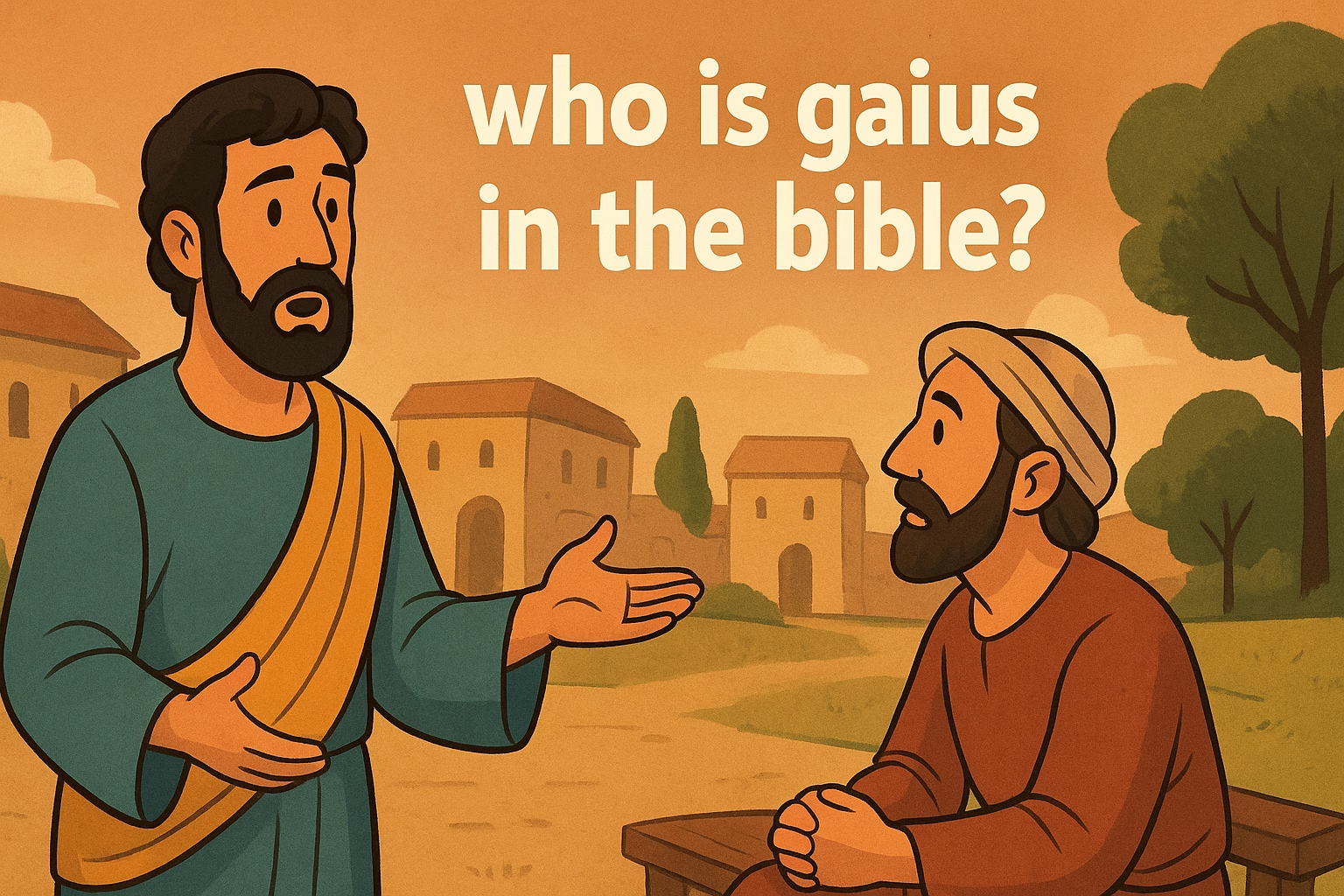
The Bible mentions several individuals named Gaius across different contexts, which can lead to some confusion regarding their identities. Understanding who Gaius is requires examining the specific passages and their contexts. This article will explore the various Gaiuses mentioned in the New Testament, their roles, and their significance in early Christianity.
One of the most notable Gaiuses in the Bible is a companion of the Apostle Paul, mentioned in several of Paul’s letters. Additionally, there are references to Gaius in the context of the early church and its leadership. Each mention provides insight into the early Christian community and its development.
Gaius of Corinth
One prominent Gaius is found in the book of Romans. In Romans 16:23, Paul writes, “Gaius, who is host to me and to the whole church, greets you.” This Gaius is believed to have been a resident of Corinth, where he hosted Paul during his missionary work. Hosting a prominent apostle and the entire church in one’s home indicates a position of respect and influence within the early Christian community.
This Gaius is often identified with the Gaius mentioned in 1 Corinthians 1:14, where Paul states, “I thank God that I baptized none of you except Crispus and Gaius.” Here, Paul highlights Gaius’s importance by noting that he was one of the few individuals baptized by Paul himself, further emphasizing his role in the early church.
Gaius of Derbe
Another Gaius mentioned in the New Testament is Gaius of Derbe. He appears in Acts 20:4, where it states, “He was accompanied by Sopater, the son of Pyrrhus from Berea; by Aristarchus and Secundus from Thessalonica; and Gaius from Derbe, and Timothy.” This Gaius was part of Paul’s missionary team and traveled with him on his journey to Jerusalem. His inclusion in this group indicates his active participation in spreading the Gospel and supporting Paul’s ministry.
While not much is detailed about Gaius of Derbe, his association with Paul and other prominent figures in the early church demonstrates the interconnectedness of believers during this period. His journey alongside Paul signifies a commitment to the mission of the church and the spread of Christianity.
Gaius in the Epistle of 3 John
The third significant reference to a Gaius is found in the Epistle of 3 John. This letter is addressed to a Gaius who is praised for his hospitality and faithfulness. In 3 John 1:5-6, John writes, “Dear friend, you are being faithful to God when you care for the traveling teachers who pass through, even though they are strangers to you.” This Gaius is commended for his support of itinerant preachers, reflecting the early church’s emphasis on hospitality and community support.
In this context, Gaius represents the ideal Christian who not only believes in the message of the Gospel but actively participates in its propagation by supporting those who spread it. His actions exemplify the spirit of generosity and service that characterized the early church.
Distinguishing Between the Gaiuses
It is essential to note that while the Bible mentions multiple Gaiuses, it is not always clear if these references point to the same individual or different people. The Gaius of Corinth, Gaius of Derbe, and the Gaius addressed in 3 John may represent distinct persons, each contributing to the early church in their unique ways.
Scholars often debate whether these references refer to the same Gaius or different individuals due to the commonality of the name in the Greco-Roman world. However, the distinct contexts in which they are mentioned suggest that they likely served different roles within the early Christian community.
The Significance of Gaius in Early Christianity
The various Gaiuses in the New Testament highlight the diversity and interconnectedness of the early Christian church. Their presence in Paul’s writings and the Epistles reflects the importance of community, support, and leadership in the growth of Christianity during its formative years.
Gaius of Corinth, for instance, serves as an example of the hospitality and leadership that early Christians offered. His home became a gathering place for believers, showcasing the importance of nurturing community bonds. Gaius of Derbe, on the other hand, illustrates the commitment of early Christians to travel and spread the Gospel, highlighting the missionary efforts that characterized the early church.
Meanwhile, the Gaius mentioned in 3 John emphasizes the significance of personal support and encouragement within the body of Christ. His dedication to helping traveling teachers demonstrates the vital role that individual believers played in the church’s mission and its outreach efforts.
Through these examples, we see that Gaius represents the collective effort of early Christians to foster a community centered on faith, support, and the sharing of the Gospel message. Each Gaius, in their respective contexts, contributes to the rich tapestry of early Christianity, reminding us of the importance of community in our faith journey.
The Role of Gaius in Early Church Leadership
The Gaiuses mentioned in the New Testament not only reflect individual contributions but also underline the broader structure of leadership within the early church. The early Christian community was not monolithic; it consisted of various leaders, supporters, and congregants who played distinct roles. Gaius of Corinth, in particular, exemplifies this leadership dynamic. By hosting Paul and the church, he likely served as a focal point for gatherings, discussions, and the sharing of teachings.
In early Christianity, homes often acted as meeting places for believers, especially in cities where formal church buildings were not yet established. Gaius’s role as a host indicates his influence and responsibility within the community. His ability to welcome Paul and others into his home highlights the significance of hospitality as a form of leadership. The early church relied heavily on individuals who could provide a space for fellowship and worship, and Gaius fulfilled this important function.
The Cultural Context of Gaius’s Actions
Understanding Gaius’s actions also requires a look into the cultural context of the time. The Greco-Roman world placed a high value on hospitality, especially towards travelers. This cultural norm is reflected in Gaius’s support for itinerant preachers, as mentioned in 3 John. By caring for these teachers, Gaius not only adhered to societal expectations but also lived out the Christian principle of love and service.
In a society where resources were often scarce, offering food, shelter, and support to those spreading the Gospel was a significant commitment. Gaius’s actions demonstrate how the early church adapted cultural practices to align with Christian values, fostering a sense of community and mutual support among believers.
Gaius and the Missionary Movement
Gaius’s involvement in the missionary efforts of the early church cannot be understated. As part of Paul’s team, Gaius of Derbe contributed to the spread of Christianity across various regions. His willingness to travel and support Paul illustrates the dedication required of early Christians to advance their faith. The missionary movement was characterized by collaboration among believers, and Gaius’s participation reflects a shared commitment to the Great Commission, where Jesus instructed His followers to go and make disciples of all nations.
This collective effort among believers not only facilitated the growth of the church but also fostered a sense of unity and purpose. Gaius’s journey with Paul and others represents the interconnectedness of the early church, where individuals played vital roles in supporting one another’s missions and endeavors.
Theological Implications of Gaius’s Example
The examples of Gaius in the New Testament invite believers today to consider their roles within the church and the broader community. His hospitality, support for ministry, and commitment to the Gospel can inspire modern Christians to engage actively in their faith communities. Gaius’s actions serve as a reminder that every believer has the potential to contribute to the mission of the church, whether through leadership, support, or service.
Additionally, Gaius’s story emphasizes the importance of recognizing and valuing diverse contributions in the church. Just as Gaius’s hospitality and support were critical in the early church, today’s believers are called to identify and utilize their unique gifts to serve others and further the Gospel. This passage of time reminds the church that growth and outreach often depend on the faithfulness of individuals within the community.
Questions for Reflection and Application
As we reflect on the life and contributions of Gaius in the New Testament, several questions arise that can guide our understanding and application of his example:
- What does it mean to be a leader in your community, as exemplified by Gaius of Corinth?
- How can you practice hospitality in your own life, following Gaius’s example of welcoming others into your home or life?
- In what ways can you support those who are actively spreading the Gospel in your community, similar to how Gaius supported itinerant teachers?
- How can the church today learn from the interconnectedness and collaboration seen in the early church through figures like Gaius?
These questions encourage believers to think deeply about their roles in the church and how they can contribute to the mission of spreading the Gospel, just as Gaius did in the early days of Christianity.
Conclusion: Gaius as a Model for Christian Living
In summary, the various Gaiuses mentioned in the New Testament provide valuable insights into the early church’s dynamics. Their contributions highlight the importance of hospitality, support, and leadership within the Christian community. Gaius serves as a model for believers today, illustrating how individual actions can significantly impact the collective mission of the church. By embodying the spirit of generosity and service that Gaius exemplified, modern Christians can continue to foster a vibrant and supportive community centered on faith, love, and the sharing of the Gospel.
Learn more about early Christian leadership and explore the role of hospitality in the church to further understand the significance of figures like Gaius in the New Testament.