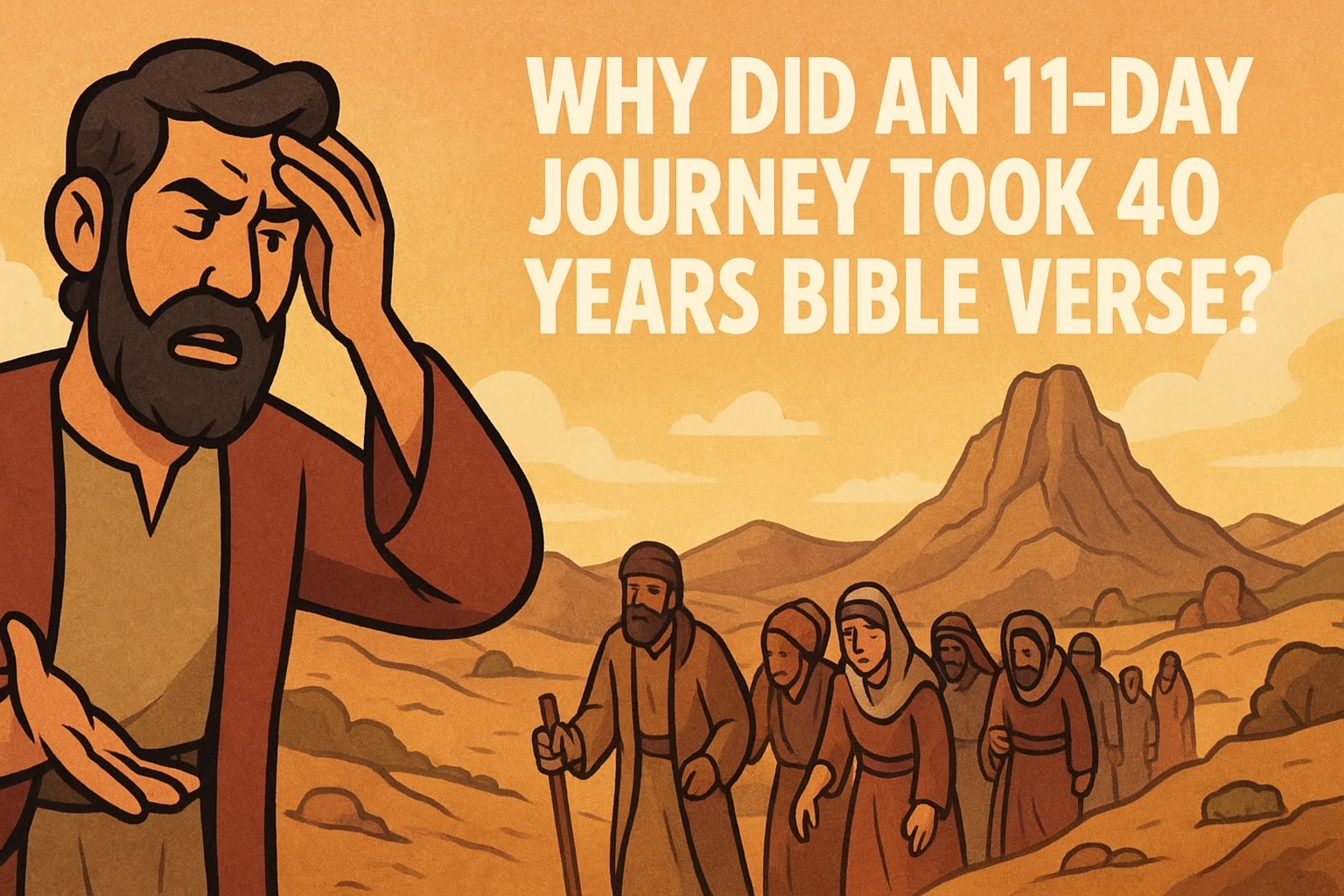
The journey of the Israelites from Egypt to the Promised Land is a significant narrative in the Bible, illustrating themes of faith, obedience, and divine guidance. What is striking is that a journey which could have taken just 11 days ended up spanning 40 years. This article explores the reasons behind this extended journey, drawing from Scripture and the context surrounding the Israelites’ experiences.
The primary reason for the 40-year delay can be found in the disobedience and lack of faith exhibited by the Israelites. When they reached the border of the Promised Land, they sent spies to scout the territory. The report from the spies was mixed; while some spoke of the land’s richness, others emphasized the formidable inhabitants and their fortified cities. This led to widespread fear and rebellion among the people. As a result, God decreed that this generation would not enter the Promised Land, and they would wander in the desert until that generation had passed away (Numbers 14:26-35).
The Context of the Journey
The journey from Egypt to Canaan was not just a physical transition but also a spiritual journey. The Israelites had been in slavery for over 400 years and had grown accustomed to the life of oppression. When God delivered them through Moses, He intended not only to take them to a new land but also to transform them into a people who would trust and worship Him. The initial plan was for them to enter the Promised Land shortly after their exodus.
However, the Israelites’ lack of faith was evident when they faced challenges. In Exodus 16, after leaving Egypt, they complained about the lack of food and expressed a desire to return to slavery rather than trust God to provide for their needs. This pattern of distrust continued throughout their journey.
The Role of Faith and Obedience
In the biblical narrative, faith and obedience are crucial themes. Hebrews 3:19 states, “So we see that because of their unbelief they were not able to enter his rest.” This verse highlights that their inability to enter the Promised Land was directly related to their lack of faith. God had promised them a land flowing with milk and honey, but their fear of the inhabitants led them to doubt His promise.
When the spies returned with their report, Caleb and Joshua stood firm in their belief that God would help them conquer the land. They affirmed, “We can certainly conquer it!” (Numbers 13:30). However, the majority of the people chose to believe the negative report, leading to widespread disobedience. This moment of rebellion against God’s plan was pivotal and resulted in God’s judgment.
The Consequences of Rebellion
God’s response to the Israelites’ rebellion was severe. In Numbers 14:28-30, He stated, “As I live, says the Lord, what you have said will come true for you—your bodies will fall in this wilderness.” This was a direct consequence of their lack of faith. Those who had doubted God’s promise would not see the land that had been promised to their ancestors. Instead, they were condemned to wander in the wilderness until that entire generation had died, with only their children allowed to enter the Promised Land.
The 40-year wandering served as a time of purification and preparation. God used this period to teach the Israelites reliance on Him. They learned to depend on His provision of manna and quail, and they received the Law, which would guide their community and worship. This was not merely punishment; it was also an opportunity for spiritual growth and development.
The Significance of the Numbers
The numbers in this narrative also hold significance. The Israelites wandered for 40 years, a period often associated with testing and trial in the Bible. For instance, Moses spent 40 years in Midian before returning to Egypt, and Jesus fasted for 40 days in the wilderness. The 40 years in the desert served as a formative period for the Israelites, shaping them into a nation that would ultimately enter the Promised Land under Joshua’s leadership.
“The Lord your God has blessed you in everything you have done. He has watched your every step through this great wilderness.” (Deuteronomy 2:7)
This verse reflects God’s continued presence and guidance during their wandering. Even in their disobedience, God remained faithful, providing for their needs and leading them toward their destiny.
Lessons for Today
The story of the Israelites teaches us valuable lessons about faith and obedience. It reminds us that our journey with God can be prolonged by our choices. Just as the Israelites faced consequences for their lack of faith, we too must consider how our actions and beliefs affect our spiritual journey. Trusting God’s promises and obeying His guidance can lead us to our own “Promised Land,” while doubt and rebellion may result in unnecessary detours.
Moreover, the Israelites’ experience highlights the importance of community in faith. When we face challenges, it is essential to encourage one another to trust in God’s promises, just as Caleb and Joshua did. Our collective faith can influence our journey and help us overcome obstacles.
The Impact of Leadership on the Journey
Leadership played a crucial role in the Israelites’ journey through the wilderness. Moses, as their leader, faced immense challenges, including managing the complaints and fears of the people. His relationship with God was central to guiding the Israelites, yet it was tested during their time in the desert. In Exodus 32, when the Israelites made a golden calf to worship while Moses was on Mount Sinai, Moses interceded on their behalf, demonstrating the weight of leadership and the importance of seeking God’s mercy for the community.
Moreover, Moses’ own moments of doubt had consequences. In Numbers 20, when the people complained about a lack of water, God instructed Moses to speak to a rock to provide water. Instead, Moses struck the rock in frustration. Because of this act of disobedience, God told Moses that he would not enter the Promised Land. This illustrates how even leaders must remain faithful and obedient to God’s commands, as their actions can have far-reaching effects on the entire community.
Spiritual Lessons in the Wilderness
The wilderness experience was not merely a physical challenge; it was a time of spiritual testing and growth. The Israelites faced numerous trials, from hunger to thirst to enemy attacks. Each challenge provided an opportunity for them to learn reliance on God. In Exodus 17, when the Amalekites attacked, Moses held up his hands in prayer, and as long as he did, Israel prevailed. This incident highlights the importance of prayer and divine assistance in overcoming adversities.
Furthermore, the Israelites received the Law during their wanderings, which included moral and ceremonial guidelines meant to shape their identity as God’s chosen people. This time in the wilderness was essential for establishing their covenant relationship with God, preparing them for life in the Promised Land. The significance of the Law cannot be overstated; it was intended to guide their conduct and worship, setting them apart from other nations.
Understanding God’s Purpose in Delay
The prolonged journey serves as a reminder that not all delays are punitive. Sometimes, God uses waiting periods for reasons beyond our understanding. The Israelites’ 40 years in the wilderness allowed for a generation marked by doubt and rebellion to pass away. This process of refinement was necessary for entering the Promised Land with a new generation that would be more receptive to God’s promises.
In our lives, we may also experience delays that seem frustrating or unnecessary. These moments can serve as times for reflection, growth, and preparation. God may be working in ways we do not see, teaching us patience, resilience, and deeper faith. Understanding that God’s timing is different from our own can help us navigate our spiritual journeys more faithfully.
Questions to Reflect Upon
As we consider the Israelites’ journey, we can ask ourselves several reflective questions:
- How do we respond to challenges in our lives? Do we lean into faith or allow fear to dictate our actions?
- In what ways can we encourage others in our community to trust in God during difficult times?
- Are there areas in our lives where we are reluctant to obey God, similar to the Israelites’ initial response to the Promised Land?
- How can we better recognize and appreciate God’s provision in our own “wilderness” experiences?
These questions can help us apply the lessons from the Israelites’ journey to our own lives, prompting us to consider how we can grow in faith and obedience.
Conclusion: The Journey Toward Faithfulness
The story of the Israelites’ 40-year journey to the Promised Land serves as a powerful reminder of the importance of faith, obedience, and the profound impact of leadership and community in our spiritual lives. It illustrates that while the path to our promises may be fraught with challenges, it is also filled with opportunities for growth and transformation. By learning from their experiences, we can cultivate a deeper trust in God and strive to remain faithful, even in the face of adversity. In doing so, we can navigate our own journeys with the assurance that God is guiding us toward our promised destinations.
For further exploration on related themes, you can read about the significance of community in faith journeys in our article on building a supportive faith community, or learn more about the importance of obedience in our relationship with God in our piece on the role of obedience in spiritual growth.