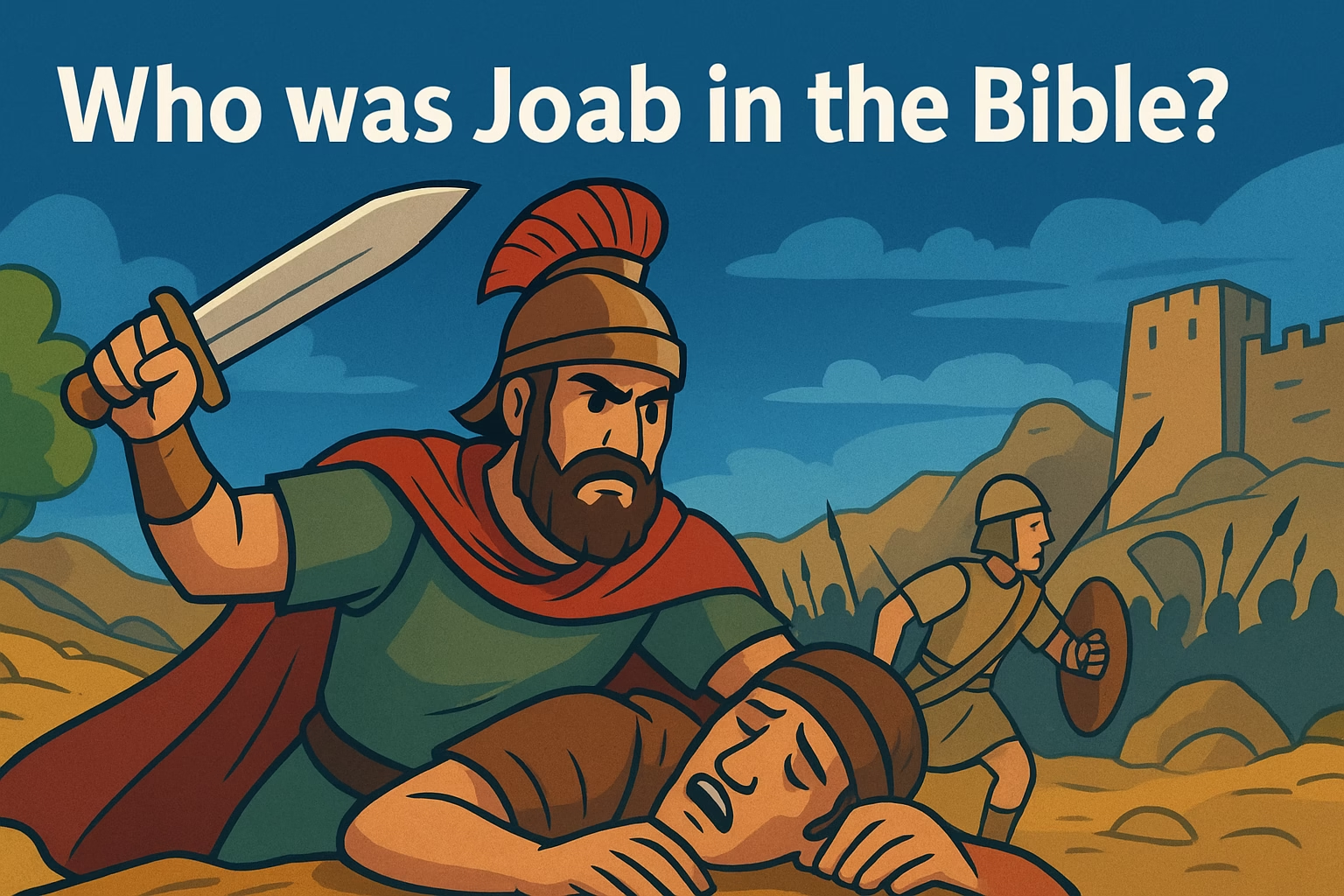
Joab is a significant figure in the Bible, known for his role as a military commander and his complex relationship with King David. His actions and decisions had a considerable impact on the history of Israel during a tumultuous period. This article explores Joab’s life, his military exploits, and his intricate character as depicted in the Scriptures.
Joab was the son of Zeruiah, David’s sister, making him David’s nephew. He served as the commander of David’s army and played a crucial role during David’s reign as king of Israel. Joab is first introduced in 1 Samuel 26:6, where he is mentioned as one of David’s mighty men, indicating his status as a skilled and brave warrior. His military prowess is highlighted throughout the books of Samuel, particularly in 2 Samuel, where his actions both served and challenged the king.
Joab’s Early Military Achievements
Joab’s military career began in earnest during David’s conquest of Jerusalem, which became the political and spiritual capital of Israel. In 2 Samuel 5:6-10, Joab is noted for leading the charge against the Jebusites, the inhabitants of Jerusalem, showing his bravery and loyalty to David. His successful capture of the city earned him a prominent position in David’s administration.
Following the establishment of Jerusalem, Joab continued to demonstrate his military expertise. He was instrumental in various campaigns, including the defeat of the Ammonites and the capture of their capital, Rabbah (2 Samuel 12:26-29). Joab’s ability to command and execute military strategies made him a respected figure among the troops and a key advisor to David.
The Complex Relationship with David
While Joab was a loyal servant to David, his relationship with the king was often strained due to his fierce and sometimes ruthless nature. One of the most notable incidents illustrating this complexity is the death of Uriah the Hittite, Bathsheba’s husband. In 2 Samuel 11, Joab was ordered by David to place Uriah in the front lines of battle, leading to Uriah’s death. Joab carried out this command without hesitation, demonstrating his loyalty to David but also raising questions about his moral judgment.
“So Joab assigned Uriah to a spot close to the city wall where he knew the enemy’s strongest men were fighting.” (2 Samuel 11:16 NLT)
This incident set off a chain of events that would haunt both David and Joab. Following the death of Uriah, David married Bathsheba, but the consequences of his actions led to turmoil within his household, including the death of their child. Joab’s role in this affair reflects the moral ambiguity that often characterizes his actions throughout Scripture.
Joab’s Role in Absalom’s Rebellion
Joab’s loyalty to David was tested during the rebellion of Absalom, David’s son. In 2 Samuel 15, Absalom sought to usurp David’s throne, leading to a civil war. Joab remained loyal to David, even though he had a complicated relationship with Absalom. After David fled Jerusalem, Joab took charge of the military response against Absalom’s forces.
In 2 Samuel 18, Joab faced the decision of how to deal with Absalom after the young man’s forces were defeated. Despite David’s explicit orders to treat Absalom gently, Joab took matters into his own hands. He confronted Absalom, who was caught in a tree, and ultimately killed him, showcasing Joab’s ruthless pragmatism and willingness to act decisively, even against the king’s wishes.
“But Joab took three daggers in his hand and plunged them into Absalom’s heart while he was still alive in the oak tree.” (2 Samuel 18:14 NLT)
Joab’s actions in this situation reveal a critical aspect of his character: his fierce loyalty to David often overshadowed his sense of mercy or justice. This complexity adds depth to his portrayal in the Biblical narrative and raises questions about the nature of loyalty and the consequences of violence.
Joab’s Later Life and Downfall
As David’s reign continued, Joab’s influence remained significant, but his actions increasingly led to conflict with the king. In 1 Kings 1, as the succession of David became uncertain, Joab again acted in his own interest. He supported Adonijah, another of David’s sons, in a bid for the throne, which put him at odds with David and Solomon, who was chosen to succeed David.
Following David’s death, Solomon sought to consolidate his power and eliminate potential threats. Joab, recognizing the danger, fled to the altar for sanctuary, hoping for mercy. However, Solomon ordered Joab’s execution, citing his past actions—including the murders of Abner and Amasa—as justifications for his death (1 Kings 2:28-34). This marked the tragic end of Joab’s life, illustrating how his relentless pursuit of power and loyalty to David ultimately led to his own destruction.
Joab’s story is a compelling narrative of loyalty, ambition, and moral complexity. His military achievements and unwavering support for David are often overshadowed by his ruthless decisions and the consequences that followed. The lessons from Joab’s life resonate throughout the Scriptures, inviting reflection on the nature of leadership, loyalty, and the weight of one’s choices.
Joab’s Relationships with Other Key Figures
Joab’s life intertwined with several notable figures in the Biblical narrative, each relationship adding layers to his complex character. His interactions with Abner, the commander of Saul’s army, are particularly significant. After Saul’s death, Abner sought to unify the fractured kingdom under Ish-bosheth, Saul’s son. Joab viewed Abner as a threat to David’s reign and eventually killed him, claiming revenge for his brother Asahel’s death during a previous encounter (2 Samuel 3:30). This act not only solidified Joab’s position but also deepened the rift between the factions in Israel.
Additionally, Joab’s relationship with Amasa, the commander appointed by Absalom, is equally revealing. After Absalom’s defeat, David appointed Amasa to replace Joab as the commander of his army, which was a significant slight to Joab. In a display of his cunning and ruthlessness, Joab killed Amasa when he least expected it. This act of betrayal highlights Joab’s willingness to go to extreme lengths to maintain his power and influence (2 Samuel 20:9-10).
Joab’s Character Traits and Leadership Style
Joab’s character can be described as multifaceted. He was a skilled military leader, exhibiting tactical brilliance and bravery in battle. However, his methods were often brutal and devoid of compassion. His willingness to kill for the sake of loyalty or ambition raises questions about the morality of his actions. The contrast between his military efficiency and moral ambiguity creates a complex figure whose legacy is both admirable and troubling.
Moreover, Joab often acted independently of David’s wishes, suggesting a strong sense of self-reliance. This independence sometimes resulted in beneficial outcomes for David, but it also led to significant conflicts between them. Joab’s leadership style reflected a pragmatic approach to warfare and politics, yet it lacked the ethical considerations that characterize true servant leadership.
Joab’s Legacy in Biblical Narrative
Joab’s legacy extends beyond his military exploits and political maneuvering; it invites readers to ponder the implications of loyalty, ambition, and moral choices. His life serves as a cautionary tale about the dangers of unchecked power and the moral dilemmas faced by leaders. Joab’s story is a reminder that even those who achieve great success can be flawed and that their choices have lasting consequences.
In modern contexts, Joab’s life encourages discussions about the ethical responsibilities of leadership. How do we balance ambition with morality? What does it mean to be loyal, and at what cost? These questions resonate today, as leaders in various fields grapple with similar dilemmas.
Reflections on Joab’s Actions and Their Consequences
Examining Joab’s actions prompts deeper reflections on the nature of justice and mercy. His decisions often prioritized expediency over compassion, leading to tragic outcomes not only for himself but for others around him. For instance, his role in the deaths of Uriah, Abner, and Amasa raises questions about the cycle of violence and revenge. How do we break this cycle in our own lives and communities? Joab’s story challenges us to consider the impact of our choices on those we lead and the broader society.
Furthermore, Joab’s experiences illustrate the complexities of loyalty. His fierce allegiance to David often blinded him to the moral implications of his actions. This invites reflection on what it truly means to be loyal. Is loyalty always virtuous, or can it lead to destructive consequences? The narrative of Joab encourages readers to think critically about their own loyalties and the ethical frameworks that guide them.
Conclusion: The Enduring Lessons from Joab’s Life
Joab’s life is a rich tapestry of loyalty, ambition, and moral complexity. While he was a formidable military leader and a loyal servant to King David, his ruthless actions and the eventual consequences of those actions paint a cautionary picture of the perils of unchecked ambition. Joab’s story invites us to reflect on our own lives and the choices we make, challenging us to seek a balance between loyalty and morality, ambition and compassion. Ultimately, Joab serves as a reminder that the path to greatness is often fraught with difficult decisions and consequences that extend far beyond the moment.
For more insights into the themes of leadership and moral complexity in the Bible, consider exploring the stories of other biblical figures. You may find parallels in the lives of David and Solomon that further illuminate the lessons from Joab’s life. Check out this article on David’s leadership challenges and this article on Solomon’s wisdom and decisions for a deeper understanding.