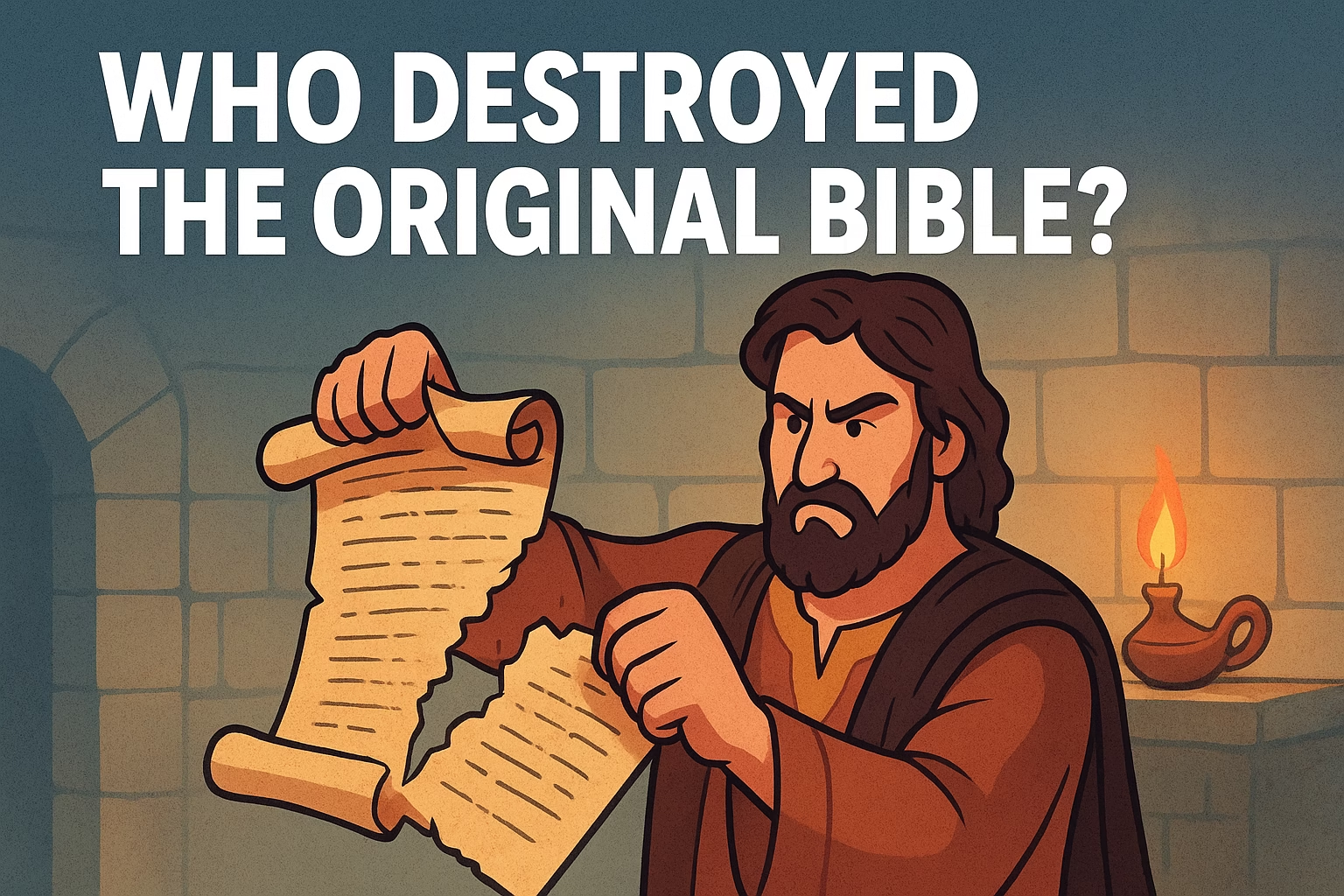
The question of who destroyed the original Bible is complex and layered, as it involves historical events, theological beliefs, and the nature of the scriptures themselves. Understanding this topic requires a careful examination of how the Bible has been preserved, translated, and interpreted throughout history.
To answer the question directly, it is important to clarify that there was no single entity or individual who “destroyed” the original Bible. Rather, the Bible has undergone significant changes and challenges over the centuries due to a variety of factors, including persecution, translation errors, and the evolution of religious thought.
The Historical Context of the Bible’s Preservation
The Bible as we know it today is a compilation of texts written over many centuries. The Old Testament, or Hebrew Scriptures, was written primarily between the 12th and 2nd centuries BCE, while the New Testament was written in the 1st century CE. These texts were originally passed down through oral tradition before being written down and compiled.
Throughout history, various empires and regimes have sought to suppress or destroy certain religious texts, including the Bible. For example, during the Babylonian exile, many of the Hebrew Scriptures faced the threat of loss as the Jewish people were forcibly removed from their homeland. However, the faithful preservation of these texts by scribes and religious leaders allowed them to endure.
Persecution and Destruction in Early Christianity
In the early days of Christianity, believers often faced severe persecution. Roman authorities viewed Christianity as a threat to the traditional Roman religion and societal order. As a result, many Christian texts were destroyed. The Emperor Diocletian, for example, ordered the destruction of Christian scriptures in an effort to eradicate the faith around 303 CE. This was part of a larger campaign of persecution against Christians.
“The word of God is not chained” (2 Timothy 2:9, NLT).
Despite these efforts, the resilience of early Christians helped preserve their scriptures. They copied texts and shared them in secret, ensuring the survival of essential writings. The belief that God’s word would endure provided strength amid adversity.
The Role of Translation and Interpretation
Another factor that contributed to changes in the Bible is the process of translation. As Christianity spread across different cultures and languages, the Bible was translated into various vernaculars. Each translation process involved interpretation, which sometimes led to variations in meaning and text.
For example, the Septuagint, a Greek translation of the Hebrew Scriptures, was created in the 3rd century BCE. This translation was significant for early Christians who spoke Greek. However, the translation also introduced differences from the original Hebrew texts, which some scholars argue may have changed interpretations of certain passages.
The Council of Nicaea and Canon Formation
In 325 CE, the Council of Nicaea was convened to address various theological disputes within Christianity. One of its significant outcomes was the affirmation of certain texts as authoritative. However, the process of determining which books belonged in the Bible was gradual and involved debates among early church leaders.
- The Old Testament canon was largely established by the time of Christ, but variations existed among different Jewish communities.
- The New Testament canon took several centuries to solidify, with various gospels and letters being debated.
- Some texts were excluded due to questions about their authorship or theological content.
This process of canonization did not destroy original texts but rather defined the boundaries of what was considered sacred scripture for the Christian faith. Some texts were lost or fell out of use, but others were preserved and remain influential today.
Modern Challenges and Textual Criticism
In more recent history, the field of textual criticism has emerged, which studies the various manuscripts of biblical texts to understand their development and transmission. Scholars compare ancient manuscripts to identify discrepancies and variations in wording. This work helps to clarify how the Bible has changed over time and which versions are closest to the originals.
While some may view this scholarly work as a threat to the integrity of the Bible, many Christians see it as an opportunity to deepen their understanding of scripture. The process of examining ancient texts can reveal insights into historical context, cultural influences, and the meaning behind certain passages.
The Importance of Preservation
Ultimately, the Bible has not been destroyed in a traditional sense. Instead, it has evolved through history, with texts being lost, preserved, and interpreted in different ways. The core message of the Bible remains intact for believers, emphasizing themes of faith, redemption, and God’s relationship with humanity.
As Christians engage with scripture today, they do so with the understanding that the Bible is a living document, shaped by history but still relevant to their lives. The preservation efforts of countless individuals throughout history testify to the enduring nature of God’s word.
Influence of Political and Cultural Factors
The history of the Bible’s preservation is also deeply intertwined with political and cultural factors. Throughout history, rulers and governments have attempted to manipulate religious texts for their own agendas. In some instances, this manipulation involved the outright destruction of certain biblical texts that did not align with the ruling powers’ ideologies.
For example, during the Protestant Reformation in the 16th century, various authorities condemned and even destroyed translations of the Bible that were viewed as heretical. The desire to control the interpretation of scripture led to conflicts that significantly impacted the accessibility of the Bible to the layperson.
Moreover, the rise of secularism in modern times has also influenced how the Bible is perceived and treated. As societies have become more pluralistic, some have attempted to marginalize religious texts, including the Bible. This has led to debates about the place of scripture in public life, further complicating its preservation and interpretation.
Technological Advances and Bible Distribution
Despite the challenges posed by political and cultural factors, advancements in technology have played a crucial role in the preservation and dissemination of the Bible. The invention of the printing press in the 15th century revolutionized the way texts were copied and distributed. For the first time, the Bible could be mass-produced, making it accessible to a wider audience.
The Gutenberg Bible, printed in the 1450s, is one of the earliest major books produced using movable type. This marked a significant shift in how the Bible was shared, allowing for diverse translations and interpretations to flourish. The ability to print and distribute the Bible helped combat efforts to suppress it, empowering individuals to engage with scripture directly.
The Role of Modern Scholarship
Contemporary biblical scholarship continues to play a vital role in understanding the complexities surrounding the Bible. Scholars employ various methodologies, including historical-critical approaches, to explore the context in which biblical texts were written. This scholarship helps clarify misunderstandings and misinterpretations that may have arisen over centuries.
Additionally, the discovery of ancient manuscripts, such as the Dead Sea Scrolls in the mid-20th century, has provided new insights into the textual history of the Bible. These findings have led to a deeper appreciation of the textual variants and the historical context in which the scriptures were produced. Such discoveries also confirm the remarkable preservation of biblical texts over time.
Questions for Reflection
As we explore the question of who destroyed the original Bible, several important questions arise for deeper reflection:
- How do historical events shape our understanding and interpretation of scripture today?
- In what ways can modern technology aid in the preservation of biblical texts and encourage engagement with scripture?
- What role should individuals play in safeguarding the integrity of the Bible in a rapidly changing cultural landscape?
- How can we reconcile differing interpretations of scripture while maintaining unity within the Christian faith?
These questions invite believers and scholars alike to engage thoughtfully with the Bible and consider its relevance in contemporary society. They challenge individuals to reflect on how historical forces have shaped their faith and the importance of preserving the core messages of scripture amidst change.
Conclusion: The Bible’s Enduring Legacy
In conclusion, while the Bible has faced challenges throughout history, it has not been destroyed in a definitive sense. Instead, it has been shaped by various forces, including persecution, translation, and cultural shifts. The enduring legacy of the Bible lies in its ability to adapt and remain relevant, offering guidance and inspiration to countless individuals across generations.
As believers continue to engage with scripture, they do so with the understanding that the Bible is a living document, enriched by history and scholarship. The efforts of those who have preserved and shared the Bible throughout the ages reflect a commitment to its teachings and the transformative power of God’s word.
For further insights on the preservation of biblical texts and their impact on faith, explore this article about the historical context of scripture. You may also find valuable perspectives in this discussion on the role of modern translations in understanding biblical messages.