The question of how Matthew, one of Jesus’ twelve apostles, died is intriguing and often discussed among biblical scholars and historians. While the New Testament provides little detail about the deaths of the apostles, various early Christian writings and traditions offer insights into Matthew’s fate. Understanding these accounts helps to paint a picture of Matthew’s life and legacy beyond what is explicitly mentioned in Scripture.
According to tradition, Matthew, also known as Levi, was a tax collector before becoming a disciple of Jesus. His Gospel is the first book of the New Testament and is a vital source for understanding Jesus’ teachings and the early Church. However, the Bible does not directly describe the circumstances of Matthew’s death. Instead, we rely on historical accounts and traditions that have developed over time.
Scriptural Context of Matthew’s Life
Matthew is introduced in the Gospels as a tax collector called by Jesus to follow Him (see Matthew 9:9). This calling marks a significant transformation in his life, moving from a position of perceived betrayal (as tax collectors were often seen as traitors to their people) to becoming a devoted follower of Christ. After Jesus’ resurrection and ascension, Matthew is believed to have spread the Gospel, particularly to the Jewish communities.
Traditional Accounts of Matthew’s Death
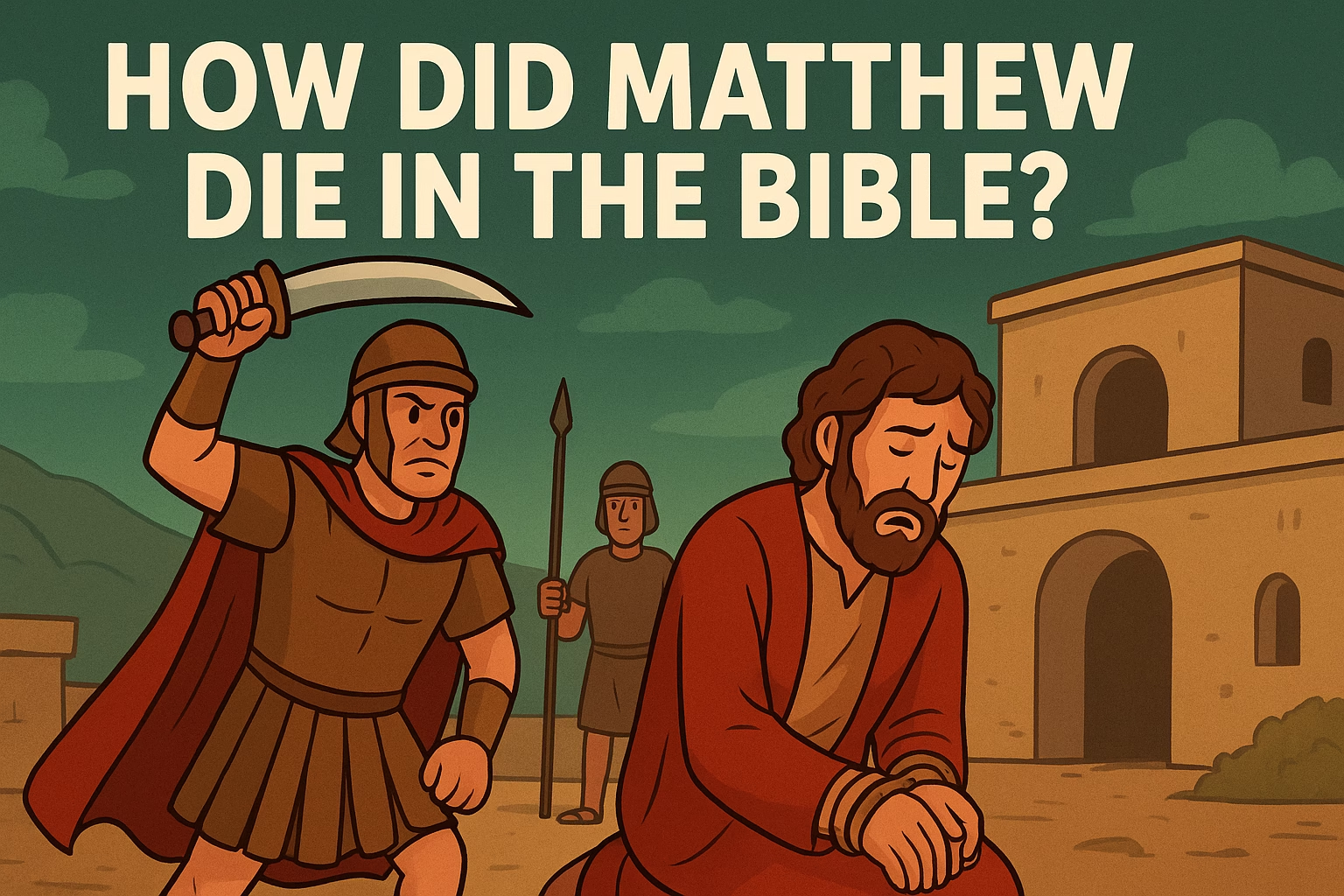
While the New Testament does not detail Matthew’s death, early church traditions suggest various scenarios. One of the most common accounts indicates that Matthew died a martyr’s death. According to some sources, he was killed for his faith while preaching the Gospel. However, the specifics of how he died vary widely among different traditions.
Martyrdom in Ethiopia
One prevalent tradition claims that Matthew was martyred in Ethiopia. This account suggests that he was either beheaded or killed by other means during his missionary work in that region. The Ethiopian Orthodox Church holds Matthew in high regard, and his martyrdom is celebrated, emphasizing his commitment to spreading the Gospel in foreign lands.
Alternative Accounts of Death
Other traditions provide different details regarding Matthew’s death. Some early Christian writers, such as the church historian Eusebius, mention that Matthew might have died peacefully, suggesting he lived a long life before passing away naturally. This view contrasts sharply with the martyrdom accounts, highlighting the uncertainty surrounding the exact circumstances of Matthew’s death.
- Martyrdom in Ethiopia: Beheaded or killed during missionary work.
- Peaceful death: Some traditions suggest he lived a long life.
Evaluating Historical Sources
When examining the historical sources regarding Matthew’s death, it is crucial to distinguish between what is found in Scripture and what comes from later traditions. The New Testament does not provide a definitive answer to how Matthew died, and much of what we know comes from apocryphal texts and writings of early church fathers.
For instance, the “Acts of Andrew and Matthew” is an apocryphal text that contains references to Matthew’s missionary activities and hints at his martyrdom. However, this text is not considered canonical and its historical accuracy is debated among scholars. Similarly, writings from church historians like Eusebius and Jerome provide accounts based on oral traditions and local beliefs, which can vary significantly.
Importance of Context
Understanding the context of Matthew’s life and the early Church is vital. The apostles faced significant challenges, including persecution and hostility, as they spread the message of Jesus. The notion of martyrdom was prevalent among early Christians, with many apostles and followers of Christ facing violent ends. This cultural backdrop likely influenced the development of stories about Matthew’s death.
In summary, while the Bible does not explicitly state how Matthew died, various traditions suggest he was either martyred or lived a long life before passing away. The conflicting accounts demonstrate the complexities of early Christian history and the challenges of confirming details about the apostles based solely on historical texts and traditions.
Theological Implications of Matthew’s Death
Matthew’s death, whether through martyrdom or natural causes, carries significant theological implications for Christians today. The idea of martyrdom, especially in the context of the early Church, reflects deep commitment and faith in Jesus Christ. Martyrdom is often viewed as the ultimate testimony of one’s faith, demonstrating the lengths to which believers will go to uphold their convictions.
In the New Testament, Jesus speaks about the cost of discipleship. For instance, in Matthew 16:24-26, He invites His followers to take up their crosses and follow Him. This call to sacrifice resonates with the tradition of Matthew’s martyrdom, suggesting that true discipleship may lead to suffering and even death for the faith. Such narratives can inspire believers to remain steadfast in their faith, even in the face of adversity.
Lessons from Matthew’s Life and Death
Regardless of how Matthew died, his life serves as a powerful example for Christians. His transformation from a tax collector to a devoted disciple illustrates the transformative power of Christ. This change encourages believers to reflect on their own lives and consider how they can embody the teachings of Jesus in their daily actions.
The accounts of Matthew’s missionary work, especially in regions like Ethiopia, highlight the importance of evangelism and spreading the Gospel. His dedication to sharing the message of Christ, despite the risks involved, prompts questions about how modern Christians approach their faith and witness in their communities. Are they willing to step out of their comfort zones to share their beliefs, much like Matthew is said to have done?
The Role of Tradition in Understanding Matthew’s Death
Tradition plays a crucial role in shaping the understanding of how Matthew died. While the Bible provides minimal information, the stories passed down through generations contribute to the rich tapestry of Christian history. These traditions often reflect the values and beliefs of the communities that uphold them, providing insights into how early Christians viewed martyrdom and discipleship.
It is important for believers today to discern the difference between tradition and Scripture. While traditions can enrich faith, they should not replace the authority of the Bible. Engaging with both Scripture and tradition allows Christians to appreciate the historical context of their faith while grounding their beliefs in the teachings of Jesus.
Questions for Reflection
Considering the uncertainty surrounding Matthew’s death, several questions arise for personal reflection:
- What does Matthew’s transformation from a tax collector to an apostle teach us about God’s ability to change lives?
- How do the accounts of martyrdom influence your understanding of commitment to your faith?
- In what ways can you share the message of Jesus in your own community, following Matthew’s example?
- How do you differentiate between biblical teachings and traditions in your personal faith journey?
Conclusion: The Legacy of Matthew
Matthew’s legacy extends beyond the question of how he died. His life and work as an apostle exemplify the profound impact of faith and the call to action that all Christians are invited to embrace. Whether he died a martyr or lived a long life, Matthew’s commitment to spreading the Gospel encourages believers to reflect on their own dedication to Christ’s teachings.
Ultimately, the story of Matthew invites us to consider how we live out our faith in a world that often challenges our beliefs. By examining the life and potential death of this apostle, we can draw inspiration to be bold in our faith, committed in our witness, and unwavering in our love for others.
For further reading on the significance of apostolic teachings, you can explore the role of the apostles in the early Church and learn more about the historical context of biblical martyrdom.