The question of whom Cain married has intrigued scholars and readers of the Bible for centuries. The story of Cain and Abel is one of the earliest narratives in Scripture, found in the Book of Genesis. However, the Bible does not provide explicit details about Cain’s wife, leading to much speculation and interpretation over time. In this article, we will explore the context of Cain’s life, the possible answers to who he married, and the implications of those interpretations.
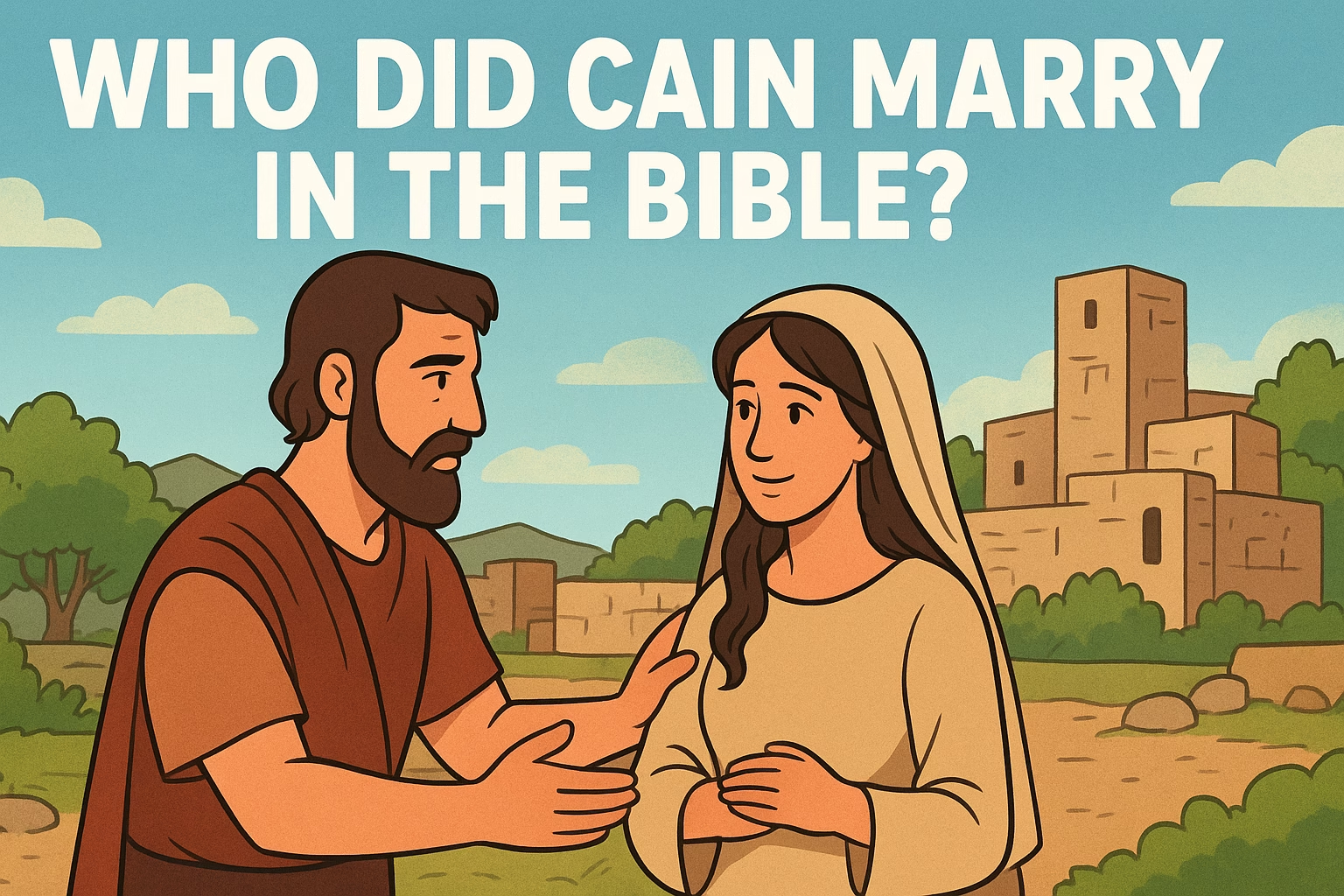
According to Genesis 4:17, “Cain knew his wife, and she conceived and bore Enoch.” This brief mention raises several questions, particularly regarding the identity of Cain’s wife. The Bible does not name her, nor does it provide details about her lineage or background. The most common explanation is that Cain married a close relative, likely a sister or a niece, as Adam and Eve had many children, though the names of most are not recorded in Scripture.
The Context of Cain’s Life
To better understand who Cain married, we must first consider the context of his life and family. Genesis 1:28 tells us that God commanded Adam and Eve to “be fruitful and multiply.” This command indicates that they were to have many children. The Bible specifically names only three of their sons: Cain, Abel, and Seth, but it implies that they had many more children over their long lives.
- Genesis 5:4 states, “After he became the father of Seth, Adam lived 800 years and had other sons and daughters.” This suggests that there were numerous children born to Adam and Eve.
This context is crucial because it establishes that Cain’s wife could have been one of his sisters or a close relative. Given the early timeline of humanity, it was not uncommon for people to marry within their family, especially in the initial generations.
The Biblical Evidence
As we examine the biblical evidence, it is essential to note that there are no direct mentions of Cain’s wife’s name or lineage in the Scriptures. The Bible focuses more on the actions and consequences of Cain’s life rather than the details of his family. Genesis 4:16-17 provides insight into Cain’s life after the murder of Abel. After God punished Cain, he went to the land of Nod, where he settled and built a city, naming it after his son Enoch.
While the text does not elaborate on Cain’s wife, we can infer that she was present in this new land, as Cain’s family continued to grow. The lack of specific details may reflect the narrative style of Genesis, which often prioritizes theological themes over genealogical records.
Speculations and Theological Implications
Throughout history, theologians and scholars have speculated about Cain’s wife. Some propose that she was a sister, while others suggest that she could have been a niece or a descendant of Adam and Eve’s other children. These interpretations arise from the understanding that God created humanity to populate the earth rapidly in its early stages.
Some Jewish traditions and interpretations of the Talmud even suggest that Cain may have married one of his sisters, as this was a common practice in the early generations.
However, it’s important to note that the Bible does not explicitly endorse or condemn inter-family marriages at this point in history. In later biblical law, such relationships were prohibited, but this was established after the time of Cain and Abel.
Understanding the Genealogy of Adam and Eve
To grasp the implications of Cain’s marriage, we must consider the genealogy of Adam and Eve as presented in Genesis. The genealogical accounts serve to connect significant figures in biblical history, but they often skip over many details. The focus is primarily on the lineage that leads to major biblical events and characters.
In Genesis 4, the emphasis is on Cain’s actions, his punishment, and the establishment of his descendants rather than on his wife. The genealogical records highlight the importance of lineage, particularly in the context of the covenant God made with humanity through Abraham and later figures.
Possible Names and Interpretations
While the Bible does not provide the name of Cain’s wife, some interpretations and traditions have emerged over the years. Some Jewish texts suggest names such as Awan or Luluwa for Cain’s wife, but these are not found in the canonical Scriptures. Such names arise from extra-biblical traditions and should be viewed as speculative rather than authoritative.
Ultimately, the Bible’s silence on Cain’s wife’s identity may serve a purpose. The narrative centers on the moral and theological lessons of Cain’s actions rather than the details of his family life. The focus remains on the consequences of sin, divine justice, and humanity’s relationship with God.
In summary, while the question of who Cain married remains unanswered in the biblical text, the most reasonable explanation is that he married a close relative, likely a sister. This interpretation fits within the context of early humanity’s rapid population growth and the societal norms of that time. The absence of detailed genealogical records for Cain’s family reflects the narrative’s focus on the broader themes of sin and redemption rather than individual family dynamics.
Exploring the Cultural Context of Early Marriages
To understand Cain’s marriage more deeply, we must examine the cultural context of the time. In the early chapters of Genesis, societal norms and practices were significantly different from what we see today. Marriages among close relatives were not uncommon and were often necessary for the survival and growth of the human population. Early humanity faced unique challenges, including a limited population and the need to establish communities.
In ancient times, the concept of family and kinship was paramount, and the boundaries of acceptable relationships were more flexible than they are in contemporary societies. The Bible does not explicitly detail the laws governing marriages during Cain’s time, but we know that these laws evolved as humanity grew and societal structures became more complex.
Theological Perspectives on Inter-Family Marriages
From a theological standpoint, the early inter-family marriages raise questions about sin and the nature of relationships in a fallen world. The union between Cain and his wife, likely a sister, highlights the reality of humanity’s situation after the Fall. While later biblical texts outline prohibitions against incestuous relationships (as seen in Leviticus), in the early days of humanity, such practices were not only accepted but essential for population growth.
This aspect of Cain’s marriage can lead to a deeper understanding of God’s plan for humanity. The narrative shows how God allowed for a broad range of relationships in the early generations, suggesting that divine providence was at work even when human actions led to sin and strife, as exemplified by Cain’s later actions.
Questions Raised by Cain’s Marriage
The question of whom Cain married opens the door to many other inquiries. These include:
- How did early humans navigate moral and ethical dilemmas? The story of Cain and Abel illustrates the complexities of human nature, including jealousy, anger, and the consequences of sin. Understanding how these dynamics played out in early marriages can shed light on broader themes of morality in Scripture.
- What does this mean for contemporary believers? While the specifics of Cain’s marriage may not apply directly to modern relationships, the underlying themes of sin, redemption, and God’s grace are still relevant today. Believers can reflect on how God works through imperfect situations to fulfill His purposes.
- What can we learn about God’s design for family? Despite the challenges presented by Cain’s story, it serves as a reminder that God values family and community. The early narratives emphasize the importance of relationships, even when they are complicated.
Lessons from Cain’s Story
Ultimately, the story of Cain and his marriage invites readers to consider the broader implications of human relationships in the context of faith. While the details of Cain’s wife may remain a mystery, the lessons derived from this narrative speak volumes about the nature of sin, the need for community, and the redemptive work of God in the lives of His people.
The focus on Cain’s actions rather than his wife’s identity suggests that the biblical narrative prioritizes moral lessons over genealogical details. Cain’s experience serves as a cautionary tale about the consequences of sin and the importance of making righteous choices, even in the face of deep-seated emotions like jealousy and anger.
Final Reflections
In conclusion, while the identity of Cain’s wife may not be explicitly revealed in Scripture, understanding the context of early human relationships provides valuable insights into the narrative. Cain likely married a close relative, which aligns with the cultural practices of the time. This interpretation emphasizes the rapid population growth and the necessity of family ties in the formative years of humanity.
Moreover, the story of Cain and Abel serves as a reminder of the complexities of human existence and the ever-present need for divine grace. As we reflect on these themes, we are encouraged to seek deeper connections with others and strive for righteousness in our relationships, knowing that God’s plan for humanity unfolds even amid the challenges we face.
For more insights on the genealogies and relationships in early biblical narratives, check out this article on the genealogy of Adam and Eve, which explores the significance of these family lines in biblical history, and learn more about the implications of inter-family marriage in ancient cultures.