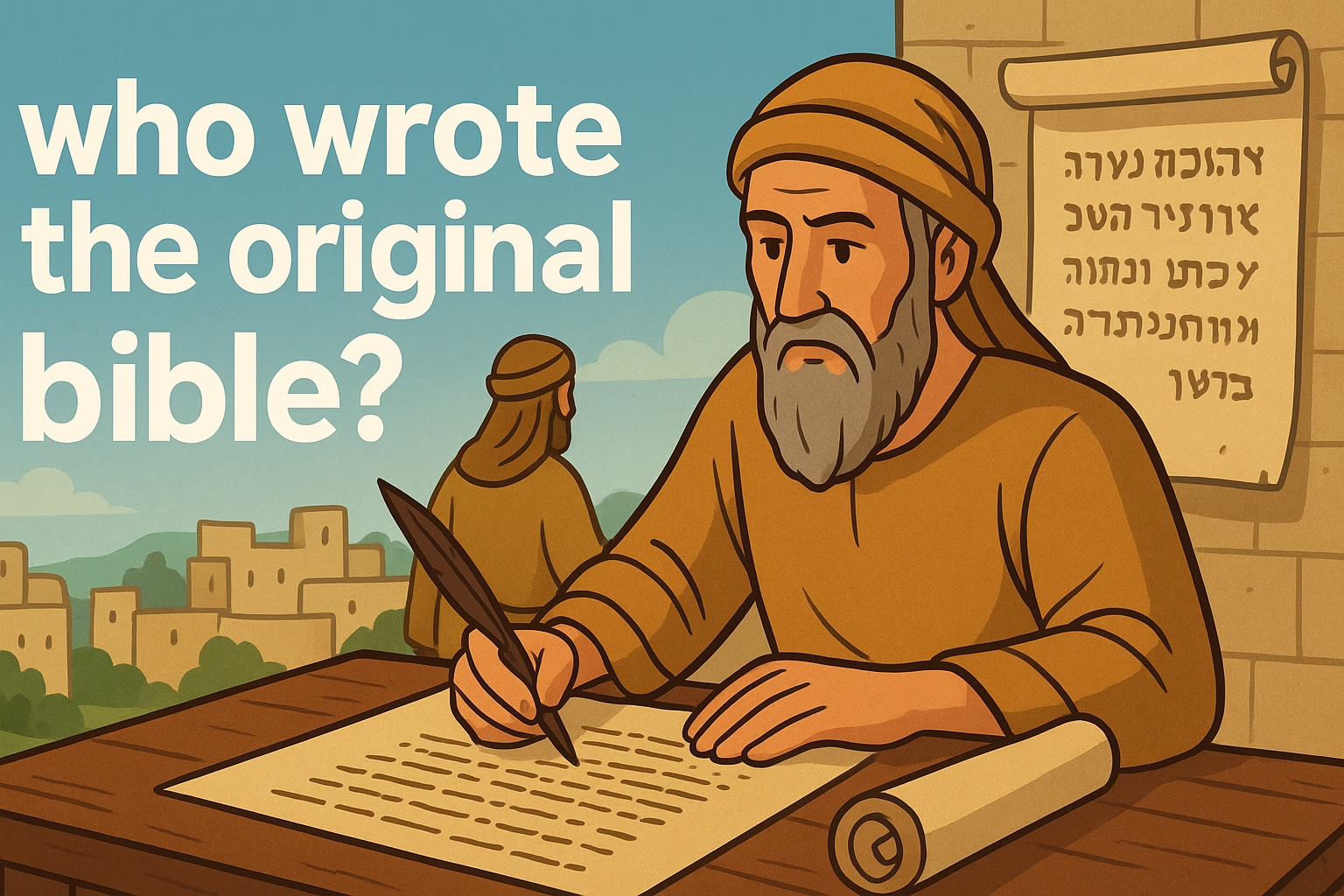
The question of who wrote the original Bible is one that has captivated scholars, theologians, and believers for centuries. The Bible is a collection of texts that span thousands of years, and its authorship is diverse, reflecting the different times, cultures, and contexts in which the texts were written. Understanding who wrote the Bible involves looking at various books and sections, each with its own unique background and authorship claims.
At its core, the Bible is traditionally divided into two main sections: the Old Testament and the New Testament. The Old Testament is primarily rooted in ancient Israelite history and culture, while the New Testament focuses on the life and teachings of Jesus Christ and the early Christian church. Each of these sections has multiple authors, some of whom are well-known, while others remain anonymous.
Authorship of the Old Testament
The Old Testament, also known as the Hebrew Bible, contains a variety of literary genres, including history, poetry, prophecy, and law. Traditionally, it has been attributed to several key figures:
- Moses: Often regarded as the primary author of the first five books of the Bible, known as the Torah or Pentateuch. This includes Genesis, Exodus, Leviticus, Numbers, and Deuteronomy. While Moses is traditionally credited with these texts, modern scholars debate the extent of his authorship, suggesting that multiple sources and editors contributed over time.
- David: Credited with writing many of the Psalms, King David’s poetic contributions reflect his experiences and relationship with God. The Psalms are a collection of songs and prayers that express a wide range of emotions.
- Prophets: Many of the prophetic books, such as Isaiah, Jeremiah, and Ezekiel, are attributed to the prophets themselves. These texts often contain messages of warning, hope, and guidance for the people of Israel.
In addition to these figures, various other authors contributed to the historical books, wisdom literature, and minor prophets. For example, the books of Joshua and Judges narrate Israel’s conquest and settlement of the Promised Land, while Proverbs and Ecclesiastes reflect on wisdom and life experience.
Authorship of the New Testament
The New Testament comprises 27 books that focus on the life of Jesus and the early Christian community. The authorship of these texts includes:
- Matthew: Traditionally attributed to one of Jesus’ disciples, the Gospel of Matthew presents Jesus as the fulfillment of Old Testament prophecy.
- Mark: The Gospel of Mark is often considered the earliest Gospel and is thought to be based on the teachings of the Apostle Peter.
- Luke: The Gospel of Luke and the Book of Acts are attributed to Luke, a physician and companion of the Apostle Paul. Luke’s writings emphasize the compassion of Jesus and include unique parables.
- John: The Gospel of John is attributed to the Apostle John. It presents a more theological perspective on Jesus’ identity and mission.
- Paul: The Apostle Paul is credited with writing many of the epistles (letters) in the New Testament, addressing various Christian communities and offering theological insights.
Other texts, such as the letters of Peter, James, and John, as well as the Book of Revelation, also contribute to the understanding of early Christianity. While some authorship claims are widely accepted, others remain subjects of scholarly debate.
Challenges in Determining Authorship
Determining the authorship of biblical texts can be complex. Several factors contribute to this complexity:
- Anonymity: Many books, especially in the Old Testament, do not explicitly name their authors. For example, the Book of Job does not identify its author, leading to various interpretations about its origins.
- Multiple Sources: Some texts, particularly in the Pentateuch, are believed to be composed of multiple sources edited together over time. This theory, known as the Documentary Hypothesis, suggests that different traditions contributed to the formation of these texts.
- Historical Context: Understanding the historical and cultural context in which a text was written is crucial. For instance, the letters of Paul were written to address specific issues within early Christian communities.
Due to these challenges, scholars often rely on linguistic analysis, historical context, and theological themes to explore authorship. While traditional attributions provide valuable insight, they are sometimes reevaluated in light of new discoveries or scholarly interpretations.
Conclusion on Authorship
In summary, the Bible’s authorship is a rich tapestry woven from the contributions of many individuals over centuries. While some authors are traditionally recognized, the complexities of textual history and scholarly analysis reveal a broader picture of collaborative writing and editing. The diverse voices within the Bible contribute to its depth and significance, inviting readers to engage with its teachings and insights.
Influence of Culture and Historical Context on Authorship
The environment in which biblical texts were written plays a significant role in understanding authorship. Each author was influenced by their cultural and historical context, which shaped their perspectives and the messages they conveyed. For instance, the writings of the Old Testament reflect ancient Near Eastern culture, including laws, customs, and religious practices, which can be seen in texts like Leviticus and Deuteronomy. These writings often mirror the legal codes of surrounding nations, suggesting that the authors were responding to their cultural milieu.
In the New Testament, the context of Roman rule and the emergence of early Christianity profoundly influenced the texts. The letters of Paul, for example, address specific issues faced by early Christian communities in a Greco-Roman world. Understanding the socio-political climate of the time helps readers grasp the urgency and relevance of Paul’s messages, as he navigated the complexities of faith in a society often hostile to new religious movements.
Oral Tradition and Its Role in Authorship
Before many biblical texts were written down, they were preserved through oral tradition. This means that stories, teachings, and laws were passed down verbally from generation to generation. Oral tradition is particularly significant in the context of the Old Testament, where narratives like those found in Genesis and Exodus were shared among the Israelite community long before being recorded in written form.
This oral transmission allowed for a dynamic process of storytelling, where details might change or adapt based on the audience and context. As a result, the final written texts may reflect a blend of various oral traditions, making it challenging to pinpoint a single author or source. The New Testament also reflects this oral culture, especially in the Synoptic Gospels (Matthew, Mark, and Luke), which share many similarities in their accounts of Jesus’ life and teachings, suggesting they may have drawn from common oral sources.
Disputed Texts and Controversies
Within the Bible, some texts are subjects of dispute regarding their authorship. For example, the authorship of the Book of Hebrews remains uncertain, with various candidates proposed, including Paul and Apollos. Similarly, the pastoral epistles (1 Timothy, 2 Timothy, and Titus) are debated among scholars, with some suggesting they were written by different authors than Paul due to stylistic and thematic differences.
Moreover, the inclusion of certain texts in the biblical canon has also sparked debate. The Apocrypha, for instance, contains books that some traditions include while others reject. The authorship and authenticity of these texts are often questioned, leading to differing views on their authority and significance within the broader biblical narrative.
The Role of Editors and Redactors
Another important aspect of biblical authorship is the role of editors and redactors. Over the centuries, various scribes and editors likely contributed to the shaping of biblical texts, adding, modifying, or compiling existing materials. This editing process can be seen in the way certain books, particularly in the Old Testament, weave together different sources and traditions.
For example, the Book of Isaiah is believed to have multiple authors and redactors, with sections written at different times reflecting varying historical contexts. This layered authorship challenges the notion of a singular voice and highlights the collaborative nature of biblical writing.
Implications for Interpretation
The complexities surrounding authorship have significant implications for how the Bible is interpreted. Understanding the historical and cultural context, the influence of oral tradition, and the role of editors can enrich one’s reading of Scripture. It invites readers to consider the perspectives of the authors and the communities they addressed, leading to a more nuanced understanding of biblical texts.
For instance, when reading the letters of Paul, recognizing the specific issues faced by the early church can illuminate the relevance of his teachings today. Similarly, understanding the historical backdrop of the Old Testament can enhance one’s appreciation of its themes of covenant, faithfulness, and redemption.
Questions for Further Reflection
As one explores the authorship of the Bible, several questions may emerge, prompting deeper contemplation:
- How does understanding the cultural and historical context of a biblical text influence your interpretation of its message?
- In what ways do the oral traditions surrounding biblical texts shape the understanding of their authorship?
- How do the debates surrounding authorship affect the way you view the authority and inspiration of Scripture?
- What role do you believe modern scholarship should play in understanding the Bible’s authorship and its implications for faith?
Engaging with these questions can lead to a richer dialogue about the Bible and its significance in the life of believers and the broader community.
Conclusion on the Complexity of Biblical Authorship
Ultimately, the authorship of the Bible is a multifaceted issue that encompasses a range of voices, contexts, and traditions. While traditional attributions provide a foundation, the complexities of history, culture, and textual development reveal a dynamic process of writing and editing. This understanding invites readers to engage with the Scriptures more deeply, appreciating the diverse contributions that shape the Bible as we know it today.
For further exploration of biblical authorship and its implications, you can read more about the historical context of the Bible and how different interpretations have emerged in the study of Scripture. Additionally, understanding the role of oral tradition in biblical texts can enhance your appreciation of their origins and significance.