Gehenna is a term that appears in the Bible and is often associated with concepts of judgment, punishment, and the afterlife. Understanding Gehenna requires an exploration of its origins, biblical references, and the theological implications tied to this term. In this article, we will delve into what Gehenna means, its historical context, and how it is portrayed in Scripture.
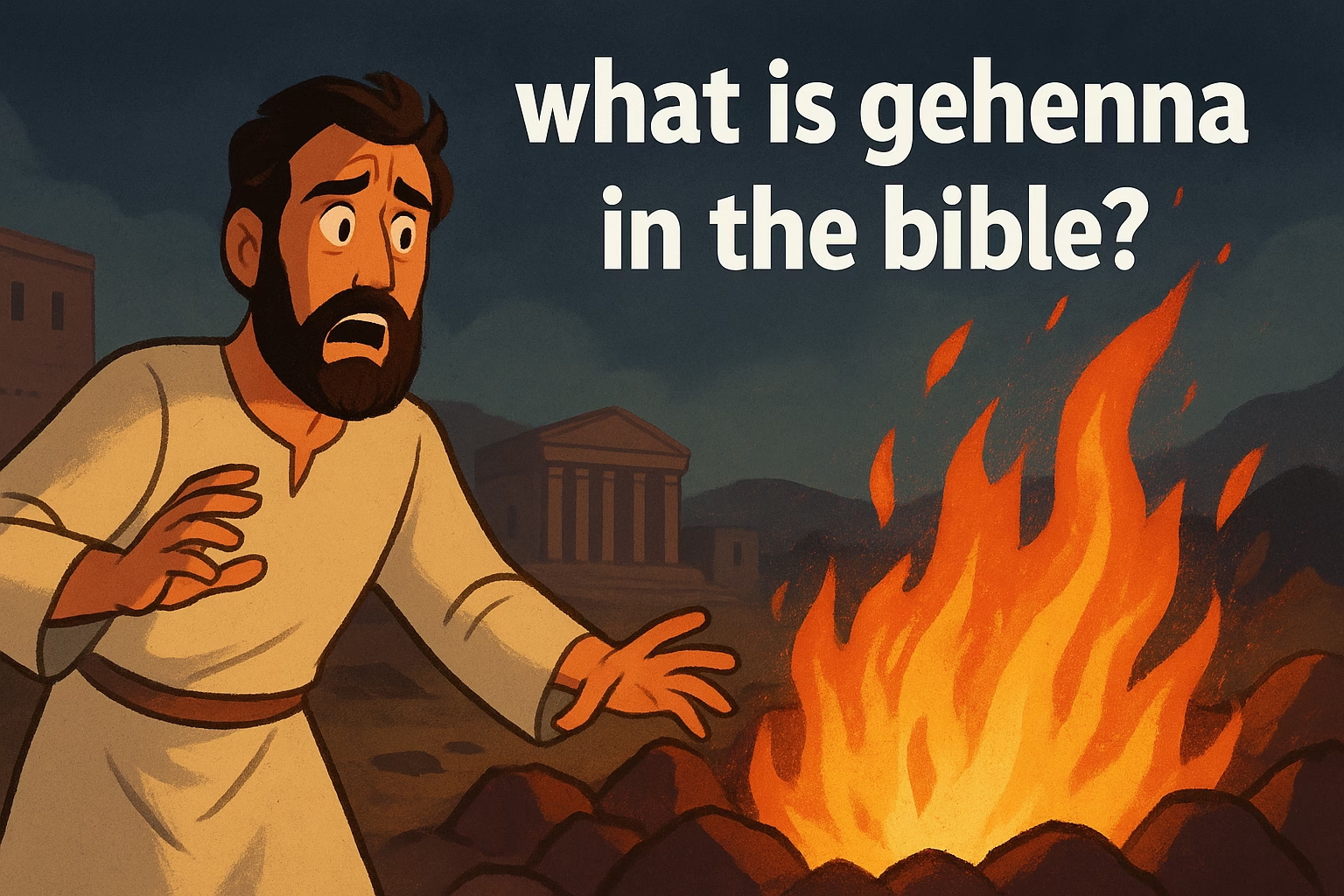
Gehenna is derived from the Hebrew phrase “Ge Hinnom,” which translates to the “Valley of Hinnom.” This valley, located just outside Jerusalem, was historically known for its association with idolatrous practices, including child sacrifice to the pagan god Molech. In biblical terms, Gehenna symbolizes a place of destruction and divine judgment. It is important to differentiate between Gehenna and other terms for hell or the grave, as Gehenna carries specific connotations in the context of biblical teaching.
Historical Context of Gehenna
The Valley of Hinnom has a rich and troubling history. In ancient times, it was a site of great shame for the Israelites. The prophet Jeremiah condemned the practices that took place there, warning that such actions would lead to destruction (Jeremiah 7:30-32). The valley became a metaphor for the consequences of sin and rebellion against God. Over time, the valley’s association with idolatry and death transformed its meaning into one of judgment.
In later Jewish thought, Gehenna was viewed as a place of punishment for the wicked after death. This idea evolved as the Jewish understanding of the afterlife developed. By the time of Jesus, Gehenna was commonly understood as a place of fiery torment for those who rejected God and lived in sin.
Gehenna in the New Testament
The New Testament references Gehenna primarily in the teachings of Jesus. He used the term to illustrate the severity of sin and the consequences of rejecting God’s ways. For instance, in Matthew 5:22, Jesus warns that anyone who harbors anger against a brother or sister is subject to judgment, and that calling someone a fool could lead to being “in danger of the fire of Gehenna.” This illustrates the seriousness of sin and the potential for eternal consequences.
Another significant reference occurs in Matthew 10:28, where Jesus states, “Don’t be afraid of those who want to kill your body; they cannot touch your soul. Fear only God,
Gehenna and Jewish Eschatology
To fully grasp the concept of Gehenna, it is essential to consider its role in Jewish eschatology, which is the study of end times and the final judgment. In ancient Jewish beliefs, the afterlife was not as clearly defined as in later Christian doctrine. However, the idea of a place of punishment for the wicked began to take shape, with Gehenna often cited as a temporary purgatorial state where souls could be purified before entering their ultimate destination.
During the Second Temple period, Jewish writings, such as the Talmud, expanded on the concept of Gehenna. It was seen as a place where the souls of the wicked would endure suffering for a limited time, often thought to be up to twelve months, after which they would cease to exist or be restored, depending on the particular belief system. This reflects a more nuanced understanding of divine justice, emphasizing both punishment and the possibility of redemption.
Gehenna in the Teachings of Jesus
Jesus’ teachings regarding Gehenna were deeply rooted in the cultural and religious context of His time. He often employed vivid imagery to convey spiritual truths, and Gehenna served as a powerful symbol of the consequences of sin. In the Gospels, Jesus warns about the dangers of leading others astray, stating that it would be better for a person to have a millstone tied around their neck and be thrown into the sea than to cause one of His little ones to stumble (Mark 9:42). This warning is closely tied to the fate awaiting those who reject God’s commandments and lead others into sin, highlighting the serious implications of their actions in relation to Gehenna.
Moreover, Jesus’ references to Gehenna also reflect His emphasis on the heart’s condition. In Matthew 23:33, He addresses the Pharisees and calls them a “brood of vipers,” warning them that they are on the path to judgment. This underscores the notion that Gehenna is not merely a physical place but a state of being that results from a life lived in opposition to God’s will.
Gehenna and the Concept of Judgment
Gehenna serves as a stark reminder of divine judgment and the seriousness of sin. The New Testament emphasizes that all will stand before God for judgment, as seen in passages like Romans 14:10-12, which states that each person will give an account of themselves to God. This sense of accountability reinforces the importance of living a life aligned with God’s teachings, as the fate of the soul is ultimately determined by one’s relationship with Him.
In Revelation 20:14-15, the final judgment is depicted, where death and Hades are thrown into the lake of fire, which is described as the second death. This imagery of the lake of fire is often associated with Gehenna, suggesting a finality to the judgment of the wicked. Understanding Gehenna in this context highlights the urgency of repentance and the call to live according to God’s ways, as the consequences of sin extend beyond earthly life.
Contemporary Interpretations of Gehenna
In modern Christian thought, interpretations of Gehenna vary widely. Some view it strictly as a symbol of eternal punishment, while others suggest it represents a state of separation from God. The debate continues regarding whether Gehenna is a literal place of torment or a metaphor for spiritual death and separation from God’s presence.
Furthermore, some theologians argue that the imagery of fire used in descriptions of Gehenna serves to illustrate the seriousness of sin rather than provide a detailed account of the afterlife. This perspective encourages believers to focus on the transformative power of God’s grace and the hope of redemption, rather than solely on the fear of punishment.
Questions for Reflection
As we consider the implications of Gehenna, several questions arise that can help deepen our understanding:
- How does the concept of Gehenna challenge us to evaluate our own lives and choices in light of God’s teachings?
- In what ways can we communicate the seriousness of sin while emphasizing God’s grace and forgiveness?
- How does the understanding of Gehenna influence our view of justice and mercy in our own communities?
- What role does repentance play in our spiritual journey, particularly in relation to the warnings about Gehenna?
Conclusion: The Significance of Gehenna in Christian Faith
Gehenna, as depicted in the Bible, carries profound significance for understanding sin, judgment, and the nature of God’s justice. It serves as a reminder of the consequences of living apart from God’s will and the importance of repentance and restoration. While interpretations may vary, the overarching message remains clear: Gehenna highlights the seriousness of our spiritual choices and the urgent call to align our lives with God’s purposes. Through this understanding, believers are encouraged to embrace God’s grace and share the hope of redemption with others, transforming the fear of Gehenna into a motivation for a faithful and fruitful life in Christ.
For more insights on the nature of hell and its biblical descriptions, consider reading what hell is described as in the Bible and explore what hell is like according to the Bible.