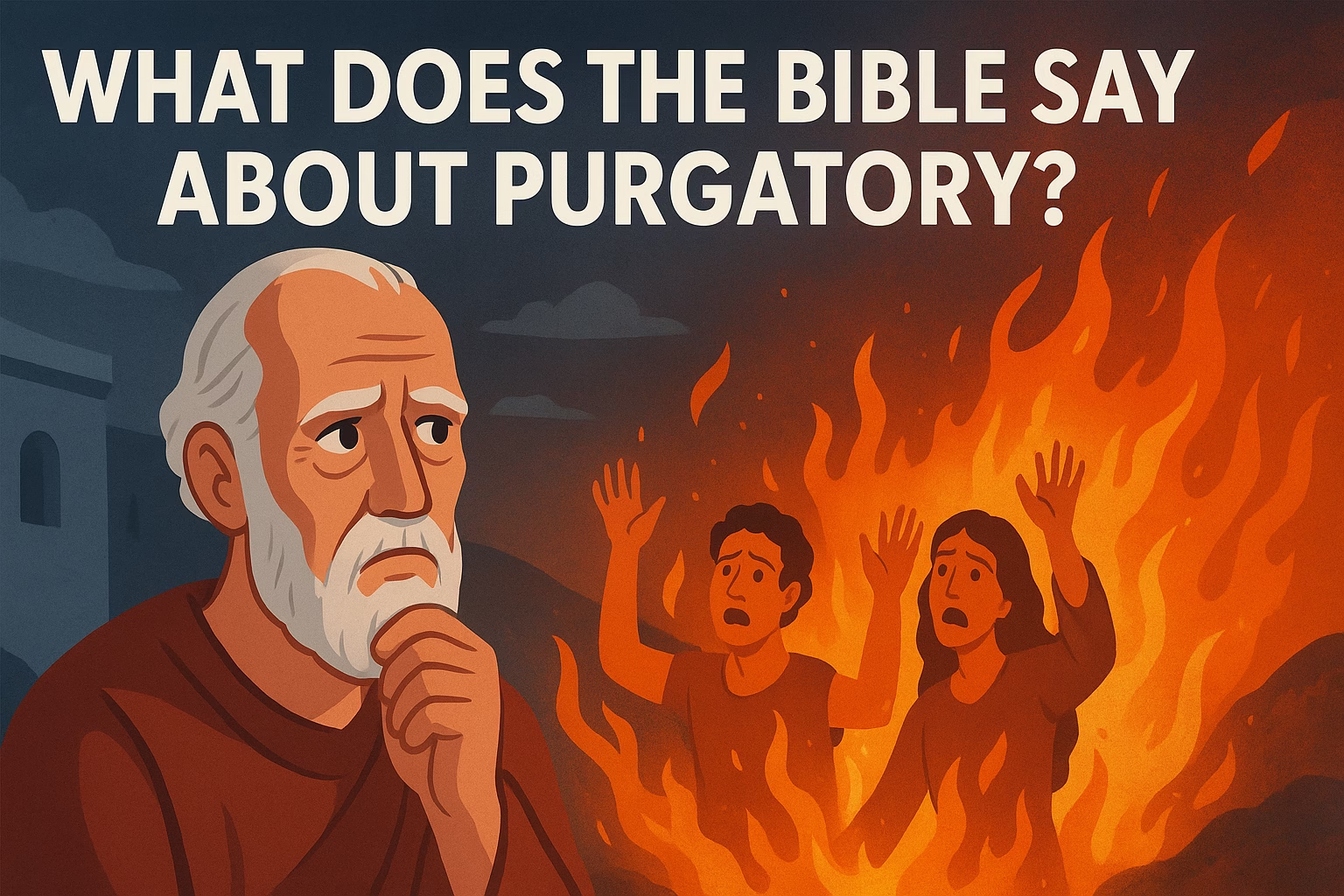
Purgatory is a concept that often generates much discussion and debate among Christians. While many hold firm beliefs regarding the afterlife, the idea of purgatory specifically is not explicitly detailed in the Bible. This article aims to explore what the Scriptures say, along with the interpretations that have emerged over time.
To understand what the Bible says about purgatory, we must first examine the key passages that are often referenced in discussions about the afterlife and purification. The term “purgatory” itself does not appear in the Bible, but some interpret certain verses to suggest a state of purification after death for those who are not yet ready to enter heaven.
Key Biblical Passages Related to Purgatory
1. 1 Corinthians 3:11-15
One of the most cited passages in relation to purgatory is found in 1 Corinthians 3:11-15. In this text, Paul discusses how each person’s work will be tested by fire. He writes that if someone’s work survives, they will receive a reward, but if it is burned up, they will suffer loss, although they themselves will be saved, “but only as through fire.” This imagery of fire is often interpreted as a form of purification.
“But on the Day of Judgment, fire will reveal what kind of work each builder really is. The fire will show if a person’s work has any value.” (1 Corinthians 3:13 NLT)
This passage may suggest a process of purification for believers who have not fully lived out their faith. However, the interpretation of this fire as purgatory is not universally accepted and remains a subject of debate among theologians.
2. Matthew 12:32
Another verse that is often discussed in this context is Matthew 12:32, where Jesus mentions that certain sins can be forgiven in this age and in the age to come. Some interpret this to mean that there is a possibility for post-death forgiveness, which aligns with the concept of purgatory.
“Anyone who speaks against the Son of Man can be forgiven. But anyone who speaks against the Holy Spirit will not be forgiven, either in this world or in the world to come.” (Matthew 12:32 NLT)
This verse raises questions about the nature of forgiveness and the afterlife, leading some to conclude that there is a state where souls can still be purified before entering heaven.
3. 2 Maccabees 12:39-46
While not part of the Protestant canon, 2 Maccabees is included in the Catholic Bible and discusses the practice of praying for the dead. In this passage, Judas Maccabeus makes atonement for the dead, suggesting a belief in a purification process after death. This has been a foundational text for the Catholic understanding of purgatory.
“He made atonement for the dead, so that they might be freed from their sin.” (2 Maccabees 12:46 NLT)
This idea of intercessory prayer for the deceased implies a belief in a state of existence where souls can benefit from the prayers of the living, aligning closely with the Catholic doctrine of purgatory.
Tradition and Interpretation
The Development of the Purgatory Concept
The concept of purgatory as a place of purification has evolved over time, influenced significantly by Church tradition rather than direct biblical evidence. Early Church Fathers, such as Augustine and Gregory the Great, contributed to the development of this doctrine. They emphasized the need for purification of the soul, which led to the institutionalization of the idea of purgatory in Catholic theology.
In contrast, many Protestant denominations reject the notion of purgatory, citing the belief that Christ’s sacrifice on the cross fully atoned for sin, thus negating the need for any further purification after death. This fundamental difference in understanding salvation and the afterlife is a key point of divergence between Catholic and Protestant beliefs.
Disputed Interpretations
While some biblical texts can be interpreted to suggest a process of purification, the lack of explicit mention of purgatory in the Bible leads to various interpretations. The verses cited above can be understood in different ways, and many theologians argue that they do not necessarily support the concept of purgatory as traditionally defined.
- Some argue that the fire mentioned in 1 Corinthians is metaphorical, referring to a testing of faith during one’s earthly life rather than a post-death experience.
- Others believe that forgiveness mentioned in Matthew 12:32 pertains only to this life, not implying a process after death.
These differing interpretations highlight the complexity of the subject and the necessity for careful biblical exegesis when discussing the afterlife.
Conclusion of Part One
In summary, while the Bible does contain passages that some interpret as supporting the idea of purgatory, the concept itself is not explicitly defined within Scripture. The development of purgatory as a doctrine has largely arisen from Church tradition and theological interpretations. Understanding purgatory requires examining both the biblical texts and the historical context in which these interpretations emerged.
Further Biblical Insights on Afterlife and Purification
To deepen our understanding of purgatory, we can explore additional biblical themes regarding purification and the afterlife. The Scriptures offer various insights into God’s justice, mercy, and the transformative process of sanctification that believers undergo, both in this life and potentially beyond.
The Nature of God’s Justice and Mercy
The Bible consistently emphasizes that God is both just and merciful. Psalm 85:10 states, “Mercy and truth have met together; righteousness and peace have kissed each other.” This verse encapsulates the balance between God’s justice and His desire for reconciliation with humanity. Some theologians argue that purgatory reflects this balance—a place where God’s mercy allows for purification before entering His presence, ensuring that all His creation can be restored to a state of holiness.
The Process of Sanctification
Sanctification is a key theme in Christian theology, referring to the process by which believers are made holy through the work of the Holy Spirit. Philippians 1:6 reassures Christians that “He who began a good work in you will carry it on to completion until the day of Christ Jesus.” This scripture suggests that the journey of spiritual growth and purification continues until believers are fully conformed to the image of Christ. The idea of purgatory, for some, parallels this ongoing process of sanctification, which may extend beyond earthly life.
Imagery of Refinement
The Bible often uses imagery of refinement to describe God’s work in believers’ lives. In Malachi 3:2-3, it is written, “He will sit as a refiner and purifier of silver; He will purify the sons of Levi and purge them as gold and silver.” This metaphor illustrates the careful and intentional process of purification that aligns closely with the concept of purgatory. Just as metal is refined through fire to remove impurities, some interpretations suggest that the soul undergoes a similar process after death, preparing it for eternal communion with God.
Questions for Reflection
As we consider the concept of purgatory, it is helpful to reflect on several questions:
- How do we understand God’s justice and mercy in relation to sin and purification?
- What role does sanctification play in the life of a believer, and how does it relate to the afterlife?
- In what ways can the imagery of refinement enhance our understanding of God’s transformative work in our lives?
These questions encourage deeper exploration of Scripture and personal reflection on the nature of God’s grace and the afterlife.
Tradition vs. Scripture: Theological Divergence
The debate over the existence of purgatory often centers on the tension between tradition and Scripture. For many Catholics, the teachings of the Church and the authority of the Magisterium provide a framework for understanding purgatory. This includes the belief that the Church can intercede for the souls in purgatory through prayers and sacramental acts.
Conversely, many Protestant denominations emphasize Sola Scriptura, the belief that Scripture alone is the authoritative source for Christian doctrine. This foundational principle leads to a rejection of purgatory, as proponents argue that the Bible does not provide sufficient support for the concept. They maintain that Jesus’ sacrifice is entirely sufficient for salvation, eliminating any need for further purification after death.
The Role of Intercessory Prayer
In discussing purgatory, it is essential to consider the role of intercessory prayer. The Catholic tradition teaches that the living can pray for the souls in purgatory, aiding their purification process. This practice is based on the belief that the prayers of the faithful can assist those undergoing purification. However, Protestants typically view prayer as a means of communion with God rather than a mechanism for influencing the state of the deceased.
Conclusion
In conclusion, while the Bible does not explicitly mention purgatory, various passages and themes can be interpreted to support the concept of post-death purification. The discussions surrounding purgatory reveal the complexity of theological interpretations and the balance between tradition and Scripture. Ultimately, the understanding of purgatory invites believers to reflect on God’s justice, mercy, and the transformative process of sanctification, both in this life and the next.
For further exploration of related topics, consider reading about the spirits of the dead and salvation in the Bible.