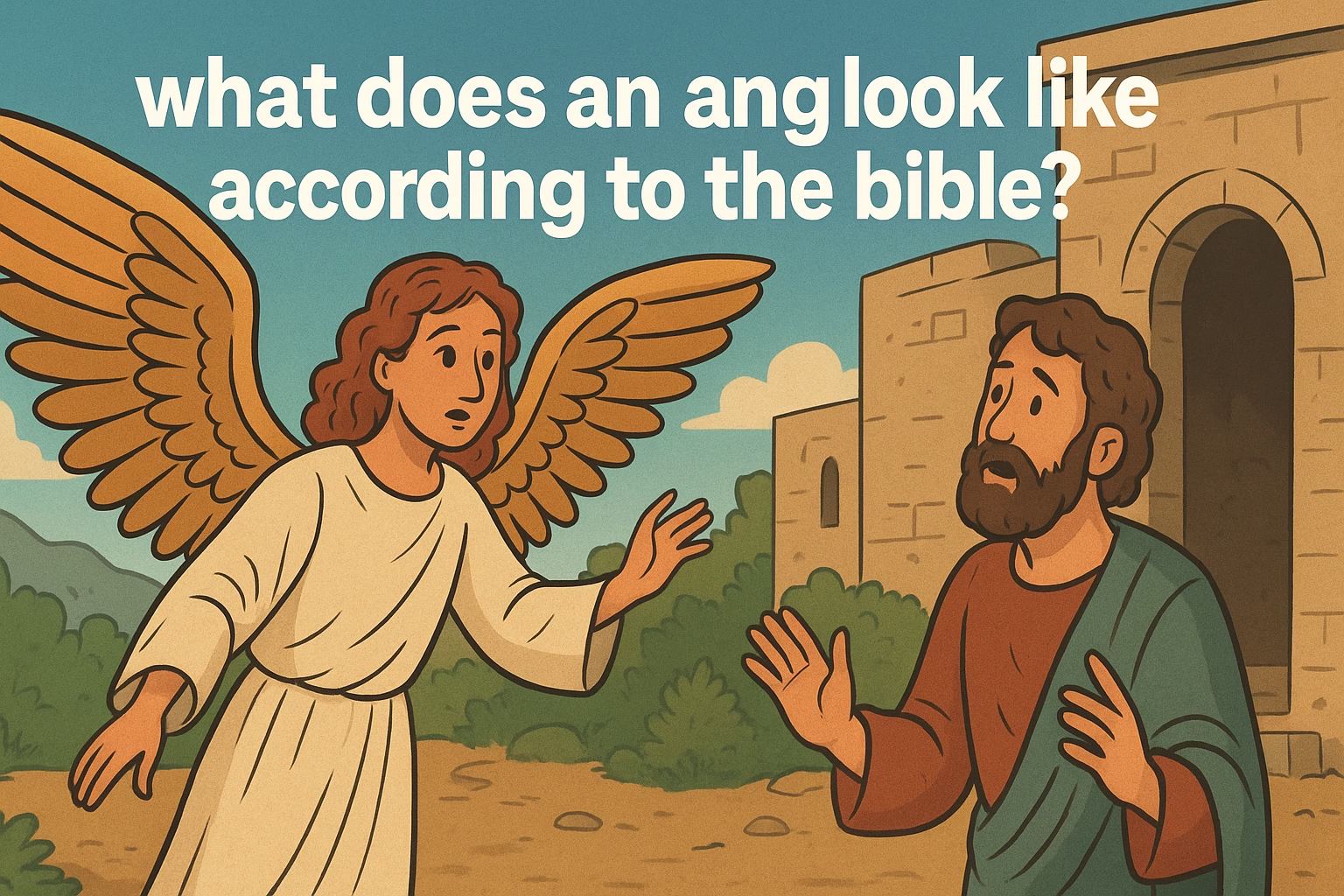
Angels have captivated human imagination for centuries, depicted in art, literature, and popular culture. But what do angels truly look like according to the Bible? This question invites us to explore various passages that describe these celestial beings, their forms, and their roles. Understanding the biblical portrayal of angels can deepen our appreciation for their significance in the spiritual realm.
Angels, as described in the Bible, come in various forms and appearances. While many people envision angels as gentle beings with wings and halos, the Scriptures present a more complex picture. Throughout the Bible, angels are depicted not only as messengers but also as warriors, guardians, and agents of God’s will. Let’s delve into the different descriptions found in the Bible.
Angels as Messengers
One of the primary roles of angels is to serve as messengers of God. This is evident in several biblical accounts. For example, the angel Gabriel appears to Mary in the Gospel of Luke to announce the birth of Jesus. In this context, Gabriel is described simply as an angelic figure, without elaborate details about his appearance (Luke 1:26-38).
In another instance, the angel who appears to Zechariah, the father of John the Baptist, is also described as a messenger. The focus in these narratives is less on their physical appearance and more on their divine mission. This suggests that while angels may have identifiable features, their primary purpose is to convey God’s messages rather than to draw attention to themselves.
Angelic Appearances in the Old Testament
In the Old Testament, angels are often described in more vivid and sometimes frightening terms. For example, in Ezekiel 1:4-14, the prophet has a vision of four living creatures, each with four faces and four wings. These beings are described as having the likeness of a man, a lion, an ox, and an eagle. The imagery is quite complex and emphasizes their awe-inspiring nature.
Additionally, in Isaiah 6:1-3, the prophet describes seraphim, angelic beings that surround God’s throne. These seraphim are depicted as having six wings: two covering their faces, two covering their feet, and two for flying. They proclaim God’s holiness, emphasizing their role in worship and reverence.
Angels as Warriors
Angels are also portrayed as warriors in the Bible. In the book of Revelation, for instance, Michael the archangel leads the heavenly armies against the forces of evil (Revelation 12:7-9). While specific details about Michael’s appearance are not provided, the passage highlights his strength and leadership in spiritual warfare.
Another example is found in 2 Kings 6:15-17, where the prophet Elisha’s servant is given a glimpse of the heavenly army surrounding them. This army is described as being filled with horses and chariots of fire, showcasing the power and majesty of God’s messengers. The focus here is on their might and the protection they provide, rather than their physical features.
Angels and Their Form
The Bible does not provide a uniform description of angels’ appearances, leading to various interpretations. While some passages suggest they may have human-like features, others depict them in more fantastical forms. For instance, the cherubim described in Exodus 25:18-22 are often illustrated with wings and faces, serving as guardians of the sacred space.
In contrast, Hebrews 13:2 encourages believers to show hospitality to strangers, as some may be angels unaware. This suggests that angels can take on human form, blending in with people, which aligns with their role as messengers.
The Nature of Angelic Appearance
When considering what angels look like, it is essential to recognize that their appearances may vary depending on their mission. While some angels may appear as radiant beings, others may take on more subdued forms. The common thread among all descriptions is their connection to God’s purpose and holiness.
In summary, the biblical portrayal of angels encompasses a wide range of appearances and forms. They serve as messengers, warriors, and worshipers, each with a unique role in God’s divine plan. Their physical descriptions often reflect their purpose, emphasizing their power, majesty, and the awe they inspire.
Symbolism in Angelic Appearances
Understanding the appearance of angels in the Bible requires an appreciation of the symbolism inherent in their descriptions. Many biblical references to angels convey deeper meanings beyond their physical characteristics. For instance, the use of wings often symbolizes swiftness and the ability to transcend earthly limitations. When angels are described with wings, it emphasizes their role as messengers who traverse the heavens to carry out God’s will.
Furthermore, the presence of multiple faces or the association with particular animals, as seen in the living creatures of Ezekiel, can represent various attributes of God. The lion may symbolize strength and majesty, the ox may signify service and sacrifice, the man represents intelligence and reason, and the eagle suggests divine perspective and swiftness. These symbols invite readers to explore the multifaceted nature of angels and their connection to God’s character.
Angels in the New Testament
In the New Testament, angels continue to play significant roles, particularly in the narratives surrounding the life of Jesus. For instance, angels appear at critical moments, such as the announcement of Jesus’ resurrection (Matthew 28:1-7). Here, the angel is described as having an appearance like lightning and clothing as white as snow, highlighting the glory and power associated with divine messengers.
Additionally, in the book of Acts, angels are depicted as active participants in the early church, guiding and freeing apostles from prison (Acts 5:19-20). These instances illustrate that angels are not only messengers but also protectors and enforcers of God’s plans. Their appearances in the New Testament often reflect a sense of urgency and authority, reinforcing their pivotal roles in the unfolding story of salvation.
The Role of Angels in Spiritual Warfare
The concept of angels as warriors is not limited to physical battles. The New Testament also emphasizes the spiritual dimensions of warfare. Ephesians 6:12 reminds believers that our struggle is not against flesh and blood but against spiritual forces of evil. In this context, angels are seen as agents of God’s protection and assistance in spiritual battles. Their appearances may not always be visible to human eyes, but their influence is felt in the spiritual realm.
Michael, the archangel, is specifically mentioned in Jude 1:9 as contending with the devil over the body of Moses. This interaction underscores the reality of spiritual conflict and the active role angels play in upholding God’s purposes. While the physical appearance of angels may remain largely mysterious, their involvement in spiritual warfare speaks to their power and authority as divine beings.
Angels and Human Interaction
Throughout the Bible, angels have interacted with humans in various capacities. Often, these encounters evoke awe and fear. In many instances, the first words of an angelic message are “Do not be afraid,” indicating the overwhelming presence of these beings. Their divine nature can provoke a deep sense of reverence and recognition of God’s majesty.
Moreover, the notion that angels can take on human forms, as suggested in Hebrews 13:2, encourages believers to view every encounter as potentially significant. This invites questions about how we interact with others and how we recognize the divine in our daily lives. The idea that we may encounter angels in disguise prompts reflection on our attitudes toward strangers and the importance of kindness and hospitality.
Contemporary Perspectives on Angels
In modern times, angels continue to be a source of fascination. Many people hold personal beliefs about angels that may differ from traditional biblical interpretations. Some view angels as guardian spirits or as comforting presences in times of need. While these beliefs can provide hope and encouragement, it is essential to ground our understanding of angels in the biblical context.
The Bible presents angels as powerful beings with specific roles and responsibilities rather than merely as comforting figures. Acknowledging the full scope of their biblical portrayal allows believers to appreciate the majesty and mystery of these celestial beings while recognizing their ultimate purpose in serving God’s will.
Conclusion: The Nature of Angels
In conclusion, the biblical descriptions of angels reveal a rich tapestry of appearances and roles that reflect their divine purpose. From majestic warriors to humble messengers, angels serve as representatives of God’s will, embodying attributes such as strength, majesty, and reverence. While their physical appearances may vary, the essence of angels remains rooted in their connection to God and His plans for humanity.
As we contemplate the nature of angels, we are reminded of the spiritual realities that surround us and the importance of recognizing the divine in our everyday lives. Engaging with the biblical portrayal of angels not only deepens our understanding of these celestial beings but also enriches our faith as we consider the ways in which God interacts with us through His messengers.
To learn more about the significance of angels in the Bible and how they relate to our understanding of God’s presence, you can explore the role of angels in the spiritual realm and the impact of angelic encounters in Scripture.