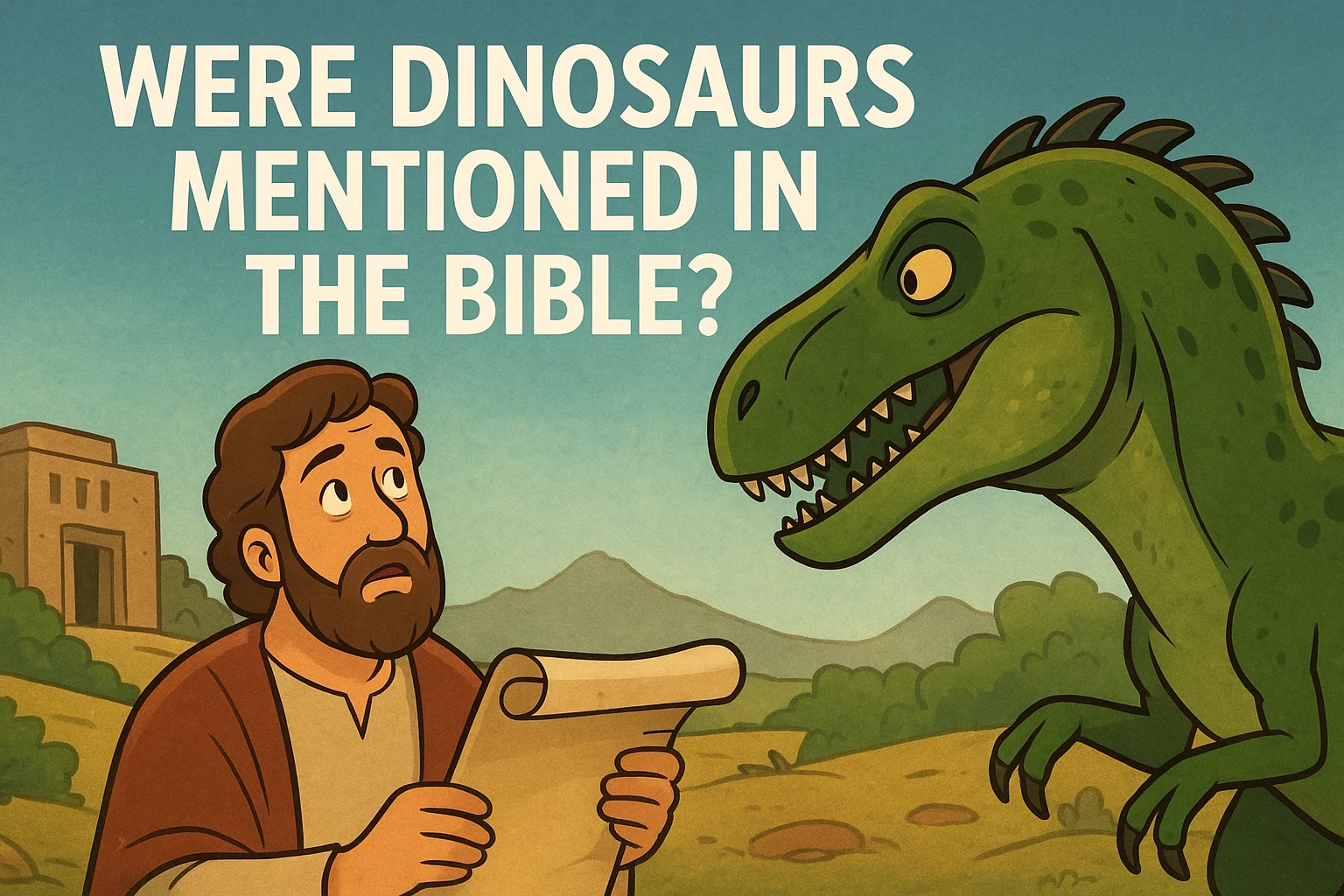
The question of whether dinosaurs are mentioned in the Bible has intrigued many people, both believers and skeptics alike. As we explore this topic, it is essential to approach it with an open mind and a willingness to understand the context of biblical texts. Dinosaurs, as we understand them today, lived millions of years ago, long before the creation of humans. The Bible does not explicitly mention dinosaurs by name, but it does contain descriptions of creatures that some scholars and enthusiasts believe may correlate to what we now classify as dinosaurs.
To address the question directly, while the term “dinosaur” is not found in the Bible, there are passages that some interpret as references to large, prehistoric creatures. In this article, we will examine these passages and the context in which they appear, allowing us to explore the possibility of biblical references to dinosaurs.
Understanding the Context of Creatures in the Bible
The Bible was written in a time and culture vastly different from our own. The authors of the biblical texts were not concerned with classifying creatures as we do today. Instead, they described animals and beings based on their experiences and the understanding of the world around them. Therefore, while we may look for dinosaurs specifically, we must first consider how the Bible describes various creatures.
Behemoth: A Possible Dinosaur Reference?
One of the most frequently cited passages in discussions about dinosaurs is found in the book of Job. Job 40:15-24 describes a creature called “Behemoth.” This passage portrays Behemoth as a massive, powerful animal that grazes on grass and has a tail like a cedar tree. The description continues with details about its strength and habitat.
Job 40:15-17 (NLT): “Look at Behemoth, which I made just as I made you. It eats grass like an ox. See its powerful loins and the muscles of its belly. Its tail is as strong as a cedar. The sinews of its thighs are knit tightly together.”
Many scholars suggest that Behemoth could represent a large dinosaur or other prehistoric creature due to its size and strength. However, interpretations vary widely. Some believe Behemoth refers to a hippo or elephant, as these animals were known in ancient times and match some of the characteristics described. This highlights the challenge of determining whether biblical descriptions correspond with modern understandings of dinosaurs.
Leviathan: Another Mysterious Creature
Another creature that is often discussed in the context of dinosaurs is Leviathan, mentioned in Job 41. Leviathan is depicted as a fearsome sea creature, capable of great destruction and possessing impenetrable scales. The vivid imagery used in this passage has led some to speculate that Leviathan could represent a large marine reptile or even a dinosaur-like creature.
Job 41:1-2 (NLT): “Can you catch Leviathan with a hook or put a noose around its jaw? Can you tie it with a rope through the nose or pierce its jaw with a spike?”
The description of Leviathan emphasizes its untamable nature and power, which could metaphorically represent the awe-inspiring creatures of the Earth, including dinosaurs. However, like Behemoth, interpretations of Leviathan’s identity are varied, and it is essential to consider the poetic and symbolic language used in the text.
Interpreting Scripture Versus Scientific Understanding
When discussing whether dinosaurs are mentioned in the Bible, it is crucial to distinguish between direct references and interpretations that arise from the text. The Bible does not provide a scientific classification of creatures, nor does it present a timeline of Earth’s history as understood through modern science. Instead, it communicates theological truths, moral lessons, and narratives central to the faith.
Many Christians believe that the biblical creation account in Genesis describes God’s creation of the world, including all living creatures, but does not specifically mention dinosaurs. The focus of Genesis is on the relationship between God and humanity, rather than providing a detailed account of every species that existed.
Creation and the Age of the Earth
The age of the Earth and the existence of dinosaurs are subjects of significant debate among Christians. Some interpret the “days” of creation in Genesis as literal 24-hour periods, while others view them as symbolic of longer epochs. This interpretation can influence how one understands the timeline of dinosaurs and their coexistence with humanity.
For those who hold a young-Earth creationist perspective, dinosaurs may have existed alongside humans, while others who accept an old-Earth view may see dinosaurs as part of a long history of life that predates humans. Regardless of perspective, the Bible focuses primarily on God’s relationship with humanity rather than providing a comprehensive account of all creatures that have ever existed.
Conclusion of Part One
As we explore the question of whether dinosaurs are mentioned in the Bible, it is clear that there are passages that may allude to large, powerful creatures, such as Behemoth and Leviathan. However, these interpretations are often debated and may reflect more about the cultural and literary context of the Bible than about specific prehistoric creatures. Understanding the Bible requires careful consideration of its purpose, genre, and the time in which it was written. As we continue this exploration, we will delve deeper into the implications of these interpretations and how they fit within the broader narrative of Scripture.
The Nature of Biblical Language and Imagery
Understanding the language of the Bible is crucial when examining references to creatures like Behemoth and Leviathan. The Bible employs a rich tapestry of poetic and metaphorical language to convey its messages. Many descriptions are intended to evoke emotions, teach lessons, or illustrate God’s power and majesty rather than serve as scientific accounts of reality.
In ancient Hebrew literature, creatures often symbolize broader concepts. For example, Behemoth and Leviathan can be seen as representations of chaos and the untamed aspects of creation that God masters. Looking at these creatures through a symbolic lens allows for a deeper appreciation of the text’s theological implications rather than solely focusing on their literal existence.
Literary Context of Job
The book of Job, where both Behemoth and Leviathan are mentioned, is a poetic work that addresses profound questions of suffering, justice, and the nature of God. The descriptions of these creatures serve to illustrate God’s sovereignty over all creation, emphasizing that even the most formidable beings are under His control. This literary context suggests that the primary purpose of these creatures is not to provide information about prehistoric life but to illustrate God’s greatness.
Historical and Cultural Perspectives
When considering the biblical references to creatures resembling dinosaurs, it is essential to recognize the historical and cultural perspectives of the times in which these texts were written. Ancient Israelites may have encountered large animals such as crocodiles, hippos, and elephants, which could have influenced their descriptions. The cultural context in which the Bible was written lacked modern scientific understanding, leading to different classifications of animals.
In this light, discussions about Behemoth and Leviathan should consider the potential for these creatures to represent animals familiar to the biblical authors rather than direct references to dinosaurs. The interpretations of these creatures can reveal much about the ancient worldview and the ways in which they viewed the natural world.
Christian Tradition and Interpretation
Christian tradition has long sought to interpret the Bible in ways that resonate with contemporary understanding. Throughout history, various theologians and scholars have offered differing interpretations of creatures like Behemoth and Leviathan. Some have viewed them as mythical representations of chaos, while others have attempted to align them with known species.
This diversity of interpretation highlights the Bible’s depth and the ongoing dialogue within the Christian community regarding its meaning. It also underscores the importance of approaching Scripture with humility and a willingness to engage with various perspectives.
What Does This Mean for Modern Believers?
The question of whether dinosaurs are mentioned in the Bible is not merely an academic one; it has implications for how modern believers understand their faith and the natural world. As Christians grapple with the relationship between science and Scripture, it becomes essential to consider how biblical texts can coexist with scientific discoveries.
Many believers find that the Bible’s primary purpose is to reveal God’s character, His relationship with humanity, and His plan for salvation. The focus on God’s sovereignty and the moral and spiritual truths found in Scripture can provide a foundation for understanding the world, including the existence of dinosaurs and other prehistoric creatures.
Faith and Science: A Harmonious Relationship
For many Christians, faith and science are not opposing forces but rather complementary paths to understanding truth. The discoveries of paleontology and geology offer valuable insights into the history of life on Earth, including the existence of dinosaurs. Instead of viewing these findings as challenges to faith, they can be seen as part of God’s creation narrative, revealing the complexity and beauty of the world He has made.
Believers are encouraged to embrace both the spiritual truths of Scripture and the scientific insights of the natural world. This dual approach can lead to a richer understanding of God’s creation and the ways in which humanity fits into the larger picture of existence.
Conclusion: Embracing Mystery and Wonder
In conclusion, while the Bible does not explicitly mention dinosaurs, the exploration of creatures like Behemoth and Leviathan invites deeper reflection on the nature of Scripture, the cultural context of its writing, and the relationship between faith and science. The descriptions of these creatures serve to illustrate God’s power and majesty rather than provide a scientific account of prehistoric life.
Ultimately, the inquiry into dinosaurs in the Bible encourages believers to embrace the mystery and wonder of God’s creation. It calls for an appreciation of the diverse ways in which God communicates truth through His Word and the natural world. As we seek to understand the relationship between Scripture and science, we can find joy in the exploration of both, celebrating the complexity of God’s creation and the profound truths found within the Bible.