Deborah is one of the most notable female figures in the Bible, recognized for her leadership and prophetic abilities. Her story not only highlights her strength but also provides insight into the role of women in ancient Israel. This article will explore where Deborah is mentioned in the Bible, focusing on her life, contributions, and the context of her narrative.
Deborah appears prominently in the Book of Judges, specifically in Judges chapters 4 and 5. She is introduced as a prophetess and a judge of Israel, a significant role during a time of oppression and turmoil. This context is crucial for understanding her impact and the events that unfolded during her leadership.
Deborah in the Book of Judges
Judges 4: The Call to Action
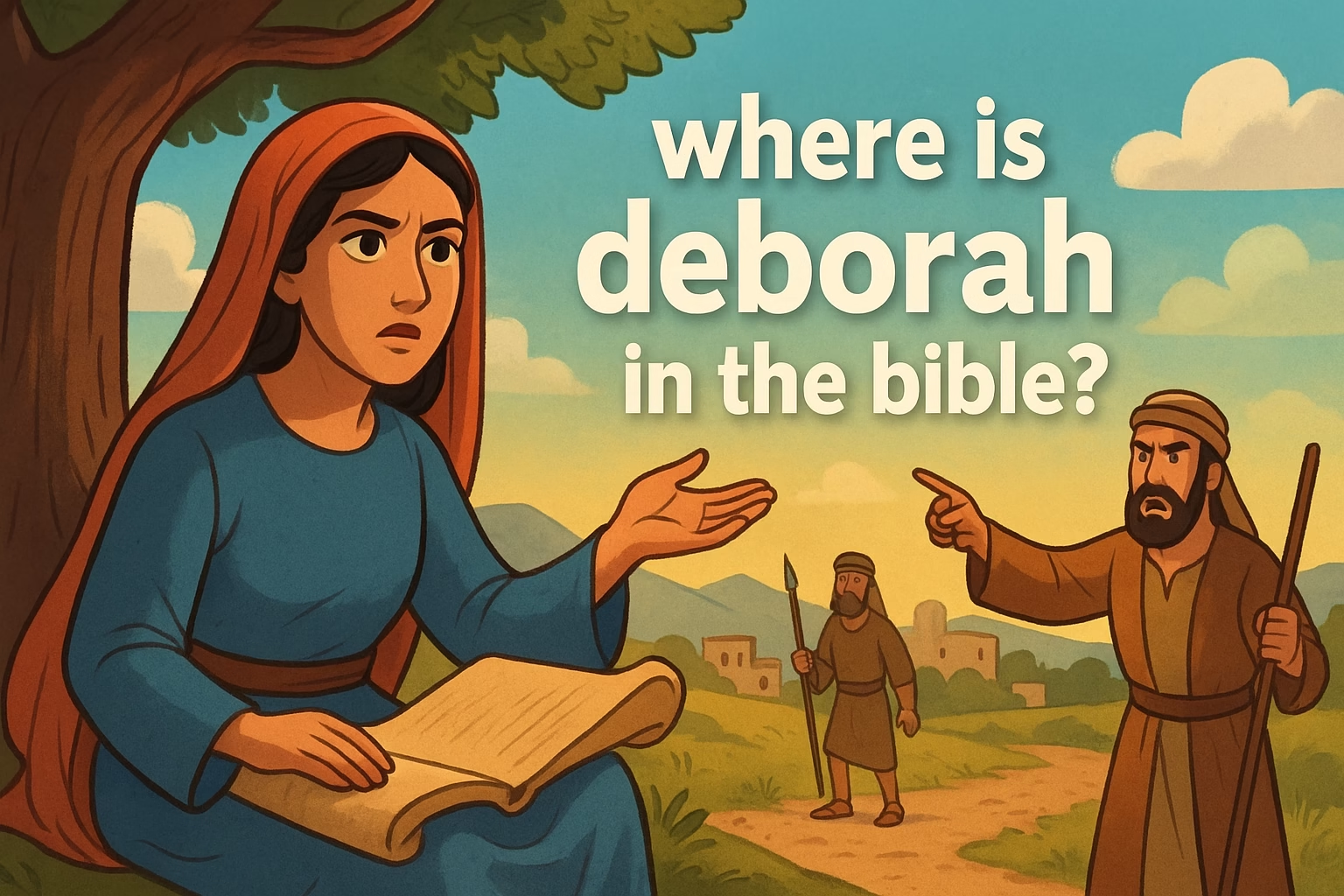
In Judges 4, we learn that the Israelites were under the oppression of King Jabin of Canaan. Deborah, described as a prophetess, was leading Israel at that time. She would sit under a palm tree, known as the Palm of Deborah, where the people came to her for judgment. This setting indicates her respected position and the trust that the Israelites placed in her wisdom and guidance.
One day, Deborah summoned Barak, a military leader, and instructed him to gather an army and confront Sisera, the commander of Jabin’s forces. She told Barak that God commanded him to take 10,000 men to Mount Tabor to fight against Sisera. Barak hesitated and requested that Deborah accompany him, expressing his doubt about going into battle without her presence. Deborah agreed but told him that the honor of victory would not be his alone; instead, Sisera would fall into the hands of a woman (Judges 4:4-9).
The Battle Against Sisera
Deborah’s leadership was pivotal in rallying the Israelites to fight against their oppressors. As they marched to battle, God intervened by sending a powerful storm that caused confusion among Sisera’s troops. This divine assistance led to a great victory for Barak and the Israelites, resulting in the defeat of Sisera’s army (Judges 4:14-16).
After the battle, Sisera fled on foot and sought refuge in the tent of Jael, a Kenite woman. Jael played a crucial role in the final act of the story, as she ultimately killed Sisera and thus fulfilled Deborah’s prophecy. This moment highlights the theme of women stepping forward in unexpected ways to fulfill God’s plans (Judges 4:17-22).
Deborah’s Song: Judges 5
A Celebration of Victory
Following the victory, Deborah and Barak sang a song of praise, which is found in Judges 5. This song is one of the earliest pieces of Hebrew poetry and serves not only as a celebration of their victory but also as a historical account of the events that transpired. The song recounts the bravery of the Israelite leaders and the contributions of various tribes, highlighting the importance of unity among them during the battle.
In her song, Deborah reflects on the circumstances leading up to the conflict and the miraculous intervention of God. She praises the people who willingly offered themselves for battle, emphasizing the significance of their courage and faith (Judges 5:1-2).
Key Themes in Deborah’s Story
Deborah’s narrative encompasses several key themes that resonate throughout the Bible:
- Leadership: Deborah’s role as a judge and prophetess showcases the importance of strong, wise leadership in times of crisis.
- Faith and Obedience: Her unwavering faith in God’s command and her willingness to act on it serves as an example of obedience.
- The Role of Women: Deborah’s story challenges traditional gender roles, demonstrating that women can be powerful leaders and instruments of God’s will.
- Divine Intervention: The battle’s outcome emphasizes the belief that God fights for His people, often in miraculous ways.
The Significance of Deborah’s Legacy
Deborah’s story holds significant theological and historical importance in the Bible. Her leadership during a tumultuous period in Israel’s history illustrates the effectiveness of faith-driven guidance. She not only led her people in battle but also served as a voice for God, reminding the Israelites of their covenant relationship with Him.
Deborah’s legacy extends beyond her immediate actions. She is often cited as a symbol of female empowerment within the biblical narrative. Her prominence in Judges encourages discussions about women’s roles in faith communities and leadership positions, challenging readers to recognize the diverse ways God can work through individuals, regardless of gender.
Her song in Judges 5 further cements her place in biblical history, as it stands as one of the earliest examples of worship and poetic expression in Scripture. The themes of victory, faith, and collaboration resonate throughout the passage, inviting readers to reflect on their own roles in God’s unfolding story.
In summary, Deborah’s presence in the Bible is primarily found in the Book of Judges, where her leadership and prophetic voice shine through in times of struggle and conflict. Her story is rich with lessons about faith, courage, and the significant roles that women can play in God’s plans. As we continue to explore her narrative, we will delve deeper into the implications of her leadership and the broader context of her time.
Deborah’s Role in the Context of Ancient Israel
To fully appreciate Deborah’s significance, it is essential to understand the context of ancient Israel during her time. The period of the Judges was marked by cycles of sin, oppression, repentance, and deliverance. The Israelites frequently turned away from God, leading to their subjugation by surrounding nations. Deborah’s emergence as a leader came at a time when Israel was in dire need of guidance and strength.
As a prophetess, Deborah was not only a political leader but also a spiritual figure. Her role as a judge involved mediating disputes and providing divine insight, which was crucial in a society where moral and ethical standards were often compromised. The people of Israel looked to her for direction, and her leadership illustrated a divine response to their cries for help.
Understanding the Cultural Dynamics
Deborah’s leadership is particularly noteworthy given the cultural dynamics of her time. In a patriarchal society, women often faced limitations in leadership roles. However, Deborah’s position as both a judge and prophetess highlights a significant exception. Her authority was recognized, and her actions demonstrated that God could and did use women to lead His people. This sets a powerful precedent for the role of women in faith and leadership throughout biblical history and beyond.
Deborah’s Influence on Future Generations
The impact of Deborah’s story extends well beyond her immediate context. Her narrative has inspired countless individuals throughout history, particularly women, to embrace leadership roles in their communities and churches. She serves as a reminder that God’s calling transcends gender and societal expectations. Many modern-day leaders reference Deborah as a source of inspiration, pointing to her as a model of courage, wisdom, and faithfulness.
Additionally, Deborah’s story is often cited in discussions about women’s roles in ministry and church leadership. Her example encourages believers to consider the gifts and callings of women within their faith communities, challenging traditional views that may limit opportunities based on gender. This ongoing conversation about gender roles in the church reflects Deborah’s enduring influence on contemporary Christian thought.
Theological Implications of Deborah’s Leadership
Deborah’s leadership offers profound theological insights. Her story illustrates the concept of God’s sovereignty and His ability to use anyone for His purposes. It emphasizes that divine authority is not confined to societal norms or expectations. Deborah’s actions remind believers that God equips individuals with the strength and wisdom needed to fulfill their calling, regardless of their background or gender.
Moreover, Deborah’s prophetic role signifies the importance of listening to God’s voice. Her willingness to act on God’s instructions serves as a model for all believers. It invites reflection on how individuals today discern God’s guidance in their lives and respond to it with faith and courage.
Deborah in the New Testament Context
While Deborah’s story is primarily found in the Old Testament, her legacy continues to be relevant in the New Testament context. The New Testament emphasizes the breaking down of barriers between genders, as illustrated in Galatians 3:28, where Paul states that in Christ, there is neither male nor female. This verse reinforces the idea that all believers are equal in their standing before God, echoing the themes present in Deborah’s leadership.
Furthermore, the New Testament features numerous women who played pivotal roles in the early church. Figures such as Phoebe, Priscilla, and Lydia demonstrate the continued significance of women in God’s mission. These examples affirm that the empowering narrative of Deborah resonates throughout Scripture, encouraging the recognition of women’s contributions in both biblical and contemporary contexts.
Questions for Reflection
Deborah’s story raises several important questions for personal reflection and communal discussion:
- How can we apply Deborah’s example of leadership and faith in our own lives?
- What barriers do we see today in recognizing and empowering women in leadership roles within the church?
- In what ways can we cultivate a spirit of obedience to God’s calling, as demonstrated by Deborah?
- How can we encourage others to see the value of diverse leadership in our faith communities?
These questions invite deeper engagement with Deborah’s narrative and challenge readers to consider how her story can inform their faith and actions today.
Conclusion: The Enduring Legacy of Deborah
Deborah’s presence in the Bible is not only a testament to her individual strength and leadership but also a reflection of God’s ability to work through anyone willing to follow His call. Her story serves as a powerful reminder of the importance of faith, courage, and the pursuit of justice in times of adversity. As we reflect on her contributions, may we be inspired to embrace our own roles in God’s story, recognizing that He equips each of us uniquely to fulfill His purposes. Deborah’s legacy continues to challenge and inspire, encouraging us to break down barriers and embrace the diverse ways God can work through all of His children.
For further exploration of biblical leadership, consider reading about the role of women in the Bible or the significance of prophetic voices in Scripture. You can find more information in these articles: women in the Bible and prophetic voices in Scripture.