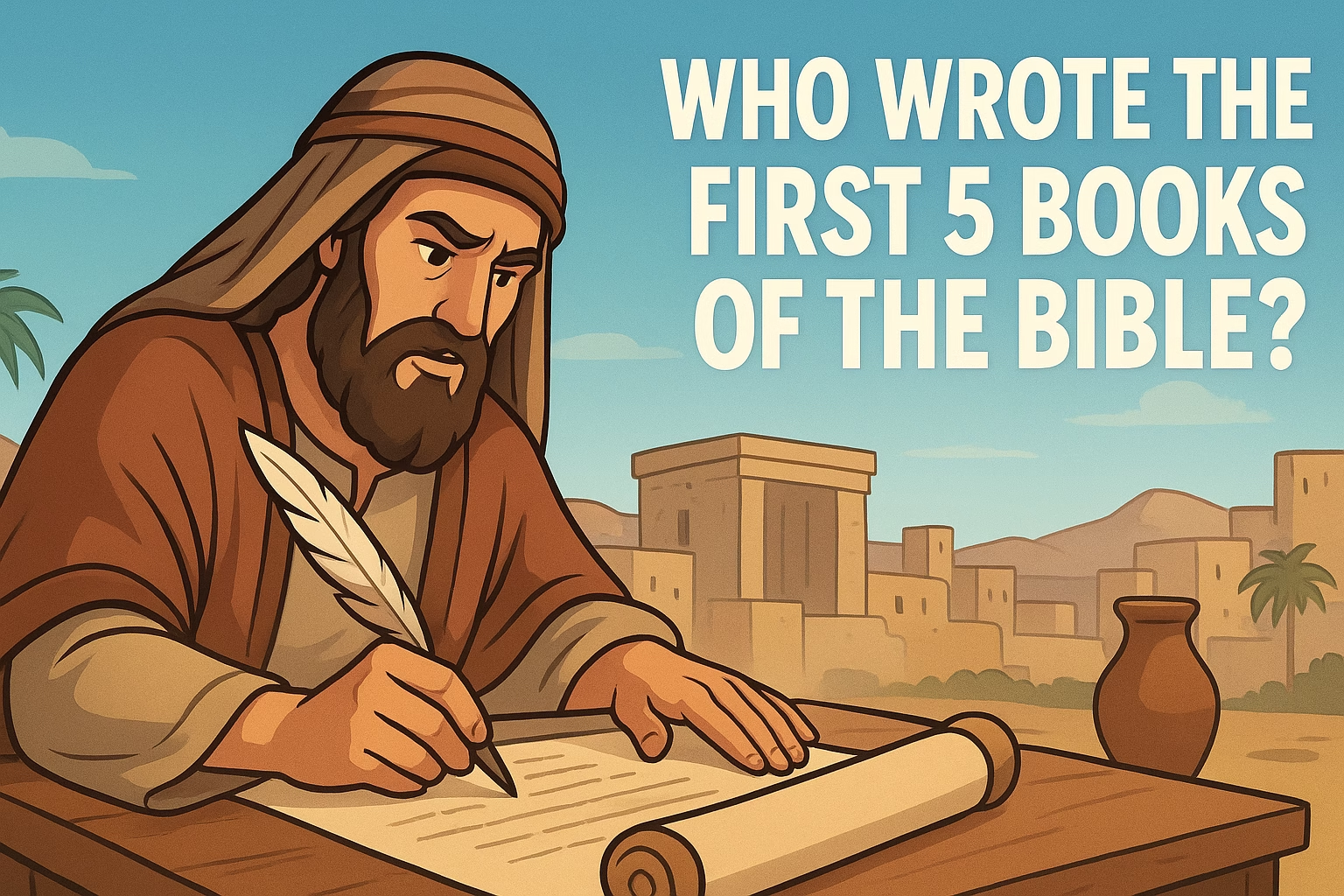
The first five books of the Bible, known as the Pentateuch or the Torah, hold a significant place in both Jewish and Christian traditions. Understanding who wrote these foundational texts provides insight into their origins and the historical context in which they were composed. In this article, we will explore the authorship of these books, examining both traditional beliefs and modern scholarly perspectives.
Traditionally, Moses is recognized as the author of the first five books: Genesis, Exodus, Leviticus, Numbers, and Deuteronomy. This view has been held for centuries and is supported by various passages within the Bible itself. However, contemporary scholarship has introduced different theories regarding the authorship of these texts, suggesting multiple contributors and a more complex development over time.
Traditional View: Moses as the Author
The traditional belief that Moses wrote the Pentateuch is rooted in Jewish and Christian teachings. This view is supported by several scriptural references. For example, in Exodus 24:4, it states, “Then Moses wrote down everything the Lord had said.” This passage suggests Moses’ direct involvement in recording God’s laws and instructions. Additionally, Deuteronomy 31:9 indicates that Moses wrote down the law and gave it to the priests.
Furthermore, the New Testament also affirms Moses’ role as a writer. In John 5:46-47, Jesus mentions Moses, indicating that the scriptures testify about Him. This connection implies that the teachings and writings attributed to Moses were authoritative and foundational to the faith.
Understanding the Pentateuch’s Content
The Pentateuch encompasses a wide range of content, including creation narratives, the patriarchs’ stories, the Exodus from Egypt, the giving of the Law, and the establishment of Israel’s covenant with God. Each book serves a specific purpose within the overall narrative of God’s relationship with humanity.
- Genesis: Covers creation, the patriarchs (Abraham, Isaac, Jacob), and the beginnings of Israel.
- Exodus: Details the Israelites’ escape from slavery in Egypt and the receiving of the Law at Mount Sinai.
- Leviticus: Contains laws and regulations for worship and daily life.
- Numbers: Chronicles the Israelites’ wandering in the desert and their census.
- Deuteronomy: Features Moses’ final speeches and reiteration of the Law before entering the Promised Land.
Modern Scholarship: Multiple Authors and Sources
While the traditional view attributes the authorship of the Pentateuch solely to Moses, modern biblical scholarship presents a more nuanced understanding. The Documentary Hypothesis, a well-known scholarly theory, suggests that the Pentateuch is a compilation of texts from multiple authors and sources, written over several centuries.
According to this hypothesis, four primary sources contribute to the Pentateuch:
- J (Jahwist): This source is characterized by a vivid narrative style and uses the name Yahweh for God. It is believed to have been written in the southern kingdom of Judah.
- E (Elohist): This source prefers the term Elohim for God and focuses on themes such as prophecy and dreams. It is thought to have emerged from the northern kingdom of Israel.
- D (Deuteronomist): Primarily associated with the book of Deuteronomy, this source reflects a particular theological perspective and emphasizes covenant and law.
- P (Priestly): This source includes genealogies, rituals, and laws, focusing on the priestly aspects of worship and community life.
This theory suggests that these sources were woven together over time, particularly during and after the Babylonian exile, resulting in the Pentateuch as we have it today. While this view has gained traction in academic circles, it remains a subject of debate and is not universally accepted.
Evidence from the Texts
In examining the texts themselves, there are indications that they may not have been authored by a single individual. For instance, the narrative style and theological focus vary throughout the Pentateuch, suggesting different authorship. Additionally, certain passages imply an awareness of events that occurred after Moses’ lifetime, raising questions about the traditional authorship claim.
For example, Deuteronomy 34:5-6 describes the death of Moses and states that he was buried in Moab, which would be an unlikely detail for Moses to have written himself.
Moreover, the presence of distinct legal codes and cultural practices within the Pentateuch indicates a diversity of sources and contexts. The laws in Leviticus, for instance, reflect specific priestly concerns that may not have been present during Moses’ time.
Conclusion on Authorship
In summary, while the traditional view attributes the authorship of the first five books of the Bible to Moses, modern scholarship suggests a more complex origin involving multiple authors and sources. This understanding invites readers to appreciate the richness and diversity of the Pentateuch as a compilation of Israel’s foundational stories and laws. As we continue exploring the authorship of these texts, it becomes essential to consider both traditional beliefs and contemporary insights for a fuller understanding of the Pentateuch’s significance.
The Role of Oral Tradition
Before the written texts of the Pentateuch were established, oral tradition played a vital role in the transmission of these stories and laws. Oral storytelling was a common practice in ancient cultures, including among the Israelites. This method allowed for the preservation of narratives and teachings across generations, often adapting them to reflect the community’s current context and needs.
In the case of the Pentateuch, it is likely that many of the stories were passed down orally before being committed to writing. This oral tradition would have allowed for the inclusion of various perspectives and interpretations, enriching the texts. As a result, the Pentateuch may reflect a collective memory of the Israelite people rather than the voice of a single author.
Historical Context and Influence
The historical context in which the Pentateuch was written also influences our understanding of its authorship. The Babylonian exile in the 6th century BCE was a significant event for the Jewish people, leading to a renewed focus on their identity, laws, and covenant with God. Scholars argue that during this time, the texts of the Pentateuch were compiled and edited to preserve the Israelite heritage and provide guidance for the community in exile.
This period of reflection and compilation may explain the diversity of voices found within the Pentateuch. The texts were not merely historical records but also theological responses to the challenges the Israelites faced. Understanding this context allows readers to appreciate the complexity and depth of the Pentateuch beyond the question of authorship.
Implications for Interpretation
The question of who wrote the first five books of the Bible has profound implications for how we interpret them today. Recognizing the potential for multiple authors and the influence of oral traditions encourages readers to engage with the text in a more dynamic way. Instead of seeking a singular meaning or authorial intent, readers can explore the layers of meaning that arise from the interplay of different voices and perspectives.
This approach also invites modern readers to consider how the themes and messages of the Pentateuch resonate with contemporary issues. For instance, the emphasis on covenant, community, and ethical living remains relevant today, offering valuable lessons for faith and practice.
Questions for Further Reflection
As we reflect on the authorship of the Pentateuch, several meaningful questions emerge:
- How does understanding the potential for multiple authors change the way we read and interpret these texts?
- In what ways does the historical context of the Babylonian exile shape the themes and messages found in the Pentateuch?
- What significance does the oral tradition hold in understanding the transmission of these stories and laws?
- How can the diverse perspectives within the Pentateuch inform our contemporary understanding of faith and community?
Engaging with these questions can deepen our appreciation for the Pentateuch and its role in the broader narrative of Scripture, as well as its significance in our lives today.
Final Thoughts on the Pentateuch’s Authorship
Ultimately, the question of who wrote the first five books of the Bible invites us into a deeper exploration of faith, tradition, and community. Whether one leans toward the traditional view of Moses as the sole author or embraces the insights of modern scholarship about multiple contributors, the Pentateuch remains a cornerstone of biblical literature. Its stories and laws continue to shape our understanding of God’s relationship with humanity and the call to live faithfully within that relationship.
As we journey through these sacred texts, let us honor both the historical context and the enduring relevance of the Pentateuch in our lives and communities.
Learn more about the authorship of the original Bible and explore how it relates to the discussions of the Pentateuch’s authorship. Additionally, you can find out who wrote the most books in the Bible, which provides further insight into the diverse authorship of Scripture.