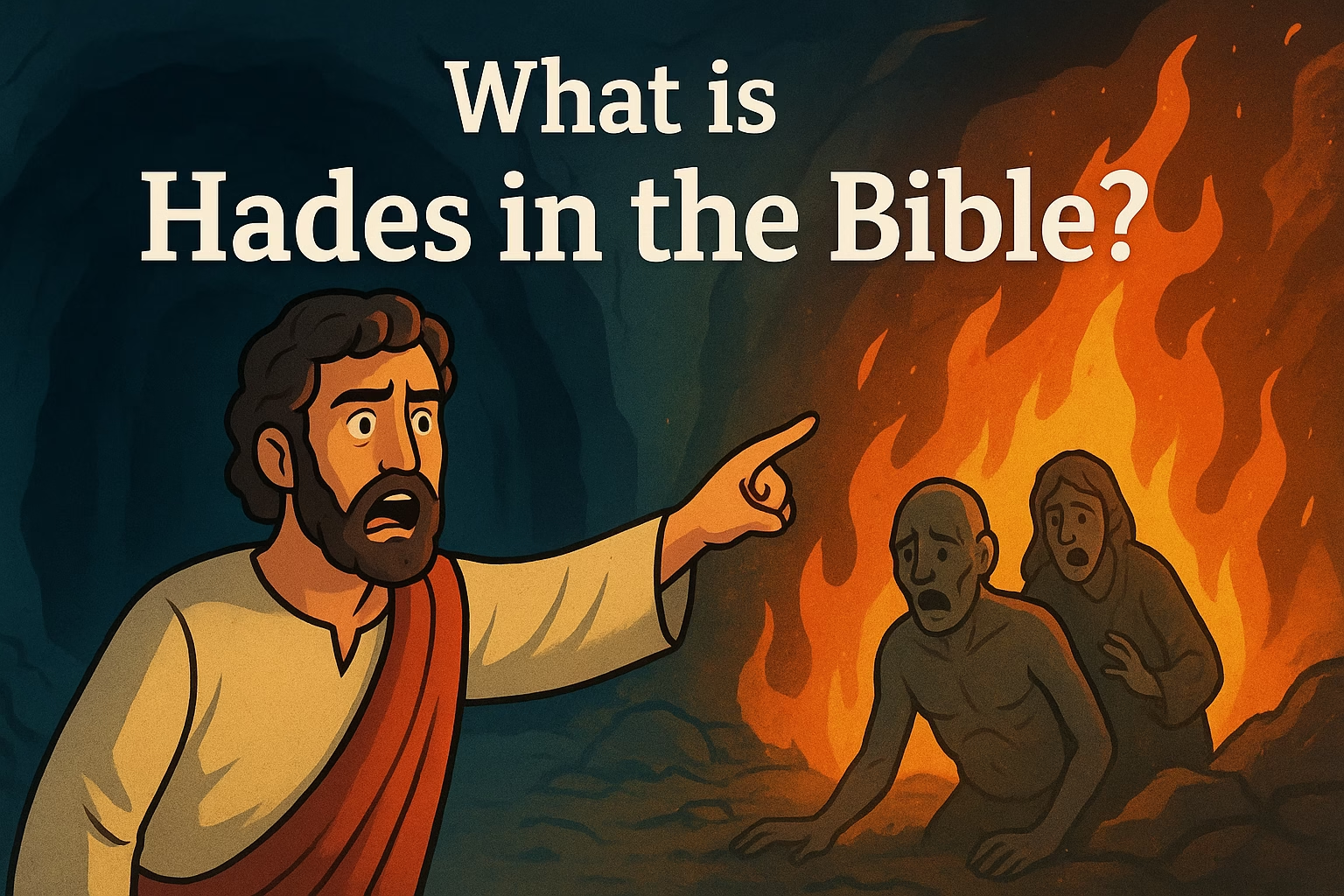
The concept of Hades in the Bible can often be a source of confusion for many readers. Understanding what Hades signifies requires examining its context, usage, and the nuances of the original language. In this article, we will explore the biblical meaning of Hades, its portrayal in Scripture, and how it relates to concepts of the afterlife.
In biblical terms, Hades refers to the realm of the dead, a place where souls go after death. It is often associated with the idea of a temporary holding place for the deceased, both the righteous and the wicked, before the final judgment. The term “Hades” is derived from the Greek language and appears in the New Testament, while the Old Testament often uses the Hebrew word “Sheol” in a similar context.
The Meaning of Hades in the New Testament
In the New Testament, the term Hades is primarily found in the context of Jesus’ teachings and the apostolic writings. One of the most notable references is found in Luke 16:19-31, where Jesus tells the parable of the rich man and Lazarus. In this story, both men die, and the rich man finds himself in torment in Hades, while Lazarus is comforted in Abraham’s bosom.
This passage illustrates several key aspects of Hades:
- A Place of Conscious Existence: Both the rich man and Lazarus are aware of their surroundings, indicating that Hades is not a place of mere oblivion.
- Separation of the Righteous and the Wicked: The rich man experiences torment, while Lazarus enjoys comfort, suggesting a division within Hades itself.
- Hope for the Righteous: The story implies a future hope for those who are righteous, as they are in a place of peace awaiting the final resurrection.
Hades versus Hell
It is crucial to distinguish between Hades and Hell, as these terms are often conflated in popular usage. In the New Testament, Hades refers to the temporary abode of the dead, whereas Hell (often translated from the Greek word “Gehenna”) is associated with the final judgment and eternal punishment.
Revelation 20:14 speaks of Hades being cast into the lake of fire, which is described as the second death. This indicates that Hades is not the final destination for souls; rather, it is a temporary holding place until the Day of Judgment.
Hades in the Old Testament: The Concept of Sheol
In the Old Testament, the Hebrew word “Sheol” corresponds to the Greek Hades and represents a similar concept. Sheol is described as a shadowy place where the dead reside, and it is mentioned in various passages, such as Psalm 16:10 and Ecclesiastes 9:10. The understanding of Sheol is more limited in the Old Testament, with less emphasis on the distinctions between the righteous and the wicked.
For instance, in Psalm 6:5, it is written, “For in death there is no remembrance of you; in Sheol, who will give you praise?” This indicates a sense of silence and inactivity in Sheol, which contrasts with the more conscious existence portrayed in Hades in the New Testament.
The Nature of Hades
The nature of Hades can be understood through several biblical references that shed light on its characteristics:
- A Temporary Realm: Hades is not a permanent state. It functions as a holding area until the resurrection of the dead, as indicated in Acts 2:31, where Peter speaks of Jesus not being abandoned to Hades.
- A Place of Awaiting Judgment: Those in Hades await the final judgment, which will determine their eternal fate. This is seen in the parable of the rich man and Lazarus, where the rich man pleads for relief and mercy.
- A Place of Conscious Experience: The rich man’s torment suggests that Hades is a place where souls experience their circumstances, whether they are in comfort or distress.
Hades in Early Christian Thought
Early Christian writers and theologians had varying interpretations of Hades, often shaped by their understanding of Scripture and cultural contexts. Some viewed Hades as a place of purification, while others emphasized its role in the final judgment.
The idea of Hades has also influenced various Christian doctrines about the afterlife, including the concepts of purgatory in certain traditions, which reflect a belief in a state of purification before entering heaven. However, these interpretations are not universally accepted among all Christian denominations.
Overall, Hades serves as a significant concept in understanding the biblical view of the afterlife, bridging the Old and New Testament teachings. While the details may vary, the common thread is the recognition of Hades as a place where souls await their ultimate destiny.
The Implications of Hades in Christian Eschatology
Understanding Hades also plays a crucial role in the broader framework of Christian eschatology, which deals with the final events in the history of the world and humanity. The concept of Hades is intertwined with beliefs about resurrection, judgment, and eternal life. These elements are foundational to Christian faith and have implications for how believers live their lives today.
One of the key elements in understanding Hades within eschatology is the resurrection of the dead. According to Christian belief, at the end of time, all people will be resurrected, and those in Hades will face judgment. This is supported by passages such as John 5:28-29, which emphasizes that all who are in their graves will hear the voice of Jesus and come out, either to live or to be condemned.
This understanding highlights the temporary nature of Hades, as it is not the final resting place for souls. Instead, it serves as a waiting area until the resurrection and the ultimate judgment. During this time, the righteous can find hope in their future reward, while the wicked face the reality of their choices.
The Role of Hades in the Judgment Process
In addition to being a temporary abode, Hades is also significant in the judgment process. Revelation 20:11-15 describes a scene where the dead, both great and small, stand before God for judgment. The dead are judged according to their deeds, and anyone whose name is not found in the Book of Life is cast into the lake of fire, which is often equated with Hell.
This judgment emphasizes the importance of personal accountability and the consequences of one’s actions. The existence of Hades serves as a reminder that life choices have eternal implications. Believers are encouraged to live in accordance with their faith, knowing that their actions will be assessed in light of God’s justice and mercy.
The Comfort of Hades for the Righteous
While Hades is often viewed through the lens of judgment and punishment, it is essential to recognize that it also holds a sense of comfort for the righteous. The parable of the rich man and Lazarus indicates that Lazarus was in a place of comfort, often interpreted as a waiting area for the faithful until the resurrection.
For many Christians, this aspect of Hades brings hope, as it reassures them that death is not the end. Instead, it is a transition to a state of peace and rest in the presence of God. This belief can provide solace during times of grief and loss, reminding believers that their loved ones who have passed away in faith are awaiting a glorious resurrection.
Questions for Reflection and Study
When contemplating the nature and implications of Hades, several questions arise that can deepen one’s understanding:
- How does the concept of Hades influence your understanding of life after death? Reflecting on this can help clarify personal beliefs about resurrection and eternal life.
- In what ways can the teachings about Hades inspire a more purposeful life? Considering the temporary nature of Hades may motivate believers to live in alignment with their faith.
- How do the distinctions between Hades and Hell shape your understanding of God’s justice? Understanding these differences can provide insight into the nature of divine judgment and mercy.
Conclusion: The Significance of Hades in the Bible
In summary, Hades is a multifaceted concept in the Bible that serves as a temporary realm for the dead, a place of awaiting judgment, and a reflection of the afterlife’s reality. Its portrayal in both the Old and New Testaments highlights the continuity of God’s plan for humanity, bridging the gap between death and resurrection.
Understanding Hades encourages believers to reflect on their lives, consider their faith’s implications, and find comfort in the hope of eternal life. Whether viewed as a holding place or a comfort for the righteous, Hades remains a crucial element in the Christian understanding of life after death and the eventual resurrection.
For further insights into related topics, you can explore what hell is like according to the Bible and what hell is described as in the Bible.