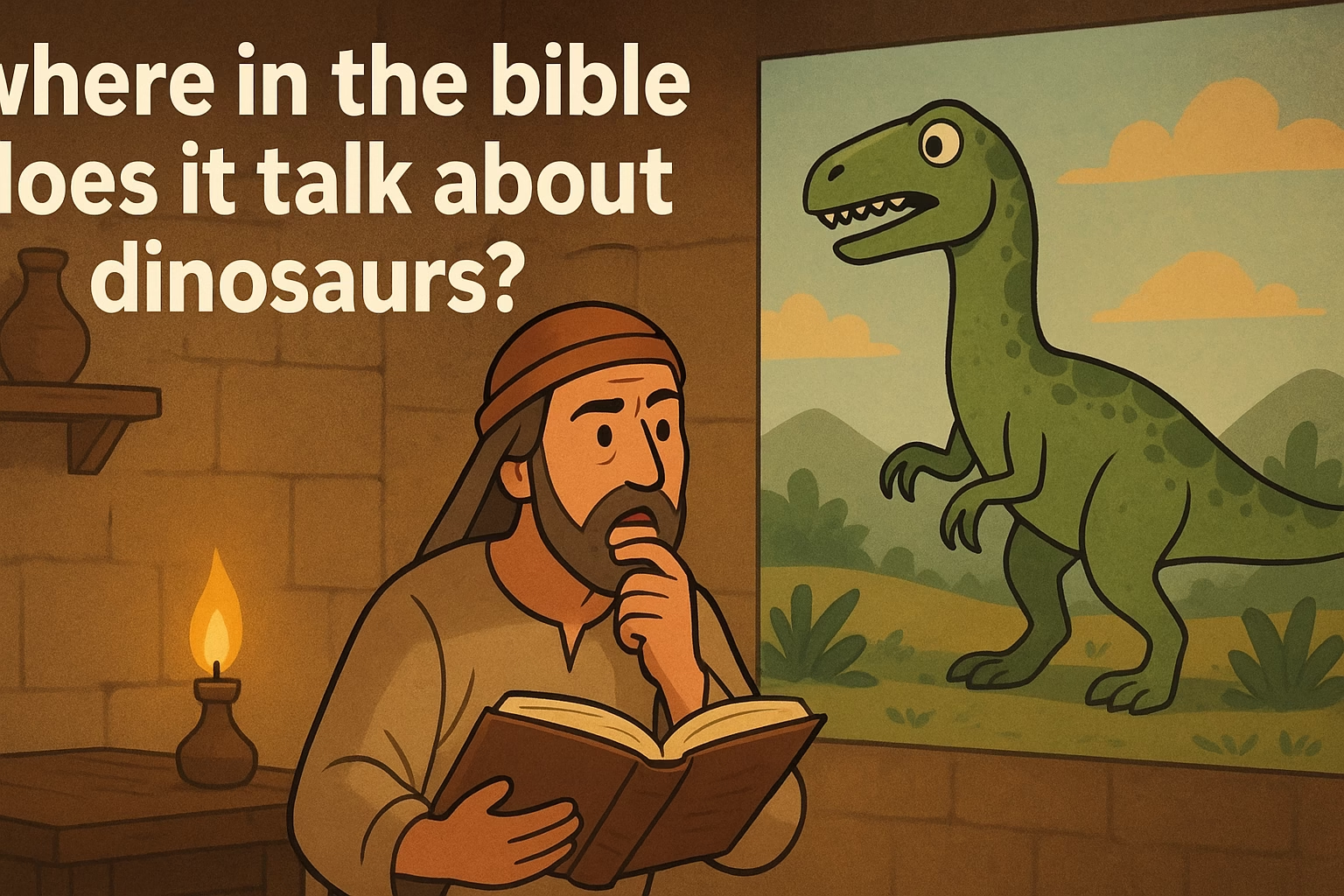
The question of whether the Bible mentions dinosaurs can be intriguing for many readers, especially as science has provided insights into these fascinating creatures. While the Bible does not explicitly use the term “dinosaur,” some passages describe large, powerful creatures that some scholars and theologians believe could refer to dinosaurs or similar animals. In this article, we will explore those passages and the context in which they appear.
To directly address the question, the most notable references that could relate to dinosaurs come from the books of Job and Genesis. Other passages may also describe large animals, but it is essential to interpret these in their historical and cultural contexts. Let’s delve into some specific scriptures that have sparked discussions about dinosaurs.
Job’s Behemoth and Leviathan
Behemoth
In the book of Job, specifically Job 40:15-24, there is a description of a creature called “Behemoth.” The passage describes Behemoth as a massive, powerful being that eats grass like an ox and has bones like tubes of bronze. The text reads, “Look at Behemoth, which I made just as I made you. It eats grass like an ox. See its powerful loins and the muscles of its belly. Its tail is as strong as a cedar tree” (Job 40:15-17, NLT).
This description has led some to speculate that Behemoth could represent a dinosaur, possibly a large herbivore like a sauropod. However, it is essential to note that this interpretation is not universally accepted. Many scholars believe that Behemoth refers to a large land animal such as a hippopotamus or an elephant, which were familiar to the people of Job’s time.
Leviathan
Another creature mentioned in Job is Leviathan, found in Job 41. This creature is depicted as a fearsome sea monster, capable of causing great destruction. The text describes Leviathan as having a powerful body and impenetrable scales. “Who can catch Leviathan by the eye, or put a hook in its mouth?” (Job 41:1, NLT). Some have likened Leviathan to a dragon or large sea creature, drawing parallels to the idea of large prehistoric reptiles.
Similar to Behemoth, interpretations of Leviathan vary widely. Some see it as a mythological creature representing chaos and evil, while others consider it a real animal known to Job’s audience. Again, the connection to dinosaurs is speculative and not explicitly stated in the text.
Genesis and Creation
The Creation of Land Animals
In Genesis 1:24-25, God creates various land animals, stating, “Let the earth produce every sort of animal, each producing offspring of the same kind.” This passage encompasses a broad category of creatures, but it does not specifically mention dinosaurs. However, the language used in Genesis suggests a diverse creation, which could include large reptiles and other prehistoric animals.
The creation narrative in Genesis presents a theological view of God as the creator of all living things. It does not provide specific details about every type of animal, leaving some ambiguity regarding what types of creatures inhabited the earth during the time of creation.
Fossils and Ancient Creatures
While the Bible does not mention dinosaurs directly, the existence of fossils and the study of paleontology provide evidence of these ancient creatures. Many Christians reconcile scientific findings with their faith by viewing the Bible as a spiritual document that communicates truths about God and humanity rather than a scientific textbook.
Some believers see the existence of dinosaurs as part of God’s creation, created before the events described in Genesis. This perspective allows for the acceptance of both scientific evidence and biblical faith, suggesting that dinosaurs existed in the world long ago, possibly even before the creation of humanity.
Interpreting Scripture and Tradition
When examining references to dinosaurs in the Bible, it is crucial to distinguish between what the text explicitly states and what interpretations arise from cultural or historical contexts. The term “dinosaur” itself was coined in the 19th century, long after the biblical texts were written. Therefore, any references must be contextualized within the understanding of ancient peoples and their descriptions of the world around them.
Many interpretations depend on how one reads the descriptions of creatures like Behemoth and Leviathan. Some theologians argue that these creatures symbolize God’s power and majesty, while others focus on the possibility of them representing real animals known to the ancient world.
Additionally, some traditions within Christianity may emphasize a literal interpretation of the Genesis creation account, while others adopt a more allegorical or metaphorical approach. These differing views can influence how one perceives the relationship between biblical texts and the existence of dinosaurs.
In summary, while the Bible does not mention dinosaurs directly, passages like Job’s Behemoth and Leviathan have sparked discussions regarding their possible connections to these prehistoric creatures. The context of scripture and the interpretation of ancient texts play a significant role in understanding how these descriptions relate to our modern understanding of dinosaurs.
The Nature of Biblical Language and Imagery
Understanding the references to creatures like Behemoth and Leviathan in Job requires a grasp of the poetic and metaphorical nature of biblical language. The Bible often employs vivid imagery to convey deeper truths about God, creation, and the human experience. The descriptions of these creatures serve not only to illustrate their physical characteristics but also to evoke a sense of awe regarding God’s power and creativity.
For instance, the use of terms like “tail like a cedar” in reference to Behemoth is not merely a factual statement but an artistic way to express the grandeur of the creature. This style of writing can lead to various interpretations, as readers may focus on the literal or the figurative aspects of the text. The distinction between these approaches can influence whether one sees a connection to dinosaurs or interprets the passages as symbolic representations of God’s might.
Scientific Perspectives and Biblical Faith
The relationship between scientific discoveries and biblical accounts is a topic of considerable debate among Christians. Some believers embrace the findings of paleontology, including the existence of dinosaurs, as part of God’s creative process. This perspective often leads to a harmonization of scientific understanding with biblical narratives, suggesting that the timeline of creation may encompass vast ages, allowing for the existence of dinosaurs before the creation of humans.
In this view, the Bible’s creation account is not necessarily a chronological timeline but rather a theological framework emphasizing God’s sovereignty over creation. This allows for the acknowledgment of dinosaurs as part of God’s diverse creation, even if they are not explicitly mentioned in scripture.
Cultural Context and Ancient Worldviews
When exploring the biblical text, it is essential to consider the cultural context of the ancient Near East. The people who wrote and read the Bible had a different understanding of the natural world than we do today. Their descriptions of animals were likely influenced by their experiences and the creatures they encountered in their environment.
For example, large animals such as elephants and hippos were familiar to the ancient Israelites, and their characteristics could have informed the descriptions of Behemoth. The imagery used in these texts may reflect the reality of the audience’s world rather than a direct reference to prehistoric creatures. This cultural lens shapes how we interpret the Bible and its potential references to animals like dinosaurs.
Exploring Theological Implications
The discussion about dinosaurs in the Bible also raises significant theological questions. If dinosaurs existed before the events described in Genesis, what does that mean for our understanding of creation? Some theologians argue that the existence of dinosaurs can enhance our appreciation of God’s creativity and the complexity of life on Earth.
Furthermore, the absence of dinosaurs in biblical texts does not negate their existence or the validity of scientific findings. Many Christians believe that faith and science can coexist, providing complementary perspectives on the natural world. This approach allows for a more profound exploration of God’s creation without feeling the need to dismiss scientific evidence.
Questions for Further Reflection
As we examine the relationship between the Bible and the concept of dinosaurs, several questions arise that can deepen our understanding:
- How do different interpretations of scripture influence our understanding of creation and the existence of prehistoric creatures?
- In what ways can we reconcile scientific discoveries with our faith in a Creator God?
- What role does cultural context play in shaping the descriptions of animals in the Bible?
- How can our understanding of ancient texts inform our view of God’s creative work throughout history?
These questions invite further exploration and discussion, encouraging believers to engage thoughtfully with both scripture and science. By doing so, we can cultivate a richer understanding of our faith and the world around us.
Conclusion: The Intersection of Faith and Discovery
While the Bible does not specifically mention dinosaurs, the references to creatures like Behemoth and Leviathan offer intriguing possibilities for interpretation. Understanding these passages within their literary and cultural contexts allows for a more nuanced view of what they may represent. As science continues to uncover the history of life on Earth, Christians are encouraged to embrace both faith and inquiry, recognizing that both can coexist and enrich our understanding of God’s creation. Ultimately, the discussion of dinosaurs in the Bible serves as a reminder of the complexity and wonder of the world God has made.
For more insights on the relationship between dinosaurs and biblical texts, you can check out this article that explores the question in greater detail, or learn about the age of the Earth according to the Bible in this informative piece.