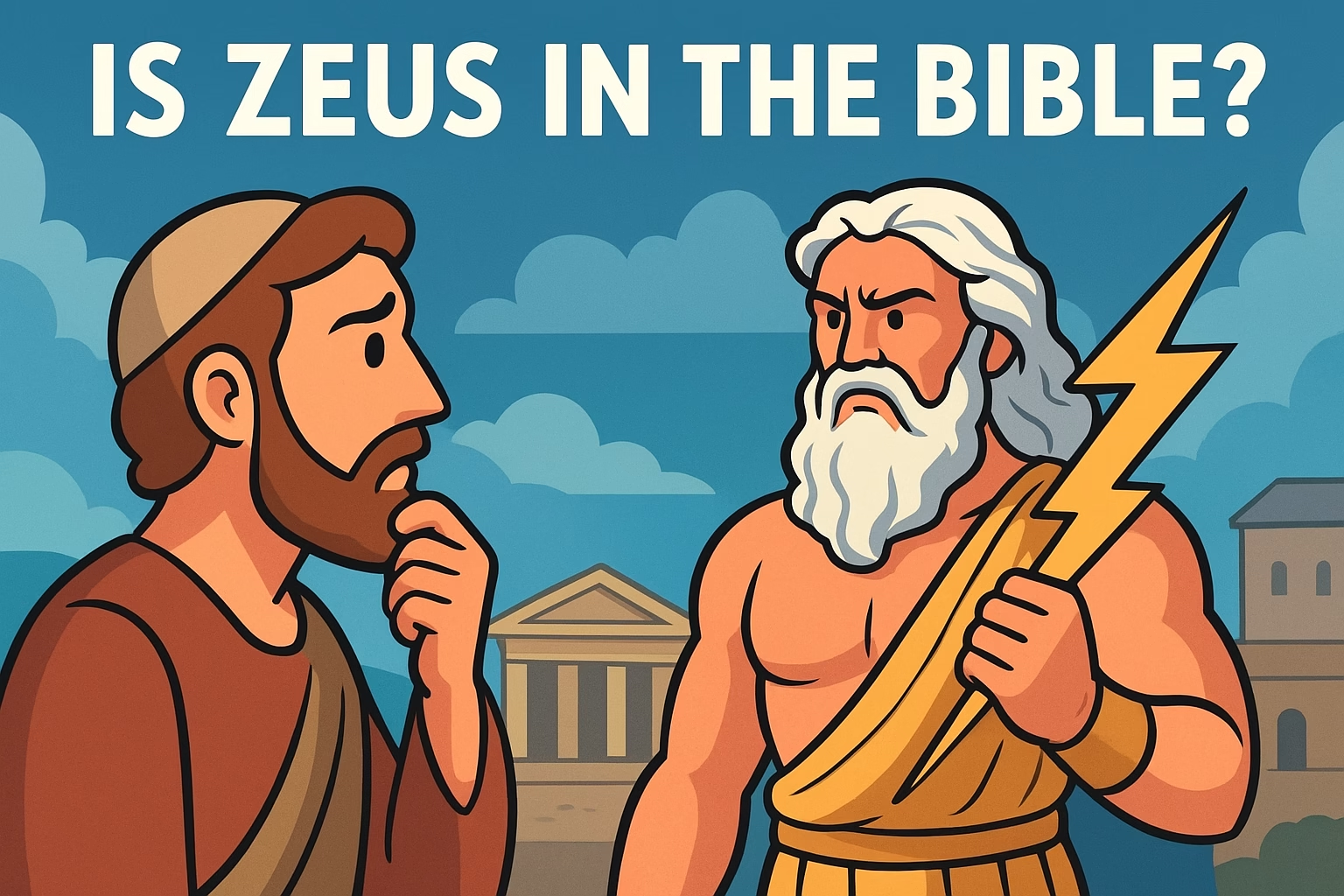
The question of whether Zeus is mentioned in the Bible can lead to intriguing discussions about ancient cultures, religious beliefs, and scriptural interpretation. As a figure from Greek mythology, Zeus was known as the king of the gods, ruling over Mount Olympus and associated with thunder, lightning, and law. However, the Bible, which primarily focuses on the God of Israel and the teachings of Jesus Christ, does not reference Zeus directly. Instead, it offers insights into how early Christians and Jews viewed pagan deities in contrast to the one true God.
To answer the question directly, Zeus is not mentioned in the Bible as a character or deity. However, there are passages that address the worship of false gods, which can include figures like Zeus. Understanding these references can shed light on the biblical perspective regarding such deities.
Understanding the Context of Greek Mythology in the Bible
To grasp why Zeus is not mentioned in the Bible, it is essential to recognize the cultural and historical context in which the scriptures were written. The Old Testament was primarily composed in a Hebrew cultural context, while the New Testament emerged in a Greco-Roman world where Greek mythology was prevalent.
The Israelites were repeatedly warned against the worship of foreign gods, which included deities from surrounding cultures, such as the Canaanites and Egyptians. In the New Testament, early Christians encountered the Greek and Roman pantheon, which included Zeus. The Apostle Paul, for instance, addressed the issue of idol worship in his letters, particularly in the context of cities like Corinth and Athens, where pagan worship was common.
Scriptural References to Idolatry
While Zeus himself is not named, the Bible provides several passages that discuss the worship of idols and false gods. These references illustrate the biblical stance against idolatry, which can encompass the worship of figures like Zeus.
Old Testament Warnings Against Idolatry
In the Old Testament, God’s commandment against idolatry is clear. In Exodus 20:3-5, it states, “You must not have any other god but me. You must not make for yourself an idol of any kind…” This commandment emphasizes the exclusivity of worshiping the one true God and condemns the creation of idols that represent other deities.
Throughout the Old Testament, the Israelites often struggled with the temptation to worship gods like Baal and Asherah, which were prevalent among neighboring cultures. The prophets frequently called the people back to fidelity to Yahweh, warning them about the consequences of turning to foreign gods.
New Testament Perspectives on Pagan Deities
The New Testament continues this theme of rejecting false gods. In Acts 17, the Apostle Paul encounters the Athenians, who worship many gods, including one dedicated to an “unknown god.” Paul uses this moment to proclaim the message of Jesus Christ, emphasizing that the true God does not dwell in temples made by human hands (Acts 17:24). This passage illustrates the early Christian effort to distinguish their faith from the surrounding pagan practices.
In 1 Corinthians 10:20-21, Paul warns believers, stating, “What am I saying? That food offered to idols is anything, or that an idol is anything? No, but the sacrifices of pagans are offered to demons, not to God…” This highlights the belief that idols represent falsehoods and are in opposition to the worship of the living God.
The Role of Zeus in Early Christian Context
As Christianity spread in the Greco-Roman world, early Christians encountered various beliefs, including those centered on Zeus. The New Testament writers were aware of these cultural contexts and often addressed them directly or indirectly in their teachings.
For example, in Acts 14, Paul and Barnabas are mistaken for gods when they perform a miracle in Lystra. The people call Barnabas Zeus and Paul Hermes. Paul responds by vehemently rejecting this notion, emphasizing that they are merely human beings preaching about the one true God (Acts 14:14-15). This incident underscores the early church’s efforts to redirect worship away from pagan deities like Zeus back to the God of Israel.
Zeus and the Concept of Divine Authority
The portrayal of Zeus in Greek mythology as a powerful ruler of the gods contrasts sharply with the biblical understanding of God’s sovereignty. While Zeus was often depicted as capricious and engaged in human-like behaviors, the Bible presents God as holy, just, and unchanging. In Malachi 3:6, God declares, “For I am the Lord, I do not change…” This fundamental difference in character and authority is crucial to understanding why Zeus does not have a place in biblical theology.
In summary, while Zeus is not mentioned in the Bible, the scriptures address the broader issue of idolatry and the worship of false gods. The biblical narrative consistently calls for exclusive devotion to the one true God, highlighting the importance of faith in contrast to the myriad of deities from surrounding cultures.
The Influence of Greek Thought on Early Christianity
While Zeus himself is not mentioned in the Bible, the influence of Greek thought and mythology on early Christianity cannot be overlooked. The early church was established in a world saturated with Hellenistic culture, where philosophical ideas and mythological narratives were deeply ingrained in society. This cultural backdrop shaped how the apostles communicated the Gospel message.
The New Testament writers, including Paul, often engaged with the philosophical ideas prevalent in their surroundings. For instance, in Colossians 2:8, Paul warns believers against being taken captive by hollow and deceptive philosophy that depends on human tradition and the elemental spiritual forces of this world rather than on Christ. This statement reflects an awareness of the competing ideologies that existed alongside the Christian faith, including those worshiping Zeus and other deities.
Comparative Theology: Yahweh vs. Zeus
To further understand the absence of Zeus in the Bible, it is helpful to compare the characteristics of Zeus with the God of the Bible. Zeus was often depicted as having human flaws and engaging in morally questionable actions, which contrasted sharply with the biblical portrayal of God as wholly righteous and sovereign.
In the Bible, God is described as loving, just, and merciful, with a desire for a personal relationship with humanity. This is evident in passages like John 3:16, which emphasizes God’s love for the world. In contrast, Zeus was known for his numerous affairs and conflicts with other gods, often acting out of jealousy or vengeance. This stark difference in character underscores why the worship of Zeus would be seen as incompatible with the worship of the God of the Bible.
The Nature of Divine Worship
The worship practices associated with Zeus also differ significantly from biblical worship. Greek worship often involved rituals, sacrifices, and a pantheon of gods, each with their own specific attributes and domains. In contrast, biblical worship is centered on the acknowledgment of one God who is both transcendent and immanent. Worship is not merely a series of rituals but a heartfelt response to God’s grace and truth.
Romans 12:1 calls believers to offer their bodies as living sacrifices, holy and pleasing to God, which is described as true worship. This contrasts with the often transactional nature of worship in pagan religions, where offerings were made to appease gods like Zeus in hopes of receiving favor or avoiding wrath.
Modern Implications and Questions for Believers
The question of Zeus’s absence in the Bible invites modern believers to reflect on the relevance of idolatry in today’s context. While Zeus may not be worshipped in contemporary society, the underlying issue of misplaced devotion remains. Many people today may prioritize various “gods” in their lives, such as materialism, power, or status, which can distract from their relationship with God.
Believers are encouraged to consider what might be competing for their devotion. Are there areas in life where other priorities overshadow their commitment to God? The call to worship the one true God remains as relevant today as it was in biblical times.
Questions for Reflection
- In what ways can we identify modern forms of idolatry in our culture?
- How can understanding the nature of God help us avoid the pitfalls of false worship?
- What practical steps can we take to ensure our worship remains focused on God alone?
- How can we engage with those who hold different beliefs while remaining true to our faith?
Conclusion: The Singular Nature of God
In conclusion, while Zeus is not mentioned in the Bible, the scriptures provide a clear stance against idolatry and the worship of false gods. The biblical narrative consistently emphasizes the singular nature of God, contrasting it with the polytheistic practices of surrounding cultures. By understanding the cultural context of the early church and the character of God, believers can gain insights into the importance of devotion to the one true God and the dangers of contemporary idolatry.
As we navigate a world filled with competing ideologies and distractions, the call to worship the God of the Bible remains paramount. The lessons learned from examining figures like Zeus serve as reminders of the need for fidelity to God and the importance of maintaining a relationship with Him above all else.
For further exploration of how ancient beliefs intersect with biblical teachings, you might find it helpful to read this article on the relevance of ancient deities in modern faith and this discussion on idolatry in contemporary culture.