
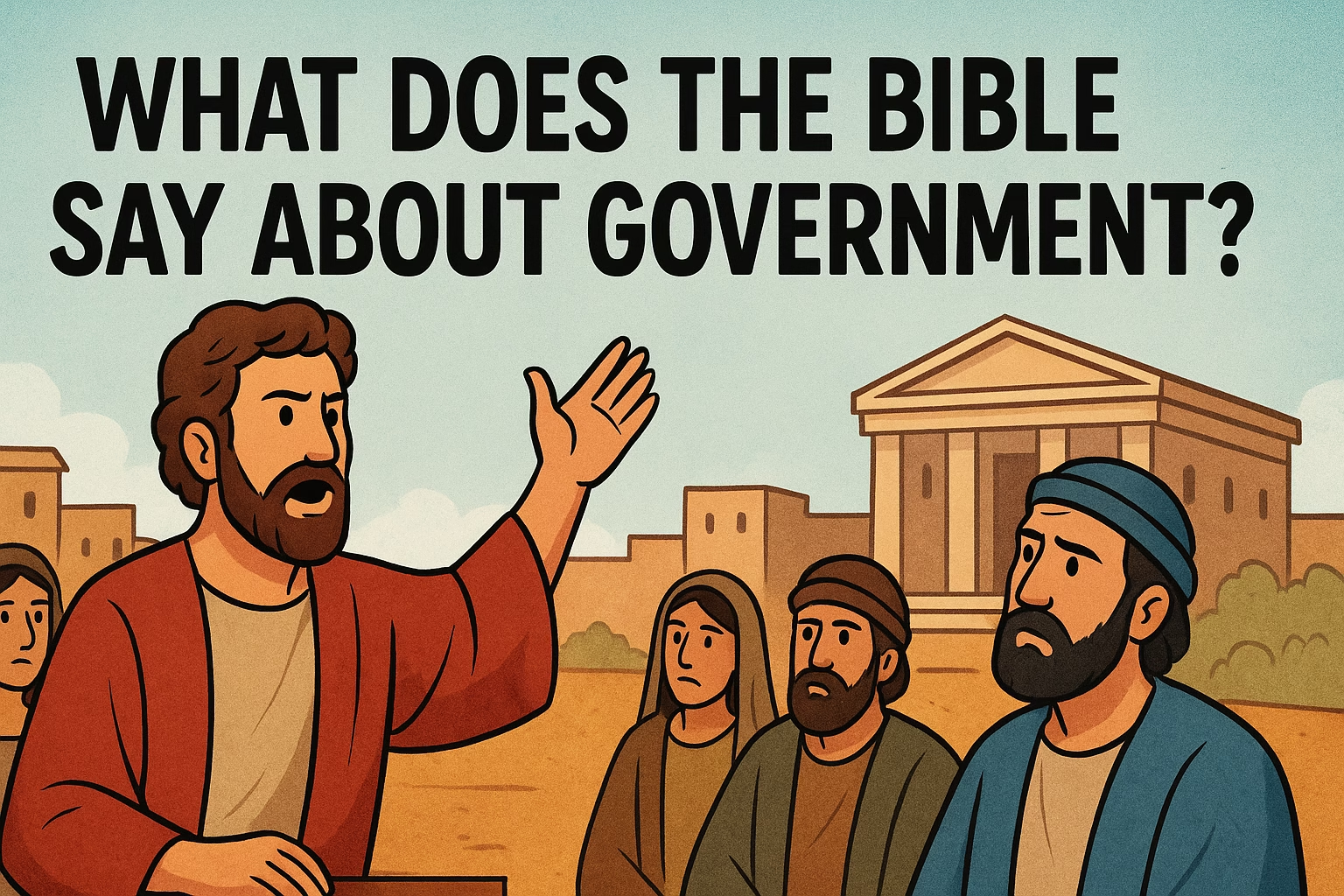
The relationship between government and faith is a topic that has been discussed throughout history. Many people wonder what the Bible says about governance, authority, and our responsibilities as citizens. Understanding these biblical principles can help us navigate our roles in society while maintaining our values.
The Bible presents a nuanced view of government, acknowledging its authority while emphasizing the importance of justice, righteousness, and the moral duties of both leaders and citizens. Below, we will explore various biblical passages and themes that address government and authority.
God’s Sovereignty Over Governments
The Bible teaches that God is ultimately in control of all earthly authorities. In Romans 13:1, the Apostle Paul writes, “Everyone must submit to governing authorities. For all authority comes from God, and those in positions of authority have been placed there by God.” This passage highlights that earthly governments are established under God’s sovereignty. It suggests that when we honor our government, we are also honoring God’s plan.
In addition to Romans, 1 Peter 2:13-14 encourages believers to submit to human authorities for the Lord’s sake, indicating that obedience to government is part of living out one’s faith. However, this submission is not absolute; it must align with God’s moral laws. When the government commands actions contrary to God’s will, believers are called to obey God rather than men (Acts 5:29).
The Purpose of Government
The Bible outlines several purposes of government. Primarily, it is meant to maintain order and justice within society. In Romans 13:3-4, Paul explains that rulers are not a terror to good conduct but to bad. They serve as God’s servants to carry out His wrath on the wrongdoer. This implies that a government should promote justice and punish wrongdoing, reflecting God’s character.
Moreover, in the Old Testament, the concept of kingship is explored extensively. For instance, in Deuteronomy 17:14-20, God provides guidelines for future kings of Israel, emphasizing that they should lead with humility, obey God’s laws, and not exploit their power. This establishes a foundational principle that leaders are to serve the people rather than elevate themselves.
The Role of Citizens
The Bible also speaks to the responsibilities of citizens within a government. One significant aspect is the call to pray for those in authority. In 1 Timothy 2:1-2, Paul urges believers to pray for kings and all those in authority so that we may live peaceful and quiet lives marked by godliness and dignity. This highlights the importance of intercession and support for leaders, even if we disagree with their policies.
Additionally, citizens are called to act justly and love mercy, as stated in Micah 6:8. This means that believers should engage in their communities and advocate for justice and righteousness. The Bible encourages us to be active participants in society, reflecting Christ’s love and character in all we do.
Justice and Righteousness in Governance
Throughout Scripture, the themes of justice and righteousness are paramount. In Psalm 82:3-4, God commands, “Defend the weak and the fatherless; uphold the cause of the poor and the oppressed.” This call is not limited to individuals but extends to those in positions of authority. Governments are expected to protect the vulnerable and promote justice for all citizens.
Proverbs also emphasizes the importance of righteous leadership. Proverbs 29:2 states, “When the righteous thrive, the people rejoice; when the wicked rule, the people groan.” This suggests that the character of leaders directly influences the well-being of their constituents. Thus, the Bible advocates for leaders who embody integrity, wisdom, and a commitment to justice.
Separation of Church and State
While the Bible supports the concept of governance, it also recognizes the distinction between the roles of the church and the state. Jesus addressed this when he said, “Give back to Caesar what is Caesar’s and to God what is God’s” (Mark 12:17). This statement illustrates that while we are to fulfill our civic duties, our ultimate allegiance belongs to God.
This separation does not mean that faith should be excluded from public life. Rather, it suggests that believers can engage with government and advocate for policies that align with biblical values. The church’s role includes speaking out against injustice and standing up for moral principles, guiding society toward God’s truth.
Conclusion of Part One
In summary, the Bible provides a comprehensive understanding of government, emphasizing God’s sovereignty, the purpose of authority, and the responsibilities of both leaders and citizens. It calls for justice, righteousness, and active participation in society while recognizing the distinction between the roles of the church and state. As we delve deeper into this topic, we will explore further implications and applications of these biblical principles in our lives today.
The Role of Justice in Governance
The Bible places a significant emphasis on justice as a cornerstone of effective governance. In Isaiah 1:17, God commands His people to “learn to do good; seek justice, correct oppression; bring justice to the fatherless, plead the widow’s cause.” This directive underscores the expectation that both leaders and citizens actively work toward a just society. When governments fail to uphold justice, they deviate from their God-given mandate.
Moreover, the prophetic books of the Old Testament frequently highlight God’s displeasure with leaders who neglect justice. For example, in Amos 5:24, God proclaims, “But let justice roll down like waters, and righteousness like an ever-flowing stream.” This imagery evokes a sense of urgency and abundance in pursuing justice, suggesting that it should be a continual, flowing aspect of governance rather than a sporadic effort.
Accountability of Leaders
The Bible also emphasizes that leaders are accountable to God for their actions. In James 3:1, it warns that “not many of you should become teachers, my brothers, for you know that we who teach will be judged with greater strictness.” This principle extends to those in positions of authority, including government officials. They are called to exercise their power with humility and integrity, knowing that they will answer to God for their leadership.
This accountability is an essential aspect of biblical governance. Leaders are expected to be transparent and to serve the interests of the people, rather than seeking personal gain. In Ezekiel 34:4, God rebukes the shepherds of Israel for failing to care for the flock, stating that they have “not sought the lost.” This serves as a warning for contemporary leaders to prioritize the needs of their constituents over their ambitions.
The Importance of Moral Integrity
Moral integrity is a vital quality for those in governance, as it directly impacts their decision-making and effectiveness. Proverbs 16:12 asserts, “It is an abomination to kings to do evil, for the throne is established by righteousness.” The Bible teaches that righteousness should characterize leadership, as it fosters trust and stability within society. When leaders act with integrity, they set a standard for citizens to follow.
Additionally, Proverbs 20:28 states, “Steadfast love and faithfulness preserve the king, and by steadfast love, his throne is upheld.” This verse highlights the necessity of love and faithfulness in leadership. Governments that prioritize these virtues will likely cultivate a more just and compassionate society, reflecting God’s heart for humanity.
Engaging in Political Processes
The Bible does not shy away from the idea of political engagement. Believers are encouraged to be informed citizens and to participate in the political processes that shape their communities. In Proverbs 29:7, it is stated, “The righteous care about justice for the poor, but the wicked have no such concern.” This indicates that a genuine concern for justice should motivate believers to engage in advocacy and policy-making.
Moreover, the story of Esther demonstrates the importance of using one’s position for the benefit of others. Esther, a Jewish queen, bravely intervened to save her people from destruction. Her actions illustrate that those in influential positions can effect change and should use their platforms to promote justice and righteousness.
The Influence of Believers in Society
As followers of Christ, believers are called to be salt and light in the world (Matthew 5:13-16). This includes influencing government and societal structures to reflect biblical values. The Apostle Paul, in Titus 3:1-2, encourages believers to be ready for every good work, to speak evil of no one, and to be peaceable. Engaging in the political realm should be characterized by a spirit of love, respect, and a commitment to truth.
Furthermore, believers are tasked with advocating for the marginalized and voicing the concerns of the voiceless. This aligns with the biblical call to love one’s neighbor as oneself (Mark 12:31). Engaging in social justice initiatives, supporting policies that uplift the downtrodden, and standing against injustice are practical expressions of faith in action.
Conclusion: Living Out Biblical Principles in Government
In conclusion, the Bible provides a rich framework for understanding the relationship between faith and government. It emphasizes the importance of justice, accountability, and moral integrity in leadership while encouraging citizens to actively engage in their communities. Believers are called to influence society positively, advocating for righteousness and compassion.
As Christians navigate the complexities of government and authority, they should reflect on their responsibilities to uphold biblical values in all aspects of life. By doing so, they can contribute to a society that honors God and promotes justice, mercy, and peace.
For further insights on engaging with societal issues and exploring the intersection of faith and civic responsibilities, you might find the following articles helpful: descriptive anchor text and descriptive anchor text.