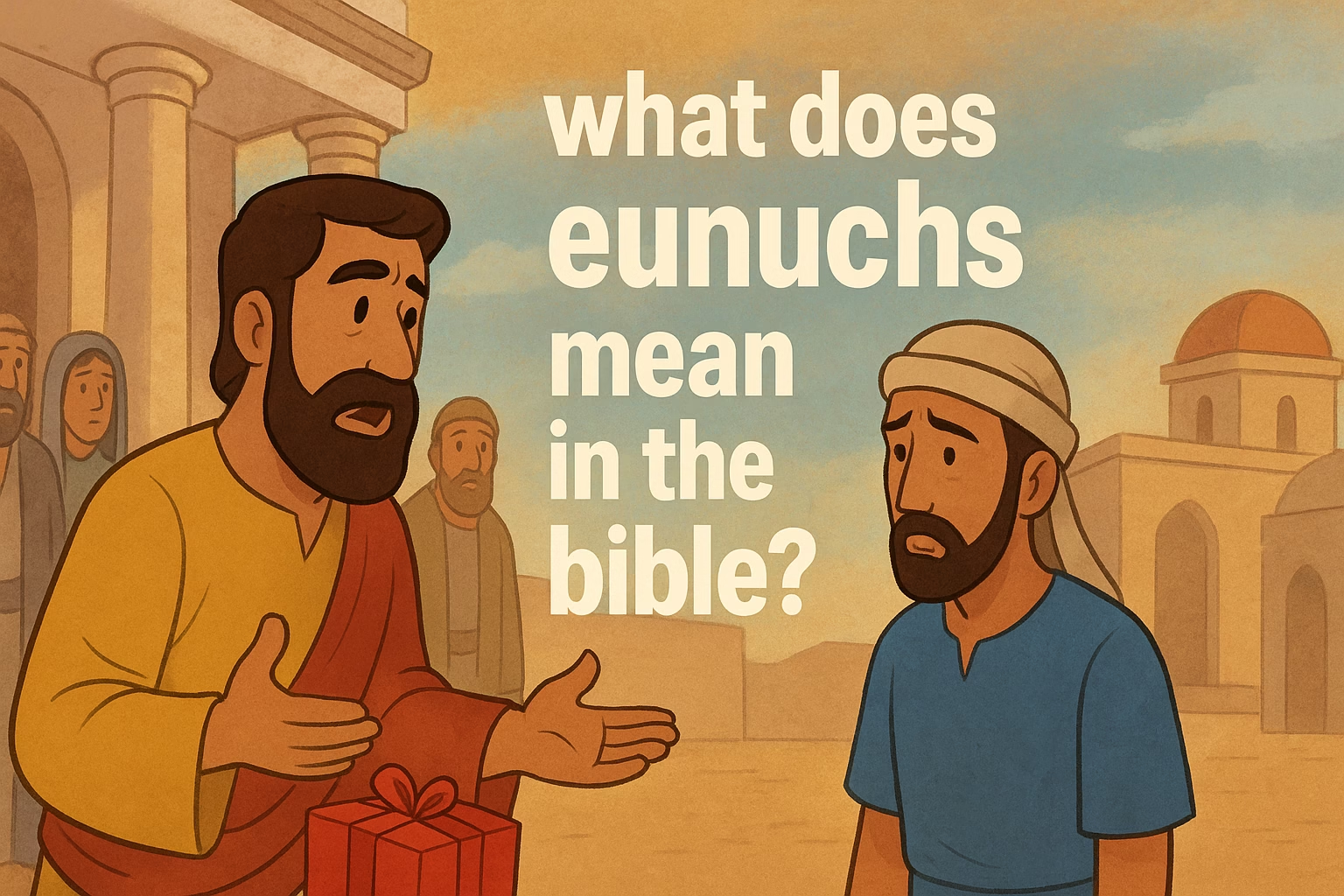
The term “eunuchs” in the Bible refers to individuals who have been castrated or who are unable to reproduce. This concept appears in various contexts throughout Scripture, often relating to issues of sexuality, marriage, and service to God. Understanding what eunuchs mean in the Bible requires exploring both the cultural significance of eunuchs in ancient times and the theological implications of their mention in biblical texts.
In biblical terms, eunuchs can be classified into several categories. There are those who were made eunuchs by others, those who chose to be eunuchs for the sake of the Kingdom of Heaven, and those who were born as eunuchs. Each of these categories carries distinct meanings and implications.
Understanding Eunuchs in Ancient Cultures
In the ancient Near East, eunuchs often held significant roles in society. They were frequently employed in royal courts, serving as trusted officials, guardians of women, and attendants to kings. Their status as eunuchs allowed them to take on responsibilities that men with families could not, due to the demands of family life. This cultural backdrop provides insight into how eunuchs were perceived in biblical times.
Eunuchs in the Old Testament
The Old Testament mentions eunuchs in various passages, often highlighting their unique roles. One notable example is found in Isaiah 56:3-5, where God promises blessings to eunuchs who keep His Sabbaths and hold fast to His covenant. The text states, “Let no eunuch complain, ‘I am only a dry tree.’ For this is what the Lord says: ‘To the eunuchs who keep my Sabbaths, who choose what pleases me and hold fast to my covenant— to them I will give within my temple and its walls a memorial and a name better than sons and daughters.’” This passage emphasizes that eunuchs can have a meaningful place in God’s plan, despite their societal status.
Another significant reference is found in the story of the Ethiopian eunuch in Acts 8:26-39. This eunuch is a high-ranking official in charge of the treasury of the queen of the Ethiopians. After encountering Philip, he expresses his desire to understand the Scriptures and is baptized. This narrative highlights the inclusivity of the Gospel and shows that eunuchs were not excluded from receiving salvation and being part of God’s family.
Types of Eunuchs Mentioned in the Bible
As mentioned earlier, the Bible references different types of eunuchs, which can be categorized as follows:
- Eunuchs Made by Others: These are individuals who have been castrated, often for service in royal courts, as seen in the examples of Daniel and his companions (Daniel 1:3-7).
- Eunuchs by Choice: Some individuals choose to live as eunuchs for the sake of the Kingdom of Heaven. In Matthew 19:12, Jesus speaks of those who have renounced marriage for God’s purposes, indicating a voluntary choice to remain celibate.
- Eunuchs Born That Way: This category refers to those who are unable to marry or reproduce due to congenital conditions. Jesus acknowledges this in Matthew 19:12, recognizing the diversity of experiences related to sexuality.
Theological Implications of Eunuchs
The presence of eunuchs in the Bible raises important theological questions about identity, belonging, and service to God. Eunuchs were often marginalized in society, yet biblical texts demonstrate that they are valued in God’s eyes. The promise of a name better than sons and daughters in Isaiah suggests that spiritual identity transcends physical attributes and societal norms.
Eunuchs and the Kingdom of Heaven
In Matthew 19:12, Jesus’ teaching about eunuchs emphasizes the radical nature of the Kingdom of Heaven. By highlighting those who choose celibacy for the sake of God’s work, Jesus redefines traditional views on family and relationships. This teaching invites believers to consider their commitment to God above societal expectations or personal desires.
“For there are eunuchs who were born that way, and there are eunuchs who have been made eunuchs by others, and there are those who choose to live like eunuchs for the sake of the kingdom of heaven.” (Matthew 19:12, NLT)
Conclusion of Part One
This exploration of eunuchs in the Bible reveals their multifaceted roles and the significant theological implications of their existence. By examining both Old and New Testament references, we see that eunuchs are not only part of biblical narratives but also serve as examples of faithfulness and dedication to God. Their stories challenge us to reconsider who belongs in the community of faith and how we understand our own identities in relation to God’s kingdom.
Broader Cultural Context of Eunuchs
To fully grasp the significance of eunuchs in the Bible, it is essential to understand their roles within the broader cultural context of the ancient world. Eunuchs were often seen as individuals who could neither initiate family life nor perpetuate family lines, which placed them in a unique position in society. As a result, they were frequently entrusted with sensitive roles, including the management of royal harems and serving as advisors to monarchs.
This trust often stemmed from the belief that eunuchs were less likely to engage in rivalries over inheritance or family disputes, making them ideal candidates for positions of power and influence. Their inability to father children meant that they could dedicate their lives to service without the distractions of familial obligations. In this way, eunuchs were often perceived as loyal and devoted servants, which is reflected in various biblical accounts.
Eunuchs in the New Testament
The New Testament further develops the understanding of eunuchs, emphasizing their inclusion in the community of believers. The story of the Ethiopian eunuch is particularly striking as it illustrates the breaking of social barriers. Philip’s encounter with the eunuch signifies the early church’s mission to reach all people, regardless of their social status or physical condition. The eunuch’s eagerness to learn and his subsequent baptism highlight the transformative power of faith and the Gospel’s accessibility.
In Matthew 19, Jesus’ teaching about eunuchs also serves to challenge societal norms regarding marriage and family. By acknowledging that some choose to live as eunuchs for the sake of the Kingdom, Jesus elevates the status of those who may feel marginalized. This radical inclusion encourages believers to embrace a broader understanding of community that transcends conventional definitions of family.
The Spiritual Significance of Eunuchs
The spiritual implications of being a eunuch extend beyond mere physical characteristics. In biblical texts, eunuchs symbolize those who may feel excluded or marginalized within the faith community. Their presence in Scripture serves as a reminder that God values all individuals, irrespective of their societal status or personal circumstances.
Understanding Celibacy and Commitment
Jesus’ words in Matthew 19 encourage believers to reflect on the nature of commitment, particularly in the context of celibacy. For many, the choice to remain unmarried or celibate can be a profound expression of faith and dedication to God’s work. This perspective challenges the conventional view that fulfillment is found primarily in marriage and family life. Instead, it invites believers to consider how they can serve God and others in their unique circumstances, whether single or married.
Questions for Reflection
As we explore the meaning of eunuchs in the Bible, several questions arise that can help deepen our understanding:
- How does the biblical portrayal of eunuchs challenge our perceptions of identity and belonging within the church?
- What can we learn from the Ethiopian eunuch’s story about the importance of seeking understanding and truth?
- In what ways can we support those who feel marginalized in our communities, similar to how God affirms eunuchs in the Scriptures?
- How does Jesus’ teaching about eunuchs inform our views on celibacy and commitment to God’s mission?
Contemporary Implications of Eunuchs in Faith Communities
In modern faith communities, the concept of eunuchs can still resonate powerfully. Many people today identify with feelings of exclusion or struggle with their identities, much like the eunuchs of biblical times. The church has a critical role in fostering an environment where all individuals feel valued and included, regardless of their marital status, sexual orientation, or personal circumstances.
Moreover, the call to live faithfully, irrespective of one’s status, remains relevant. Just as eunuchs were called to serve God and others, believers today are encouraged to seek ways to contribute positively to their communities, regardless of their life situation. This message can empower individuals to embrace their unique journeys and find purpose in their lives.
Conclusion
The exploration of eunuchs in the Bible reveals a rich tapestry of meaning that extends beyond mere physical characteristics. Eunuchs serve as powerful symbols of inclusion, commitment, and faithfulness. Their stories challenge traditional views on identity and belonging, inviting believers to reassess how they define community within the church. Ultimately, the biblical narrative surrounding eunuchs calls all believers to recognize their unique roles in God’s kingdom and to embrace a life of service and dedication, regardless of societal expectations.
For further exploration of related topics, you can read about the significance of celibacy in Christian life and learn how the early church embraced diversity in its community. These articles can provide additional insights into the themes discussed regarding eunuchs and their place in the faith journey.