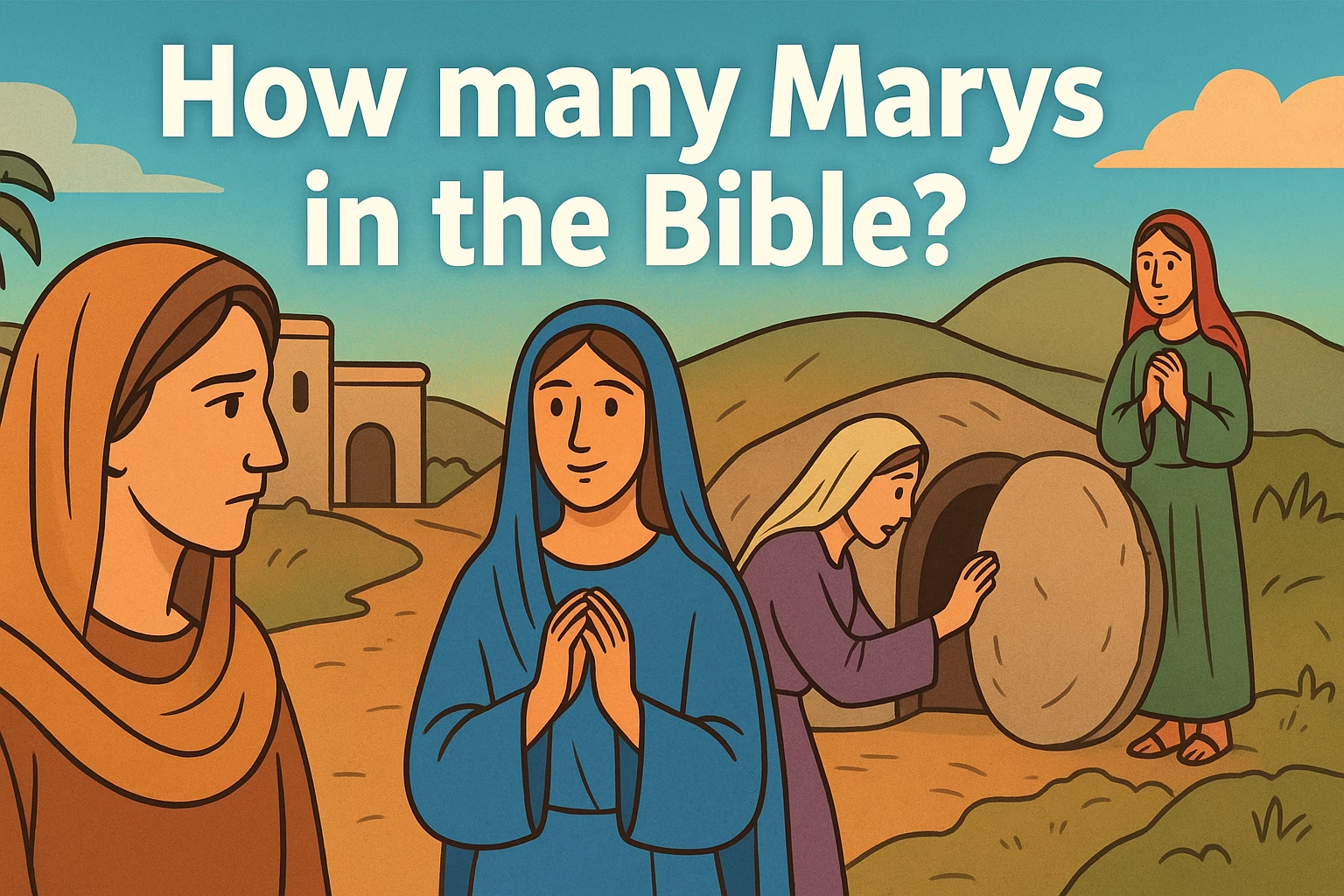
The name Mary appears several times throughout the Bible, referring to different women who played significant roles in biblical history. This article will explore the various Marys mentioned in Scripture, their identities, and their contributions to the biblical narrative.
In total, there are at least five distinct Marys in the Bible. These women are often connected to important events and figures in both the Old and New Testaments. Understanding who these Marys are helps to clarify their unique roles in the biblical story.
Mary, the Mother of Jesus
The most well-known Mary in the Bible is Mary, the mother of Jesus. She is introduced in the Gospels of Matthew and Luke, where her miraculous conception of Jesus is described. In Luke 1:26-38, the angel Gabriel visits Mary to announce that she will conceive by the Holy Spirit, giving birth to the Son of God. Mary responds with faith, saying, “I am the Lord’s servant. May your word to me be fulfilled.”
Mary’s role is pivotal in Christianity, as she is honored for her obedience and faith. She appears throughout the Gospels, witnessing Jesus’ life, ministry, and crucifixion. Her presence at significant events, such as the wedding at Cana (John 2:1-11) and at the foot of the cross (John 19:25), emphasizes her importance in Jesus’ life.
Mary Magdalene
Another prominent figure is Mary Magdalene, who is often confused with Mary, the mother of Jesus. Mary Magdalene is introduced in the Gospels as a woman from whom Jesus cast out seven demons (Luke 8:2). She becomes a devoted follower of Christ, accompanying Him during His ministry.
Mary Magdalene is notably present at the crucifixion and is the first to witness the resurrected Jesus. In John 20:11-18, she encounters the risen Christ outside the tomb, where He tells her to share the news with His disciples. Her role as the first witness to the resurrection highlights her significance in early Christianity.
Mary of Bethany
Mary of Bethany is another distinct Mary mentioned in the New Testament. She is the sister of Martha and Lazarus and is known for her close relationship with Jesus. One of the most famous stories involving Mary of Bethany is found in Luke 10:38-42, where she sits at Jesus’ feet, listening to His teaching while Martha is busy with preparations.
Mary of Bethany also plays a crucial role in the account of Lazarus’ resurrection (John 11:1-44). When Jesus arrives after Lazarus has died, Mary expresses her grief and faith in Him, saying, “Lord, if you had been here, my brother would not have died.” This interaction reveals her deep understanding of Jesus’ identity and power.
Mary, the Mother of James and Joseph
Another Mary mentioned in the New Testament is Mary, the mother of James and Joseph. This Mary is referred to in Matthew 27:56 and Mark 15:40, where she is listed among the women who witnessed Jesus’ crucifixion. She is sometimes identified as Mary the wife of Clopas, though this identification is debated among scholars.
This Mary is significant as she stands alongside other women at a pivotal moment in the New Testament, demonstrating the role of women in the early Church and their dedication to Jesus even in the face of tragedy.
Mary, the Mother of John Mark
The final Mary in the Bible is Mary, the mother of John Mark. She is mentioned in Acts 12:12, where Peter goes to her house after being miraculously freed from prison. The gathering of believers at her home shows her role in the early Christian community and highlights the importance of hospitality in the early Church.
Mary, the mother of John Mark, is believed to have been a prominent figure in the Jerusalem church. Her son, John Mark, is traditionally credited with writing the Gospel of Mark and is also known for his missionary work with Paul and Barnabas.
Conclusion of the Marys
In summary, there are at least five Marys identified in the Bible: Mary, the mother of Jesus; Mary Magdalene; Mary of Bethany; Mary, the mother of James and Joseph; and Mary, the mother of John Mark. Each of these women holds a unique place in biblical history, contributing to the unfolding narrative of faith and community in the early Church. Understanding their stories provides a richer context for the role of women in Scripture and emphasizes their vital contributions to the Christian faith.
The Significance of Marys in Biblical Narratives
Understanding the various Marys in the Bible goes beyond merely counting their names; it involves recognizing the diverse roles they played in the unfolding story of God’s relationship with humanity. Each Mary represents different aspects of faith, devotion, and community within the biblical narrative.
Mary, the Mother of Jesus: A Model of Faith
Mary, the mother of Jesus, is often seen as a model of faith and obedience. Her acceptance of the angel Gabriel’s message exemplifies trust in God’s plan. This moment is often reflected upon during Advent, as Christians prepare for the celebration of Christ’s birth. Mary’s willingness to embrace her role as the mother of the Messiah invites believers to consider their own responses to God’s call in their lives.
Furthermore, Mary’s involvement in Jesus’ life extends to her participation in His ministry. Her presence at the wedding at Cana not only highlights her maternal concern but also serves as the catalyst for Jesus’ first miracle, turning water into wine (John 2:1-11). This event signifies the importance of community and celebration in the Christian faith.
Mary Magdalene: The First Evangelist
Mary Magdalene’s role as the first to witness the resurrection is profound. Her encounter with the risen Christ marks a pivotal moment in Christian history. Jesus’ directive to her to go and tell the disciples about His resurrection positions her as the first evangelist. This is significant, considering the societal context of the time, where women often had limited roles in religious and social spheres.
Mary Magdalene’s story invites reflection on the themes of redemption and transformation. Her life before meeting Jesus, marked by demonic possession, contrasts sharply with her role as a faithful follower and messenger after her encounter with Him. This transformation illustrates the power of Christ to change lives, a message that resonates deeply within the Christian community.
Mary of Bethany: A Lesson in Discipleship
Mary of Bethany embodies the essence of discipleship through her choice to prioritize spiritual learning over worldly distractions. In Luke 10:38-42, her decision to sit at Jesus’ feet exemplifies a deep hunger for spiritual truth. This story prompts believers to consider their own priorities and the importance of dedicating time to learn from Christ.
Moreover, her interaction with Jesus during Lazarus’ death reveals her deep faith. She expresses her grief but also her belief in Jesus’ power over death. This moment encourages Christians to bring their doubts and questions to Jesus, reinforcing that faith can coexist with grief and confusion.
Mary, the Mother of James and Joseph: A Symbol of Loyalty
The Mary who is the mother of James and Joseph, often seen at the crucifixion, represents steadfast loyalty. Her presence during such a tragic moment highlights the courage and resilience of women in the early Church. The narrative shows that while Jesus’ male disciples fled in fear, these women remained, demonstrating unwavering support and love.
This Mary’s story encourages believers to reflect on their own loyalty and commitment to Christ, especially in times of trial. Her example serves as a reminder that faithfulness can manifest in various forms, often through quiet, steadfast presence in times of need.
Mary, the Mother of John Mark: A Pillar of Community
Mary, the mother of John Mark, illustrates the importance of hospitality and community in the early Church. Her home served as a gathering place for believers, indicating her active role in fostering community among Christians. This is particularly evident when Peter seeks refuge in her home after his miraculous escape from prison (Acts 12:12).
Her story invites believers to consider how they can contribute to their communities, offering support and a welcoming space for others. The early Church thrived on such connections, illustrating the significance of each member’s contribution to the body of Christ.
Questions for Reflection
As we reflect on the various Marys in the Bible, several questions arise:
- What can we learn from Mary, the mother of Jesus, about obedience and faith in our own lives?
- How does Mary Magdalene’s transformation challenge us to view our past and our potential in Christ?
- In what ways can we prioritize our spiritual growth, as Mary of Bethany did?
- How can we emulate the loyalty of Mary, the mother of James and Joseph, in our relationships and commitments?
- What steps can we take to foster community, following the example of Mary, the mother of John Mark?
These questions invite deeper exploration of our faith and challenge us to consider how we can embody the virtues exemplified by these remarkable women.
Conclusion: The Legacy of the Marys
The presence of multiple Marys in the Bible serves as a powerful reminder of the diverse ways women contributed to the early Church and the unfolding story of faith. Each Mary represents unique qualities that are essential for believers today, including faith, loyalty, hospitality, and the pursuit of spiritual knowledge. By understanding their stories, Christians can draw inspiration and encouragement as they navigate their own faith journeys.
In conclusion, the legacy of the Marys enriches the biblical narrative and encourages believers to embrace their roles within the community of faith, reminding us that every person, regardless of gender, has a vital part to play in God’s story.
Explore more about the role of women in the Bible and discover additional insights into the lives of biblical figures.