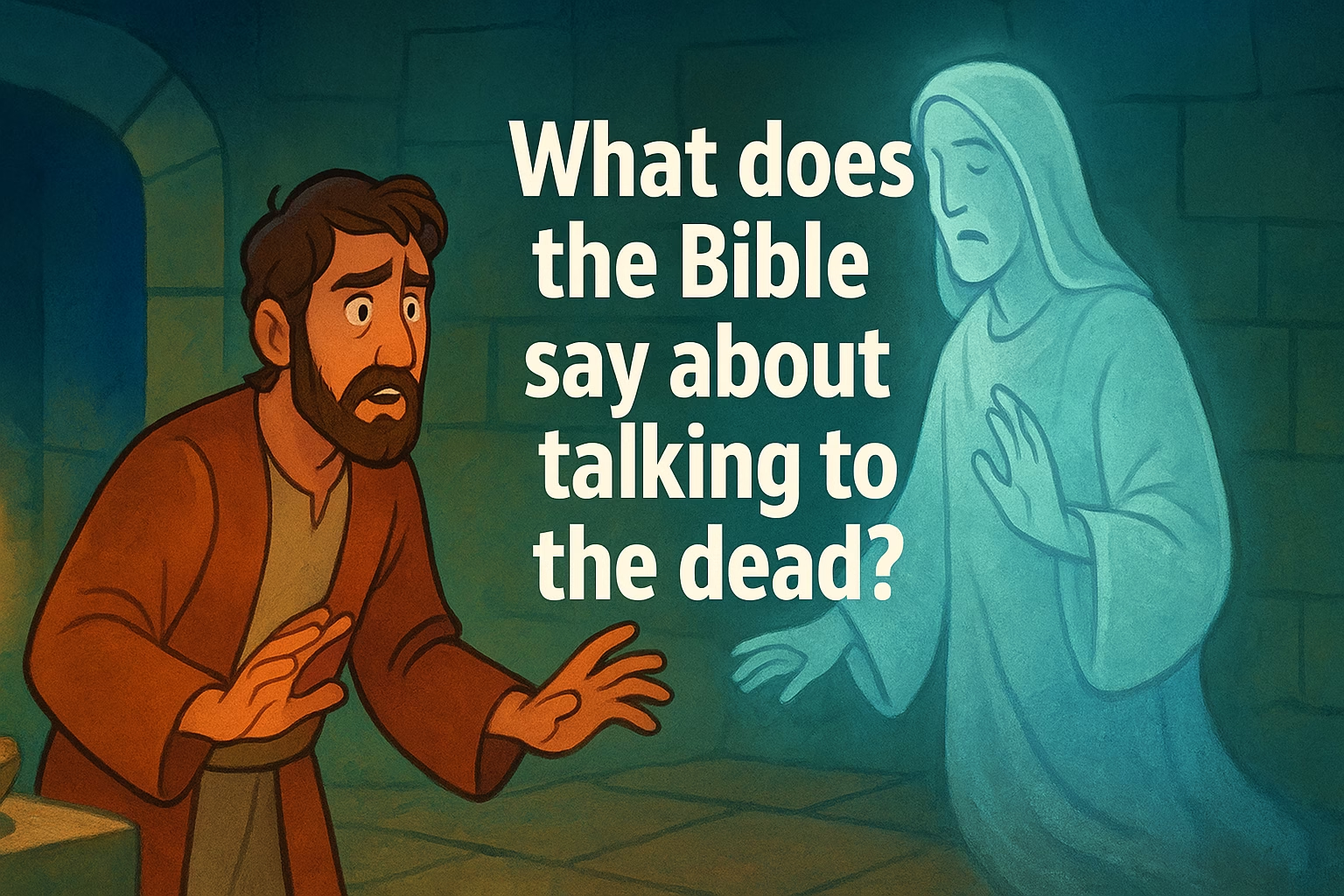
Many people wonder about the concept of talking to the dead, especially during times of grief or loss. The Bible provides guidance on this topic, reflecting a perspective that is often at odds with popular beliefs in various cultures. Understanding what Scripture says about communication with the dead can help clarify this sensitive subject.
The Bible generally discourages the practice of attempting to communicate with the dead. This prohibition is rooted in various passages that warn against seeking guidance from spirits or mediums. These verses reflect God’s desire for His followers to rely on Him and His wisdom rather than seeking answers from beyond the grave.
Old Testament Guidance
In the Old Testament, explicit warnings against communicating with the dead are found in several key passages. One of the most direct admonitions is found in Deuteronomy 18:10-12, where God commands the Israelites not to engage in practices such as divination, sorcery, or consulting the dead. The passage states:
“For example, never sacrifice your son or daughter as a burnt offering. And do not let your people practice fortune-telling or use sorcery or interpret omens or engage in witchcraft or cast spells, or function as mediums or psychics, or call forth the spirits of the dead.” (Deuteronomy 18:10-11 NLT)
This warning is significant as it reflects God’s desire for His people to avoid practices that are associated with pagan religions and to focus instead on His guidance. The underlying principle is that attempting to communicate with the dead can lead believers away from God and toward harmful spiritual influences.
Examples of Forbidden Practices
The Bible provides several examples of individuals who sought to communicate with the dead, illustrating the consequences of such actions. A prominent story is found in 1 Samuel 28, where King Saul consults a medium at Endor to summon the spirit of the deceased prophet Samuel. Despite Saul’s desperation for guidance in a time of crisis, this act was condemned:
“So Saul disguised himself by wearing ordinary clothing. Then he went to the woman at Endor. ‘I have to talk to a man who has died,’ he said. ‘Will you call up his spirit for me?'” (1 Samuel 28:8 NLT)
In this account, Saul’s actions are portrayed negatively, and the ensuing conversation with Samuel is filled with dire warnings about the consequences of Saul’s disobedience to God. This story serves as a cautionary tale about the dangers of seeking knowledge from the dead.
New Testament Perspectives
The New Testament continues this theme of discouraging communication with the dead. In Hebrews 9:27, it is stated that “it is appointed for man to die once, and after that comes judgment.” This underscores the belief in a finality to death and the idea that individuals face judgment rather than returning to communicate with the living.
Furthermore, in Luke 16:19-31, Jesus tells the parable of the rich man and Lazarus. In this story, the rich man, after his death, pleads with Abraham to send Lazarus back to warn his living family about the consequences of their actions. Abraham responds, saying:
“If they won’t listen to Moses and the prophets, they won’t be persuaded even if someone rises from the dead.” (Luke 16:31 NLT)
This parable emphasizes that the messages of God and His prophets are sufficient for guiding people in their lives. It suggests that communication from the dead would not necessarily lead individuals to repentance or faith, highlighting the importance of the Scriptures as the primary source of divine guidance.
The Role of Faith and Prayer
Instead of seeking to communicate with the dead, the Bible encourages believers to rely on prayer and faith in God. In Philippians 4:6-7, Paul instructs believers not to be anxious but to bring their requests to God through prayer. This reliance on God fosters a relationship based on trust and faith, rather than seeking answers from those who have passed away.
Moreover, the practice of praying for the dead is also not supported by Scripture. While some traditions may hold to the idea of interceding for the deceased, the Bible does not provide a basis for this practice. Instead, it emphasizes the importance of living a life of faith and making decisions based on God’s Word while still in this life.
The Importance of Discernment
As believers, it is crucial to exercise discernment when it comes to the topic of communication with the dead. The Bible warns against being led astray by false teachings or practices that may seem appealing but are ultimately contrary to God’s Word. 1 John 4:1 encourages believers to test the spirits to see whether they are from God:
“Dear friends, do not believe everyone who claims to speak by the Spirit. You must test them to see if the spirit they have comes from God.” (1 John 4:1 NLT)
This call to discernment is vital in a world where many voices seek to offer comfort or answers. The Bible consistently points back to the importance of seeking God’s wisdom and guidance through prayer, Scripture, and the community of believers rather than turning to the dead for counsel.
The Nature of Life After Death
Understanding what the Bible says about talking to the dead requires a broader context of its teachings on life after death. The Scriptures present a clear distinction between the living and the dead. In Ecclesiastes 9:5, it is stated that “the dead know nothing,” emphasizing that once a person has died, they do not possess knowledge or awareness of earthly matters. This reinforces the idea that attempting to communicate with the dead is futile, as they are not able to respond or provide guidance.
In Christian theology, death is viewed as a transition rather than an end. Upon death, individuals enter a state of judgment where their eternal destiny is determined. This perspective is crucial as it underscores the belief that the living should not seek counsel from those who have passed, as their fate is already sealed, and they are not in a position to influence the living.
Spiritual Warfare and the Influence of Spirits
The Bible warns about the reality of spiritual warfare and the presence of spirits that can potentially deceive. In Ephesians 6:12, it is noted that “we are not fighting against flesh-and-blood enemies but against evil rulers and authorities of the unseen world.” This highlights the importance of being cautious about spiritual encounters, including those that might involve communication with the dead.
Many believe that spirits of the deceased may attempt to communicate in ways that can lead individuals astray. The Bible cautions against engaging with these spirits, as they can be deceptive. Instead, believers are called to put on the full armor of God to stand firm against such influences. This is another reason why the Bible advises against seeking to talk to the dead.
The Role of the Holy Spirit
For Christians, the Holy Spirit plays a vital role in providing guidance and comfort. In John 14:26, Jesus promises that the Holy Spirit will teach and remind believers of all that He has said. This assurance means that rather than seeking answers from the dead, believers can rely on the Holy Spirit for wisdom and direction in their lives.
When faced with grief or loss, turning to God and allowing the Holy Spirit to comfort the heart can be a source of peace. This reliance on the Holy Spirit is a reflection of faith and trust in God’s plan, rather than seeking understanding through means that are not aligned with His Word.
Understanding Grief and Mourning
It is natural to seek connection with loved ones who have passed away, especially during times of mourning. However, the Bible encourages believers to process grief in a healthy manner. In Matthew 5:4, Jesus states, “Blessed are those who mourn, for they will be comforted.” This highlights the importance of acknowledging grief while also recognizing that comfort comes from God, not from attempts to communicate with the deceased.
Processing grief through prayer, support from the community, and focusing on the memories of the loved one can help individuals navigate their loss without resorting to practices discouraged by Scripture. Engaging in remembrance through prayer and honoring the deceased can be a way to cherish their memory while still adhering to biblical teachings.
Questions for Reflection
As we consider what the Bible says about talking to the dead, it may be helpful to reflect on a few key questions:
- How can I better rely on my faith and prayer during times of grief instead of seeking answers from the dead?
- What are some ways I can support others who are mourning without encouraging practices that go against biblical teachings?
- In what areas of my life do I need to practice discernment regarding spiritual matters?
- How can I cultivate a deeper relationship with the Holy Spirit to find comfort and guidance?
Conclusion: Trusting God’s Wisdom
Ultimately, the Bible’s stance on talking to the dead is clear. It discourages such practices, urging believers to seek guidance from God and His Word instead. Understanding the boundaries set by Scripture can provide clarity and peace as we navigate the complexities of grief and loss. By trusting in God’s wisdom and the guidance of the Holy Spirit, we can find comfort and direction without resorting to forbidden practices. In doing so, we honor the legacy of those who have passed, while firmly placing our hope in the promises of God.
For further exploration of biblical perspectives on life after death, you can read more in this article on what the Bible says about life after death. Additionally, understanding the importance of prayer in our lives can be found in this piece on the power of prayer.