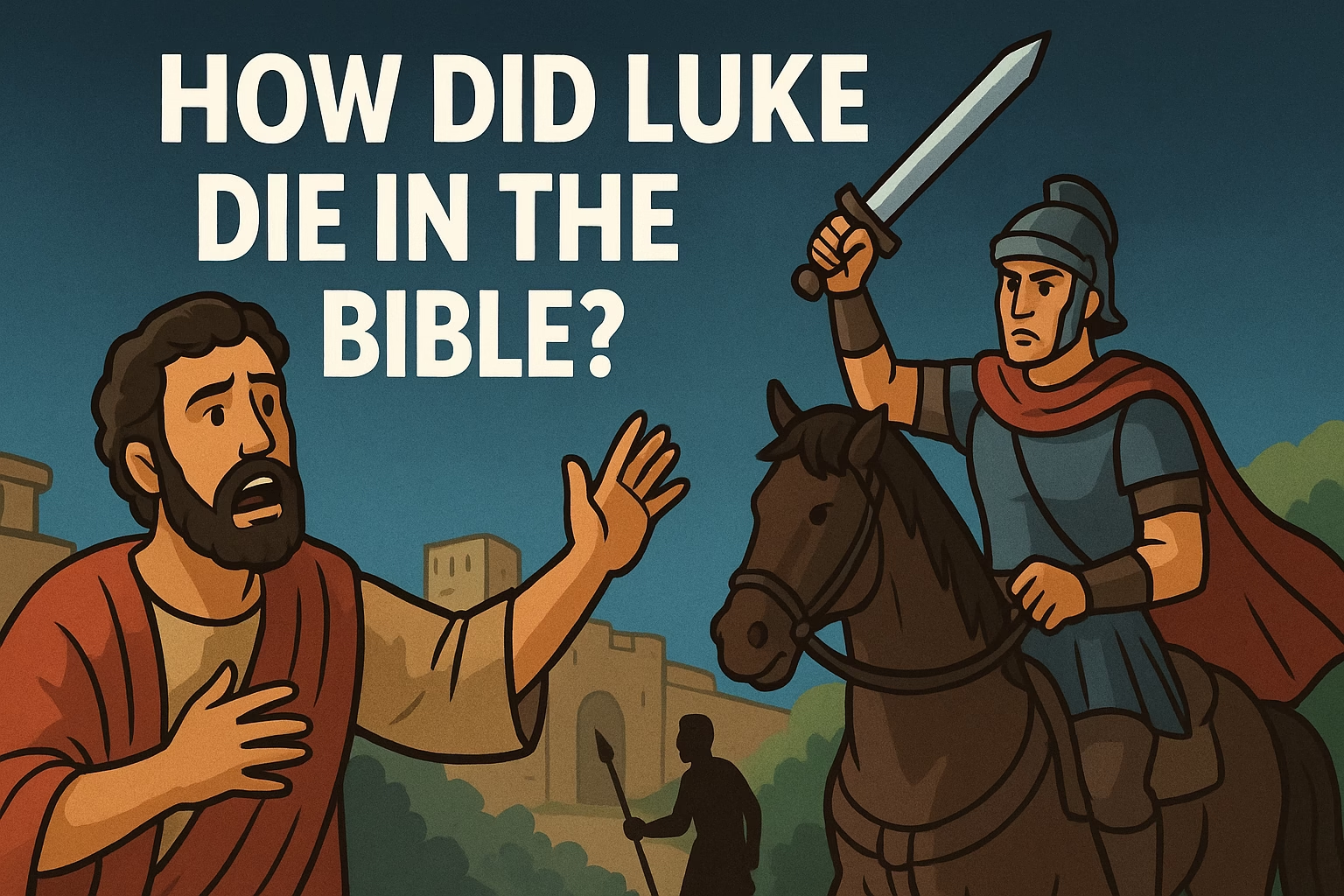
The question of how Luke, the author of the Gospel of Luke and the Book of Acts, died is one that has intrigued many Christians and scholars. While the Bible does not provide a definitive account of Luke’s death, various historical sources and traditions offer insights that can help us understand what may have happened to this beloved figure in early Christianity.
According to historical tradition, Luke is believed to have died a martyr’s death, but the specifics are not detailed in the Scriptures. The Bible does not record the events of Luke’s life after the Acts of the Apostles, which ends with Paul in prison in Rome. However, we can explore the traditions and historical accounts that provide context regarding Luke’s life and potential death.
Luke’s Background and Ministry
Luke was a physician by profession, as noted in Colossians 4:14, where Paul refers to him as “Luke, the beloved physician.” He was a companion of Paul on many of his missionary journeys, which provided him with a unique perspective on the early church and the spread of the Gospel. His writings reflect a deep concern for the marginalized and a focus on the compassion of Jesus.
Luke’s Gospel is known for its detailed accounts and emphasis on the humanity of Christ. The Book of Acts continues the story of the early church, detailing the actions of the apostles after the resurrection of Jesus. Luke’s commitment to documenting the life of Jesus and the growth of the church indicates his significant role in early Christianity.
Historical Accounts of Luke’s Death
While the Bible does not specify how Luke died, several early church fathers and historians provide accounts of his death. One of the most commonly cited traditions is that Luke was martyred in Greece. This tradition has its roots in writings from the second century and later, including those from Eusebius, an early church historian.
Eusebius and the Martyrdom of Luke
Eusebius, in his work “Ecclesiastical History,” suggests that Luke preached the Gospel in various regions, including Gaul (modern-day France) and Italy. He mentions that Luke ultimately met his end in the city of Thebes in Boeotia, Greece. According to this tradition, Luke was hanged from an olive tree, which reflects the idea that he died for his faith.
“Luke, who was a physician, was the first to preach the Gospel in Gaul and later suffered martyrdom in Thebes.” – Eusebius
Other Traditions and Interpretations
In addition to Eusebius, other church fathers such as Jerome and the early Christian historian Tertullian also mention Luke’s martyrdom. Jerome suggests that Luke was “hanged upon an olive tree” in his writings, echoing Eusebius’s account. However, the specifics about the circumstances surrounding his death vary, leading to some debate among scholars.
Some traditions assert that Luke died a natural death, suggesting he lived to an old age, possibly in the city of Antioch. This view is less common but is held by some historians who argue that the lack of a detailed martyrdom account in the New Testament may indicate he did not die as a martyr.
Distinguishing Between Scripture and Tradition
It is essential to note that much of what is known about Luke’s death comes from tradition rather than direct biblical accounts. The New Testament does not provide any explicit details regarding his death or the circumstances leading to it. Instead, the traditions surrounding Luke’s martyrdom have been shaped over centuries through oral history and writings of early church leaders.
As Christians, it is vital to recognize the difference between what is explicitly stated in Scripture and what is inferred from historical accounts or traditions. While the martyrdom of Luke is widely accepted, it is not a matter of scriptural record but rather a reflection of the early church’s understanding of his commitment to the Gospel.
Conclusion of the First Half
In summary, while the Bible does not provide a clear account of how Luke died, historical traditions suggest he met a martyr’s fate in Greece. These accounts, primarily from Eusebius and other early church historians, paint a picture of a devoted servant of Christ who ultimately paid the ultimate price for his faith. Understanding these traditions helps us appreciate the legacy of Luke as a witness to the early church and the message of Jesus.
The Context of Luke’s Death in Early Christianity
To better understand how Luke may have died, it is essential to consider the context of early Christianity during the time he lived. The early church faced significant persecution, particularly under Roman rule. Many Christians were executed for their faith, and the threat of martyrdom was a reality for those who openly proclaimed the Gospel. Luke, as a prominent figure in the early church, would not have been exempt from this risk.
Luke’s close association with the Apostle Paul, who himself faced persecution and ultimately martyrdom, adds to the likelihood that Luke would have encountered similar challenges. The commitment of early Christians to spreading the Gospel often led them to dangerous situations, and many, including apostles and disciples, suffered greatly for their beliefs.
The Role of Martyrdom in Early Christian Identity
Martyrdom played a crucial role in shaping the identity of early Christians. It was seen as a testament to one’s faith and a powerful witness to the truth of the Gospel. The stories of martyrs inspired others to remain steadfast in their beliefs, reinforcing the idea that enduring suffering for Christ was a noble and honorable path. In this light, the tradition of Luke’s martyrdom can be viewed as a significant aspect of his legacy and a reflection of the challenges faced by early believers.
The Significance of Luke’s Writings
Luke’s contributions to the New Testament go beyond his potential martyrdom. His Gospel and the Book of Acts offer a unique perspective on the life of Jesus and the growth of the early church. The themes of compassion, social justice, and the inclusion of marginalized groups resonate throughout his writings. Understanding Luke’s passion for these themes provides insight into why he might have been targeted for persecution.
For example, Luke emphasizes Jesus’ concern for the poor and outcasts, as seen in passages like Luke 4:18-19, where Jesus reads from the scroll of Isaiah, proclaiming good news to the poor and freedom for the oppressed. This focus on social justice and compassion may have contributed to the hostility he faced from those in power who felt threatened by his message.
Questions for Further Reflection
As we explore the potential circumstances surrounding Luke’s death, several questions arise that can deepen our understanding of his life and legacy:
- What does Luke’s commitment to documenting the life of Jesus and the early church tell us about his character and faith?
- How does the tradition of martyrdom shape our understanding of the sacrifices made by early Christians?
- In what ways can Luke’s emphasis on compassion and social justice inform our faith and actions today?
- How do we reconcile the differences between Scripture and historical tradition when considering the lives of biblical figures?
- What can we learn from Luke’s example of perseverance in the face of adversity?
Assessing the Historical Reliability of Accounts
When examining the accounts of Luke’s death, it is also essential to consider their historical reliability. The writings of early church fathers like Eusebius and Jerome were produced several decades after Luke’s time, and while they provide valuable insights, they are not without their limitations. The oral traditions that shaped these accounts may have evolved, leading to variations in the specifics of Luke’s martyrdom.
Scholars often debate the authenticity of these traditions, weighing them against the historical context of the early church. As Christians, it is crucial to approach these topics with a sense of discernment, recognizing that while traditions may hold value, they should not overshadow the core messages found in Scripture.
Conclusion: The Legacy of Luke
Ultimately, the question of how Luke died remains an area of speculation and tradition rather than a definitive biblical account. However, what is clear is that Luke’s life and writings have had a profound impact on Christianity. His dedication to the Gospel, his role in documenting the early church, and the potential martyrdom he faced all contribute to the enduring legacy he left behind.
As we reflect on Luke’s life, let us remember the importance of faithfulness in our own journeys. Whether in times of ease or in the face of adversity, we can draw inspiration from Luke’s commitment to sharing the message of Christ. His story encourages us to live boldly for our beliefs and to extend compassion to those around us, embodying the very principles he so passionately advocated.
For more insights into early Christian history and the significance of martyrdom, you can explore the articles on the life of early Christians and the importance of Luke’s writings.