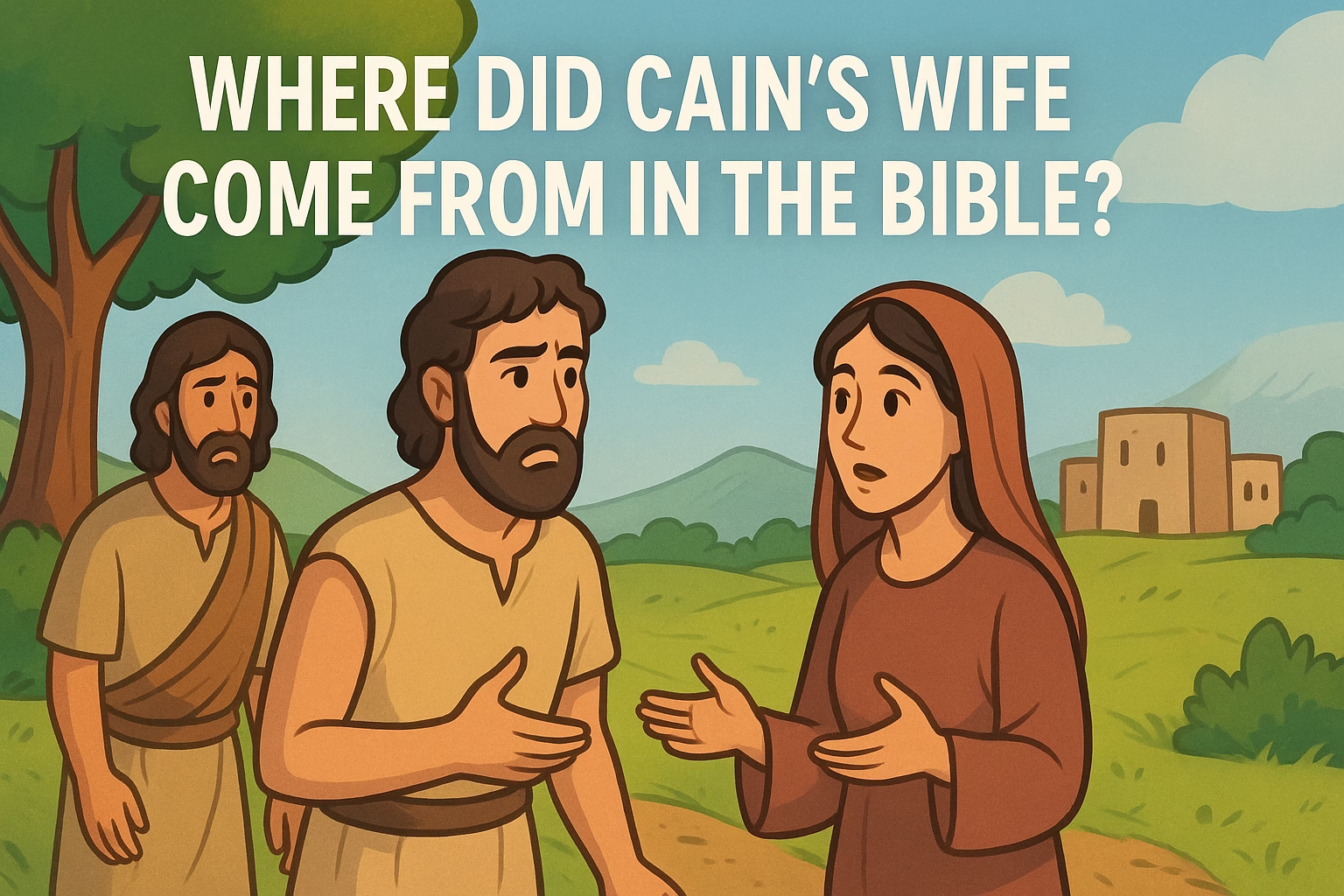
The question of where Cain’s wife came from is one that has puzzled many readers of the Bible. It is a topic that often arises in discussions about early human history as described in the Scriptures. Cain, known for being the firstborn son of Adam and Eve, has a significant role in the biblical narrative, particularly in the story of his offering to God and the subsequent murder of his brother Abel. This article will explore the biblical context around Cain’s wife, examining the relevant passages and interpretations.
The Bible does not explicitly name Cain’s wife or provide detailed information about her origins. However, we can infer some possibilities based on what is written in the book of Genesis. Cain’s wife is generally understood to be one of his relatives, likely a sister or a niece. In Genesis 4:17, it states, “Cain knew his wife, and she conceived and bore Enoch.” This indicates that Cain had a wife at that time, but it does not specify where she came from. The most common interpretation is that Adam and Eve, as the first humans created by God, had many children, and Cain’s wife would have been one of their daughters.
Understanding the Early Generations
The early chapters of Genesis provide a brief overview of the creation of humanity and the generations that followed. After the creation of Adam and Eve, Genesis 5 outlines the descendants of Adam, but it primarily focuses on the line of Seth, Adam’s third son. The Bible mentions that Adam had other sons and daughters, although it does not provide their names or the details of their lives (Genesis 5:4). This lack of specific information leads to the conclusion that there were many children born to Adam and Eve, who would have populated the earth during that time.
The Implications of a Small Initial Population
Given that Adam and Eve were the first humans, the initial population of the earth would have been quite small. The Bible does not provide a timeline for how many years passed between the creation of Adam and Eve and the birth of their children. However, it is reasonable to assume that they had multiple children over many years. This would create a situation where Cain could have married one of his sisters or a close relative. While this might raise concerns today regarding genetic issues, it is essential to understand that the genetic diversity and mutations we see now were not present in the early generations.
The Cultural Context of Marriage in Early Humanity
In the ancient world, marrying close relatives was not uncommon. This practice was more accepted in early societies, including during the time of the patriarchs. The laws prohibiting such marriages, as given in later books like Leviticus, were established much later in biblical history. Therefore, Cain marrying a relative would have been culturally acceptable and even necessary for the continuation of the human race.
Cain’s Life After the Murder of Abel
After Cain murdered his brother Abel, he was marked by God and became a wanderer. In Genesis 4:12, God tells Cain that he will be a fugitive and a wanderer on the earth. This mark was meant to protect Cain from being killed by others, which implies that there were other people on Earth at that time. The existence of other people raises questions about who these individuals were since the Bible primarily focuses on Adam’s lineage. However, it is likely that these people were also descendants of Adam and Eve, through their other children.
Theories and Speculations
There are several theories regarding Cain’s wife, but most of them are based on inference rather than explicit biblical text. Some scholars suggest that Cain’s wife could have been a descendant of another line of humanity, but this idea conflicts with the traditional understanding of biblical creation, which emphasizes that all humans descended from Adam and Eve.
- Relatives as Spouses: The most accepted view is that Cain married a sister or a close relative, as mentioned earlier.
- Population Growth: It is likely that Adam and Eve had many children, creating a population from which Cain could choose a wife.
- Other Theories: Some alternative theories exist but lack strong biblical support and are often speculative.
Ultimately, the lack of specific details about Cain’s wife in the Bible leaves room for interpretation. While some may find the absence of information frustrating, it highlights the focus of the biblical narrative on God’s relationship with humanity rather than on the minutiae of early human genealogy.
Theological Implications of Cain’s Marriage
The question of where Cain’s wife came from is not just a matter of historical curiosity; it also raises significant theological implications. The Bible’s narrative about early humanity is interwoven with themes of sin, redemption, and God’s overarching plan for creation. Understanding Cain’s marriage within this framework can provide insights into God’s intentions for human relationships and the consequences of sin.
When Cain killed Abel, it wasn’t just an act of violence; it represented a profound rupture in the relationship between humanity and God. Cain’s subsequent marriage and the birth of his children can be seen as part of a new beginning, albeit one marked by the consequences of sin. The fact that Cain’s wife is not named or described serves to emphasize the anonymity of those who live outside the direct favor of God, as Cain was after his transgression.
Marriage as a Foundation for Society
From a biblical perspective, marriage is established as a fundamental institution. In Genesis 2:24, it states that a man shall leave his father and mother and be joined to his wife, and they shall become one flesh. This foundational idea of marriage is crucial for understanding human relationships and community formation. Cain’s marriage, despite its controversial origins, illustrates the necessity of forming families for societal development. As humanity grew, the dynamics of relationships would evolve, but the essential structure of marriage remained a key element in God’s design.
Exploring the Nature of Cain’s Descendants
After Cain’s marriage, the Bible outlines the lineage of his descendants in Genesis 4. Cain’s son Enoch established a city, and Cain named it after him. This development indicates that Cain’s family line had a significant impact on early civilization, contributing to developments in culture, agriculture, and technology. The mention of Enoch’s city suggests the importance of community and civilization even in the aftermath of Cain’s sin.
Additionally, the descendants of Cain are noted for their contributions to various fields, including music and metalworking. This is seen in the mention of Jubal, who became the father of those who play the lyre and pipe, and Tubal-Cain, who forged tools of bronze and iron. These accomplishments highlight that, despite Cain’s initial act of sin, his lineage played a crucial role in advancing human culture and civilization.
The Contrast with Seth’s Lineage
In contrast to Cain’s descendants, the line of Seth, another son of Adam and Eve, is presented in a more favorable light in the biblical narrative. Seth’s lineage emphasizes the importance of worshiping God and maintaining a righteous path, as seen in Genesis 4:26, where people began to call on the name of the Lord. This contrast serves to illustrate the divergence in human behavior and the consequences of choices made by individuals and families. Cain’s descendants, flourishing in societal aspects, did so apart from a focus on God, while Seth’s line aimed to restore the relationship between humanity and the Creator.
Reflecting on God’s Grace and Judgment
The story of Cain, his wife, and his descendants provides a profound opportunity to reflect on the themes of grace and judgment in the Bible. Even after Cain’s grievous sin, God showed him mercy by allowing him to live and establish a family. This act of grace highlights God’s desire for redemption and the continuation of humanity despite its flaws. God’s protective mark on Cain serves as a reminder that divine mercy can coexist with justice. It poses a significant question for believers today: How do we view our own sins in the light of God’s grace?
Moreover, the narrative invites readers to consider the broader implications of how sin affects relationships and communities. Cain’s actions led to a cycle of violence and separation, which can be seen throughout humanity’s history. This underscores the biblical message that sin has consequences, not only for the individual but for generations to come.
Questions for Further Reflection
As we ponder the origins of Cain’s wife and the implications of his lineage, several questions arise that can deepen our understanding of the biblical narrative:
- What does the story of Cain teach us about the nature of sin and its consequences?
- How can we apply the lessons learned from Cain’s family dynamics to our modern understanding of relationships and community?
- In what ways do we see God’s grace manifesting in our lives, even when we fall short?
- What role does lineage and heritage play in our understanding of God’s plans for humanity?
These questions can guide personal reflection or group discussions, allowing for a deeper exploration of the biblical text and its relevance to contemporary life.
Conclusion: The Mystery of Cain’s Wife
The question of where Cain’s wife came from may never be definitively answered, but it serves as a gateway into rich biblical themes and theological discussions. The early chapters of Genesis remind us that God’s creation, despite its imperfections, is part of a larger narrative of redemption and grace. Cain’s marriage, his descendants, and their contributions to early society illustrate the complexity of human relationships and the enduring impact of choices made in the context of God’s will.
Ultimately, the story invites us to reflect on our own lives, our relationships, and how we navigate the challenges of sin and grace. In doing so, we gain a deeper appreciation for the interconnectedness of humanity and the divine purpose at work throughout history.
For further exploration of biblical narratives, consider reading about the significance of Cain and Abel and the lineage of Seth.