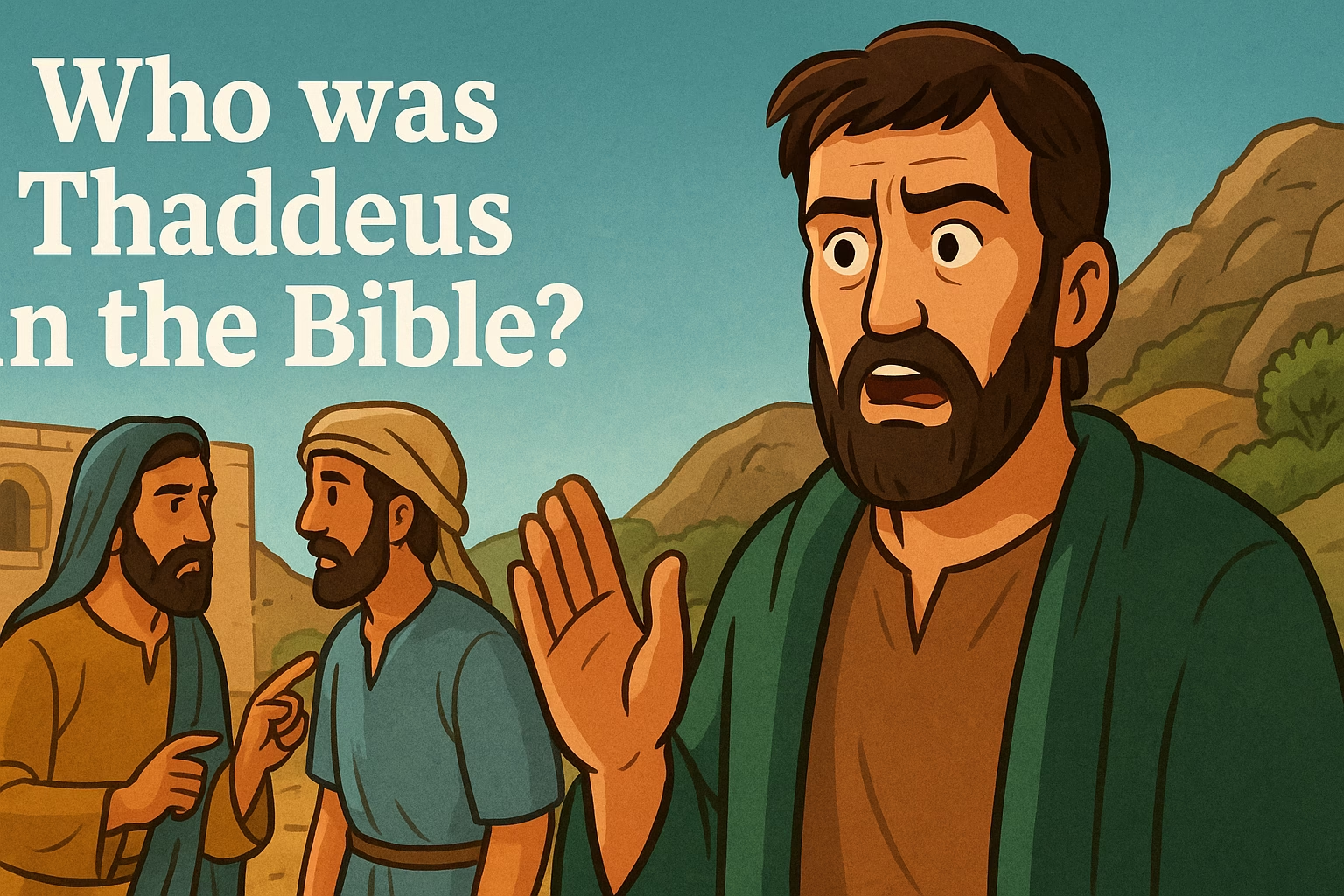
Thaddeus is a somewhat enigmatic figure in the New Testament, known primarily for his role as one of the twelve apostles chosen by Jesus Christ. While there are not many detailed accounts of his life or actions, his presence in the gospel narratives and later writings provides insights into his character and significance within the early Christian community.
To understand who Thaddeus was, it is essential to examine the biblical texts that mention him, as well as the historical context surrounding his life and ministry. Thaddeus is often identified with Judas, the son of James, and is sometimes referred to as Judas Thaddeus. This can lead to some confusion, given the presence of Judas Iscariot, the infamous betrayer of Jesus. However, Thaddeus is distinguished from Iscariot in the accounts of the apostles.
Thaddeus in the Gospel Accounts
Identification Among the Apostles
Thaddeus is mentioned in the lists of apostles found in the Gospels of Matthew, Mark, and Luke. In Matthew 10:3, he is referred to as “Thaddeus,” while in the Gospel of Luke (Luke 6:16) and in the book of Acts (Acts 1:13), he is called “Judas the son of James.” This connection suggests that he may have been known by different names or titles, which was common in the cultural context of the time.
The varying names can create some confusion, but it is generally accepted that Thaddeus and Judas the son of James are the same person. His inclusion in these lists indicates that he was one of the close followers of Jesus, chosen to be part of the foundational group that would later spread the message of Christianity.
Thaddeus’s Role in the Ministry of Jesus
While the Gospels do not provide extensive details about Thaddeus’s actions during Jesus’s ministry, there is a notable moment found in the Gospel of John. In John 14:22, Thaddeus asks Jesus a question during the Last Supper: “Lord, why are you going to reveal yourself only to us and not to the world at large?” This question reflects his desire to understand Jesus’s mission and the implications of His teachings. It also highlights the curiosity and earnestness of the apostles as they sought to grasp the nature of Jesus’s identity and purpose.
Thaddeus in the Early Church
The Book of Acts
After the resurrection and ascension of Jesus, Thaddeus, along with the other apostles, played a crucial role in the establishment of the early Christian church. The Book of Acts, which chronicles the actions of the apostles after Jesus’s ascension, does not mention Thaddeus extensively. However, his presence among the apostles is implied during significant events, such as Pentecost when the Holy Spirit descended upon the followers of Jesus.
Traditions and Writings Attributed to Thaddeus
Beyond the New Testament, Thaddeus is associated with various traditions and writings. Some early Christian texts, such as the apocryphal “Gospel of Judas,” mention him, although these texts are not considered canonical by most Christian denominations. Additionally, Thaddeus is sometimes linked to missionary work in regions such as Syria and Persia, where he is believed to have preached the gospel and established communities of believers.
Tradition holds that Thaddeus was martyred for his faith, although the specifics of his death are not detailed in the Bible. The lack of concrete historical evidence regarding the life and death of Thaddeus has led to various legends and interpretations throughout Christian history.
Thaddeus’s Legacy
Thaddeus’s legacy is significant in the context of the early church. As one of the twelve apostles, he contributed to the foundational teachings and spread of Christianity. His inquiry during the Last Supper illustrates the thoughtful engagement of the apostles with Jesus’s message, and it serves as a reminder of the struggles and questions that early Christians faced as they sought to understand their faith.
In some Christian traditions, particularly within the Catholic and Orthodox churches, Thaddeus is venerated as a saint. His feast day is celebrated on different dates depending on the tradition, often emphasizing his role as a faithful follower of Christ and a witness to the resurrection.
Overall, while Thaddeus may not be as prominently featured as some of the other apostles, his inclusion in the New Testament and the traditions surrounding his life and ministry underscore the diverse and rich tapestry of the early church’s history. Through his questions, actions, and eventual martyrdom, Thaddeus remains an important figure in the narrative of Christianity’s beginnings.
Theological Significance of Thaddeus
Thaddeus’s role in the New Testament goes beyond mere identification as an apostle. His actions and questions, particularly during critical moments like the Last Supper, provide insight into the theological themes present in the Gospels. His inquiry about Jesus’s revelation to the disciples versus the world highlights a significant aspect of Christian theology: the concept of divine revelation. Thaddeus’s desire for understanding reflects the human quest for knowledge about God and the nature of faith.
This moment serves as a reminder that understanding God’s plan is often a gradual process that requires faith and patience. Thaddeus’s question can also be seen as a precursor to the Great Commission, where Jesus later instructs his followers to spread the Gospel to all nations. This indicates that while not all people would immediately recognize Jesus’s divinity, the apostles were entrusted with the task of revealing this truth to the world, a mission that Thaddeus was a part of.
Thaddeus in Christian Tradition
In addition to his scriptural references, Thaddeus’s legacy has been shaped by Christian tradition over the centuries. Various accounts of his missionary work and martyrdom have been passed down through oral tradition and later documented in hagiographies. The most widely accepted tradition holds that Thaddeus traveled to regions such as Syria and Armenia to spread the message of Christianity. His efforts are often celebrated in the context of the early church’s expansion, particularly in areas that are now part of modern-day Turkey and Iran.
Thaddeus is often depicted in Christian art and iconography, usually alongside symbols of martyrdom such as a club or an axe, which are believed to represent the manner of his death. These artistic representations serve to remind the faithful of his commitment to his beliefs and the sacrifices made by early Christians for their faith.
Questions for Reflection
Thaddeus’s life and actions prompt several questions that can deepen our understanding of faith and discipleship:
- What does Thaddeus’s question during the Last Supper reveal about the nature of faith? Reflecting on Thaddeus’s inquiry can lead to discussions about how believers today grapple with understanding God’s plans.
- In what ways can we emulate Thaddeus’s curiosity and desire for understanding in our spiritual journeys? This question encourages believers to seek knowledge and understanding in their walk with Christ.
- How does Thaddeus’s role as an apostle challenge us to engage with the world around us? This can lead to conversations about evangelism and the importance of sharing one’s faith in contemporary society.
Thaddeus’s Influence on Modern Christianity
In modern Christianity, Thaddeus is often invoked in prayers for intercession due to his status as a saint. Many believers turn to him during times of doubt or when seeking guidance, believing that his experiences and questions resonate with their own struggles. Some denominations celebrate his feast day, emphasizing his role as a faithful follower and martyr, which can inspire Christians to remain steadfast in their faith amidst trials.
While Thaddeus may not be as widely known as other apostles like Peter or Paul, his presence in the New Testament serves as a reminder of the diverse voices and experiences within the early church. His life illustrates that every believer, regardless of their visibility or prominence, plays an essential role in the unfolding story of Christianity.
Conclusion: The Enduring Legacy of Thaddeus
In conclusion, Thaddeus stands as a testament to the complexity and richness of the early Christian narrative. His questions and actions, though recorded in only a few verses, highlight the deep human desire for understanding and connection with the divine. As one of the twelve apostles, he contributed to the foundation of the church and the spread of Jesus’s teachings, leaving behind a legacy that continues to inspire and challenge believers today.
Thaddeus’s life encourages us to seek knowledge, ask questions, and engage deeply with our faith, reminding us that even those who may seem less prominent in scripture can have a profound impact on the course of history and the lives of believers.
To learn more about other biblical figures such as Herod and Joab, you can explore their stories in these articles: who was Herod in the Bible and who was Joab in the Bible.