
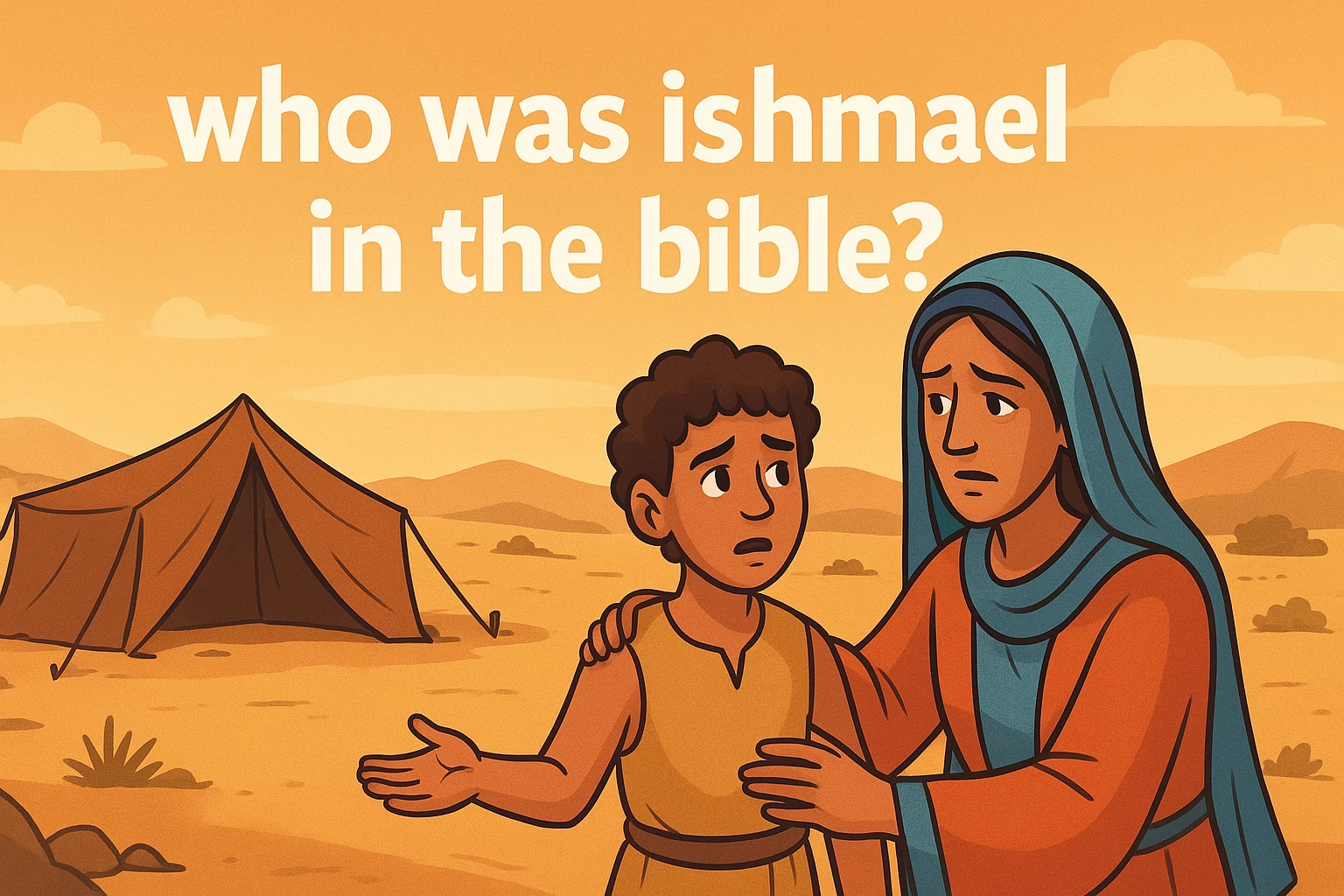
The story of Ishmael is a fascinating part of the biblical narrative, illustrating themes of faith, family, and the complexities of human relationships. Understanding who Ishmael was in the Bible requires examining his origins, his significance in the biblical story, and the implications of his life on subsequent generations.
Ishmael was the first son of Abraham, born to Hagar, who was Sarah’s Egyptian maidservant. The account of Ishmael’s birth is found in Genesis 16. Sarah, who was unable to bear children, offered Hagar to Abraham to produce an heir. When Hagar conceived, tension arose between her and Sarah, leading to Hagar fleeing into the wilderness. There, an angel of the Lord appeared to her, instructing her to return and promising that her son would be a great nation.
The Birth of Ishmael
The circumstances surrounding Ishmael’s birth highlight the challenges faced by Abraham and Sarah in their quest for a child. God had promised Abraham that he would be the father of many nations (Genesis 17:4). However, as years passed without a child, impatience grew. Sarah’s decision to offer Hagar as a surrogate stemmed from a lack of faith in God’s timing.
In Genesis 16:11-12, the angel tells Hagar that she will name her son Ishmael, which means “God hears,” because the Lord had heard her affliction. The prophecy concerning Ishmael was significant; he would become a wild man and his hand would be against everyone, and everyone’s hand would be against him. This foreshadowing hints at the turbulent life Ishmael would lead.
Ishmael’s Life and Legacy
Ishmael’s life is marked by both struggle and promise. After his birth, Hagar returned to Abraham and Sarah. Eventually, when Isaac, the child of promise, was born to Abraham and Sarah, tensions escalated. In Genesis 21, Sarah saw Ishmael mocking Isaac and demanded that Abraham send Hagar and Ishmael away. God told Abraham to heed Sarah’s voice, promising that Ishmael would also become a nation because he was Abraham’s offspring.
When Hagar and Ishmael were cast out, they wandered in the wilderness of Beersheba. In Genesis 21:17-19, God heard the boy’s cries and provided for them, leading Hagar to a well of water. This moment underscores God’s continued care for Ishmael, despite the circumstances of his birth and the rejection he faced from his family.
The Significance of Ishmael in Biblical Narrative
Ishmael’s story is not merely a tale of rejection; it serves a larger purpose in the biblical narrative. He is often seen as the father of the Arab nations. The descendants of Ishmael are traditionally associated with various tribes in the region, which plays a significant role in the historical and theological discussions surrounding Israel and its neighbors.
In Genesis 25:12-16, the genealogies reveal that Ishmael had twelve sons who became princes, thus fulfilling God’s promise to make him a great nation. This aspect of his legacy is crucial when considering the broader narrative of the Old Testament and the relationships between different peoples.
Ishmael in Religious Tradition
Ishmael is also significant in Islamic tradition, where he is considered a prophet and the ancestor of Muhammad. The story of Ishmael and his mother Hagar is honored during the Hajj pilgrimage, particularly in the ritual of Sa’i, which commemorates Hagar’s search for water for her son.
Both Christianity and Islam view Ishmael as a pivotal figure, though interpretations of his significance vary. In Christianity, he is often seen as a symbol of the flesh—representing the human attempts to fulfill God’s promises through their own means, as opposed to the divine promise fulfilled through Isaac.
Theological Implications of Ishmael’s Story
The narrative of Ishmael raises important theological questions concerning God’s grace and mercy. Despite being born out of a complicated situation, God chose to bless Ishmael and his descendants. This serves as a reminder that God’s plans can transcend human failures and misunderstandings.
Ishmael’s story invites reflection on themes of belonging and identity. Being cast out could symbolize the struggle many face in seeking acceptance and purpose. The fact that God hears Ishmael’s cries and provides for him emphasizes that even in abandonment, God does not forget His children.
“God hears the cries of the marginalized and provides for those in need.”
Moreover, Ishmael’s life can be seen as a foreshadowing of the larger narrative of salvation history. His existence and the subsequent tension between his descendants and those of Isaac reflect the ongoing struggles within humanity, illustrating the need for reconciliation and understanding among different cultures and peoples.
In summary, Ishmael is a complex character whose life story serves as a crucial element in the biblical narrative. His birth, struggles, and legacy are intertwined with the broader themes of faith, promise, and the intricate relationship between God and humanity. His narrative invites readers to explore deeper questions about faith, identity, and the nature of God’s promises throughout history.
The Relationship Between Ishmael and Isaac
The dynamic between Ishmael and Isaac is a focal point in understanding Ishmael’s role in the Bible. As half-brothers, their relationship encapsulates themes of rivalry, jealousy, and the implications of human decisions. After Isaac was born, tensions grew as Sarah perceived Ishmael’s actions towards Isaac as mocking. This led to the dramatic moment when Sarah insisted that Hagar and Ishmael be sent away.
From a theological perspective, the relationship highlights the concept of divine promise versus human effort. Ishmael, born out of a lack of faith, represents the attempts to fulfill God’s promise through human means, while Isaac symbolizes the fulfillment of God’s covenant with Abraham. This contrast raises questions about how humans often try to intervene in God’s plans and the consequences that follow.
Ishmael’s Role in Prophecy and the Future
Ishmael’s life does not end with his departure from Abraham’s household. In fact, his story continues to unfold in the context of biblical prophecy. Genesis 21:18 contains a significant promise from God to Hagar: Ishmael would grow into a great nation. This promise indicates that Ishmael’s lineage would have a substantial impact on future generations.
Later, in Genesis 25:18, it is noted that Ishmael settled in the wilderness of Paran, and his descendants became known for their strength and prowess. The descendants of Ishmael are traditionally associated with various tribes and nations that played critical roles in the history of the Middle East. This aspect of Ishmael’s legacy enriches the narrative, illustrating how God’s promises extend beyond immediate circumstances and into the broader tapestry of human history.
Ishmael in the New Testament
Ishmael’s presence in the New Testament is subtle but meaningful. In Galatians 4:21-31, Paul uses Ishmael and Isaac as an allegory to illustrate the difference between the old covenant and the new covenant. He describes Ishmael as the child of the slave woman, representing those who live under the law, while Isaac, the child of the free woman, symbolizes those who are free in Christ. This interpretation offers a theological perspective on the nature of grace and the contrast between law and faith.
This discussion in Galatians encourages readers to consider how their spiritual heritage influences their relationship with God. It invites reflection on whether one approaches faith through human effort or through the grace offered in the New Covenant through Jesus Christ.
Ishmael’s Legacy in Modern Context
The legacy of Ishmael extends beyond biblical times into modern discussions about identity, culture, and faith. Many people today grapple with feelings of exclusion or marginalization, similar to Ishmael’s experience. His story resonates with those who seek to understand their place in a world that often overlooks them.
Furthermore, Ishmael’s relationship to the Arab nations today plays a significant role in contemporary discussions about geopolitical tensions and interfaith dialogue. Understanding Ishmael’s biblical narrative can foster a greater appreciation for the complexities of these relationships and the historical roots that continue to influence modern interactions.
Questions for Reflection
Ishmael’s narrative raises several important questions for personal and theological reflection:
- What does Ishmael’s story teach us about the nature of God’s grace in our lives?
- How can we reconcile the tensions in our relationships, particularly those that seem to stem from jealousy or rivalry?
- What does it mean to trust in God’s timing, especially when faced with our own impatience or struggles?
- In what ways can we extend compassion to those who feel marginalized or abandoned in our communities?
These questions encourage believers to engage deeply with the text and consider how Ishmael’s story is relevant to their lives today, prompting a search for understanding and reconciliation in a complex world.
Conclusion: The Enduring Impact of Ishmael
Ishmael’s life and legacy offer profound insights into the human experience, the nature of God’s promises, and the complexities of faith. His narrative serves as a reminder that God is attentive to the cries of all His children, regardless of their circumstances. Ishmael’s story invites readers to explore themes of identity, belonging, and divine grace, encouraging a deeper understanding of the interconnectedness of all people in God’s plan.
Ultimately, Ishmael stands as a testament to the fact that God’s purposes unfold in ways that transcend human understanding, and that every story, including his, plays a vital part in the grand narrative of redemption and hope.
For further exploration of biblical figures and their significance, consider reading about the role of Isaac in the Bible and the connection between Ishmael and modern faith traditions.