
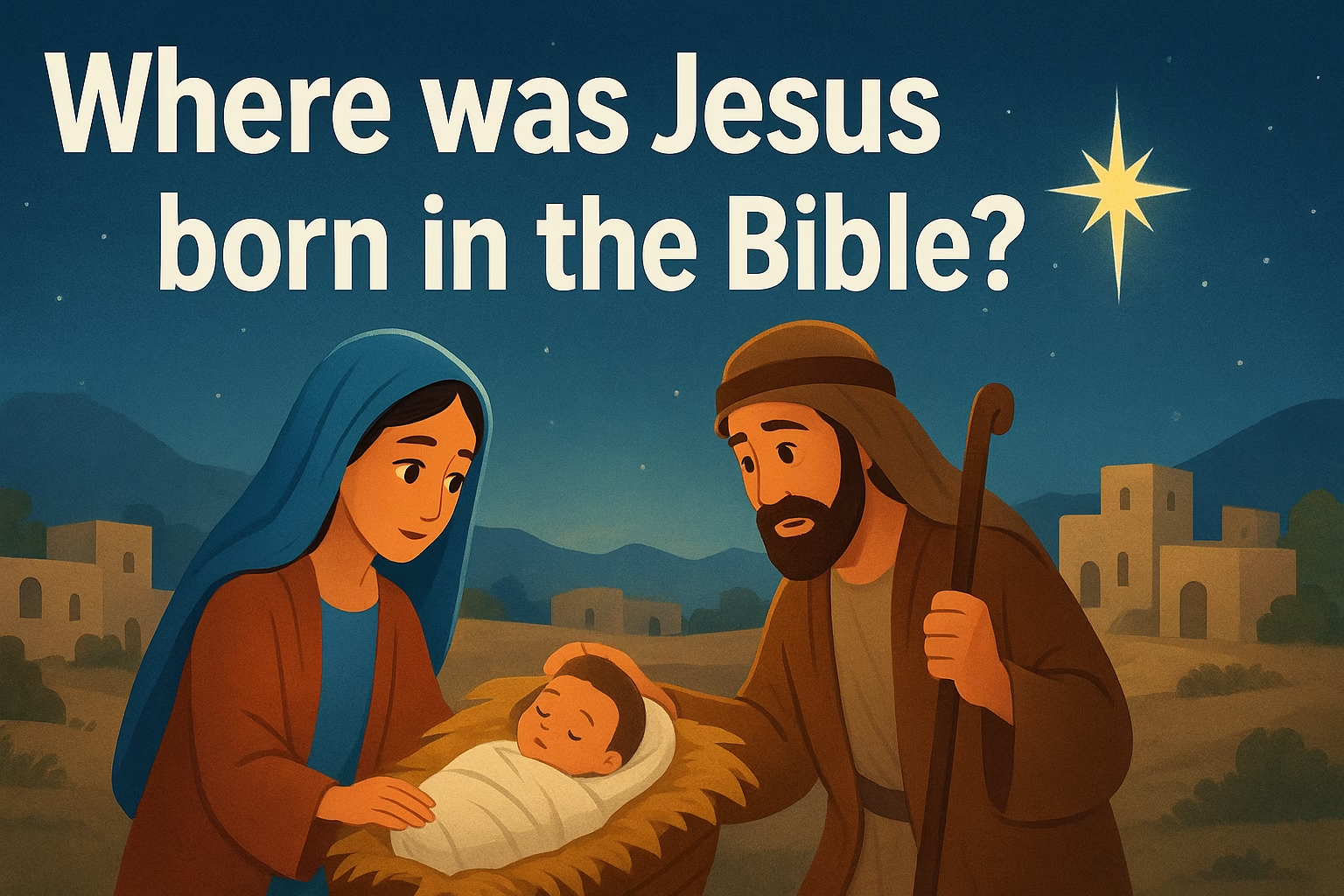
The birthplace of Jesus is one of the most significant details in the Christian faith, as it is tied to various prophecies and events surrounding His life. Understanding where Jesus was born not only provides historical context but also deepens our appreciation for the narratives found in the Bible. This article will explore the scriptural references and the context surrounding the birth of Jesus, focusing on the town that holds this monumental significance.
According to the Bible, Jesus was born in Bethlehem. This is confirmed in several passages, including the Gospel of Matthew and the Gospel of Luke, which provide accounts of His birth and the circumstances surrounding it.
Scriptural References to Jesus’ Birthplace
The Gospel of Matthew
The Gospel of Matthew clearly states Jesus’ birthplace in chapter 2. After recounting the story of Jesus’ birth, Matthew notes, “Jesus was born in Bethlehem of Judea, during the reign of King Herod” (Matthew 2:1 NLT). This account is significant because it connects Jesus’ birth to the prophecy found in the Old Testament, specifically in Micah 5:2, which foretold that a ruler would come from Bethlehem.
The Gospel of Luke
Luke also provides an account of Jesus’ birth in chapter 2. He describes how Mary and Joseph traveled to Bethlehem because of a census ordered by Caesar Augustus. Luke 2:4-7 states that Joseph went to Bethlehem, the city of David, because he was a descendant of David. It is here that Mary gave birth to Jesus and laid Him in a manger because there was no room for them in the inn.
Historical Context of Bethlehem
Bethlehem’s Significance
Bethlehem, located about six miles south of Jerusalem, is often referred to as the City of David. It holds a rich history, being the birthplace of King David, which adds to its significance in the lineage from which Jesus descended. The connection to David is crucial, as many prophecies in the Old Testament indicate that the Messiah would come from David’s line.
Prophecies and Fulfillment
The birth of Jesus in Bethlehem fulfills numerous prophecies. For instance, Micah 5:2 mentions, “But you, O Bethlehem Ephrathah, are only a small village among all the people of Judah. Yet a ruler of Israel, whose origins are in the distant past, will come from you on my behalf” (Micah 5:2 NLT). This prophecy was well-known among the Jewish people and set the expectation for the Messiah’s arrival.
Understanding the Nativity Narrative
Mary and Joseph’s Journey
The journey of Mary and Joseph to Bethlehem is pivotal in understanding the circumstances of Jesus’ birth. As recorded in Luke, they traveled from Nazareth to Bethlehem due to the Roman census. This journey was not just a mere relocation; it was part of God’s divine plan to ensure that Jesus was born in the prophesied location. The humble setting of His birth in a manger underscores the nature of His mission on earth.
Significance of the Manger
The fact that Jesus was laid in a manger highlights the humility of His birth. In Luke 2:7, it is noted that Mary wrapped Him in swaddling clothes and laid Him in a feeding trough because there was no room for them in the inn. This imagery serves to illustrate that the Savior of the world entered humanity in the most modest of circumstances, emphasizing His accessibility to all people, especially the poor and marginalized.
Contemporary Interpretations and Traditions
Modern-Day Bethlehem
Today, Bethlehem is a city in the West Bank and remains a significant pilgrimage site for Christians. The Church of the Nativity, located in Bethlehem, is built over the traditional site of Jesus’ birth and attracts thousands of visitors each year. The city continues to symbolize the hope and promise of the Messiah, as well as the fulfillment of biblical prophecy.
Traditions Surrounding Christmas
The story of Jesus’ birth in Bethlehem has shaped many Christmas traditions. Nativity scenes, carols, and church services often depict the humble setting of Jesus’ birth. These traditions serve as a reminder of the significance of His arrival and the hope He brings to the world.
Conclusion of Part One
In summary, the Bible clearly identifies Bethlehem as the birthplace of Jesus, fulfilling ancient prophecies and highlighting the humble beginnings of the Savior. Understanding the context and significance of this location enriches our appreciation for the nativity story and its implications for believers today. The next section will delve deeper into the implications of Jesus’ birth and the events that followed.
Theological Implications of Jesus’ Birthplace
The significance of Jesus being born in Bethlehem extends beyond mere geography. It has profound theological implications that resonate throughout Christian doctrine. Bethlehem is not just a location; it represents the fulfillment of God’s promises and the beginning of a new covenant with humanity.
Fulfillment of God’s Promises
Throughout the Old Testament, God made covenants with His people, often promising a Messiah who would redeem them. Jesus’ birth in Bethlehem fulfills these promises, particularly the prophecy in Micah that identifies the birthplace of the coming ruler. This connection reinforces the belief that Jesus is the long-awaited Messiah, fulfilling what was foretold by the prophets.
The Incarnation and Its Meaning
The incarnation—the belief that God became human in the person of Jesus—is central to Christian theology. By being born in Bethlehem, Jesus embodies the idea that God chose to enter human history in a specific time and place. This act of humility highlights the depth of God’s love for humanity, as He was willing to experience human life, including its struggles and limitations, from the very beginning.
Historical and Cultural Context of Jesus’ Birth
The Role of Roman Rule
The census that brought Mary and Joseph to Bethlehem was ordered by Caesar Augustus, reflecting the dominance of the Roman Empire at that time. This historical backdrop is crucial for understanding the societal conditions surrounding Jesus’ birth. The Roman Empire’s influence was felt not only politically but also culturally and religiously, shaping the world into which Jesus was born.
Jewish Expectations of the Messiah
During the time of Jesus’ birth, many Jews were expecting a political savior who would liberate them from Roman oppression. However, the nature of Jesus’ mission was different. His birth in Bethlehem, in such humble circumstances, challenged the prevailing expectations of a conquering hero. Instead, Jesus came as a servant, emphasizing love, mercy, and redemption over military might.
Lessons from Jesus’ Birth in Bethlehem
Humility and Accessibility
The circumstances of Jesus’ birth teach important lessons about humility and accessibility. Being born in a manger signifies that Jesus came for everyone, including the marginalized and downtrodden. This aspect of His birth encourages believers to reflect on their own lives and consider how they can embody humility and serve those in need.
Divine Timing and Sovereignty
The timing of Jesus’ birth was not coincidental but rather part of God’s divine plan. The journey of Mary and Joseph, the census, and the fulfillment of prophecy all demonstrate that God’s purposes are often fulfilled in ways that exceed human understanding. This encourages believers to trust in God’s timing and sovereignty in their own lives.
Questions for Reflection
As we consider the significance of Jesus’ birth in Bethlehem, it is valuable to reflect on some questions:
- How does the humble setting of Jesus’ birth challenge our understanding of greatness and success?
- In what ways can we embody the humility and service that Jesus exemplified through His birth?
- What does it mean for us today that Jesus came to us in such a vulnerable manner?
- How can we trust in God’s timing when our circumstances seem difficult or unclear?
The Impact of Jesus’ Birth on Christian Faith
The birth of Jesus in Bethlehem is more than just a historical event; it is foundational to the Christian faith. It signifies the beginning of the fulfillment of God’s plan for salvation, offering hope and assurance to believers. The nativity story reminds us of the transformative power of Christ’s presence in our lives, encouraging us to live out our faith with joy and gratitude.
Conclusion
In conclusion, the birthplace of Jesus in Bethlehem holds profound significance in the Christian faith. It fulfills ancient prophecies, highlights the humility of Christ, and sets the stage for His mission on earth. Understanding the context and implications of His birth enriches our faith and invites us to reflect on the lessons that emerge from this pivotal moment in history. As we celebrate the nativity, may we remember the hope, love, and redemption that Jesus brings into our lives.
For further exploration of the significance of Jesus’ birth and its impact on Christian traditions, consider reading about the role of Bethlehem in Christian history and the various interpretations of the nativity story.