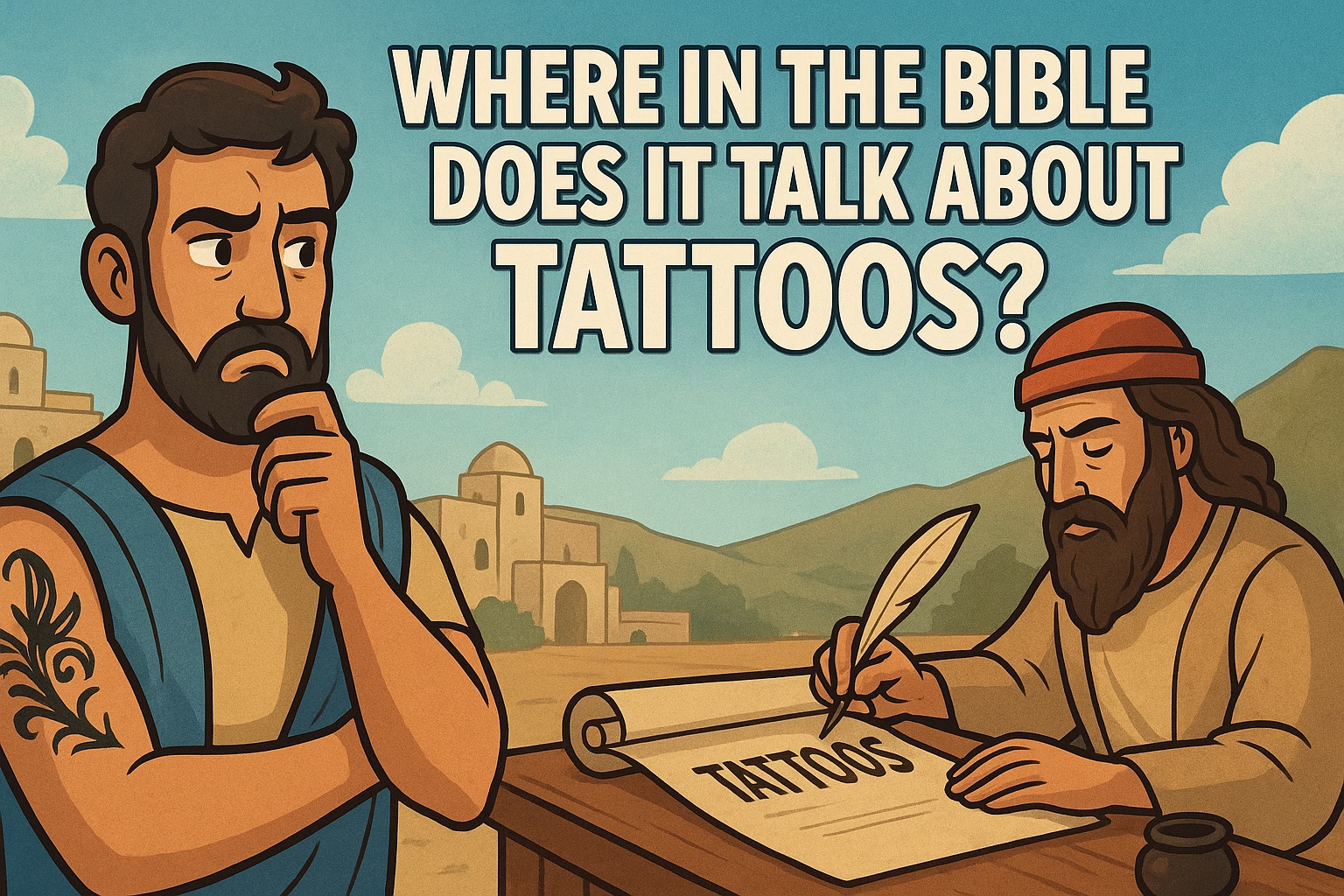
The topic of tattoos often raises questions among Christians regarding their acceptability in light of biblical teachings. Many people seek to understand what the Bible says about tattoos, whether they are permissible, and what the implications might be for a Christian lifestyle. This article will explore the relevant scriptures and provide context to help clarify this issue.
One of the most frequently cited passages in discussions about tattoos is found in Leviticus 19:28. This verse states, “Do not cut your bodies for the dead, and do not mark your skin with tattoos. I am the Lord.” However, understanding this verse requires considering its context and the cultural practices of the time.
Understanding Leviticus 19:28
Leviticus is part of the Old Testament and is often referred to as part of the Mosaic Law given to the Israelites. The command against tattoos in Leviticus 19:28 is situated within a larger set of laws that were intended to set the Israelites apart from surrounding nations. At that time, many cultures practiced body marking and cutting as part of their mourning rituals or as acts of devotion to gods.
The prohibition against tattoos can be understood as a directive to avoid practices associated with pagan rituals and to maintain a distinct identity as God’s chosen people. The focus was on holiness and separation from practices that could lead to spiritual compromise.
Contextual Considerations
When interpreting Leviticus 19:28, it is essential to consider the cultural and historical context. The Israelites were living in a time where body modifications were often linked to idolatry and other religious practices that were contrary to the worship of Yahweh. Therefore, the prohibition was not solely about tattoos themselves but about avoiding the associated pagan practices.
Many scholars argue that this verse should be viewed within the broader context of the entire chapter, which outlines a variety of laws concerning ethical behavior, dietary restrictions, and other aspects of daily life. These laws were specific to the Israelite community and their covenant relationship with God.
New Testament Perspectives
The New Testament does not specifically address tattoos as a topic. Instead, it emphasizes principles of love, grace, and the condition of the heart. In 1 Corinthians 6:19-20, Paul reminds believers that their bodies are temples of the Holy Spirit and that they should honor God with their bodies. This passage encourages Christians to consider how their actions, including body art, reflect their commitment to God.
Freedom in Christ
In Galatians 5:1, Paul speaks about the freedom believers have in Christ, emphasizing that they are no longer bound by the law. This freedom allows for personal convictions and the ability to make choices regarding body art. The focus shifts from strict adherence to the law to living in a way that honors God through love and personal conviction.
Personal Conviction and Cultural Context
For many Christians today, the decision to get a tattoo may depend on personal conviction and cultural context. Some view tattoos as a form of self-expression or art, while others may still hold to the belief that they are inappropriate based on the Old Testament law. It is crucial to approach this topic with grace and understanding, recognizing that individuals may have different interpretations and convictions.
- Self-Expression: Many individuals choose tattoos as a way to express their beliefs, commemorate significant life events, or celebrate their identity.
- Artistic Perspective: For some, tattoos are seen as a form of art, similar to wearing clothing that reflects personal style.
- Cultural Acceptance: In many cultures today, tattoos are widely accepted and have become a common form of self-expression.
Ultimately, the decision to get a tattoo is a personal one that should be approached with prayerful consideration and an understanding of one’s own convictions. Christians are encouraged to seek guidance from the Holy Spirit and consider how their choices reflect their faith.
Conclusion on Tattoos and Faith
While the Bible does mention tattoos in Leviticus 19:28, the context and cultural implications suggest that the prohibition was specific to the practices of the time. The New Testament emphasizes freedom in Christ and encourages believers to honor God with their bodies. As such, the decision to get a tattoo can be a matter of personal conviction, and it is essential to approach the topic with grace and understanding toward others’ choices.
Additional Biblical Insights on Body Modifications
While Leviticus 19:28 is the primary verse referenced in discussions about tattoos, other biblical passages address body modifications and the importance of the body in a broader spiritual context. Understanding these additional insights can provide a more comprehensive view of how tattoos may be perceived in light of biblical teachings.
Body as a Temple
As mentioned earlier, in 1 Corinthians 6:19-20, Paul states that believers’ bodies are temples of the Holy Spirit. This metaphor emphasizes the sacredness of the body and suggests that how one treats their body should reflect their reverence for God. This perspective raises questions about whether tattoos, which permanently alter the body, can align with the idea of honoring God through one’s physical form.
For many Christians, this understanding leads to a careful evaluation of the motivations behind getting a tattoo. Is the tattoo intended to glorify God, commemorate a significant event, or express personal beliefs? Reflecting on these motivations can help individuals discern whether their decision aligns with the principle of honoring God with their bodies.
Faith and Cultural Practices
Another aspect to consider is the cultural significance of tattoos in various societies. In some cultures, tattoos hold deep spiritual meanings or are part of traditional rites of passage. For example, Polynesian tattooing is steeped in cultural history and identity. In these contexts, tattoos may not only serve as art but also as a testament to faith and heritage.
When engaging with different cultural practices, Christians may find it beneficial to explore how these tattoos can reflect their faith. For instance, some may choose to incorporate Christian symbols or verses into their tattoos, using them as a means of sharing their faith with others. This approach can transform the act of tattooing into a witness rather than a contradiction to one’s beliefs.
Considerations of Intent and Message
When contemplating a tattoo, the intent behind it is crucial. The Bible encourages believers to reflect on their motivations and the messages they convey through their actions. In Philippians 4:8, Paul encourages believers to focus on whatever is true, noble, right, pure, lovely, and admirable. This principle can be applied to the decision to get a tattoo, prompting individuals to consider whether their choice aligns with these values.
For example, a tattoo that serves as a reminder of God’s faithfulness or a significant scripture may be viewed positively within the faith community. Conversely, tattoos that promote messages contrary to Christian values may lead to questions about the appropriateness of such choices.
Potential Impact on Witness
Another consideration for Christians is how their tattoos may affect their witness to others. In 1 Corinthians 10:31, Paul instructs believers to do everything for the glory of God. This can extend to how one presents themselves through their appearance, including tattoos. Christians may wish to consider how their body art reflects their faith and how it might be perceived by those who do not share their beliefs.
For instance, if a tattoo could lead to misunderstandings or negative perceptions about one’s faith, it may be worth reevaluating the decision. Engaging in open conversations about tattoos with fellow Christians and seeking wisdom from mentors can provide valuable perspectives and help navigate these decisions.
Engaging in Dialogue
Given the diversity of opinions on tattoos within the Christian community, fostering open dialogue about the topic can be beneficial. Engaging in discussions with others can help clarify personal convictions and how they align with biblical teachings. This can be particularly important for young Christians who may be considering tattoos for the first time.
It is essential to create a safe space for sharing thoughts and feelings about tattoos, allowing individuals to express their views without fear of judgment. By listening to differing perspectives, believers can gain insights into how tattoos can be understood in light of faith and cultural practices.
Conclusion: A Personal Journey of Faith and Expression
In summary, while Leviticus 19:28 addresses tattoos directly, the broader biblical context emphasizes the importance of honoring God with one’s body and the motivations behind personal choices. The New Testament encourages believers to pursue freedom in Christ while being mindful of how their actions reflect their faith. Ultimately, the decision to get a tattoo is deeply personal and should be approached with careful consideration, prayer, and an understanding of one’s own convictions.
As Christians navigate their choices regarding tattoos, they are encouraged to seek guidance from the Holy Spirit and engage in conversations that foster understanding and grace within the community. Tattoos can serve as an expression of faith, identity, and personal journey, but they should always align with the core principles of love and honor towards God.
For further exploration on similar topics, you can read about the relationship between faith and cultural expressions or dive into the significance of body art in Christianity.