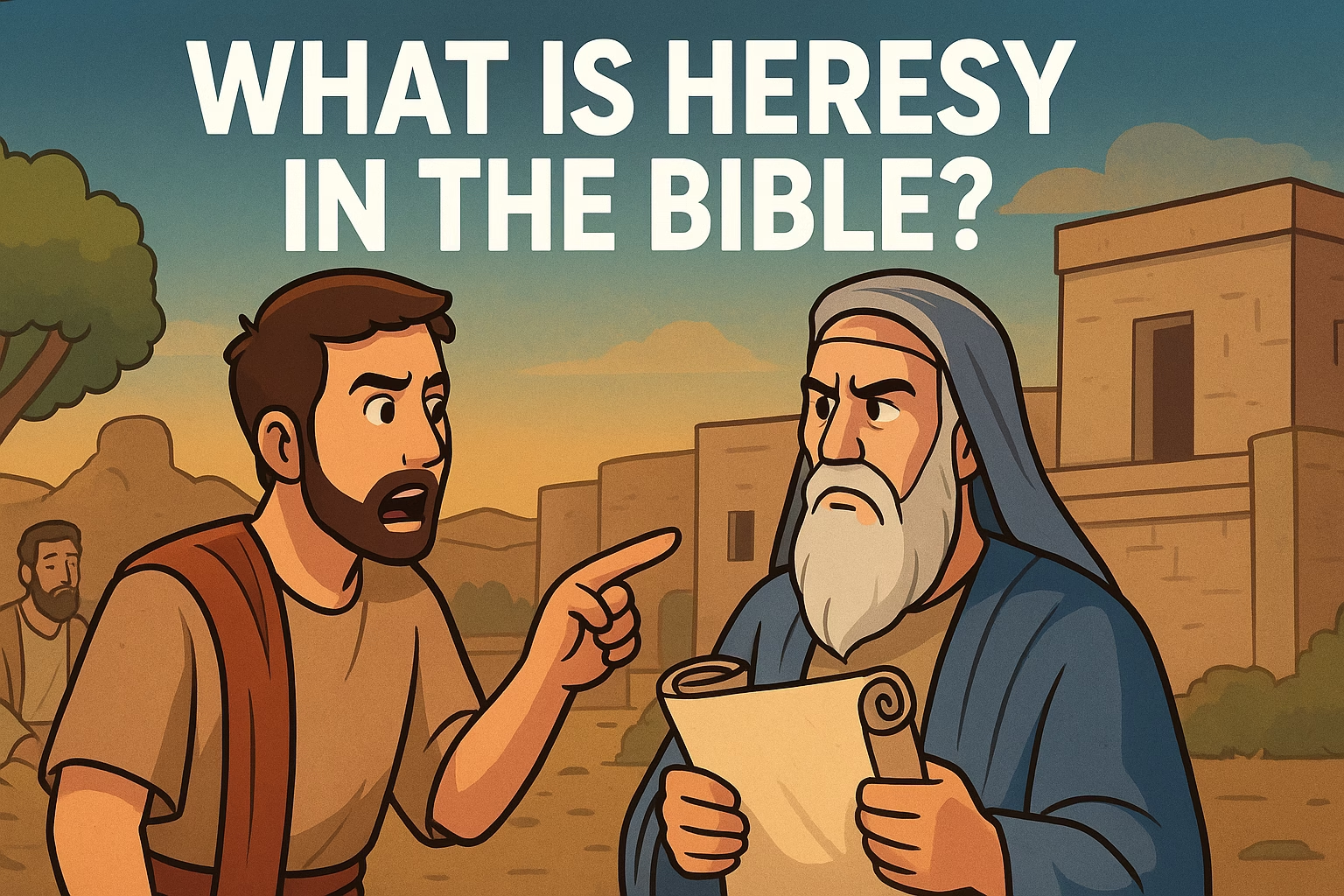
Understanding heresy is crucial for anyone seeking to grasp the teachings of the Bible and the Christian faith. The term “heresy” often evokes strong emotions and debates within the church community. It refers to beliefs or practices that deviate from established doctrines. In this article, we will explore what heresy is in the context of the Bible, examining relevant Scripture passages and the implications of heretical beliefs.
In the Bible, heresy is typically understood as a deviation from core Christian beliefs. It arises when individuals or groups adopt teachings that contradict or distort the fundamental truths of the faith. This can involve misinterpretations of Scripture, the introduction of new doctrines, or the denial of essential tenets of Christianity. The New Testament provides several warnings against heretical teachings, urging believers to remain steadfast in the truth.
Biblical References to Heresy
Galatians 1:6-9
One of the clearest passages addressing heresy is found in Galatians 1:6-9. Here, the Apostle Paul expresses astonishment that the Galatians are turning to a different gospel. He emphasizes that any deviation from the gospel he preached is not just a minor mistake but a serious issue. Paul declares that even if an angel from heaven were to preach a different message, they should be accursed. This strong language underscores the importance of adhering to the original message of Christ.
2 Peter 2:1-3
Another significant passage is 2 Peter 2:1-3, which warns that false prophets and teachers will arise among believers, secretly introducing destructive heresies. Peter’s warning emphasizes that these heresies can lead to destructive outcomes, not only for those who promote them but also for those who follow them. He highlights the danger of being led astray by enticing words and deceptive teachings.
The Nature of Heresy
Distinction from Disagreement
It is important to distinguish between heresy and mere disagreement on non-essential matters. Within Christianity, there are various interpretations of Scripture that do not necessarily constitute heresy. For example, differing views on baptism or the nature of spiritual gifts can lead to debate, but they do not undermine the core tenets of faith. Heresy, on the other hand, involves a fundamental rejection or distortion of key doctrines, such as the divinity of Christ or the resurrection.
Core Doctrines Under Threat
Several core doctrines are often at the heart of heretical teachings. These include:
- The Deity of Christ: Denying that Jesus is fully God.
- The Trinity: Rejecting the concept of one God in three persons.
- Salvation by Grace: Teaching that salvation can be earned through works rather than faith.
- The Resurrection: Denying the physical resurrection of Jesus and the promise of resurrection for believers.
When individuals or groups challenge these doctrines, they are often labeled as heretical. The church has historically taken a strong stance against teachings that undermine these essential beliefs.
Historical Context of Heresy
Early Church Responses
In the early church, heresy was a significant concern as various sects and philosophies threatened to distort the message of Christianity. Church leaders, such as the Apostles and early church fathers, actively addressed heretical teachings. For example, Gnosticism, which claimed secret knowledge and denied the physical world’s goodness, was one such threat. The church responded by affirming the importance of apostolic teaching and the authority of Scripture.
Creeds and Councils
To combat heresy, the early church developed creeds—formal statements of faith that clarified essential beliefs. The Nicene Creed, established in 325 AD, was a response to Arianism, which denied the full divinity of Christ. By affirming the nature of Christ as “true God from true God,” the Nicene Creed helped to unify the church around core doctrines and provided a standard against which heretical teachings could be measured.
Contemporary Heresies
Modern-Day Challenges
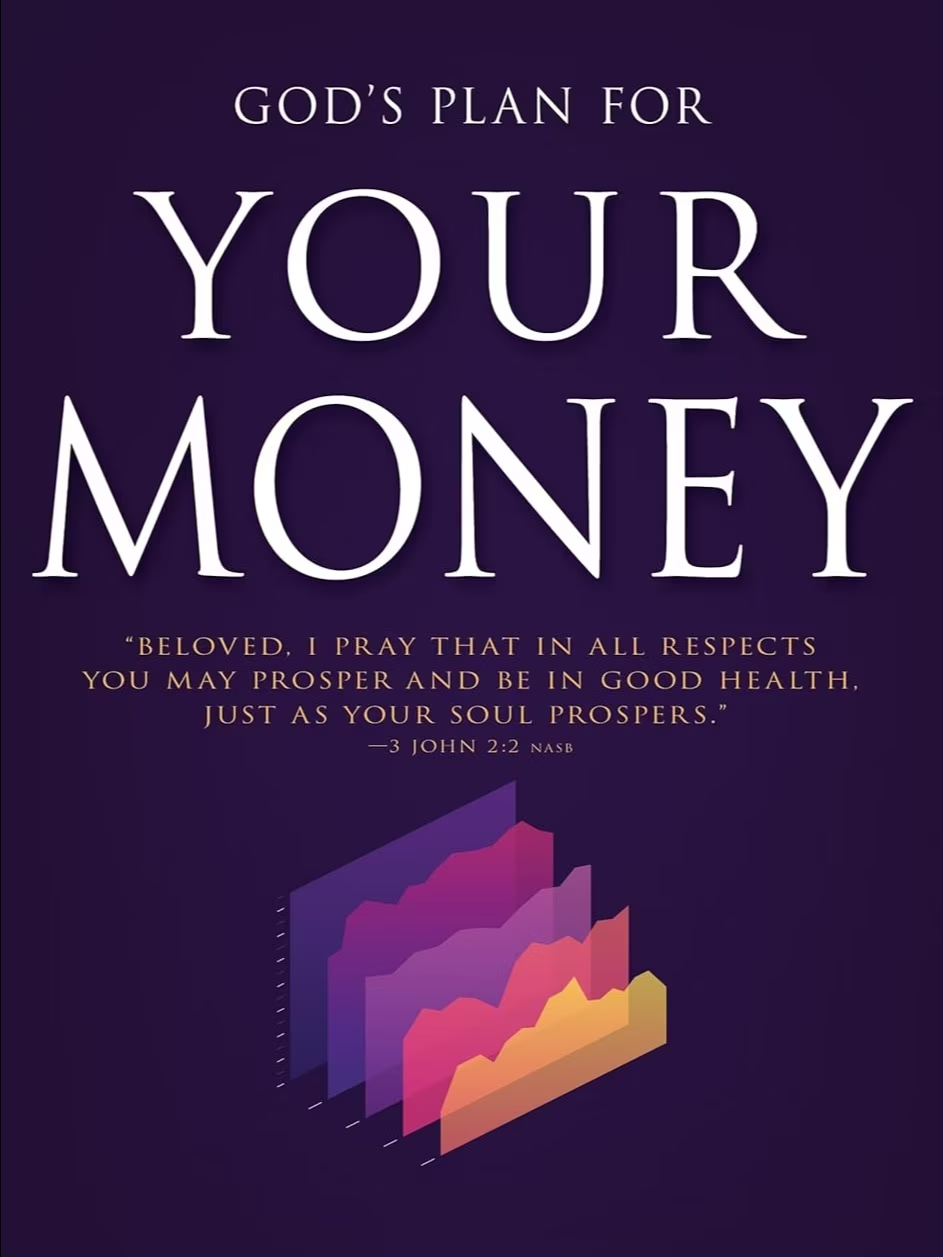
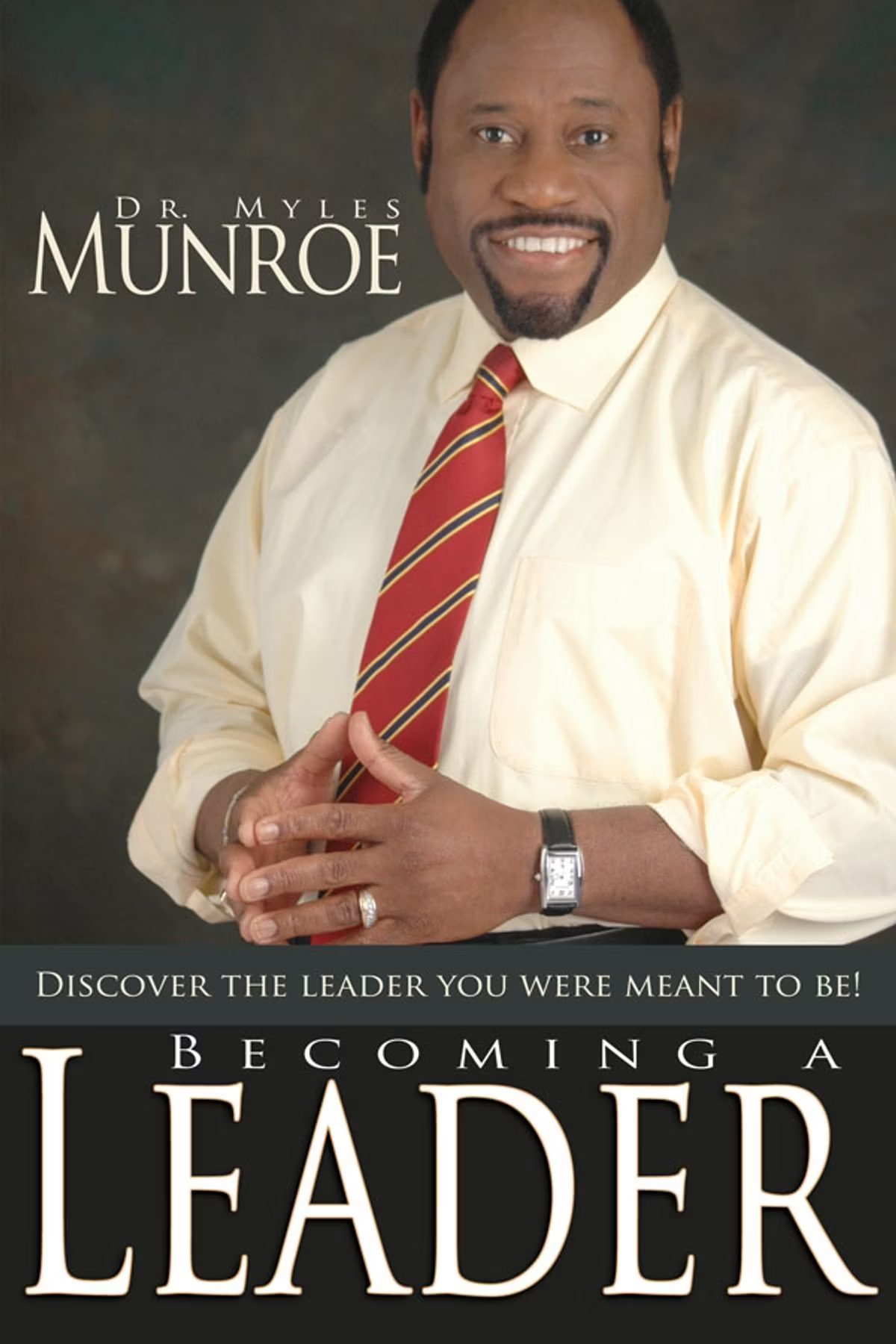
In today’s context, heresy continues to pose challenges to the church. With the rise of various ideologies and movements, some teachings can subtly infiltrate Christian thought. Examples include the prosperity gospel, which teaches that faith guarantees health and wealth, and universalism, which posits that all people will ultimately be saved regardless of their beliefs. Such teachings often distort the biblical message and can lead believers away from the truth.
Discernment and Accountability
To combat heresy, believers are called to exercise discernment. This involves studying Scripture, understanding core doctrines, and being accountable to one another within the church community. The Apostle John advises believers to test the spirits to see whether they are from God (1 John 4:1). This call for vigilance is essential for preserving the integrity of the faith.
The Consequences of Heresy
Spiritual Consequences
The implications of heresy extend beyond intellectual disagreements; they carry significant spiritual consequences. When individuals embrace heretical beliefs, they risk separating themselves from the true faith and the community of believers. This estrangement can lead to spiritual emptiness and confusion, as seen in Ephesians 4:14, where Paul warns against being “tossed back and forth by the waves, and blown here and there by every wind of teaching.” The instability that comes from heretical beliefs can hinder a believer’s relationship with God and their growth in faith.
Community Impact
Heresy can also disrupt the unity of the church. When false teachings take root, they can create divisions among believers, leading to factions and disagreements. Paul addresses this in 1 Corinthians 1:10, urging the church to be united in mind and thought. A divided church struggles to fulfill its mission and can become less effective in reaching out to the world. The challenge of maintaining unity amidst differing beliefs underscores the importance of adhering to sound doctrine.
Historical Examples of Heretical Movements
Throughout history, various movements have been labeled heretical because they challenge core Christian doctrines. For instance, the Arian controversy in the fourth century revolved around the nature of Christ, leading to significant theological debates and the formulation of the Nicene Creed. Similarly, the rise of the Pelagian heresy questioned the necessity of divine grace for salvation, prompting responses from prominent theologians like Augustine. These historical examples highlight the ongoing struggle within the church to uphold essential truths against heretical teachings.
Guidelines for Identifying Heresy
Scriptural Foundation
To accurately identify heresy, believers must ground their understanding in Scripture. This involves a careful examination of the Bible’s teachings, ensuring that any doctrine aligns with the overall message of Scripture. Acts 17:11 commends the Bereans for examining the Scriptures daily to see if what they were taught was true. This practice of diligent study is crucial for discerning truth from falsehood.
Consulting Church Tradition
In addition to Scripture, consulting the teachings of early church fathers and historical creeds can provide valuable insight. The church’s historical responses to heresy can serve as a guide for contemporary believers. Understanding how past generations confronted heretical ideas can help modern Christians recognize similar threats today. The Apostles’ Creed and the Nicene Creed are foundational documents that encapsulate essential Christian beliefs and can be used as touchstones for evaluating new teachings.
Engaging in Community Dialogue
Engaging in discussions with fellow believers can also aid in identifying heresy. The collective wisdom of the church community can help clarify misunderstandings and provide accountability. Proverbs 27:17 states, “As iron sharpens iron, so one person sharpens another.” Open dialogue fosters a healthy environment where believers can explore and affirm their faith together, strengthening their understanding of sound doctrine.
Responses to Heresy
Correction and Restoration
When heretical teachings arise, the church is called to respond with both correction and restoration. Galatians 6:1 encourages believers to restore those caught in sin gently. This approach emphasizes love and grace while upholding the truth. Addressing heresy should not be about condemnation but rather about guiding individuals back to sound doctrine and fostering a spirit of unity in the church.
Teaching and Discipleship
Preventing heresy also requires ongoing teaching and discipleship within the church. Ephesians 4:11-13 outlines the role of church leaders in equipping believers for works of service and building up the body of Christ. By providing sound teaching and fostering spiritual maturity, churches can create an environment where believers are less susceptible to heretical ideas. Discipleship programs that emphasize biblical literacy and doctrinal understanding are essential for strengthening the faith of the community.
Conclusion: The Importance of Sound Doctrine
Understanding heresy within the biblical context is vital for preserving the integrity of the Christian faith. As believers navigate a world filled with competing ideologies, it is imperative to hold fast to sound doctrine and the core tenets of Christianity. By studying Scripture, engaging with church tradition, and fostering community dialogue, Christians can discern truth from falsehood and protect themselves from the dangers of heretical teachings. Ultimately, a commitment to understanding and defending the faith is essential for spiritual growth and the health of the church.
For further exploration of related topics, you can read more about the role of church tradition in understanding heresy and the importance of sound doctrine in modern Christianity.