
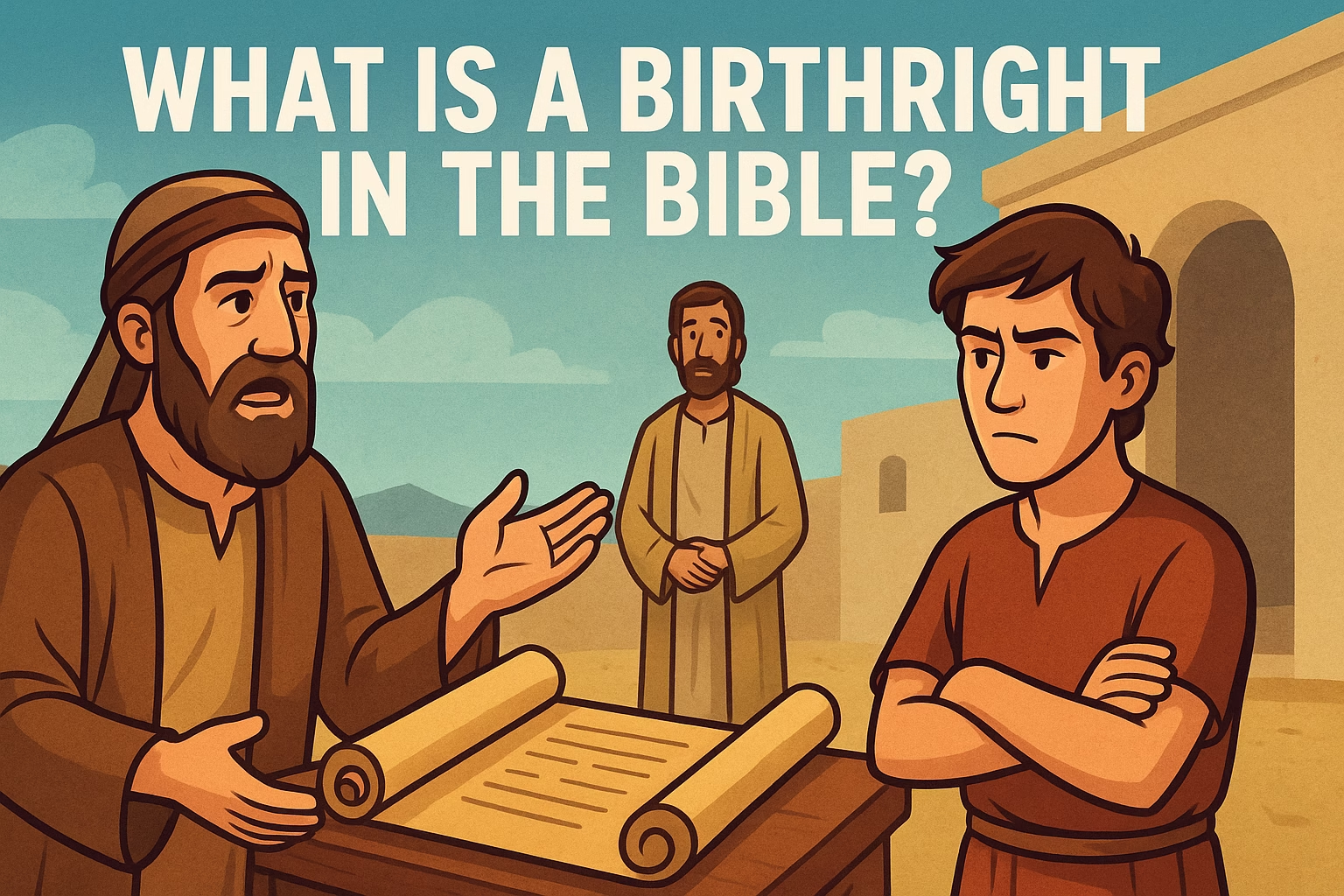
The concept of birthright in the Bible carries significant weight and implications, often tied to family, inheritance, and divine promise. Understanding what a birthright is can help clarify many narratives in Scripture, especially those involving key figures such as Esau and Jacob. This article will explore the meaning of birthright in biblical terms, its historical context, and the implications it had for families and individuals in ancient Israel.
A birthright typically refers to the privilege or right of the firstborn son in a family. This right included a double portion of the inheritance and leadership of the family after the father’s death. In biblical times, the birthright was not just a material blessing; it also encompassed spiritual responsibilities and blessings. The firstborn was often seen as having a special status before God and within the family unit.
The Significance of Birthright in the Old Testament
The birthright was a vital aspect of family life in ancient Israel. It was not merely about receiving more material possessions; it was also about the carrying on of the family legacy and spiritual leadership. This is illustrated in the story of Esau and Jacob, where Esau, the firstborn son of Isaac, sold his birthright to his younger brother Jacob for a bowl of stew (Genesis 25:29-34). This act demonstrated a lack of appreciation for the spiritual and material blessings associated with his birthright.
Esau and Jacob: A Case Study
The narrative of Esau and Jacob provides an essential understanding of the birthright concept. In Genesis 27, Isaac, their father, intended to bless Esau with the family inheritance. However, Jacob, with the help of their mother Rebekah, deceived Isaac and received the blessing instead. This act of deception highlighted the high stakes associated with the birthright and its blessings. Jacob’s acquisition of the birthright and blessing ultimately set the stage for the future of the Israelite nation.
Birthright and Inheritance Laws
The laws regarding birthright are outlined in the Old Testament, particularly in Deuteronomy. According to Deuteronomy 21:15-17, if a man has two wives and one is loved while the other is unloved, he must not favor the son of the loved wife over the son of the unloved wife when it comes to giving an inheritance. The firstborn son must receive a double portion of all the father has, ensuring that the birthright remains significant regardless of the father’s affections.
Spiritual Implications of Birthright
In biblical terms, the birthright also had spiritual ramifications. The firstborn son was often seen as the one through whom God’s promises would be fulfilled. For instance, God chose the lineage of Abraham, Isaac, and Jacob to carry His covenant promises. Thus, the birthright was not just a matter of physical inheritance but also involved carrying forward God’s promises and blessings.
Examples of Birthright in the Bible
Several examples throughout Scripture illustrate the importance of birthright:
- Reuben: As Jacob’s firstborn, Reuben had the birthright. However, due to his immoral actions, Jacob chose to give the birthright to Joseph instead (1 Chronicles 5:1-2).
- Joseph: Although Joseph was not the firstborn, he received a special blessing from Jacob, which included the birthright’s privileges. His two sons, Ephraim and Manasseh, were adopted by Jacob as his own, further emphasizing the significance of Joseph’s blessing (Genesis 48:5).
- The Levites: In the case of the Levites, although they were not the firstborn of Jacob’s sons, they were chosen by God to serve as priests and carry out religious duties, thus receiving a different form of spiritual birthright (Numbers 3:12).
Birthright in the New Testament
While the New Testament does not emphasize the concept of birthright in the same way as the Old Testament, it does address the idea of inheritance in a spiritual context. Believers in Christ are described as heirs of God and co-heirs with Christ (Romans 8:17). This spiritual inheritance can be seen as a fulfillment of the promise of a new birthright, available to all who believe, regardless of their physical lineage.
In Galatians 3:28, Paul emphasizes that in Christ, there is neither Jew nor Gentile, neither slave nor free, nor is there male and female, for all are one in Christ Jesus. This verse suggests that the traditional distinctions of birthright and inheritance are transformed in the light of faith, making spiritual inheritance accessible to all believers.
In summary, the birthright in the Bible is a multifaceted concept encompassing rights, privileges, and responsibilities. Its significance extends beyond material wealth to include spiritual leadership and divine promise, impacting the narratives of key biblical figures and shaping the understanding of inheritance in both the Old and New Testaments.
The Role of Birthright in Family Dynamics
The birthright often dictated the dynamics within families, influencing relationships and power structures. The firstborn son was expected to inherit material wealth and assume leadership roles within the family. This meant that the birthright conferred a level of authority and responsibility that could lead to tension among siblings. In the case of Esau and Jacob, the rivalry between the brothers was intensified by the implications of the birthright. Esau’s impulsive decision to sell his birthright for a momentary need highlights the conflict that can arise when the significance of such responsibilities is undervalued.
Moreover, birthrights could lead to favoritism, as seen in the relationship between Jacob and his sons. Jacob’s favoritism toward Joseph created animosity among his other sons, ultimately leading to Joseph’s betrayal and sale into slavery (Genesis 37). This illustrates how the birthright could affect family dynamics, sometimes resulting in tragic outcomes.
Birthright and Covenant Theology
In the broader context of biblical theology, the concept of birthright is closely tied to covenantal themes. God’s covenants often involved promises of blessing and inheritance that transcended mere physical lineage. For instance, when God established His covenant with Abraham, He promised to make him the father of many nations (Genesis 17:4). This promise extended beyond Abraham’s immediate descendants and included all who would come to faith. Thus, the birthright in a spiritual sense is not limited to the firstborn but opens the door for all believers to partake in God’s promises.
The New Testament expands on this idea by emphasizing that through faith in Christ, individuals become part of God’s family and receive a spiritual birthright. This new identity in Christ reshapes the understanding of inheritance, enabling a diverse group of believers to share in the blessings of God without regard to their earthly birthrights.
The Consequences of Disregarding Birthright
Throughout the Bible, there are cautionary tales regarding the consequences of disregarding one’s birthright. In addition to Esau, who lost his birthright due to a moment of weakness, we see the ramifications of Reuben’s actions. His failure to honor his birthright resulted in its transfer to Joseph, as mentioned earlier. This theme serves as a reminder that the privileges associated with birthright come with responsibilities. Failing to uphold these responsibilities can lead to loss, not only of material inheritance but also of spiritual blessings.
Questions for Reflection
Understanding the concept of birthright in the Bible raises several thought-provoking questions:
- How does the biblical view of birthright challenge contemporary views on privilege and inheritance?
- In what ways can we apply the lessons of birthright to our own family dynamics and relationships?
- How does the New Testament understanding of spiritual inheritance reshape our view of identity and belonging in Christ?
- What responsibilities come with the spiritual birthright we receive as believers, and how can we honor those responsibilities?
Conclusion: The Birthright as a Spiritual Legacy
In conclusion, the birthright in the Bible serves as a profound symbol of not just familial privileges but also spiritual legacies. It reminds us that our identities and inheritances are rooted in God’s promises, transcending earthly definitions of lineage and status. The stories of individuals like Esau, Jacob, Reuben, and Joseph illustrate the weight of these responsibilities and the transformative nature of God’s covenant. As believers, we are invited to embrace our spiritual birthright, recognizing it as a call to live in accordance with God’s will and to share in the blessings of His kingdom.
For those seeking to explore more about biblical concepts and their implications, consider reading understanding the covenant relationship and the significance of heritage in the Bible.