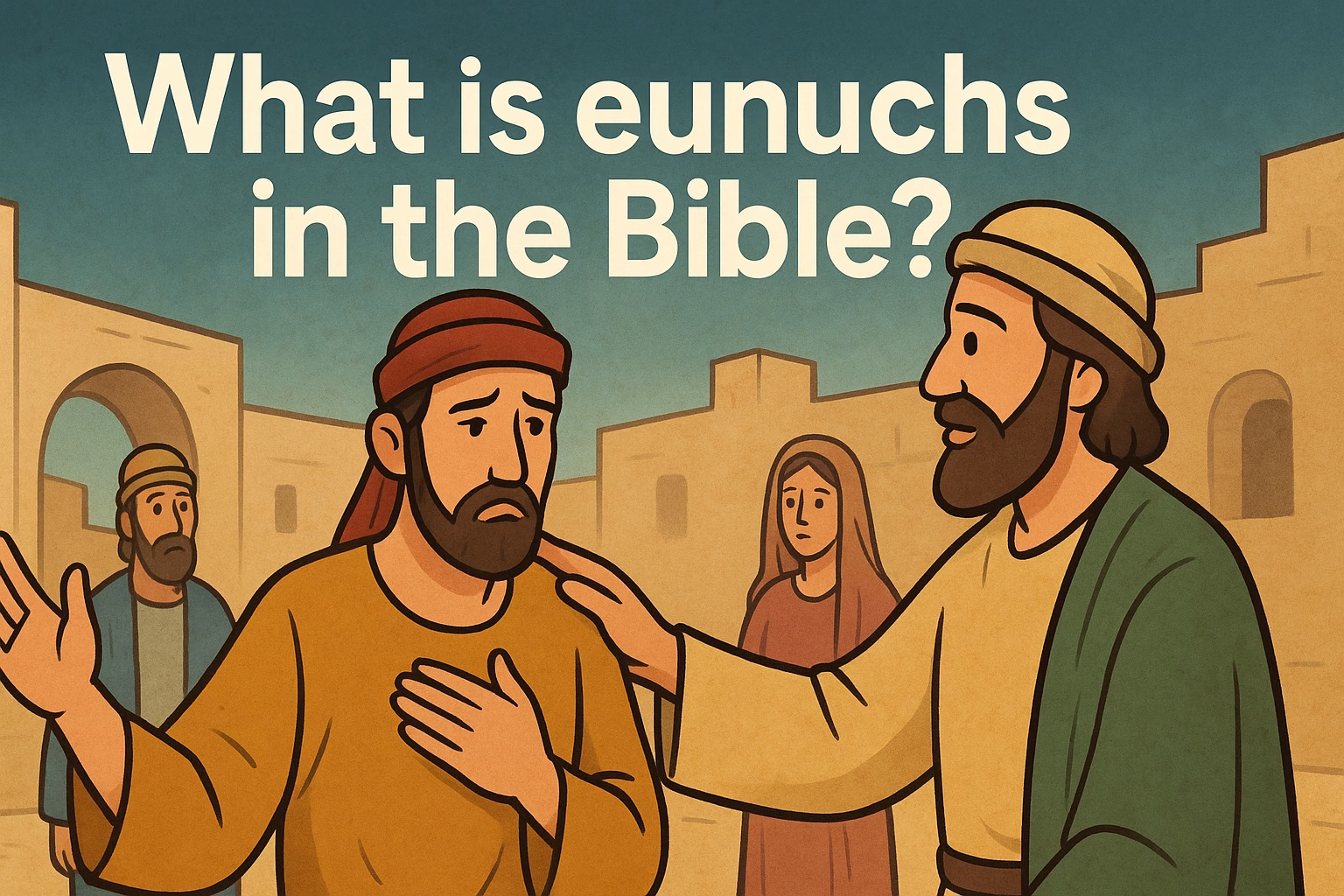
In the Bible, the term “eunuch” refers to a man who has been castrated or who is unable to father children. Eunuchs held various roles in society, and their status is mentioned in both the Old and New Testaments. Understanding the concept of eunuchs in biblical texts requires a look at cultural contexts, specific passages, and the significance of their roles.
Eunuchs were often employed in royal courts and served as attendants to kings and queens. They were also mentioned in the context of marriage and family, as they were unable to fulfill the traditional role of a husband and father. The Bible offers insights into the lives of eunuchs, shedding light on their unique position in society and their relationship with God.
Understanding Eunuchs in the Old Testament
In the Old Testament, eunuchs are mentioned in various contexts. One of the earliest references can be found in Deuteronomy 23:1, which states, “No one whose testicles are crushed or whose male organ is cut off may enter the assembly of the Lord.” This verse implies a societal and religious restriction on eunuchs, reflecting the cultural norms of ancient Israel.
Despite this restriction, there are notable examples of eunuchs in the Old Testament who played significant roles. One such figure is the Ethiopian eunuch mentioned in the book of Isaiah. Isaiah 56:3-5 offers a comforting message to eunuchs, stating that they should not feel excluded from God’s blessings. The passage reads, “Do not let the eunuch say, ‘I am just a dry tree.’ For this is what the Lord says: ‘To the eunuchs who keep my Sabbaths, who choose what pleases me and hold fast to my covenant— to them I will give within my temple and its walls a memorial and a name better than sons and daughters. I will give them an everlasting name that will endure forever.’”
Eunuchs in the New Testament
The New Testament continues to address the topic of eunuchs, particularly in the teachings of Jesus. In Matthew 19:12, Jesus speaks about eunuchs, saying, “For there are eunuchs who were born that way, and there are eunuchs who have been made eunuchs by others, and there are those who choose to live like eunuchs for the sake of the kingdom of heaven. The one who can accept this should accept it.” This statement highlights three categories of eunuchs: those born unable to marry, those made eunuchs through physical alteration, and those who choose celibacy for spiritual reasons.
Jesus’ acknowledgment of eunuchs signifies an understanding and acceptance of their existence. He emphasizes that some may choose celibacy as a way to dedicate their lives to God’s service, illustrating that all individuals, regardless of their marital status or physical condition, have a place in the kingdom of heaven.
The Role of Eunuchs in Society
Eunuchs often occupied unique positions in society, especially in royal courts. Because they could not have children, they were seen as trustworthy and reliable servants who would not pose a threat to the royal lineage. In ancient cultures, eunuchs were often tasked with overseeing harems or serving as advisors, as their lack of familial ties made them less likely to engage in power struggles.
In the context of the Bible, one of the most famous eunuchs is the Ethiopian eunuch mentioned in Acts 8:26-39. This man was a high official in charge of the treasury of the Queen of the Ethiopians. He was reading the book of Isaiah when the Apostle Philip was led by the Holy Spirit to approach him. Philip explained the Scriptures to him, leading to the eunuch’s baptism. This story not only highlights the role of eunuchs in society but also emphasizes their openness to spiritual truths and the inclusivity of the Gospel.
Theological Implications of Eunuchs
The discussion of eunuchs in the Bible carries significant theological implications. Firstly, it challenges societal norms regarding marriage and family. Jesus’ teaching on eunuchs suggests that the value of a person is not determined by their marital status or reproductive capacity but by their relationship with God and their commitment to His kingdom.
Furthermore, the inclusion of eunuchs in the promises of God, as seen in Isaiah and the New Testament, illustrates the broader theme of God’s grace and acceptance. Eunuchs, often marginalized in society, are offered a place of honor and significance in God’s plan. This serves as a reminder that God’s love transcends human limitations and societal expectations.
In summary, eunuchs in the Bible are multifaceted figures whose roles reflect both societal structures and deeper spiritual truths. They are mentioned in various contexts, from the laws of the Old Testament to the teachings of Jesus and the early church. Their stories and the messages surrounding them provide valuable insights into the nature of God’s kingdom, inclusivity, and the diverse paths individuals may take in their spiritual journeys.
Historical Context of Eunuchs
To fully understand the significance of eunuchs in the Bible, it is essential to consider the historical context in which these texts were written. In ancient Near Eastern cultures, eunuchs often held high-ranking positions within royal courts. Their inability to father children made them ideal candidates for positions of trust, as they were less likely to engage in familial power struggles. This societal structure was prevalent in cultures surrounding ancient Israel and influenced the biblical narrative.
Eunuchs were not only servants; they often acted as advisors and guardians, especially within royal households. For instance, in the Babylonian Empire, eunuchs served as key figures in the administration, overseeing various aspects of governance. This role is illustrated in the story of Daniel, who was taken to Babylon as a young man and served in the court of King Nebuchadnezzar, where the presence of eunuchs was common.
Eunuchs and the Concept of Celibacy
The New Testament’s mention of eunuchs also opens a broader discussion about celibacy and its spiritual value. In Matthew 19:12, Jesus speaks of eunuchs who choose to live without marriage for the sake of the kingdom of heaven. This teaching encourages a view of celibacy as a legitimate and honorable path for those dedicated to serving God.
Celibacy, in this context, is not merely about abstaining from marital relations but is seen as a commitment to prioritize one’s relationship with God above societal expectations of marriage and family. This perspective resonates with Paul’s teachings in 1 Corinthians 7, where he discusses the advantages of remaining unmarried for the sake of devotion to God. The call to celibacy can be seen as a radical invitation to live wholly for God’s purposes, reflecting a deep spiritual commitment.
Modern Interpretations and Applications
Today, the teachings surrounding eunuchs and celibacy invite various interpretations within the Christian community. Some view the biblical references to eunuchs as a call for inclusivity, emphasizing that all individuals, regardless of their marital status or physical condition, are valued in the eyes of God. This perspective encourages churches to create welcoming environments for those who may feel marginalized, including single individuals, the celibate, and those who identify as LGBTQ+.
Moreover, the discussion of eunuchs raises important questions about identity and belonging within the faith community. How can churches better support individuals who do not fit traditional family structures? In what ways can congregations affirm the unique contributions of single and celibate members? Addressing these questions can foster a more inclusive understanding of God’s kingdom, reflecting the biblical message of grace and acceptance.
Questions for Reflection
As we consider the biblical portrayal of eunuchs, it is beneficial to reflect on some key questions:
- What can we learn from the lives of eunuchs about faithfulness and service to God?
- How do societal views on marriage and family influence our understanding of spiritual worth?
- In what ways can we, as a community, support those who choose celibacy or who do not conform to traditional family norms?
- What does Jesus’ teaching on eunuchs reveal about God’s love for all people, regardless of their circumstances?
These questions encourage deeper contemplation of how biblical teachings on eunuchs can inform contemporary Christian practice and community life.
Conclusion: Embracing Diversity in God’s Kingdom
The examination of eunuchs in the Bible reveals profound insights into God’s acceptance and love for all individuals. Eunuchs, often marginalized in society, are given a place of honor in God’s kingdom, illustrating that one’s value is not determined by societal norms but by their relationship with God. The biblical narrative encourages believers to embrace diversity and inclusivity, recognizing that each person has a unique role in the unfolding story of faith.
By acknowledging the significance of eunuchs and their contributions, the Christian community can foster a culture of acceptance and support, welcoming all individuals into the fold. The message of grace extended to eunuchs serves as a powerful reminder that everyone is invited to partake in the blessings of God’s kingdom, regardless of their life circumstances.
For further exploration of related topics, you can read about divorce and remarriage and learn about sodomy in the context of biblical teachings.