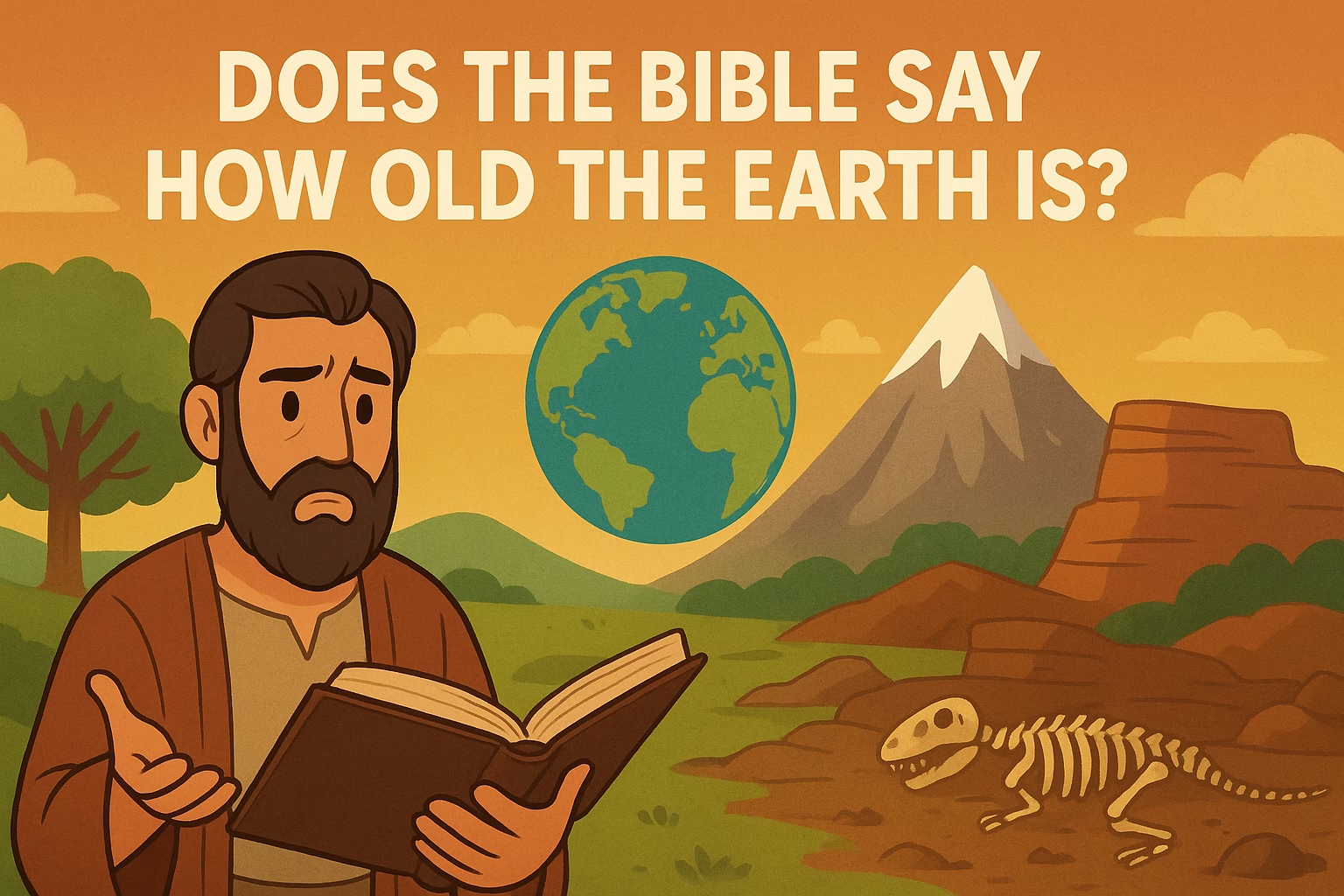
The age of the Earth is a topic that has intrigued both scientists and theologians for centuries. As believers in the Bible seek to understand the creation narrative, many wonder if the Scriptures provide a definitive answer regarding the Earth’s age. This article will explore relevant biblical passages and interpretations to see what the Bible says about the age of the Earth.
While the Bible does not explicitly state the age of the Earth, many scholars and theologians have attempted to estimate it based on genealogies and creation accounts found in Scripture. These estimates often suggest a young Earth, typically around 6,000 to 10,000 years old. However, interpretations vary, and a closer examination of the relevant texts is necessary to understand the basis for these claims.
The Creation Account in Genesis
The primary biblical account of creation is found in the Book of Genesis, particularly in chapters 1 and 2. Genesis 1 describes how God created the world in six days and rested on the seventh. The text states, “In the beginning, God created the heavens and the earth” (Genesis 1:1 NLT). This foundational verse establishes the starting point of time as understood in a biblical context.
On the first day, God created light, separating it from darkness. This act of creation marks the beginning of time as we know it. However, the text does not provide a specific time frame for how long ago this occurred.
On the sixth day, God created human beings in His image, stating, “Let us make human beings in our image, to be like us” (Genesis 1:26 NLT). This moment is often highlighted in discussions about the age of the Earth, as it marks the creation of humanity. Some biblical genealogies trace the lineage from Adam to significant figures in the Bible, providing a timeline that some interpret to estimate the age of the Earth.
Genealogies and Chronologies
Many believers look to the genealogies listed in the Bible to calculate the Earth’s age. The genealogies from Adam to Noah and from Noah to Abraham are particularly significant. For instance, the genealogies in Genesis 5 and 11 provide ages at which each patriarch had children, allowing for a rough estimate of time between these key figures.
Using the genealogical records, some scholars have calculated that approximately 1,656 years passed from Adam to Noah and another 427 years from Noah to Abraham. This brings a rough total of around 2,083 years from the creation of Adam to Abraham. Adding the years from Abraham to the present day, based on historical accounts, some arrive at an estimate of around 6,000 years for the age of the Earth.
It is important to note that not all interpretations of these genealogies yield the same conclusions. Some scholars argue that gaps exist in the genealogical lists, which could lead to a much older Earth. Others suggest that the ages may not be literal but could represent significant periods of time or symbolic meanings instead of strict chronological records.
Creation Days: Literal or Figurative?
Another area of debate is whether the “days” of creation in Genesis should be understood literally as 24-hour periods or figuratively as longer epochs. Some theologians advocate for the “day-age theory,” which suggests that each day of creation represents a longer period of geological time. This interpretation allows for the compatibility of scientific findings regarding the Earth’s age, which suggest it is approximately 4.5 billion years old.
Another perspective is the “framework hypothesis,” which views the creation account as a literary structure rather than a strict chronological sequence. This interpretation focuses on the theological significance of creation rather than the specific timing of events. It allows for a reading of the text that emphasizes God’s sovereignty and order in creation without being tied to a specific timeframe.
What Science Says
While the Bible provides a spiritual and theological framework for understanding creation, scientific evidence offers a different perspective on the age of the Earth. Geologists and astronomers use various methods, such as radiometric dating and the study of rock layers, to estimate the Earth’s age at approximately 4.5 billion years. This scientific consensus contrasts sharply with the younger Earth estimates derived from biblical genealogies.
As Christians seek to reconcile their faith with scientific findings, many choose to view the Genesis account as a theological reflection on God’s creative work rather than a scientific textbook. This approach allows for a harmonious relationship between faith and reason.
Conclusion: A Matter of Faith and Interpretation
In summary, the Bible does not provide a specific age for the Earth. While some believers use genealogies to estimate a young Earth, others interpret the creation account in a way that accommodates scientific evidence for an older Earth. Ultimately, the age of the Earth remains a complex issue that encompasses faith, interpretation, and scientific inquiry.
Theological Implications of Earth’s Age
The question of the Earth’s age is not merely an academic one; it carries significant theological implications. For many Christians, the interpretation of Genesis and the age of the Earth can influence their understanding of God’s nature, creation, and the authority of Scripture. If one adheres to a young Earth view, it may lead to a belief in a literal interpretation of the Bible that emphasizes the inerrancy of Scripture. Conversely, those who consider an older Earth may find that their faith can coexist with scientific findings, suggesting a more metaphorical or allegorical interpretation of the Genesis creation narrative.
Impacts on Creation Theology
Understanding the age of the Earth can also shape one’s perspective on creation theology. A young Earth view often aligns with a belief in a recent creation, which can reinforce ideas about original sin and the fall of humanity. In contrast, those who accept an older Earth might explore the relationship between God and creation in a more dynamic and ongoing narrative, acknowledging that God’s creative work continues through natural processes.
Questions for Reflection
As individuals contemplate the age of the Earth in light of biblical teachings, several meaningful questions arise:
- How do our interpretations of Genesis influence our understanding of God’s character?
- Can faith and science coexist without conflict, and how can we foster dialogue between the two?
- What does it mean to take the Bible seriously while also engaging with scientific discoveries?
- How might our views on the age of the Earth affect our environmental stewardship and responsibility toward creation?
These questions can deepen one’s faith and encourage a more nuanced understanding of Scripture in relation to the world around us.
The Role of Tradition and Community in Interpretation
The interpretations of the age of the Earth also vary widely among Christian traditions and communities. Some denominations emphasize a literal interpretation of the Bible, while others adopt a more flexible approach, allowing for diverse understandings of creation. The role of community in shaping these views is significant, as congregational teachings, denominational statements, and cultural contexts can all influence individual beliefs.
Engaging with fellow believers, theologians, and scholars can provide valuable insights and perspectives that challenge or reinforce one’s views on the age of the Earth. The diversity of thought within Christianity encourages believers to explore these questions collaboratively, seeking wisdom and understanding from Scripture and the wider community of faith.
Conclusion: Embracing Mystery and Faith
In conclusion, while the Bible does not provide a specific age for the Earth, it invites believers to engage in a dialogue that encompasses both faith and reason. The varying interpretations of creation, genealogies, and the age of the Earth reflect the complexity of the relationship between Scripture and science. Ultimately, embracing the mystery of creation while seeking a deeper understanding of God’s work in the world can enrich one’s faith journey. Whether one leans toward a young Earth or an older Earth perspective, the core message remains: God is the Creator, and His creative acts are worthy of reverence and awe.
For further exploration of related topics, you may find the following articles insightful: how old is the earth according to the Bible and why did people live so long in the Bible.